Medical Photography Film
CN → US| HS Code | Tariff Rate | Origin | Destination | Doc |
|---|---|---|---|---|
| 3701100030 | 38.7% | CN | US | Official Doc |
| 2914691000 | 40.5% | CN | US | Official Doc |
| 3702320130 | 38.7% | CN | US | Official Doc |
| 3701996060 | 35.0% | CN | US | Official Doc |
| 3701100030 | 38.7% | CN | US | Official Doc |
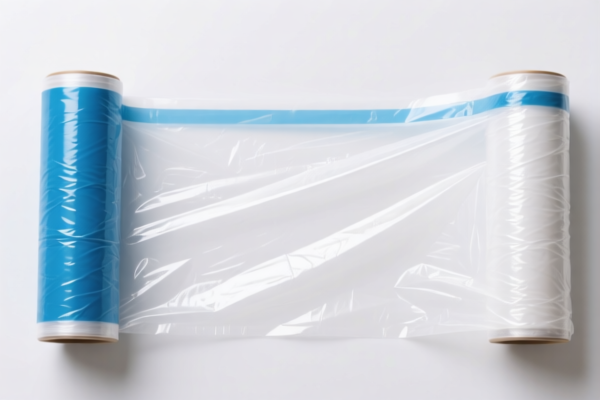
Product Images



AI Analysis
🎞️ Medical Photography Film (Medical Imaging Microfilm/Sensitive Films)
🌐 HS Code Reference & Customs Clearance Guide | 2026 Latest Tariff Analysis | Professional Clearance Strategy
📌 I. Product Definition & Classification: Do You Really Understand “Medical Photography Film”?
Medical photography film refers to photosensitive materials used for capturing, storing, or recording medical images. In international trade, these products are primarily classified based on their physical form (sheet/film vs. microfilm), intended use (general medical vs. specific imaging), and chemical composition (silver halide vs. other photosensitive substances).
Key Distinctions:
- General Medical Film (3701.10): Standard photosensitive films used for general medical photography or X-ray films (base material).
- Microfilm/Reprographic Film (3701.99 / 3702.32): Used for micro-imaging or storing digital medical records in physical form.
- Chemical Composition: If the primary characteristic is the chemical substance (e.g., silver nitrate/halides) rather than the physical film, it may be classified under Chapter 29.
⚠️ Critical Classification Point:
- If the product is a finished photographic film (even if pre-loaded or medical-specific) → Chapter 37.
- If the product is primarily a chemical compound used to make film (e.g., pure silver halide crystals) → Chapter 29.
- If the product is microfilm for record-keeping → 3701.99 or 3702.32.
📦 II. HS Code Classification Details (2026 Latest Tariff Authority Cross-Reference)
| HS Code | Product Description | Application Scenario | Total Tax Rate* | Tax Breakdown |
|---|---|---|---|---|
| 3701.10.00.30 | Medical Film, Sensitive | General medical photography, X-ray base film | 38.7% | Base: 3.7%, Add-on: 25%, Sec 122: 10% |
| 2914.69.10.00 | Organic Chemicals (Halide/Nitrate Silver) | Raw materials for film manufacturing, e.g., silver nitrate/halides | 40.5% | Base: 5.5%, Add-on: 25%, Sec 122: 10% |
| 3702.32.01.30 | Medical Imaging Microfilm | Microfilm for medical image recording, silver halide emulsion | 38.7% | Base: 3.7%, Add-on: 25%, Sec 122: 10% |
| 3701.99.60.60 | Other Photographic Plates/Films (Non-paper/Textile) | Non-standard medical microfilm, other photosensitive sheets | 35.0% | Base: 0.0%, Add-on: 25%, Sec 122: 10% |
| 3701.10.00.30 | Medical Imaging Microfilm (General) | General medical imaging microfilm, non-paper/textile photosensitive material | 38.7% | Base: 3.7%, Add-on: 25%, Sec 122: 10% |
🔍 Key Note:
- 3701.10.00.30 is the most common code for standard medical film.
- 3702.32.01.30 is specifically for microfilm used for image recording.
- 3701.99.60.60 applies to "other" photographic films not elsewhere specified, often with a 0% base tariff but still subject to heavy add-ons.
- 2914.69.10.00 is for the chemical aspect, not the physical film product. Misclassification here can lead to penalties.✅ Applicable Country: USA
✅ Origin: China (CN)
✅ Effective Date: November 10, 2025 (and subsequent imports)
💰 III. 2026 Latest Tariff Rate Details (Including Additional Taxes & Policy Surcharges)
🎯 1. 3701.10.00.30 — Medical Film (Sensitive)
| Item | Content |
|---|---|
| Base Tariff | 3.7% (ad valorem) |
| USITC Add-on Tariff | +25% (Section 301, USITC Footnote) |
| IEEPA Add-on Tariff | +10% (Section 122, targeting China/HK products) |
| Total Tax Rate | 38.7% |
| Tax Calculation | CIF Value × 38.7% |
| De Minimis Exemption | ❌ Not Applicable (deny_de_minimis) |
| Legal Authority Path | IEEPA:122 → USITC:3701.10.00.30 → FOOTNOTE:301 |
📌 Explanation:
- Base 3.7%: Standard MFN tariff for sensitive photographic films.
- 25% Add-on: Result of the Section 301 trade war tariffs on Chinese goods.
- 10% IEEPA (Sec 122): Additional levy under the International Emergency Economic Powers Act, specifically targeting certain Chinese manufacturing inputs.
- Total 38.7%: This is a high-cost category. Importers must budget accordingly.
🎯 2. 2914.69.10.00 — Organic Chemicals (Halide/Nitrate Silver)
| Item | Content |
|---|---|
| Base Tariff | 5.5% (ad valorem) |
| USITC Add-on Tariff | +25% (Section 301) |
| IEEPA Add-on Tariff | +10% (Section 122) |
| Total Tax Rate | 40.5% |
| Tax Calculation | CIF Value × 40.5% |
| De Minimis Exemption | ❌ Not Applicable (deny_de_minimis) |
| Legal Authority Path | IEEPA:122 → USITC:2914.69.10.00 → FOOTNOTE:301 |
📌 Note:
- This code applies only if the product is classified as a chemical substance (e.g., silver nitrate solution) rather than a finished film.
- If you are importing raw chemical materials to manufacture film, use this code.
- If you are importing finished film, this is likely an incorrect classification.
🎯 3. 3702.32.01.30 — Medical Imaging Microfilm
| Item | Content |
|---|---|
| Base Tariff | 3.7% (ad valorem) |
| USITC Add-on Tariff | +25% (Section 301) |
| IEEPA Add-on Tariff | +10% (Section 122) |
| Total Tax Rate | 38.7% |
| Tax Calculation | CIF Value × 38.7% |
| De Minimis Exemption | ❌ Not Applicable (deny_de_minimis) |
| Legal Authority Path | IEEPA:122 → USITC:3702.32.01.30 → FOOTNOTE:301 |
📌 Note:
- This code is for microfilm (small format) used for archival purposes.
- Ensure the product is indeed microfilm and not standard sheet film.
- Tax rate is identical to standard medical film due to the same add-on structure.
🎯 4. 3701.99.60.60 — Other Photographic Plates/Films
| Item | Content |
|---|---|
| Base Tariff | 0.0% (ad valorem) |
| USITC Add-on Tariff | +25% (Section 301) |
| IEEPA Add-on Tariff | +10% (Section 122) |
| Total Tax Rate | 35.0% |
| Tax Calculation | CIF Value × 35.0% |
| De Minimis Exemption | ❌ Not Applicable (deny_de_minimis) |
| Legal Authority Path | IEEPA:122 → USITC:3701.99.60.60 → FOOTNOTE:301 |
📌 Note:
- This is a catch-all for photographic films not specified elsewhere (e.g., non-standard medical films).
- While the base rate is 0%, the add-ons remain 35% total.
- Use this code only if the product does not fit3701.10(standard film) or3702.32(microfilm).
🎯 5. 3701.10.00.30 — Medical Imaging Microfilm (General)
| Item | Content |
|---|---|
| Base Tariff | 3.7% (ad valorem) |
| USITC Add-on Tariff | +25% (Section 301) |
| IEEPA Add-on Tariff | +10% (Section 122) |
| Total Tax Rate | 38.7% |
| Tax Calculation | CIF Value × 38.7% |
| De Minimis Exemption | ❌ Not Applicable (deny_de_minimis) |
| Legal Authority Path | IEEPA:122 → USITC:3701.10.00.30 → FOOTNOTE:301 |
📌 Note:
- This code is used when the product is described as "medical imaging microfilm" but classified under the general medical film heading.
- Tax rate is 38.7%.
- Ensure the product description matches the physical form (film) rather than the chemical content.
🛠️ IV. Customs Clearance Practical Advice (Real-World Pitfall Avoidance)
✅ 1. Required Documents Checklist (Missing One, Denied One)
| Document | Mandatory | Description |
|---|---|---|
| ✅ Product Specification Sheet | ✔️ | Dimensions, format (sheet/microfilm), sensitivity, chemical composition |
| ✅ Chemical Safety Data Sheet (SDS) | ✔️ | Especially for 2914.69.10.00 to prove chemical nature |
| ✅ Product Photos (Clear Label) | ✔️ | Show "Medical Use," "Photosensitive," and warning labels |
| ✅ Certificate of Origin (CO) | ✔️ | To determine tariff applicability (China origin triggers add-ons) |
| ✅ Commercial Invoice | ✔️ | Must clearly state "Medical Photography Film" or "Microfilm" |
| ✅ Packing List | ✔️ | Detail inner/outer packaging to avoid damage claims |
✅ 2. Declaration Tips (Key Mantra)
🔥 "Form Determines Code, Chemistry Defines Chapter, Name Must Match!"
| Scenario | Correct Declaration | Incorrect Practice |
|---|---|---|
| Standard Medical Film | 3701.10.00.30 |
Misclassified as 2914.69 (chemical) → Penalty |
| Microfilm for Archives | 3702.32.01.30 |
Misclassified as 3701.10 → Possible Audit |
| Raw Silver Halide | 2914.69.10.00 |
Misclassified as 3701.10 → Wrong HS Code |
| Other Specialized Film | 3701.99.60.60 |
Generic "Film" → Unclear Classification |
✅ 3. Special Case Handling
| Scenario | Handling Advice |
|---|---|
| OEM Custom Film | Provide design specs to justify specific HS code; avoid generic terms. |
| Mixed Shipment (Film + Chemicals) | Split Declaration: Film under 3701/3702, Chemicals under 2914. Do not combine. |
| Non-China Origin | If from Vietnam/Mexico, IEEPA 10% may be waived; check for trade agreements. |
| Samples/Small Quantity | No De Minimis Exemption; full 38.7% tax applies even for small batches. |
🌍 V. Global Market Comparison (2026 Latest)
| Country/Region | Recommended HS Code | Tariff | Certification | Notes |
|---|---|---|---|---|
| 🇺🇸 USA | 3701.10.00.30 |
38.7% | FDA/CE (if medical device) | High add-ons for China origin |
| 🇨🇳 China | 3701.10.00.30 |
3.7% | CCC (if applicable) | No additional tariffs |
| 🇪🇺 EU | 3701.10 |
0-3% | CE/REACH | No Section 301 impact |
| 🇦🇺 Australia | 3701.10 |
5% | TGA | Moderate tariffs |
| 🇯🇵 Japan | 3701.10 |
0-3% | PSE | Low tariffs |
📌 Conclusion:
- USA imposes the highest effective tariff (38.7%) on Chinese-origin medical film due to Section 301 and IEEPA.
- EU and Japan are more tariff-friendly but require strict chemical and safety certifications.
- Supply Chain Strategy: Consider sourcing from non-China origins to avoid the 35%+ add-on taxes in the US market.
📌 VI. Common Mistakes & Pitfall Guide (Lessons Learned)
❌ Mistake 1: Classifying finished medical film as a chemical (2914.69.10.00)
👉 Consequence: Under-declaration; Customs may reclassify and impose penalties.
👉 Correct: Film is a manufactured product → Chapter 37.
❌ Mistake 2: Claiming De Minimis Exemption for small shipments
👉 Consequence: Denied; all medical films from China are subject to full taxation.
👉 Correct: Budget for 38.7% tax regardless of quantity.
❌ Mistake 3: Using generic terms like "Photographic Film" without specifying medical use
👉 Consequence: Customs Delay; unclear classification leads to inspection.
👉 Correct: Use precise terms like "Medical Photography Film, Photosensitive, Non-Silver Halide" or "Medical Microfilm".
✅ Correct Declaration Example:
"Medical Photography Film, Photosensitive, 35mm Sheet, for X-Ray Imaging, Model XYZ, FDA-Compliant, China Origin"
🎯 VII. Conclusion: Precise Classification Saves Money!
🎯 Remember the Mantra:
🔹 "Form is Key: Sheet → 3701, Microfilm → 3702, Chemical → 2914."
🔹 "USA Tariff: 38.7% (3.7+25+10); No Exemptions for China Origin."
🔹 "Misclassification = Penalty; Precision = Profit."
📌 Pro Tip:
If your medical film is sourced from Vietnam, India, or Mexico, you may qualify for lower IEEPA tariffs.
Apply for an Advance Ruling before shipment to avoid clearance delays.
📣 Take Action Now:
📞 Contact a licensed customs broker + Provide Product Specs + SDS + Apply for Pre-Ruling
🚀 Ensure your Medical Film clears customs smoothly, efficiently, and cost-effectively!
✨ Professional Clearance Starts with Accurate Classification!
💼 Every Cent Saved is a Cent Earned!
Customer Reviews
About HS Code Classification
The Harmonized System (HS) is an internationally standardized nomenclature developed by the World Customs Organization (WCO) to classify traded products. Over 200 countries use the HS system as the basis for customs tariffs, trade statistics, and import/export regulations.
Each HS code follows a hierarchical structure:
- Chapter (2 digits) — Broad category of goods (e.g., Chapter 84: Machinery and Mechanical Appliances)
- Heading (4 digits) — More specific grouping within the chapter
- Subheading (6 digits) — Internationally standardized breakdown, used by all WCO member countries
- National subdivisions (8-10 digits) — Country-specific extensions for further classification, such as US HTSUS 10-digit codes
Correct HS code classification is essential for smooth customs clearance, accurate duty payment, and compliance with trade regulations. Misclassification can lead to customs delays, overpayment of duties, or penalties.
When importing from CN to US, the applicable tariff rates may include:
- Most-Favored-Nation (MFN) rate — The standard duty rate applied to WTO members
- General rate — Applied to countries without trade agreements
- Trade remedy duties — Additional tariffs such as Section 301 (anti-dumping), Section 232 (national security), or countervailing duties
The information provided on this page is for reference purposes only. For official classification, please consult with your local customs authority or a licensed customs broker.