Medical Synthetic Rubber
CN → US| HS Code | Tariff Rate | Origin | Destination | Doc |
|---|---|---|---|---|
| 4002190015 | 35.0% | CN | US | Official Doc |
| 4002110000 | 35.0% | CN | US | Official Doc |
Product Images
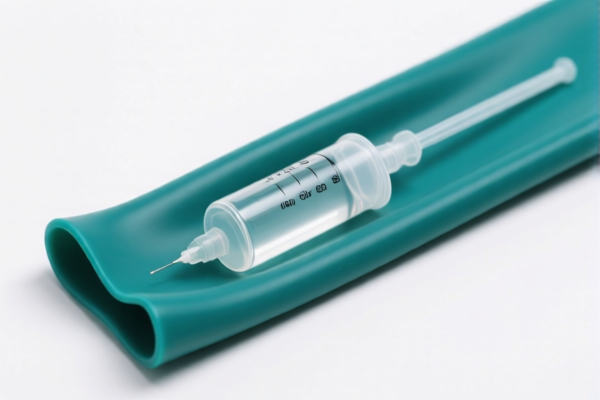
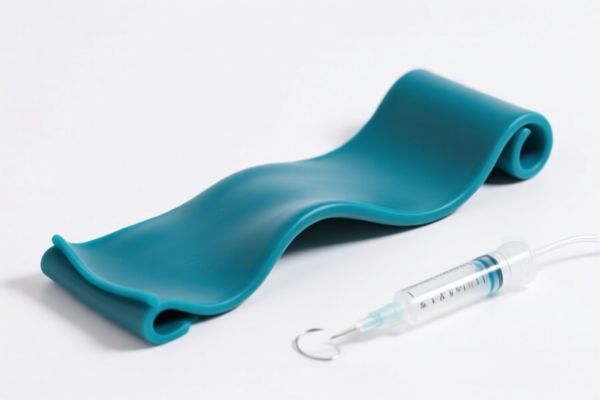


AI Analysis
💉 Medical Synthetic Rubber (医用合成橡胶)
🌐 HS Code Reference & Customs Clearance Guide | 2026 Latest Tariff Analysis | Professional通关 Strategy
📌 I. Product Definition & Classification: Do You Really Understand "Medical Synthetic Rubber"?
Medical Synthetic Rubber refers to vulcanized rubber products specifically designed for hygiene or medical purposes. In international trade, these products are highly regulated due to their direct contact with the human body or use in critical medical procedures. They are generally classified based on their specific form and function within the medical hierarchy:
1. General Medical/Hygiene Rubber Goods (4014.90.50.00):
Includes general vulcanized rubber items used in healthcare settings, such as rubber tubing, simple connectors, or non-specialized hygiene supplies that do not fit into more specific sub-categories.
2. Medical Catheters & Tubing (9018.39.00.20):
Specifically refers to rubber-made catheters and other instruments used for inserting into the body. This classification is stricter because it falls under Chapter 90 (Optical, Medical, or Surgical Instruments), requiring strict compliance with medical device standards.
3. Specific Hygiene/Medical Rubber Articles (4014.90.10.00):
Covers specialized rubber articles specifically identified as "hygiene or medical goods" in the tariff logic. This often includes items like rubber condoms (if applicable), medical gloves (depending on specific national sub-codes), or specialized seals for medical equipment.
⚠️ Key Distinction Point:
- If it is a general rubber product used in medical/hygiene contexts (not a specialized instrument) → 4014.90.50.00
- If it is a catheter or specific medical instrument made of rubber → 9018.39.00.20
- If it fits the specific hygiene/medical article logic but not catheters → 4014.90.10.00
📦 II. HS Code Classification Details (2026 Latest Tariff Authority Comparison)
| HS Code | Product Description | Application Scenario | Tax Logic |
|---|---|---|---|
4014.90.50.00 |
Rubber goods, vulcanized other than hard rubber (Other, for hygiene or medical use) | General medical rubber supplies, hygiene products | Base: 4.2% |
9018.39.00.20 |
Catheters, cannulae, and similar tubes made of rubber | Medical tubing, catheters, drainage tubes | Base: 0.0% |
4014.90.10.00 |
Rubber goods, vulcanized other than hard rubber (Other, for hygiene or medical use - Specific Logic) | Specialized medical/hygiene rubber articles | Base: 0.0% |
🔍 Important Reminder:
- Catheters (9018.39.00.20) are treated as Medical Instruments, so the base duty is 0%, but they are subject to specific Section 122 tariffs.
- General Medical Rubber (4014.90.50.00) is treated as Rubber Goods, so it has a higher base duty of 4.2%.
- All three codes are subject to the Section 122 Tariff of 10% for imports from China.
💰 III. 2026 Latest Tariff Rate Details (Including Additional Taxes, Policy Add-ons)
✅ Applicable Country: United States (US)
✅ Origin: China (CN)
✅ Effective Time: Current rates apply (Section 122 provisions)
🎯 1. 4014.90.50.00 —— General Medical Rubber Goods
| Item | Content |
|---|---|
| Base Tariff | 4.2% (ad valorem) |
| Section 122 Tariff | +10.0% |
| Total Tariff | 14.2% |
| Tax Calculation | CIF Value × 14.2% |
| Legal Basis | HTSUS:4014.90.50.00 → Section 122: 10% |
📌 Explanation:
- This code falls under Chapter 40 (Rubber and Articles Thereof).
- It attracts the standard base duty of 4.2%.
- Crucially, it is subject to the Section 122 additional tariff of 10%.
- Total effective rate: 14.2%. This is the highest tax burden among the three options.
🎯 2. 9018.39.00.20 —— Medical Rubber Catheters/Instruments
| Item | Content |
|---|---|
| Base Tariff | 0.0% (ad valorem) |
| Section 122 Tariff | +10.0% |
| Total Tariff | 10.0% |
| Tax Calculation | CIF Value × 10.0% |
| Legal Basis | HTSUS:9018.39.00.20 → Section 122: 10% |
📌 Explanation:
- This code falls under Chapter 90 (Medical Instruments).
- Medical instruments often have a 0% base duty to encourage healthcare imports.
- However, it is still subject to the Section 122 tariff of 10%.
- Total effective rate: 10.0%. This is a more cost-effective classification if the product is a true catheter/medical tube.
🎯 3. 4014.90.10.00 —— Specific Medical/Hygiene Rubber Articles
| Item | Content |
|---|---|
| Base Tariff | 0.0% (ad valorem) |
| Section 122 Tariff | +10.0% |
| Total Tariff | 10.0% |
| Tax Calculation | CIF Value × 10.0% |
| Legal Basis | HTSUS:4014.90.10.00 → Section 122: 10% |
📌 Explanation:
- This code is a specific sub-category under Chapter 40 for hygiene/medical goods.
- Depending on the specific sub-definition, the base duty can be 0%.
- Like the others, it is subject to the Section 122 tariff of 10%.
- Total effective rate: 10.0%. This offers tax savings compared to4014.90.50.00.
🛠️ IV. Customs Clearance Practical Advice (Battle-Tested Pitfall Guide)
✅ 1. Documentation Checklist (Essential Items)
| Document | Required | Explanation |
|---|---|---|
| ✅ Product Specification Sheet | ✔️ | Must clearly state material (vulcanized rubber), medical compliance (ISO 10993, FDA 510k if applicable), and usage. |
| ✅ Product Photos | ✔️ | Show the item in its packaged form. If it’s a catheter, show the lumen and connectors. |
| ✅ Commercial Invoice | ✔️ | Clearly describe the product. Avoid vague terms like "Rubber Part." Use "Medical Rubber Catheter" or "Vulcanized Rubber Hygiene Product." |
| ✅ Certificate of Origin (CO) | ✔️ | To prove Chinese origin (which triggers Section 122). |
| ✅ Medical Device Registration | ✔️ | If classified as 9018.39.00.20, FDA registration or equivalent may be required for clearance. |
✅ 2. Declaration Tips (Key Mnemonics)
🔥 "Medical Category, Check Base Duty. Section 122 Applies to All!"
| Scenario | Correct Declaration | Incorrect Practice |
|---|---|---|
| Catheters/Tubing | 9018.39.00.20 |
Misclassify as 4014.90.50.00 → Paying 4.2% extra unnecessarily |
| General Rubber Medical Supplies | 4014.90.50.00 |
Misclassify as 9018 → Risk of rejection/penalty for false medical instrument claim |
| Specific Hygiene Rubber Items | 4014.90.10.00 |
Misclassify as 4014.90.50.00 → Paying 4.2% extra unnecessarily |
✅ 3. Special Case Handling
| Situation | Handling Advice |
|---|---|
| OEM Medical Rubber Parts | Provide the end-user’s medical device specification. If the part is integral to a catheter, use 9018.39.00.20. |
| Mixed Shipments | Separate catheters (9018) from general rubber goods (4014.90.50 or .10). Do not lump them under one code to avoid customs audits. |
| FDA Compliance | For 9018.39.00.20, ensure FDA registration is up-to-date. Non-compliance can lead to detention regardless of HS Code. |
| Section 122 Impact | All three codes are subject to the 10% Section 122 tariff. There is no exemption. Plan for this 10% cost in your pricing strategy. |
🌍 V. Global Market Customs Comparison (2026 Latest)
| Country/Region | Recommended HS Code | Base Tariff | Section 122 | Total Effective Rate | Remarks |
|---|---|---|---|---|---|
| 🇺🇸 United States | 9018.39.00.20 / 4014.90.10.00 |
0% | +10% | 10% | Best for tax efficiency. |
| 🇺🇸 United States | 4014.90.50.00 |
4.2% | +10% | 14.2% | Higher cost. Avoid if alternative classification applies. |
| 🇨🇳 China | Varies | 0% - 6% | N/A | Varies | No Section 122. Import duties differ. |
| 🇪🇺 EU | 4014.90 / 9018.39 |
0% - 2.5% | N/A | 0% - 2.5% | Generally low duties. No Section 122. |
📌 Conclusion:
- Section 122 is a universal 10% hit for Chinese-origin medical rubber goods entering the US.
- Optimize by choosing the right HS Code: If your product is a catheter, always use9018.39.00.20to save the 4.2% base duty.
- If it is a general hygiene rubber item, check if it qualifies for4014.90.10.00(0% base) to save the 4.2% base duty compared to4014.90.50.00.
📌 VI. Common Errors & Pitfall Guide (Blood-Tested Lessons)
❌ Error 1: Classifying all medical rubber under 4014.90.50.00
👉 Consequence: Paying 4.2% extra base duty unnecessarily when 9018.39.00.20 or 4014.90.10.00 (0% base) might apply.
❌ Error 2: Ignoring Section 122
👉 Consequence: Assuming 0% base duty means 0% total tax. You still owe 10%. Budget for this in your Landed Cost.
❌ Error 3: Vague Description "Rubber Part"
👉 Consequence: Customs may classify it under the highest duty rate (4014.90.50.00) or detain the shipment for clarification.
❌ Error 4: Misclassifying Catheters as General Rubber
👉 Consequence: While the tax might be similar, the regulatory risk is high. Medical instruments require FDA compliance. Misclassification can lead to import bans.
✅ Correct Approach:
"Medical Grade Vulcanized Rubber Catheter, Sterile, ISO 10993 Compliant, Model ABC, HS 9018.39.00.20"
vs.
"Vulcanized Rubber Hygiene Article, Model XYZ, HS 4014.90.10.00"
🎯 VII. Conclusion: Precise Classification, Cost Optimization!
🎯 Remember the Mnemonic:
🔹 "Catheters go to 9018 (0% Base + 10% Sec 122 = 10%)".
🔹 "General Rubber goes to 4014 (Check 0% vs 4.2% Base + 10% Sec 122)".
🔹 **"Section 122 is Non-Negotiable: 10% Flat for Chinese Origin".
📌 Pro Tip:
- Apply for a Binding Ruling if your product is ambiguous (e.g., is it a catheter or a general tube?).
- Negotiate Incoterms: Since the tariff is significant (10-14.2%), consider DDP (Delivered Duty Paid) quotes to manage cash flow.
- Supply Chain Diversification: If possible, explore sourcing from non-China origins to avoid the 10% Section 122 tariff, potentially saving 10% on the CIF value.
📣 Immediate Action:
📞 Consult a Customs Broker to confirm the exact product classification.
📊 Calculate Landed Cost including the 10% Section 122 tariff.
🚀 Optimize Your HS Code to save 4.2% if possible!
✨ Professional Clearance Starts with Precise Classification!
💼 Every Percent Saved is Pure Profit!
Customer Reviews
About HS Code Classification
The Harmonized System (HS) is an internationally standardized nomenclature developed by the World Customs Organization (WCO) to classify traded products. Over 200 countries use the HS system as the basis for customs tariffs, trade statistics, and import/export regulations.
Each HS code follows a hierarchical structure:
- Chapter (2 digits) — Broad category of goods (e.g., Chapter 84: Machinery and Mechanical Appliances)
- Heading (4 digits) — More specific grouping within the chapter
- Subheading (6 digits) — Internationally standardized breakdown, used by all WCO member countries
- National subdivisions (8-10 digits) — Country-specific extensions for further classification, such as US HTSUS 10-digit codes
Correct HS code classification is essential for smooth customs clearance, accurate duty payment, and compliance with trade regulations. Misclassification can lead to customs delays, overpayment of duties, or penalties.
When importing from CN to US, the applicable tariff rates may include:
- Most-Favored-Nation (MFN) rate — The standard duty rate applied to WTO members
- General rate — Applied to countries without trade agreements
- Trade remedy duties — Additional tariffs such as Section 301 (anti-dumping), Section 232 (national security), or countervailing duties
The information provided on this page is for reference purposes only. For official classification, please consult with your local customs authority or a licensed customs broker.