Medical Waste Classification Bag
CN → US| HS Code | Tariff Rate | Origin | Destination | Doc |
|---|---|---|---|---|
| 3923210080 | 38.0% | CN | US | Official Doc |
| 3923290000 | 38.0% | CN | US | Official Doc |
| 392310 | 0.0% | CN | US | Official Doc |
| 392690 | 0.0% | CN | US | Official Doc |
Product Images
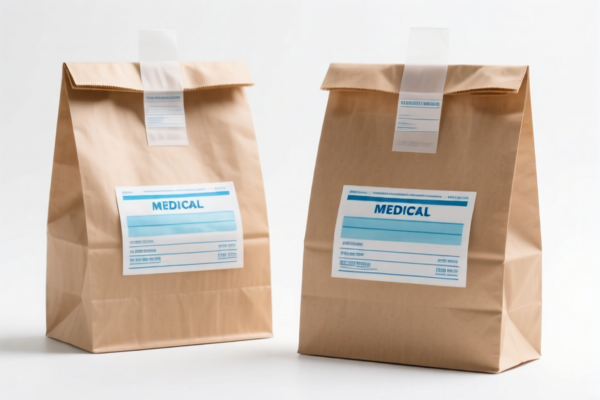
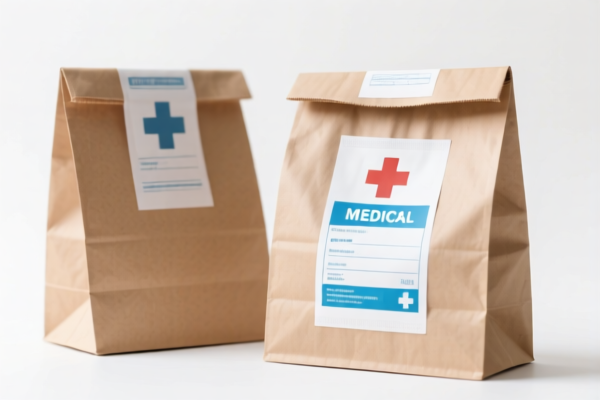
AI Analysis
🏥 Medical Waste Classification Bags & Bins (Clinical Waste Containers)
🌐 HS Code Reference & Customs Clearance Guide | 2026 Latest Tariff Analysis | Professional Clearance Strategy
📌 I. Product Definition & Classification: Do You Know What "Medical Waste Bags/Bins" Really Are?
Medical Waste Classification Bags/Bins are specialized containers designed for the safe collection, containment, and transportation of clinical waste (such as used syringes, gauze, blood-soaked materials, and infectious solids) in healthcare settings.
In international trade, these items are primarily classified based on their material composition:
1. Plastic Containers/Bags (Polyethylene/Polypropylene): - Typically classified under Chapter 39 (Plastics and articles thereof). - Includes rigid bins, sharps containers, or flexible bags made from plastic polymers. - Key characteristic: Non-metallic, moldable, lightweight.
2. Metal/Steel Containers: - Typically classified under Chapter 73 (Articles of iron or steel). - Includes sturdy, reusable bins for heavy-duty clinical waste. - Key characteristic: Durable, metallic, often with foot pedals or lids.
⚠️ Key Distinction Point:
- If the item is primarily plastic (even if labeled "medical"), it falls under HS Code 3923.90.
- If the item is primarily steel/metal, it falls under HS Code 7323.99.
- Note: "Bags" made of plastic are often grouped under transport/packaging containers (3923) if rigid, or flexible packaging if not. For customs classification of "bins/containers," 3923 is the standard for plastic.
📦 II. HS Code Classification Details (2026 Latest Tariff Authority Comparison)
Based on the provided data, here are the precise classifications for Medical Waste Classification Bags/Bins:
| HS Code | Product Description | Material Inference | Application Scenario |
|---|---|---|---|
3923.90.00.16 |
Clinical Waste Classification Bag (Plastic), Shaped as Barrel Container, for Transport or Packaging | Plastic | Rigid plastic bins, sharps containers, transport packaging for clinical waste |
3923.90.00.12 |
Clinical Waste Classification Bag (Plastic), Shaped as Barrel, for Packaging or Containing Items | Plastic | Standard plastic medical waste bins, household-style clinical waste bins |
7323.99.90.40 |
Clinical Waste Classification Bin, Material inferred as Plastic or Metal, Use as Container | Metal (Steel) / Plastic | Metal clinical waste bins, heavy-duty steel containers for hospitals |
7323.99.90.80 |
Clinical Waste Classification Bin, Material inferred as Plastic or Metal, Specific Purpose Container | Metal (Steel) | Specialized metal containers for specific clinical waste types |
🔍 Key Reminder:
- Plastic bins/bags are classified under 3923.90 (Plastics; articles for the conveyance or packing of goods).
- Metal bins are classified under 7323.99 (Other table, kitchen, and other household articles of iron or steel).
- The term "Bag" in trade often refers to the container unit (bin) rather than the flexible plastic liner, especially when classified under 7323 or 3923 for rigid structures. If referring to flexible plastic liners, they may still fall under 3923 if for transport/packing purposes.
💰 III. 2026 Latest Tariff Rate Breakdown (Including Surtaxes, Policy Surcharges)
✅ Applicable Country: United States (US)
✅ Origin: China (CN)
✅ Effective Date: From November 10, 2025 (and subsequent imports)
🎯 1. 3923.90.00.16 & 3923.90.00.12 —— Plastic Clinical Waste Bags/Bins
| Item | Content |
|---|---|
| Base Tariff Rate | 3.0% (ad valorem) |
| USITC Additional Tariff (Section 301) | +25.0% |
| IEEPA Additional Tariff (Section 122/China Specific) | +10.0% |
| Total Tariff Rate | 38.0% |
| Tax Calculation | CIF Value × 38.0% |
| De Minimis Exemption Available? | ❌ No (deny_de_minimis) |
| Legal Basis Path | IEEPA:9903.01.24 → USITC:3923.90.00.12/16 → FOOTNOTE:9903.88.01 |
📌 Explanation:
- 3.0%: Standard Most Favored Nation (MFN) duty for plastic articles.
- 25.0%: Section 301 tariff on Chinese-origin plastics.
- 10.0%: Additional IEEPA tariff specific to Chinese goods (Section 122/301 variant).
- Total 38%: This is a high tariff rate. Plastic medical waste containers are heavily taxed to protect domestic manufacturing.
🎯 2. 7323.99.90.40 & 7323.99.90.80 —— Metal (Steel) Clinical Waste Bins
| Item | Content |
|---|---|
| Base Tariff Rate | 3.4% (ad valorem) |
| USITC Additional Tariff (Section 301) | +25.0% |
| IEEPA Additional Tariff (Section 122 - Steel/Aluminum/Copper) | +50.0% |
| Total Tariff Rate | 88.4% |
| Tax Calculation | CIF Value × 88.4% |
| De Minimis Exemption Available? | ❌ No (deny_de_minimis) |
| Legal Basis Path | IEEPA:9903.01.24 → USITC:7323.99.90.40/80 → FOOTNOTE:9903.88.01 (Steel/Aluminum/Copper specific) |
📌 Critical Warning:
- 3.4%: Standard MFN duty for steel articles.
- 25.0%: Section 301 tariff on Chinese steel articles.
- 50.0%: Section 232/301 variant specifically targeting Steel, Aluminum, and Copper products from China. This is the highest tariff bracket for this product category.
- Total 88.4%: This is an extremely prohibitive tariff. Importing steel medical waste bins from China is financially unviable unless exempted.
🛠️ IV. Customs Clearance Practical Advice (Battle-Tested Pitfall Avoidance Guide)
✅ 1. Documentation Checklist (None Can Be Omitted)
| Document | Required | Notes |
|---|---|---|
| ✅ Product Specifications | ✔️ | Must specify material (Plastic vs. Steel), capacity, lid type, color (e.g., Yellow for infectious waste). |
| ✅ Material Certificate | ✔️ | Proof of material composition (e.g., HDPE, PP for plastic; Stainless Steel/Carbon Steel for metal). |
| ✅ Product Photos | ✔️ | Clear images of the container, label, and any medical symbols (Biohazard). |
| ✅ Commercial Invoice | ✔️ | Must clearly state "Medical Waste Bin" or "Clinical Waste Container," not just "Plastic Container." |
| ✅ Packing List | ✔️ | Detail quantity per carton, gross/net weight. |
| ✅ Certificate of Origin (CO) | ✔️ | If sourcing from non-China countries (e.g., Vietnam, USA), apply for lower tariffs. |
✅ 2. Declaration Techniques (Key Mantra)
🔥 “Material Determines Code, Metal is Expensive, Plastic is Moderate, Name Must Be Precise!”
| Scenario | Correct Declaration | Incorrect Practice |
|---|---|---|
| Plastic Bin/Bag | 3923.90.00.12 or 16 |
Misdeclare as steel → 88.4% tax (Massive penalty!) |
| Steel Bin | 7323.99.90.40 or 80 |
Misdeclare as plastic → 38% tax (Undervaluation risk, but better than 88.4%) |
| Flexible Plastic Bag (Liner) | Still 3923.90 (if for transport/packing) |
Misdeclare as "Textile Bag" → Different tariff, high risk |
| Combined Package (Bin + Bag) | Declare as Primary Item (e.g., Bin) | Split declaration → Complex, high audit risk |
✅ 3. Special Cases Handling
| Scenario | Handling Advice |
|---|---|
| OEM Custom Colors (Yellow/Red/Black) | Provide color specification. Color does not change HS Code but affects product description. |
| With Foot Pedal (Metal Bin) | Clearly state "Foot-Pedal Operated." This confirms it's a "Household/Household-like Article" under 7323. |
| Sharps Containers (Rigid Plastic) | Classify under 3923.90.00.16 (Plastic container for transport/packing). |
| Import from Non-China Origin | Crucial! If sourced from USA, Vietnam, Mexico, tariffs drop significantly. - Plastic: ~0-3% base tariff. - Steel: ~0-5% base tariff (check FTAs). |
🌍 V. Global Market Customs Clearance Comparison (2026 Latest)
| Country/Region | Recommended HS Code | Tariff (China Origin) | Certification Requirements | Notes |
|---|---|---|---|---|
| 🇺🇸 USA | 3923.90 (Plastic)7323.99 (Steel) |
38% (Plastic) 88.4% (Steel) |
FDA (if contact with drugs), EPA, Prop 65 | Steel is prohibitive. Prefer plastic or non-China origin. |
| 🇨🇳 China | 3923.907323.99 |
5-6% (Plastic) 5-6% (Steel) |
CCC (if applicable), GB Standards | Low tariffs. Ideal for sourcing. |
| 🇪🇺 EU | 3923.907323.99 |
3-4% (Plastic) 0-4% (Steel) |
CE, REACH, Biodegradability Cert. | No Section 301 tariffs. Favorable for steel bins. |
| 🇬🇧 UK | 3923.907323.99 |
3-4% | UKCA, Biodegradability | Post-Brexit rules apply. |
| 🇦🇺 Australia | 3923.907323.99 |
5% | RCM, AS/NZS Standards | Moderate tariffs. |
📌 Conclusion:
- USA: Plastic bins are manageable (38%), but Steel bins are nearly impossible (88.4%) from China.
- EU/UK: Steel bins are highly competitive (low tariffs, no US-style surtaxes).
- Strategy: For US market, source plastic bins from China or non-China, or source steel bins from Asia (non-China) or locally.
📌 VI. Common Errors & Pitfall Guide (Blood and Tears Lessons)
❌ Error 1: Declaring Steel Bins as "Plastic Containers" to avoid 88.4% tariff
👉 Consequence: Customs inspection reveals steel content → Seizure, Heavy Fines, and Back-tariff of 88.4%!
❌ Error 2: Declaring Plastic Bins as "Steel Bins"
👉 Consequence: Tariff drops to 38% (from 88.4%), but customs may still audit for misdeclaration → Delay and Potential Penalty. Note: 38% is better than 88.4%, but honesty is key.
❌ Error 3: Using "Medical Bag" for a Rigid Bin
👉 Consequence: Ambiguous description → Customs detention for classification review.
❌ Error 4: Ignoring Section 122/232 Steel Tariffs
👉 Consequence: Budget failure. Steel bins cost double after tax.
✅ Correct Declaration Example:
"Rigid Plastic Clinical Waste Bin, 24 Gallon, Yellow, Foot-Pedal (if metal), Model XYZ, For Hospital Use, Made of HDPE"
Or
"Steel Clinical Waste Bin, 50 Liter, Stainless Steel, For Infectious Waste, Model ABC"
🎯 VII. Conclusion: Professional Declaration, Save Time, Reduce Costs!
🎯 Remember the Mantra:
🔹 "Plastic is 38%, Steel is 88%, Name It Right!"
🔹 "USA Market: Avoid Chinese Steel, Embrace Plastic or Non-China!"
🔹 "EU Market: Steel is Your Friend, Low Tariff, High Quality!"
📌 Pro Tip:
If your Plastic Bags/Bins are sourced from Vietnam, Thailand, or Mexico, you may apply for IEEPA Exemption or lower base tariffs, reducing the total cost to 0-5%.
For Steel Bins, consider sourcing from EU or ASEAN countries to avoid the 88.4% US tariff.
📣 Immediate Action:
📞 Contact a Professional Customs Broker + Provide Product Material Photos + Apply for HS Code Advance Ruling for US imports.
🚀 Let your Medical Waste Containers Pass Customs Smoothly, Efficiently, and Profitably!
✨ Professional Clearance Starts with Precise Classification!
💼 Every Cent of Cost Deserves to Be Precisely Calculated!
Customer Reviews
About HS Code Classification
The Harmonized System (HS) is an internationally standardized nomenclature developed by the World Customs Organization (WCO) to classify traded products. Over 200 countries use the HS system as the basis for customs tariffs, trade statistics, and import/export regulations.
Each HS code follows a hierarchical structure:
- Chapter (2 digits) — Broad category of goods (e.g., Chapter 84: Machinery and Mechanical Appliances)
- Heading (4 digits) — More specific grouping within the chapter
- Subheading (6 digits) — Internationally standardized breakdown, used by all WCO member countries
- National subdivisions (8-10 digits) — Country-specific extensions for further classification, such as US HTSUS 10-digit codes
Correct HS code classification is essential for smooth customs clearance, accurate duty payment, and compliance with trade regulations. Misclassification can lead to customs delays, overpayment of duties, or penalties.
When importing from CN to US, the applicable tariff rates may include:
- Most-Favored-Nation (MFN) rate — The standard duty rate applied to WTO members
- General rate — Applied to countries without trade agreements
- Trade remedy duties — Additional tariffs such as Section 301 (anti-dumping), Section 232 (national security), or countervailing duties
The information provided on this page is for reference purposes only. For official classification, please consult with your local customs authority or a licensed customs broker.