Medical Waste Dispersant
CN → US| HS Code | Tariff Rate | Origin | Destination | Doc |
|---|---|---|---|---|
| 3824992900 | 41.5% | CN | US | Official Doc |
| 3824993990 | 35.0% | CN | US | Official Doc |
| 3006920000 | 10.0% | CN | US | Official Doc |
| 3006910000 | 14.2% | CN | US | Official Doc |
| 3808945095 | 40.0% | CN | US | Official Doc |
| 3808594000 | 40.0% | CN | US | Official Doc |
Product Images
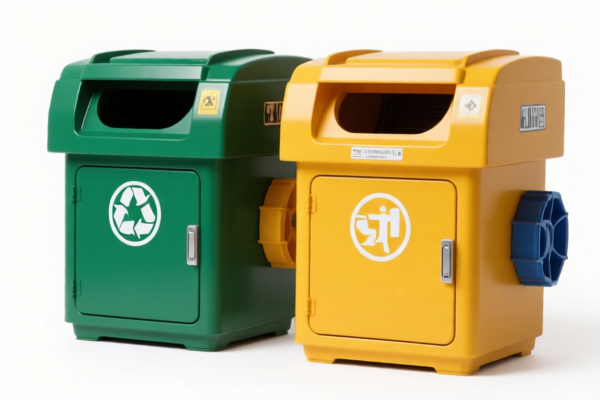
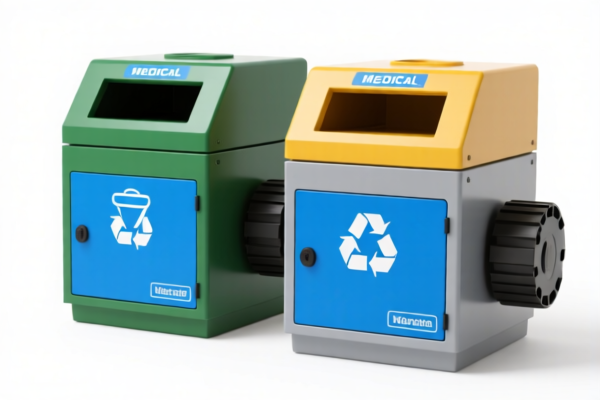
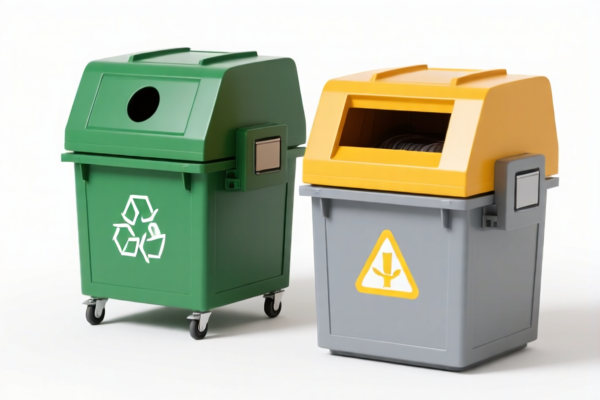

AI Analysis
💉 Medical Waste Dispersant (Disinfectants & Chemical Preparations)
🌐 HS Code Reference & Customs Clearance Guide | 2026 Latest Tariff Analysis | Professional Clearance Strategy
📌 I. Product Definition & Classification: Do You Truly Understand “Medical Waste Dispersant”?
Medical Waste Dispersant is a broad term in international trade. It rarely refers to a single HS Code but rather a spectrum of chemical preparations depending on its primary function, composition, and packaging. In the context of US Customs (CBP) data provided, these products generally fall into two main categories:
- Disinfectants/Sanitizers: If the primary purpose is to kill pathogens (bacteria, viruses) in medical waste or environments.
- Prepared Industrial/Chemical Binders or Preparations: If it is a chemical mixture used to treat, solidify, or process waste materials, or contains hazardous components like Chlorinated Paraffins.
⚠️ Key Distinction Point:
- Is it put up for retail sale (e.g., spray bottles, wipes) or is it an industrial bulk preparation?
- Does it contain Short-Chain Chlorinated Paraffins (SCCPs)?
- Is it a pharmaceutical waste itself, or a chemical agent used to treat waste?
📦 II. HS Code Classification Details (2026 Latest Tariff Authority Comparison)
| HS Code | Product Description | Applicable Scenario | Hazardous Content? | Tax Rate (Total) |
|---|---|---|---|---|
3808.59.40.00 |
Disinfectants (Good specified in subheading note 1 to Chapter 38) | Industrial or large-scale disinfectants for medical waste treatment; non-retail forms | ❌ No (unless specified) | 0.0% |
3808.94.50.95 |
Disinfectants (Other Other) | Disinfectants put up in forms/packings for retail sale; general disinfectants not specified elsewhere | ❌ No | 0.0% |
3824.89.00.00 |
Prepared Binders/Chemicals containing Short-Chain Chlorinated Paraffins (SCCPs) | Chemical preparations for mold binding or industrial use containing SCCPs (often found in certain plasticizers or flame retardants in waste processing equipment/materials) | ✅ Yes (SCCPs) | 31.5% |
3824.99.93.97 |
Other Prepared Binders/Chemical Products (Not elsewhere specified) | General chemical preparations, binders for foundry molds, or mixed chemical products without specific hazardous flags | ❌ No (General) | 30.0% |
3006.92.00.00 |
Waste Pharmaceuticals | If the product itself is considered "waste" from pharmaceutical production | ✅ N/A (Waste) | 0.0% |
3006.91.00.00 |
Appliances Identifiable for Ostomy Use | Exclusion: If the "dispersant" is actually a medical device accessory (rare for this term) | ❌ No | 0.0% |
🔍 Important Note:
- Most "Medical Waste Dispersants" (liquid disinfectants) will likely fall under Chapter 38 (3808).
- Zero Tariff Advantage: Under current US trade policies (as per the provided data), many disinfectants (3808.59.40.00and3808.94.50.95) have 0% total tax, which is a significant cost advantage.
- High Tariff Risk: If the chemical formulation includes Short-Chain Chlorinated Paraffins (SCCPs) or is classified as a general industrial binder, it jumps to 30.0%–31.5%. This is critical for chemical formulations involving flame retardants or specific plasticizers.
💰 III. 2026 Latest Tariff Rate Details (Including Additional Taxes & Policy Add-ons)
✅ Applicable Country: United States (US)
✅ Origin: China (CN)
✅ Effective Time: Current data reflects latest available duties including Section 301 and IEEPA surcharges where applicable.
🎯 1. 3808.59.40.00 & 3808.94.50.95 —— Disinfectants (The "Zero-Tax" Zone)
| Item | Content |
|---|---|
| Base Duty Rate | 0.0% |
| Section 301 / IEEPA Surcharge | 0.0% (No additional tariffs listed for these specific subheadings in the provided data) |
| Total Tax Rate | 0.0% |
| Tax Calculation | CIF Value × 0% = $0 |
| De Minimis Eligibility | ✅ Yes (Generally eligible for Section 321 de minimis if under $800, but check specific FDA/USDA restrictions for medical/chemical goods) |
| Legal Basis | Chapter 38, Heading 38.08 (Insecticides, disinfectants, etc.) |
📌 Explanation:
- These codes represent pure disinfectants. If your product is primarily an alcohol-based, quaternary ammonium, or bleach-based disinfectant for medical waste, this is the most favorable classification.
- Crucial: Ensure the product is not classified as a "pesticide" if it doesn't claim to kill pests, nor as a "pharmaceutical" if it's not for internal human/animal use.
🎯 2. 3824.99.93.97 —— Other Prepared Binders/Chemical Products
| Item | Content |
|---|---|
| Base Duty Rate | 5.0% |
| Section 301 / IEEPA Surcharge | 25.0% |
| Total Tax Rate | 30.0% |
| Tax Calculation | CIF Value × 30% |
| De Minimis Eligibility | ❌ No (High-duty items often excluded from de minimis benefits) |
| Legal Basis | Chapter 38, Heading 38.24 (Other chemical products) |
📌 Explanation:
- This code is a "catch-all" for chemical preparations not specified elsewhere. If your "dispersant" is a binding agent for solidifying medical waste, or a complex chemical mixture that doesn't fit the "disinfectant" definition, it may fall here.
- Warning: The 25% additional tariff makes this category expensive.
🎯 3. 3824.89.00.00 —— Containing Short-Chain Chlorinated Paraffins (SCCPs)
| Item | Content |
|---|---|
| Base Duty Rate | 6.5% |
| Section 301 / IEEPA Surcharge | 25.0% |
| Total Tax Rate | 31.5% |
| Tax Calculation | CIF Value × 31.5% |
| De Minimis Eligibility | ❌ No |
| Legal Basis | Chapter 38, Heading 38.24 (Specifically for SCCP-containing goods) |
📌 Explanation:
- SCCPs are regulated substances. If your chemical dispersant contains SCCPs (often found in certain lubricants, plasticizers, or recycling fluids), it is strictly regulated and taxed at the highest rate in this list.
- Compliance Alert: Ensure your MSDS/SDS explicitly lists ingredients. If SCCPs are present, declare them. Hidden SCCPs can lead to seizures and penalties.
🎯 4. 3006.92.00.00 & 3006.91.00.00 —— Waste Pharmaceuticals / Ostomy Appliances
| Item | Content |
|---|---|
| Base Duty Rate | 0.0% |
| Total Tax Rate | 0.0% |
| Applicability | Only if the item is Waste Pharmaceuticals (e.g., expired drugs being disposed of) or Ostomy appliances. |
| Note | These codes are NOT for chemical dispersants. They are for the waste/disposal of medical products or devices themselves. |
🛠️ IV. Customs Clearance Practical Advice (Battle-Tested Pitfall Guide)
✅ 1. Required Documentation Checklist (Non-Negotiable)
| Document | Required? | Purpose |
|---|---|---|
| ✅ SDS/MSDS (Safety Data Sheet) | ✔️ Critical | Must prove chemical composition. Essential for determining if SCCPs are present and classifying as Disinfectant vs. Other Chemical. |
| ✅ Certificate of Analysis (CoA) | ✔️ | Proves purity and active ingredients (e.g., % Alcohol, % Quaternary Ammonium). |
| ✅ Commercial Invoice | ✔️ | Clearly state "Disinfectant for Medical Waste Treatment" or "Chemical Binder". Do not use vague terms like "Special Liquid". |
| ✅ EPA Registration (if applicable) | ✔️ | If marketed as a disinfectant in the US, EPA registration number is often required by CBP to confirm legitimate use. |
| ✅ HS Code Pre-Ruling (Optional but Recommended) | ✔️ | Especially if unsure between 3808 and 3824. |
✅ 2. Declaration Tips (Golden Rules)
🔥 “Disinfectant is 0%, Binder is 30%, SCCP is 31.5%. Be precise!”
| Scenario | Correct Declaration | Wrong Declaration | Consequence |
|---|---|---|---|
| Alcohol-Based Disinfectant | 3808.94.50.95 - "Alcohol Disinfectant" |
"Chemical Cleaning Agent" | Risk of misclassification → 30% tax |
| Industrial Waste Binder | 3824.99.93.97 - "Prepared Chemical Binder" |
"Disinfectant" | Fraud/Non-compliance → Seizure |
| Contains SCCPs | 3824.89.00.00 - "Chemical Prep with SCCPs" |
"Non-Hazardous Chemical" | HIGH RISK: Fines, penalties, detention |
| Medical Waste (Expired Drugs) | 3006.92.00.00 - "Waste Pharmaceuticals" |
"Chemical Dispersant" | Wrong HS Code → Rejection |
✅ 3. Special Circumstances
| Situation | Handling Advice |
|---|---|
| OEM/White Label Products | Provide brand authorization if applicable, but focus on chemical composition for HS classification. |
| Mixed Packages (Dispersant + Tools) | Declare the principal function. If the dispersant is the main value/use, the whole package may be classified under 3808. Do not split unless distinct. |
| FDA/USDA Restrictions | Even with 0% tax, chemical disinfectants may require FDA review. Ensure compliance with USFDA regulations for disinfectant claims. |
| Hazardous Material (Hazmat) | Check if the product is classified as Hazmat for transport (UN Number). CBP may require Hazmat documentation even if tax is 0%. |
🌍 V. Global Market Clearance Comparison (2026 Latest)
| Country/Region | Recommended HS Code | Duty Rate | Certification Requirements | Notes |
|---|---|---|---|---|
| 🇺🇸 USA | 3808.59.40.00 or 3808.94.50.95 |
0.0% | EPA Registration, SDS | Best option: 0% duty for disinfectants. |
| 🇺🇸 USA (if SCCP) | 3824.89.00.00 |
31.5% | Strict EPA/USDA | Avoid SCCPs if possible. |
| 🇨🇳 China | 3808.94 |
5-10% | N/A | Lower base duty, but US tariffs dominate import cost. |
| 🇪🇺 EU | 3808.94 |
6.5% | REACH Compliance | High regulatory burden for chemicals. |
| 🇬🇧 UK | 3808.94 |
6.5% | UK REACH | Post-Brexit regulations apply. |
📌 Conclusion:
- USA offers the most favorable tariff (0%) for true disinfectants under3808.
- Crucial: Avoid misclassifying industrial binders or SCCP-containing chemicals as disinfectants to claim 0% duty. This is a major red flag for CBP audits.
- Compliance Cost: While duty may be 0%, EPA/FDA compliance and Hazmat shipping costs are significant.
📌 VI. Common Errors & Pitfall Guide (Blood & Tears Lessons)
❌ Error 1: Calling a "Chemical Binder" a "Disinfectant" to get 0% tax.
👉 Consequence: CBP detects mismatch in function/SDS → 30% duty + penalties.
❌ Error 2: Hiding SCCPs in the ingredient list.
👉 Consequence: Seizure, fines, and potential legal action for violating environmental laws.
❌ Error 3: Using vague descriptions like "Medical Liquid".
👉 Consequence: CBP assigns a default high-duty code (e.g., 3824.99) → 30% tax.
❌ Error 4: Ignoring Hazmat classification.
👉 Consequence: Shipment rejected at port, return freight costs.
✅ Correct Approach:
“Alcohol-Based Disinfectant, 70% Ethanol, EPA Reg. No. XXXX-XXXX, SDS Provided, Non-Retail Bulk Pack”
vs.
“Medical Waste Chemical Binder, Contains SCCP, Industrial Use”
🎯 VII. Conclusion: Professional Declaration, Save Money, Ensure Compliance
🎯 Remember the Mantra:
🔹 “Disinfectant is 0%, Binder is 30%, SCCP is 31.5%. Be precise!”
🔹 “HS Code determines destiny, duty differs by 30 points, one wrong declaration, tax triples!”
📌 Pro Tip:
- If your product is 100% Alcohol-based or standard Quaternary Ammonium, fight for
3808.94.50.95(0% tax).- If it is a complex industrial formulation, consult a customs broker to see if
3824.99.93.97(30% tax) is unavoidable.- Never hide SCCPs. The penalty far outweighs the duty savings.
📣 Immediate Action:
📞 Contact a licensed customs broker + Provide SDS/MSDS + Apply for HS Code Pre-Ruling (if high value)
🚀 Ensure your product clears customs smoothly, efficiently, and at the lowest possible cost!
✨ Professional Clearance, Starts with Accurate Classification!
💼 Every cent of your cost should be precisely calculated!
Customer Reviews
About HS Code Classification
The Harmonized System (HS) is an internationally standardized nomenclature developed by the World Customs Organization (WCO) to classify traded products. Over 200 countries use the HS system as the basis for customs tariffs, trade statistics, and import/export regulations.
Each HS code follows a hierarchical structure:
- Chapter (2 digits) — Broad category of goods (e.g., Chapter 84: Machinery and Mechanical Appliances)
- Heading (4 digits) — More specific grouping within the chapter
- Subheading (6 digits) — Internationally standardized breakdown, used by all WCO member countries
- National subdivisions (8-10 digits) — Country-specific extensions for further classification, such as US HTSUS 10-digit codes
Correct HS code classification is essential for smooth customs clearance, accurate duty payment, and compliance with trade regulations. Misclassification can lead to customs delays, overpayment of duties, or penalties.
When importing from CN to US, the applicable tariff rates may include:
- Most-Favored-Nation (MFN) rate — The standard duty rate applied to WTO members
- General rate — Applied to countries without trade agreements
- Trade remedy duties — Additional tariffs such as Section 301 (anti-dumping), Section 232 (national security), or countervailing duties
The information provided on this page is for reference purposes only. For official classification, please consult with your local customs authority or a licensed customs broker.