Medical Waste Safety Packaging Bag
CN → US| HS Code | Tariff Rate | Origin | Destination | Doc |
|---|---|---|---|---|
| 3923210030 | 38.0% | CN | US | Official Doc |
| 3923210095 | 38.0% | CN | US | Official Doc |
Product Images
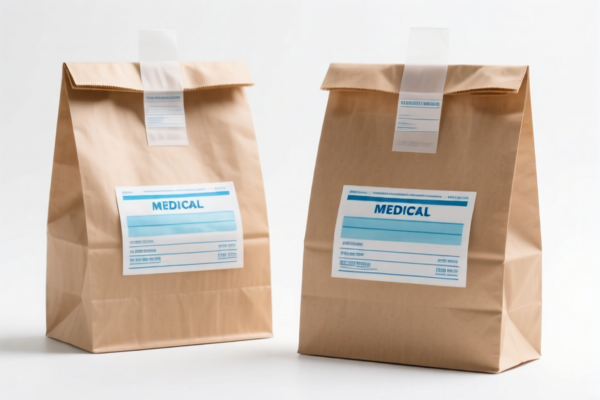
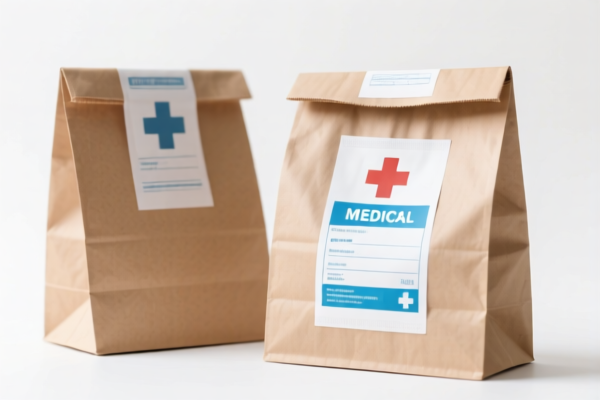
AI Analysis
🏥 Medical Waste Safety Packaging Bags
🌐 HS Code Reference & Customs Clearance Guide | 2026 Latest Tariff Analysis | Professional Level Clearance Strategy
📌 I. Product Definition & Classification: Do You Really Understand "Medical Waste Safety Bags"?
Medical waste safety packaging bags are critical components in the healthcare and biohazard management industries. They are specifically designed to contain, transport, and prepare infectious, pathological, or hazardous medical waste for incineration or specialized disposal. In international trade, their classification hinges on material composition and specific functional usage.
Primary Classification Categories:
1. Plastic Packaging Containers (General): Bags classified primarily by their form (bags/pouches) and plastic material, regardless of specific medical use.
2. Plastic Articles for Specific Industries: Bags classified as containers for medical waste, leveraging the specific "medical" application to determine the HS Code.
⚠️ Key Distinction Point:
- If classified as general plastic bags (e.g., for general packaging): Falls under Chapter 39.
- If classified as medical waste containers (specific utility): Falls under Chapter 39 but with a different subheading reflecting the specific container nature.
- Note: All provided HS Codes in the data source fall under Chapter 39 (Plastics and articles thereof), differing by subheading based on form and specific declared use.
📦 II. HS Code Classification Details (Latest 2026 Tariff Authority Comparison)
| HS Code | Product Description | Applicable Scenario | Material/Form |
|---|---|---|---|
3923.29.00.00 |
Plastic sacks and bags (other than those of heading 3921 or 3923.21 or 3923.29) | General plastic bags, inferred plastic material, form: Bag | ✅ Plastic, Form: Bag |
3923.21.00.95 |
Plastic sacks and bags | Polyethylene or similar plastic bags, form: Pouch/Sack | ✅ Polyethylene, Form: Pouch |
3926.90.99.50 |
Other articles of plastics and articles of other materials of heading 3901 to 3914 | Specific medical waste container, inferred plastic material | ✅ Plastic, Form: Container |
🔍 Important Reminder:
- All three codes relate to Plastics.
- The difference lies in the specific subheading chosen by customs based on whether the bag is viewed as a "general plastic sack" (3923) or a "medical waste container" (3926).
-3923.29.00.00and3923.21.00.95are under "Sacks and Bags" (Packaging).
-3926.90.99.50is under "Other Articles of Plastics" (Containers).
💰 III. 2026 Latest Tariff Rate Details (Including Surtaxes, Policy Add-ons)
✅ Applicable Country: United States (US)
✅ Origin: China (CN)
✅ Effective Date: Includes subsequent imports under current trade measures
🎯 1. 3923.29.00.00 —— Plastic Sacks and Bags (General Category)
| Item | Content |
|---|---|
| Base Tariff Rate | 3.0% (ad valorem) |
| Surtax (Section 301) | +25.0% |
| Section 122 Tariff | +10.0% |
| Total Tax Rate | 38.0% |
| Tax Calculation | CIF Value × 38.0% |
| De Minimis Eligibility | ❌ Not Eligible (High tariff burden typically excludes small package exemptions for bulk/commercial shipments) |
| Legal Basis Path | Section 301: 9903.88.01 → Section 122: 9903.01.25 → USITC: 3923.29.00.00 |
📌 Explanation:
- Base 3.0%: Standard MFN duty for plastic sacks.
- 25% Surtax: Applies to goods from China under Section 301 (List 3/4A).
- 10% Section 122: Additional tariff under IEEPA Section 122 for certain Chinese imports.
- Total 38.0%: Significant cost impact on bulk packaging materials.
🎯 2. 3923.21.00.95 —— Plastic Sacks and Bags (Polyethylene/Pouches)
| Item | Content |
|---|---|
| Base Tariff Rate | 3.0% (ad valorem) |
| Surtax (Section 301) | +25.0% |
| Section 122 Tariff | +10.0% |
| Total Tax Rate | 38.0% |
| Tax Calculation | CIF Value × 38.0% |
| De Minimis Eligibility | ❌ Not Eligible |
| Legal Basis Path | Section 301: 9903.88.01 → Section 122: 9903.01.25 → USITC: 3923.21.00.95 |
📌 Note:
- Despite being specified as "Polyethylene" or "Pouch," this category falls under the same surtax structure as general plastic bags.
- Whether labeled as "Bag" or "Pouch," if it is a plastic packaging item, it faces the 38.0% total duty.
🎯 3. 3926.90.99.50 —— Other Plastic Articles (Medical Waste Container)
| Item | Content |
|---|---|
| Base Tariff Rate | 5.3% (ad valorem) |
| Surtax (Section 301) | +7.5% |
| Section 122 Tariff | +10.0% |
| Total Tax Rate | 22.8% |
| Tax Calculation | CIF Value × 22.8% |
| De Minimis Eligibility | ❌ Not Eligible |
| Legal Basis Path | Section 301: 9903.90.01 → Section 122: 9903.01.25 → USITC: 3926.90.99.50 |
📌 Explanation:
- Base 5.3%: Slightly higher base rate for "Other plastic articles."
- 7.5% Surtax: Lower Section 301 surtax rate applies to this specific subheading compared to general plastic sacks.
- 10% Section 122: Same additional tariff applies.
- Total 22.8%: Significantly lower than the 38.0% rate.
- Strategic Advantage: If customs accepts the classification as a "Medical Waste Container" rather than a generic "Plastic Bag," you save 15.2% in duties.
🛠️ IV. Customs Clearance Practical Advice (Real-World Pitfall Avoidance Guide)
✅ 1. Preparation Checklist (Essential Documents)
| Document | Required | Description |
|---|---|---|
| ✅ Product Specifications | ✔️ | Material composition (e.g., PE, LDPE), thickness, color, capacity. |
| ✅ Usage Description | ✔️ | Explicitly state: "For disposal of infectious medical waste via incineration." |
| ✅ Material Safety Data Sheet (MSDS) | ✔️ | Proves non-hazardous material itself, suitable for waste containment. |
| ✅ Commercial Invoice | ✔️ | Clearly describe as "Medical Waste Incineration Bags" or "Biohazard Containers." |
| ✅ Packing List | ✔️ | Detail quantity, weight, and packaging type. |
| ✅ Test Reports | ✔️ | Leakage resistance, tensile strength, biodegradability (if applicable). |
✅ 2. Declaration Techniques (Key Mnemonics)
🔥 “Specify Use, Not Just Material; Container Status Lowers Rates!”
| Scenario | Correct Declaration | Error to Avoid |
|---|---|---|
| Generic Plastic Bags | 3923.29.00.00 / 3923.21.00.95 |
Misdeclaring as "Food Packaging" → Risk of rejection |
| Medical Waste Bags | 3926.90.99.50 |
Describing only as "Plastic Bags" → Missed 22.8% opportunity |
| Incineration Specific | Highlight "Incineration Ready" | Claiming "Recyclable Plastic" → Contradicts waste use |
| Bulk vs. Retail | Declare based on bulk form | Splitting bulk bags into retail units unnecessarily |
✅ 3. Special Case Handling
| Situation | Handling Advice |
|---|---|
| Yellow/Red Bags | Clearly indicate color coding (e.g., "Biohazard Yellow") to support medical use classification. |
| Autoclavable Bags | If designed for steam sterilization, provide technical data; may still fall under 3926 for specialized use. |
| Biodegradable Bags | If marketed as eco-friendly, ensure documentation supports biodegradability; does not change HS code but adds value. |
| Custom Printed Bags | If printed with biohazard symbols, it strongly supports 3926.90.99.50 classification. |
🌍 V. Global Market Clearance Comparison (2026 Latest)
| Country/Region | Recommended HS Code | Tariff Rate | Certification | Remarks |
|---|---|---|---|---|
| 🇺🇸 USA | 3926.90.99.50 |
22.8% (China) | FDA (if contact), ISO 13485 | 38.0% if misclassified as general bag |
| 🇨🇳 China | 3923.29.00.00 |
3.0% - 5.3% | Medical Device Reg. | Lower base duties |
| 🇪🇺 EU | 3923.29.00.00 |
4.0% - 6.5% | CE, REACH | No Section 301/122 surtaxes |
| 🇦🇺 Australia | 3926.90.99.50 |
5.0% | TGA Compliance | Check for medical device registration |
| 🇯🇵 Japan | 3923.29.00.00 |
6.0% - 8.0% | JIS Standards | Specific waste handling laws apply |
📌 Conclusion:
- USA imposes high additional tariffs (Section 301/122), making correct classification critical.
- EU/Asia do not apply the same punitive surtaxes, so the total duty burden is much lower.
- USA Importers: Must carefully argue for3926.90.99.50to reduce costs by 15.2%.
📌 VI. Common Mistakes & Pitfall Guide (Blood-Ledger Lessons)
❌ Mistake 1: Declaring all plastic bags as 3923.29.00.00 without specifying medical use.
👉 Consequence: Pay 38.0% instead of 22.8% → Loss of 15.2% profit margin!
❌ Mistake 2: Using vague terms like "Plastic Sack" on the invoice.
👉 Consequence: Customs may assign the highest general rate or delay for additional info → Demurrage fees!
❌ Mistake 3: Ignoring the Section 122 Tariff.
👉 Consequence: Unexpected 10% charge at border → Cash flow disruption!
❌ Mistake 4: Claiming "Medical Device" status incorrectly.
👉 Consequence: FDA regulation may apply → Compliance costs increase unnecessarily if not needed.
✅ Correct Approach:
"Medical Waste Incineration Bags, Polyethylene, Yellow, Biohazard Symbol, Size 60L, for Infectious Waste Disposal."
🎯 VII. Conclusion: Professional Declaration, Time & Cost Savings!
🎯 Remember the Mnemonic:
🔹 “Container Status Saves 15%; Base Tax + Surtax + Section 122 Add Up!”
🔹 “HS Code Determines Duty; 38% vs. 22.8% is a Huge Difference!”
📌 Tips:
- If your bags are manufactured in Vietnam, Thailand, or Malaysia, they may qualify for lower or zero Section 301 tariffs, drastically reducing costs.
- Consider applying for a Customs Ruling or Advance Classification before large shipments to ensure 3926.90.99.50 is accepted.
- Always highlight "Medical Waste" and "Incineration" in descriptions to support the specialized container classification.
📣 Immediate Action:
📞 Consult with a licensed customs broker + Provide product photos + Request HS Code Pre-Ruling
🚀 Ensure your medical waste bags clear customs smoothly, minimize duties, and maximize your export profits!
✨ Professional Clearance Starts with Accurate Classification!
💼 Every Dollar Saved on Tariffs is Pure Profit!
Customer Reviews
About HS Code Classification
The Harmonized System (HS) is an internationally standardized nomenclature developed by the World Customs Organization (WCO) to classify traded products. Over 200 countries use the HS system as the basis for customs tariffs, trade statistics, and import/export regulations.
Each HS code follows a hierarchical structure:
- Chapter (2 digits) — Broad category of goods (e.g., Chapter 84: Machinery and Mechanical Appliances)
- Heading (4 digits) — More specific grouping within the chapter
- Subheading (6 digits) — Internationally standardized breakdown, used by all WCO member countries
- National subdivisions (8-10 digits) — Country-specific extensions for further classification, such as US HTSUS 10-digit codes
Correct HS code classification is essential for smooth customs clearance, accurate duty payment, and compliance with trade regulations. Misclassification can lead to customs delays, overpayment of duties, or penalties.
When importing from CN to US, the applicable tariff rates may include:
- Most-Favored-Nation (MFN) rate — The standard duty rate applied to WTO members
- General rate — Applied to countries without trade agreements
- Trade remedy duties — Additional tariffs such as Section 301 (anti-dumping), Section 232 (national security), or countervailing duties
The information provided on this page is for reference purposes only. For official classification, please consult with your local customs authority or a licensed customs broker.