Medical Waste Treatment Antioxidant
CN → US| HS Code | Tariff Rate | Origin | Destination | Doc |
|---|---|---|---|---|
| 3824991100 | 35.0% | CN | US | Official Doc |
| 3824999397 | 40.0% | CN | US | Official Doc |
| 3820000000 | 24.0% | CN | US | Official Doc |
| 3824992900 | 41.5% | CN | US | Official Doc |
| 3824991100 | 35.0% | CN | US | Official Doc |
Product Images
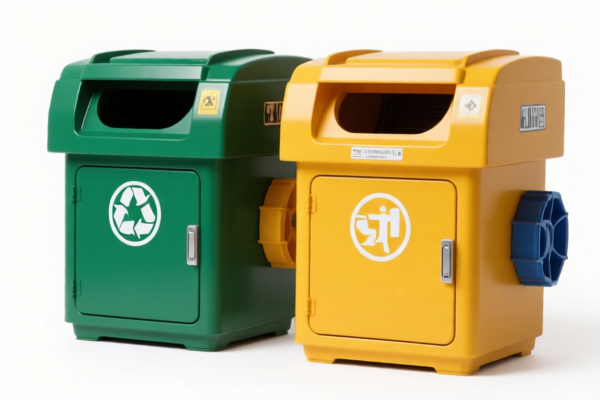
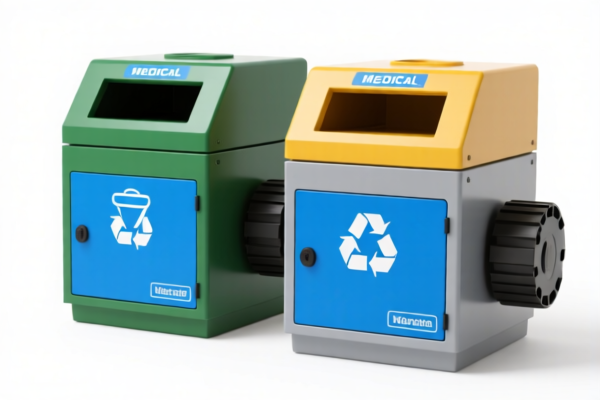
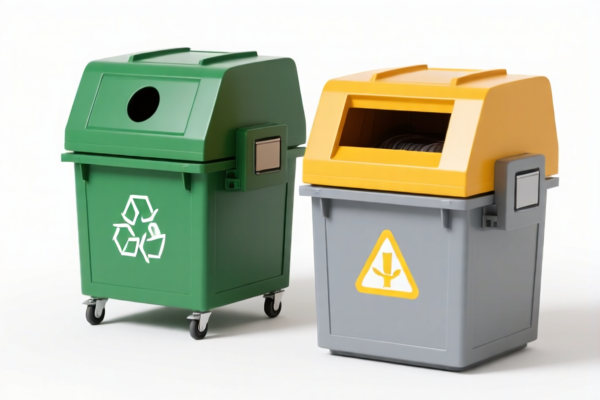

AI Analysis
🧪 Medical Waste Treatment Antioxidant (化学工业制剂)
🌐 HS Code Reference & Customs Clearance Guide | 2026 Latest Tariff Analysis | Professional Entry Strategy
📌 I. Product Definition & Classification: Do You Really Understand "Medical Waste Antioxidants"?
The Medical Waste Treatment Antioxidant is a specialized chemical formulation designed to stabilize medical waste streams during processing, storage, or transportation. It prevents oxidation reactions that could lead to degradation, odor generation, or safety hazards. In international trade, it falls under the broad category of "Chemical Products and Preparations Not Elsewhere Specified".
⚠️ Critical Distinction:
- If the product is primarily a standalone antioxidant for general chemical stabilization → It may fall under 3824.99.11.00 (Unspecified Chemical Preparations).
- If the product is specifically a antifreeze formulation containing antioxidants for waste handling → It may fall under 3824.99.93.97, 3820.00.00.00, or 3824.99.29.00 depending on the exact chemical composition and primary function (antifreeze vs. general chemical preparation).
📦 II. HS Code Classification Details (2026 Latest Tariff Authority Comparison)
Based on the provided data, there are 4 distinct HS Code classifications for products related to "Medical Waste Treatment Antioxidant" (or closely related formulations like antifreezes used in the same context). The choice depends on the primary function and chemical specificity.
| HS Code | Product Description | Applicable Scenario | Tax Rate (Total) | Key Tax Components |
|---|---|---|---|---|
3824.99.11.00 |
Unspecified Chemical Preparations | Antioxidants as general chemical stabilizers; no specific material conflict. | 35.0% | Base: 0%, Section 301: 25%, 122 Clause: 10% |
3824.99.93.97 |
Other Chemical Products & Preparations | Medical waste antifreeze formulations (chemical nature). | 40.0% | Base: 5%, Section 301: 25%, 122 Clause: 10% |
3820.00.00.00 |
Chemical Preparations (Other) | Medical waste antifreeze; identical use/category explanation. | 24.0% | Base: 6.5%, Section 301: 7.5%, 122 Clause: 10% |
3824.99.29.00 |
Other Chemical Products & Preparations | Medical waste antifreeze; material is chemical formulation. | 41.5% | Base: 6.5%, Section 301: 25%, 122 Clause: 10% |
🔍 Key Insight:
-3820.00.00.00offers the lowest total tariff (24%) if the product can be classified as a general chemical preparation with specific base/section 301 rates.
-3824.99.11.00has 0% base duty but high section 301 (25%), totaling 35%.
-3824.99.93.97and3824.99.29.00carry higher base duties (5-6.5%) and 25% Section 301, leading to 40-41.5% total.
- Classification hinges on: Is it a pure antioxidant? Is it an antifreeze? What is the exact chemical definition?
💰 III. 2026 Latest Tariff Rate Details (Including Additional Taxes & Policy Surcharges)
✅ Applicable Country: United States (US)
✅ Country of Origin: China (CN)
✅ Effective Date: From November 10, 2025 onwards (including subsequent imports)
🎯 1. 3824.99.11.00 —— Unspecified Chemical Preparations (Antioxidant Focus)
| Item | Details |
|---|---|
| Base Duty Rate | 0.0% (Ad Valorem) |
| USITC Additional Duty (Section 301) | +25.0% |
| IEEPA Additional Duty (Clause 122) | +10.0% (For China/HK products from Nov 10, 2025) |
| Total Duty Rate | 35.0% |
| Tax Calculation | CIF Value × 35% |
| De Minimis Exemption Eligibility | ❌ Not Eligible (deny_de_minimis) |
| Legal Basis Path | IEEPA:9903.01.25 → IEEPA:9903.01.24 → USITC:3824.99.11.00 → FOOTNOTE:9903.88.01 |
📌 Explanation:
- The 0% base duty reflects its classification as "not elsewhere specified" chemical preparations.
- 25% Section 301 is applied due to its chemical nature and Chinese origin.
- 10% Clause 122 is an additional surcharge effective Nov 10, 2025.
- Total 35% is significant but lower than antifreeze variants with higher base duties.
🎯 2. 3824.99.93.97 —— Other Chemical Products & Preparations (Antifreeze Focus)
| Item | Details |
|---|---|
| Base Duty Rate | 5.0% |
| USITC Additional Duty (Section 301) | +25.0% |
| IEEPA Additional Duty (Clause 122) | +10.0% |
| Total Duty Rate | 40.0% |
| Tax Calculation | CIF Value × 40% |
| De Minimis Exemption Eligibility | ❌ Not Eligible |
| Legal Basis Path | IEEPA:9903.01.25 → IEEPA:9903.01.24 → USITC:3824.99.93.97 → FOOTNOTE:9903.88.01 |
📌 Note:
- The 5% base duty makes this category more expensive than3824.99.11.00.
- Applies to chemical antifreeze formulations used in medical waste treatment.
🎯 3. 3820.00.00.00 —— Chemical Preparations (Most Cost-Effective if Applicable)
| Item | Details |
|---|---|
| Base Duty Rate | 6.5% |
| USITC Additional Duty (Section 301) | +7.5% |
| IEEPA Additional Duty (Clause 122) | +10.0% |
| Total Duty Rate | 24.0% |
| Tax Calculation | CIF Value × 24% |
| De Minimis Exemption Eligibility | ❌ Not Eligible |
| Legal Basis Path | IEEPA:9903.01.25 → IEEPA:9903.01.24 → USITC:3820.00.00.00 → FOOTNOTE:9903.88.01 |
📌 Critical Alert:
- This code has the lowest total tariff (24%).
- However, the Section 301 rate is only 7.5% (vs. 25% for other codes). This suggests a different trade policy treatment or classification nuance.
- Only applicable if the product strictly fits the "Other Chemical Preparations" definition under 3820.00.
🎯 4. 3824.99.29.00 —— Other Chemical Products & Preparations (Antifreeze)
| Item | Details |
|---|---|
| Base Duty Rate | 6.5% |
| USITC Additional Duty (Section 301) | +25.0% |
| IEEPA Additional Duty (Clause 122) | +10.0% |
| Total Duty Rate | 41.5% |
| Tax Calculation | CIF Value × 41.5% |
| De Minimis Exemption Eligibility | ❌ Not Eligible |
| Legal Basis Path | IEEPA:9903.01.25 → IEEPA:9903.01.24 → USITC:3824.99.29.00 → FOOTNOTE:9903.88.01 |
📌 Note:
- Highest total tariff at 41.5%.
- Applies when the product is classified as "Other Chemical Products" with standard 25% Section 301.
🛠️ IV. Customs Clearance Practical Advice (Battle-Tested Pitfall Guide)
✅ 1. Required Documentation Checklist (Mandatory)
| Document | Required | Explanation |
|---|---|---|
| ✅ Product Specification Sheet | ✔️ | Must detail chemical composition, function (antioxidant vs. antifreeze), and concentration. |
| ✅ MSDS (Material Safety Data Sheet) | ✔️ | Critical for chemical products; proves non-hazardous or classified status. |
| ✅ Product Photos (with Label) | ✔️ | Clear view of label, ingredients, and usage instructions. |
| ✅ Certificate of Analysis (COA) | ✔️ | Third-party verification of chemical content and purity. |
| ✅ Commercial Invoice | ✔️ | Must clearly state: "Antioxidant for Medical Waste Treatment, Chemical Preparation" |
| ✅ Packing List | ✔️ | Details net/gross weight; ensures consistency with invoice. |
| ✅ Origin Certificate (CO) | ✔️ | If not from China, may qualify for preferential rates (not applicable here as data is for CN origin). |
✅ 2. Declaration Strategy (Key Mnemonic)
🔥 “Identify Primary Function, Choose Code Wisely, Avoid High 40%+ Rates!”
| Scenario | Correct HS Code | Wrong Code | Consequence |
|---|---|---|---|
| Pure Antioxidant (Chemical Stabilizer) | 3824.99.11.00 |
3820.00.00.00 |
Risk of misclassification audit; 35% vs 24%. |
| Antifreeze with Antioxidant Additives | 3824.99.93.97 or 3824.99.29.00 |
3824.99.11.00 |
If misdeclared as pure antioxidant, risk of penalty. |
| General Chemical Preparation (Lowest Rate) | 3820.00.00.00 |
3824.99.xxxx |
Only if strictly qualifies; otherwise, 24% vs 35-41.5%. |
| Any Chemical Waste Treatment Product | N/A | "Medical Waste" directly | ❌ Never use "Medical Waste" as HS Code; it's a chemical prep. |
✅ 3. Special Case Handling
| Situation | Handling Advice |
|---|---|
| Product Contains Both Antioxidant & Antifreeze | Provide MSDS and COA to justify primary function. If antioxidant is primary, consider 3824.99.11.00. |
| OEM Custom Formulation | Submit client order + chemical formula. Avoid generic terms like "Treatment Agent"; be specific. |
| High-Volume Shipments | Apply for Advance Ruling to lock in HS Code and tariff rate before shipment. |
| Small Parcel (De Minimis) | ❌ Not Eligible. All listed codes are deny_de_minimis. Full duty applies regardless of value. |
🌍 V. Global Main Market Clearance Comparison (2026 Latest)
| Country/Region | Recommended HS Code | Duty Rate | Certification Required | Notes |
|---|---|---|---|---|
| 🇺🇸 USA | 3820.00.00.00 (if eligible) |
24% | SDS, FDA (if contact) | 3824 codes: 35-41.5%. High scrutiny on chemical imports. |
| 🇨🇳 China | 3824.99 or 3820 | 5-6.5% | None specific | No additional Section 301/Clause 122. |
| 🇪🇺 EU | 3824.99 | 0-4% | REACH, SDS | No Section 301. ECHA registration may be needed. |
| 🇬🇧 UK | 3824.99 | 0-4% | UK REACH | Post-Brexit rules apply. |
| 🇯🇵 Japan | 3824.99 | 0-4% | PMDI, SDS | Lower base duties. |
📌 Conclusion:
- USA imposes the highest effective tariff (24-41.5%) due to Section 301 and Clause 122.
- EU/UK/Japan have significantly lower duties (0-6.5%) but require strict chemical compliance (REACH/PMDI).
-3820.00.00.00is the most cost-effective for US imports if the product qualifies.
📌 VI. Common Mistakes & Pitfalls (Lessons Learned)
❌ Mistake 1: Declaring as "Medical Waste Disinfectant"
👉 Consequence: May be classified under different HS codes with different rates; risk of regulatory violations if not registered with EPA/FDA.
❌ Mistake 2: Using "Antioxidant" alone without chemical context
👉 Consequence: Customs may request clarification, leading to delays. Must specify it's a "Chemical Preparation for Medical Waste Treatment."
❌ Mistake 3: Assuming De Minimis ($800) applies
👉 Consequence: All listed codes are deny_de_minimis. Full duty and taxes apply even for small parcels.
❌ Mistake 4: Ignoring Clause 122 (10% surcharge)
👉 Consequence: Underpayment by 10%. Audit and penalty risk.
✅ Correct Approach:
"Chemical Antioxidant Preparation for Medical Waste Treatment, Model XYZ, SDS Provided, For Stabilization Purpose Only."
🎯 VII. Conclusion: Precision Classification Saves Money!
🎯 Remember Mnemonic:
🔹 "Antioxidant = 3824 or 3820, Not 30+ Codes Away!"
🔹 "3820 is Cheapest (24%), 3824 is Risky (35-41.5%), Always Check MSDS!"
🔹 "No De Minimis! Pay Duty on Every Single Unit!"
📌 Pro Tip:
If your product can be classified under 3820.00.00.00, prioritize it for the 24% total rate.
If not, 3824.99.11.00 (35%) is better than 3824.99.93.97 (40%) or 3824.99.29.00 (41.5%).
Always provide MSDS and COA to support your classification.
📣 Immediate Action:
📞 Contact a licensed customs broker.
📄 Submit MSDS, COA, and Product Specs.
🚀 Apply for Advance Ruling to lock in the 24% or 35% rate.
💡 Your bottom line depends on this 10-17% tariff difference!
✨ Professional Clearance Starts with Accurate Classification!
💼 Every Percent Counts in Chemical Imports!
Customer Reviews
About HS Code Classification
The Harmonized System (HS) is an internationally standardized nomenclature developed by the World Customs Organization (WCO) to classify traded products. Over 200 countries use the HS system as the basis for customs tariffs, trade statistics, and import/export regulations.
Each HS code follows a hierarchical structure:
- Chapter (2 digits) — Broad category of goods (e.g., Chapter 84: Machinery and Mechanical Appliances)
- Heading (4 digits) — More specific grouping within the chapter
- Subheading (6 digits) — Internationally standardized breakdown, used by all WCO member countries
- National subdivisions (8-10 digits) — Country-specific extensions for further classification, such as US HTSUS 10-digit codes
Correct HS code classification is essential for smooth customs clearance, accurate duty payment, and compliance with trade regulations. Misclassification can lead to customs delays, overpayment of duties, or penalties.
When importing from CN to US, the applicable tariff rates may include:
- Most-Favored-Nation (MFN) rate — The standard duty rate applied to WTO members
- General rate — Applied to countries without trade agreements
- Trade remedy duties — Additional tariffs such as Section 301 (anti-dumping), Section 232 (national security), or countervailing duties
The information provided on this page is for reference purposes only. For official classification, please consult with your local customs authority or a licensed customs broker.