Medical Wide Format Film
CN → US| HS Code | Tariff Rate | Origin | Destination | Doc |
|---|---|---|---|---|
| 3701100030 | 38.7% | CN | US | Official Doc |
| 3702100060 | 38.7% | CN | US | Official Doc |
| 9022906000 | 35.0% | CN | US | Official Doc |
| 9022909500 | 36.4% | CN | US | Official Doc |
Product Images


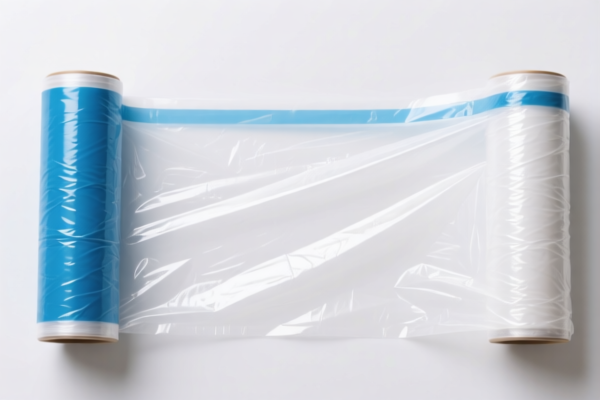

AI Analysis
🎞️ Medical Wide Format Film (Diagnostic X-Ray Film)
🌐 HS Code Reference & Customs Clearance Guide | 2024 Latest Tariff Analysis | Professional Entry Strategy
📌 I. Product Definition & Classification: What Exactly Is "Medical Wide Format Film"?
Medical Wide Format Film refers to photographic film specifically designed for recording medical imaging data, particularly X-ray radiography. Unlike standard consumer film, these are specialized medical consumables characterized by high sensitivity and specific dimensions (wide format). In international trade, the classification hinges on the physical state (exposed vs. unexposed) and the functional role (stand-alone consumable vs. device accessory).
⚠️ Key Distinction Points:
- Unexposed Film (Blank): Raw material used for imaging. Classified under Chapter 37.
- Exposed/Developed Film (Image): Considered a medical diagnostic result or device output. Classified under Chapter 90.
- Physical State: Must be strictly defined as "X-ray film," "sensitive," "unexposed" (for Ch. 37) or "exposed" (for Ch. 90).
📦 II. HS Code Classification Details (2024 Latest Tariff Authority Comparison)
| HS Code | Product Description | Application Scenario | Taxable Status |
|---|---|---|---|
3701.10.00.30 |
Wide format medical diagnostic film, unexposed, matching medical use & photoplatform film form | New stock, blank films ready for imaging | ✅ Unexposed |
3702.10.00.60 |
Wide format medical diagnostic film for X-rays, sensitive, unexposed, non-paper/non-textile material | Standard unexposed X-ray rolls/sheets | ✅ Unexposed |
9022.90.60.00 |
Wide format medical diagnostic film, as an accessory to X-ray imaging recording equipment | Film sold as part of a printer system or as a replacement part | ✅ Accessory |
9022.90.95.00 |
Wide format medical diagnostic film, classified as radioactive diagnostic consumable or device accessory | Specialized diagnostic consumables or attachment to diagnostic devices | ✅ Accessory/Consumable |
🔍 Critical Reminder:
- Chapter 37 (Codes 3701/3702) applies to blank, unexposed film. This is the most common classification for imported raw materials. - Chapter 90 (Codes 9022) applies when the film is treated as an accessory to the X-ray machine or a diagnostic consumable. This classification often results in a lower base duty but still incurs the same trade war tariffs. - Do not mix: You cannot classify unexposed film as an "accessory" (Ch 90) nor exposed film as "raw material" (Ch 37). Misclassification leads to severe penalties.
💰 III. 2024 Latest Tariff Rate Breakdown (Including Additional Taxes & Policy Surcharges)
✅ Applicable Country: United States (US)
✅ Country of Origin: China (CN)
✅ Effective Time: Current (Based on Section 301 & IEEPA regulations)
🎯 1. 3701.10.00.30 —— Medical Wide Format Film (Unexposed)
| Item | Content |
|---|---|
| Base Duty Rate | 3.7% (Ad valorem) |
| Section 301 Additional Tariff | +25.0% |
| 122 Clause Tariff (IEEPA) | +10.0% |
| Total Duty Rate | 38.7% |
| Tax Calculation | CIF Value × 38.7% |
| De Minimis Exemption | ❌ Not Eligible (deny_de_minimis) |
| Legal Basis Path | USITC:3701.10.00.30 → FOOTNOTE:301.9904.01 (25%) → IEEPA:9903.01.24 (10%) |
📌 Explanation:
- The 3.7% is the standard Most Favored Nation (MFN) duty for unexposed photographic film. - The 25% is the additional tariff under Section 301 (List 4A/B) for Chinese-origin goods. - The 10% is the additional tariff under IEEPA (Executive Order 14032 / 122 Clause) targeting specific Chinese imports. - Total Burden: 38.7% is a significant cost driver. Proper classification is crucial to ensure this is the lowest applicable rate for unexposed film.
🎯 2. 3702.10.00.60 —— Other Medical X-Ray Film (Unexposed)
| Item | Content |
|---|---|
| Base Duty Rate | 3.7% (Ad valorem) |
| Section 301 Additional Tariff | +25.0% |
| 122 Clause Tariff (IEEPA) | +10.0% |
| Total Duty Rate | 38.7% |
| Tax Calculation | CIF Value × 38.7% |
| De Minimis Exemption | ❌ Not Eligible (deny_de_minimis) |
| Legal Basis Path | USITC:3702.10.00.60 → FOOTNOTE:301.9904.01 (25%) → IEEPA:9903.01.24 (10%) |
📌 Note:
- Similar to3701.10.00.30, this code covers other unexposed X-ray films. - The tariff structure is identical (38.7%). Ensure the product description matches "non-paper, non-textile" materials if using this code.
🎯 3. 9022.90.60.00 —— Film as Accessory to X-Ray Equipment
| Item | Content |
|---|---|
| Base Duty Rate | 0.0% (Ad valorem) |
| Section 301 Additional Tariff | +25.0% |
| 122 Clause Tariff (IEEPA) | +10.0% |
| Total Duty Rate | 35.0% |
| Tax Calculation | CIF Value × 35.0% |
| De Minimis Exemption | ❌ Not Eligible (deny_de_minimis) |
| Legal Basis Path | USITC:9022.90.60.00 → FOOTNOTE:301.9904.01 (25%) → IEEPA:9903.01.24 (10%) |
📌 Strategy Insight:
- By classifying as an accessory to the imaging device rather than a standalone photographic good, the base duty drops to 0%. - However, the additional tariffs (35%) still apply. - Savings: 3.7% compared to Chapter 37 codes. This is the optimal classification if the film is strictly an integral part of the diagnostic workflow or sold as a device accessory.
🎯 4. 9022.90.95.00 —— Other Radioactive Diagnostic Consumables/Accessories
| Item | Content |
|---|---|
| Base Duty Rate | 1.4% (Ad valorem) |
| Section 301 Additional Tariff | +25.0% |
| 122 Clause Tariff (IEEPA) | +10.0% |
| Total Duty Rate | 36.4% |
| Tax Calculation | CIF Value × 36.4% |
| De Minimis Exemption | ❌ Not Eligible (deny_de_minimis) |
| Legal Basis Path | USITC:9022.90.95.00 → FOOTNOTE:301.9904.01 (25%) → IEEPA:9903.01.24 (10%) |
📌 Note:
- This is a "catch-all" for other medical diagnostic accessories. - The base duty is 1.4%, resulting in a total of 36.4%. - Use Case: Use only if the product does not fit the specific "accessory" definition of9022.90.60.00but is still clearly a medical diagnostic component. It is less optimal than9022.90.60.00(35.0%).
🛠️ IV. Customs Clearance Practical Advice (Pitfall Avoidance Guide)
✅ 1. Required Documentation Checklist (Non-Negotiable)
| Document | Mandatory? | Description |
|---|---|---|
| ✅ Product Specification Sheet | ✔️ | Must specify: "Unexposed X-Ray Film," dimensions, sensitivity, and chemical coating type. |
| ✅ Commercial Invoice | ✔️ | Must clearly state the HS Code and Country of Origin (China). Avoid vague terms like "Medical Supplies." |
| ✅ Packing List | ✔️ | Detail weight, quantity, and packaging type. Ensure no mix-up with exposed films. |
| ✅ Certificate of Origin | ✔️ | Critical for proving Chinese origin to apply/additional tariffs correctly. |
| ✅ FDA/MDF Registration Proof | ✔️ | Medical films require FDA registration. Provide MFN (Marketing Freeze Notice) or 510(k) clearance if applicable. |
| ✅ Statement of Unexposed Status | ✔️ | If claiming Chapter 37, explicitly state "UNEXPOSED, FOR DIAGNOSTIC USE ONLY." |
✅ 2. Declaration Tips (Critical Keywords)
🔥 “Unexposed for Chapter 37, Accessory for Chapter 90! Precision is Key!”
| Scenario | Correct Declaration | Incorrect Practice |
|---|---|---|
| Blank Film (General) | 3701.10.00.30 – "Unexposed Medical X-Ray Film" |
Calling it "Camera Film" → Wrong Chapter |
| Blank Film (Specific X-Ray) | 3702.10.00.60 – "Unexposed X-Ray Film, Non-Paper" |
Calling it "Photographic Paper" → Wrong HS |
| Film as Device Part | 9022.90.60.00 – "Accessory for X-Ray Imaging System" |
Calling it "Raw Material" → Higher Base Duty (3.7%) |
| Specialized Diagnostic Item | 9022.90.95.00 – "Diagnostic Consumable" |
Vague "Medical Film" → Audit Risk |
📌 Note:
- If the film is exposed (already imaged), it may not be eligible for import under standard commercial HS codes for new goods, or it may be classified differently. Ensure it is unexposed for the codes listed above. - Base Duty vs. Total Duty: Always calculate the Total Tax (Base + 25% + 10%). A 0% base duty (Ch 90) does not mean tax-free. The total is still 35%.
✅ 3. Special Case Handling
| Situation | Handling Advice |
|---|---|
| OEM/Contract Manufacturing | If manufactured for a US brand, ensure the invoice reflects the contract value and clearly states the end-user is a medical facility. |
| Sample Shipments | Samples of medical film are still subject to duties. Do not mark as "Free Sample" to avoid customs flags. Use 9022.90.60.00 for lowest rate. |
| Misclassification Risk | Customs may challenge 9022.90.60.00 if the film is sold separately without the machine. In such cases, 3701.10.00.30 (38.7%) is the safer, standard fallback. |
| China Origin Check | Any processing in a third country (e.g., Vietnam) must be substantial enough to change the Country of Origin. Otherwise, the 35-38.7% tariff still applies. |
🌍 V. Global Market Comparison (2024 Overview)
| Country/Region | Recommended HS Code | Total Tariff (China Origin) | Certification | Notes |
|---|---|---|---|---|
| 🇺🇸 USA | 9022.90.60.00 |
35.0% | FDA + 510(k) | Best Rate among options. |
| 🇺🇸 USA | 3701.10.00.30 |
38.7% | FDA + 510(k) | Standard unexposed film rate. |
| 🇨🇳 China | 3701.10.00.30 |
3.7% | CCC/CFDA | No additional tariffs. Low entry cost. |
| 🇪🇺 EU | 3701.10.30 |
3.0% | CE/MDR | No trade war tariffs. |
| 🇯🇵 Japan | 3701.10.00.00 |
3.0% | PMDA | Stable tariff structure. |
📌 Conclusion:
- USA imposes high tariffs due to trade tensions.
- EU/Japan/China have significantly lower base rates and no Section 301/IEEPA surcharges.
- For US imports,9022.90.60.00is the most cost-effective classification if legally justifiable as an "accessory."
📌 VI. Common Mistakes & Pitfall Guide (Blood Lessons)
❌ Mistake 1: Classifying unexposed film as "Photographic Film for Consumer Cameras" (3701.90)
👉 Consequence: Misclassification. Medical films require specific medical device documentation. Potential seizure.
❌ Mistake 2: Assuming "0% Base Duty" means "Tax-Free" for Chapter 90 codes
👉 Consequence: Paying 35.0% total. Unexpected costs reduce profit margins significantly.
❌ Mistake 3: Failing to specify "Unexposed" on the Commercial Invoice
👉 Consequence: Customs may assume it's exposed (used) or reject it under medical import restrictions. Delayed release.
❌ Mistake 4: Ignoring IEEPA 122 Clause Tariffs
👉 Consequence: Underpaying by 10%. Post-clearance audits will result in back taxes + interest + penalties.
✅ Correct Practice:
"Medical X-Ray Film, Wide Format, Unexposed, Chemical-Coated Polyester Base, For Diagnostic Imaging Only, Model XYZ, FDA Registered, Origin: China"
🎯 VII. Conclusion: Professional Classification Saves Money!
🎯 Key Takeaways:
🔹 Unexposed Film (Ch 37): Total Tax 38.7%. Simple, but higher base duty.
🔹 Accessory Film (Ch 90): Total Tax 35.0%. Lower base duty (0%), but requires strong justification as a device accessory.
🔹 Always Pay the 35-38.7%: Do not try to avoid the 25% + 10% surcharges. They are legally binding.
📌 Pro Tip:
If your supply chain allows, consider sourcing from non-Chinese origins (e.g., South Korea, Japan, EU) to eliminate the 35-38.7% trade war tariffs.
For Chinese-origin goods, pre-ruling on the9022.90.60.00classification is highly recommended to avoid disputes.
📣 Immediate Action:
📞 Contact your customs broker to verify
9022.90.60.00eligibility for your specific product.
🚀 Ensure your Invoice and Packing List are meticulously aligned with the chosen HS Code.
💼 Accurate classification is the difference between profit and loss in US-China trade!
✨ Professional Clearance Starts with Precise Classification!
💼 Your Every Dollar Counts – Optimize Your Tariff Strategy Today!
Customer Reviews
About HS Code Classification
The Harmonized System (HS) is an internationally standardized nomenclature developed by the World Customs Organization (WCO) to classify traded products. Over 200 countries use the HS system as the basis for customs tariffs, trade statistics, and import/export regulations.
Each HS code follows a hierarchical structure:
- Chapter (2 digits) — Broad category of goods (e.g., Chapter 84: Machinery and Mechanical Appliances)
- Heading (4 digits) — More specific grouping within the chapter
- Subheading (6 digits) — Internationally standardized breakdown, used by all WCO member countries
- National subdivisions (8-10 digits) — Country-specific extensions for further classification, such as US HTSUS 10-digit codes
Correct HS code classification is essential for smooth customs clearance, accurate duty payment, and compliance with trade regulations. Misclassification can lead to customs delays, overpayment of duties, or penalties.
When importing from CN to US, the applicable tariff rates may include:
- Most-Favored-Nation (MFN) rate — The standard duty rate applied to WTO members
- General rate — Applied to countries without trade agreements
- Trade remedy duties — Additional tariffs such as Section 301 (anti-dumping), Section 232 (national security), or countervailing duties
The information provided on this page is for reference purposes only. For official classification, please consult with your local customs authority or a licensed customs broker.