Medical X ray Film
CN → US| HS Code | Tariff Rate | Origin | Destination | Doc |
|---|---|---|---|---|
| 3701100030 | 38.7% | CN | US | Official Doc |
| 3701100030 | 38.7% | CN | US | Official Doc |
| 9018902000 | 35.0% | CN | US | Official Doc |
| 3705000000 | 35.0% | CN | US | Official Doc |
| 3701100030 | 38.7% | CN | US | Official Doc |
Product Images


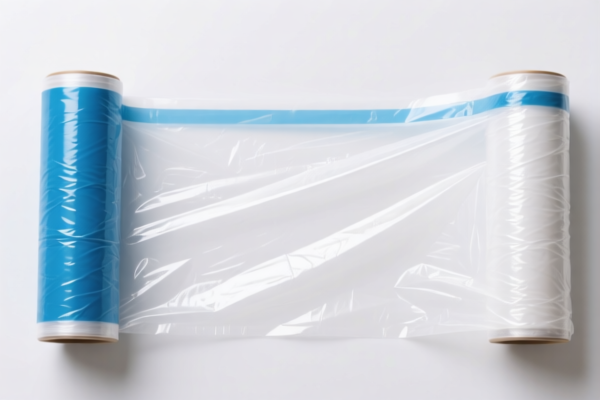

AI Analysis
🩺 Medical X-Ray Film (Radiographic Film for Medical Imaging)
🌐 HS Code & Tariff Guide | 2026 U.S. Trade Compliance | Expert Customs Clearance Strategy
📌 One Product, Multiple HS Codes — Know the Difference to Avoid 45%+ Tariffs!
📌 一、Product Definition & Classification: What Exactly Is "Medical X-Ray Film"?
Medical X-ray film is a light-sensitive photographic film used in diagnostic radiology to capture high-resolution images of internal body structures. It is not a digital sensor or imaging device — it’s a physical, analog medium that requires chemical development.
⚠️ Critical Distinction:
- If the film is pure photographic emulsion on a flexible base (no electronics, no digital components) → HS Code 3701.10.00.30
- If it’s part of a digital imaging system (e.g., with sensors, memory chips) → HS Code 9018.90.20.00
- If it's microfilm used for medical records (not for imaging) → HS Code 3705.00.00.00✅ True medical X-ray film must meet two criteria: 1. Photographic film (not digital) 2. Used in medical X-ray imaging (diagnostic radiology)
📦 二、HS Code Classification Breakdown (2026 U.S. Tariff Schedule)
| HS Code | Product Description | Applicable Use Case | Key Feature |
|---|---|---|---|
3701.10.00.30 |
Photographic film for medical X-ray imaging, sensitive to X-rays, used in radiography | Standard medical X-ray film, used in hospitals, clinics, dental offices | ✅ Medical-grade X-ray film, analog, chemical development |
9018.90.20.00 |
Medical imaging consumables, including X-ray film used in scientific instruments | Digital or hybrid imaging systems, where film is part of a larger instrument | ✅ Used in scientific instruments, not standalone film |
3705.00.00.00 |
Microfilm for medical records, used for archiving patient data | Document storage, not for diagnostic imaging | ✅ Not for imaging, but for data preservation |
🔍 Why the Confusion?
- Some suppliers label digital film cassettes or imaging plates as “X-ray film” — but these are not HS Code 3701.10.00.30. - Only analog, chemical-developed, X-ray-sensitive photographic film qualifies for3701.10.00.30.
💰 三、2026 U.S. Tariff Breakdown (With Full Legal Basis)
✅ Applicable to: U.S. imports from China (CN)
✅ Effective Date: November 10, 2025 (including all future shipments)
✅ Applicable to: All products under Section 301, Section 122, and IEEPA tariffs
🎯 1. 3701.10.00.30 — Medical X-Ray Film (Analog, Photographic)
| Tax Component | Rate | Legal Basis | Notes |
|---|---|---|---|
| Base Duty | 3.7% | U.S. HTSUS § 3701.10.00.30 | Standard tariff for medical X-ray film |
| Section 301 (USITC) Tariff | +25.0% | USITC Footnote 9903.88.01 | Applies to all Chinese-origin goods under Section 301 |
| Section 122 (IEEPA) Tariff | +10.0% | IEEPA: 9903.01.24 | Applies to products from China under International Emergency Economic Powers Act |
| Total Effective Duty | 38.7% | Sum of all three | Highest tariff in class |
📌 Legal Pathway:
IEEPA: 9903.01.24→USITC: 9903.88.01→HTSUS: 3701.10.00.30🔥 Critical Insight:
- This is not a standard 3.7% tariff — you’re paying 38.7% due to dual附加 taxes. - No de minimis exemption — even $100 shipments are fully taxed.
🎯 2. 9018.90.20.00 — Medical Imaging Consumables (Used in Scientific Instruments)
| Tax Component | Rate | Legal Basis | Notes |
|---|---|---|---|
| Base Duty | 0.0% | HTSUS § 9018.90.20.00 | No base tariff |
| Section 301 (USITC) Tariff | +25.0% | USITC Footnote 9903.88.01 | Applies to Chinese origin |
| Section 122 (IEEPA) Tariff | +10.0% | IEEPA: 9903.01.24 | Applies to China-origin goods |
| Total Effective Duty | 35.0% | Sum of 25% + 10% | Lower than 3701.10.00.30 |
📌 Why Lower?
- No base tariff (0.0%) → only 25% + 10% = 35% total
- But only if the film is used in a scientific instrument (e.g., a digital X-ray system with film cassette)⚠️ Risk: If the film is sold separately, not as part of an instrument, you cannot use this code.
🎯 3. 3705.00.00.00 — Microfilm for Medical Records
| Tax Component | Rate | Legal Basis | Notes |
|---|---|---|---|
| Base Duty | 0.0% | HTSUS § 3705.00.00.00 | No base tariff |
| Section 301 (USITC) Tariff | +25.0% | USITC Footnote 9903.88.01 | Applies to China-origin |
| Section 122 (IEEPA) Tariff | +10.0% | IEEPA: 9903.01.24 | Applies to China-origin |
| Total Effective Duty | 35.0% | 25% + 10% | Same as 9018.90.20.00 |
📌 Important:
- This code is only for microfilm used to store medical records, not for diagnostic imaging. - If your product is used for imaging, do not use this code — misclassification = penalties.
🛠️ 四、Customs Clearance Best Practices (Pro Tips to Avoid 45%+ Penalties)
✅ 1. Required Documentation (Must-Have)
| Document | Required? | Why It Matters |
|---|---|---|
| ✅ Product Technical Specs | ✔️ | Must confirm X-ray sensitivity, emulsion type, base material |
| ✅ Photographs (with labels) | ✔️ | Show brand, model, packaging, emulsion side |
| ✅ Commercial Invoice | ✔️ | Must state "Medical X-Ray Film, Analog, for Diagnostic Imaging" |
| ✅ Certificate of Origin (CO) | ✔️ | Required for tariff eligibility |
| ✅ Third-Party Lab Test Report | ✔️ | Prove medical-grade sensitivity, no digital components |
| ✅ Packing List | ✔️ | Show film rolls, spools, packaging type |
✅ 2.申报技巧(Key Rules to Remember)
🔥 “Film vs. Instrument, Analog vs. Digital — One Mistake = 38.7% Tax!”
| Scenario | Correct HS Code | Wrong Code | Risk |
|---|---|---|---|
| Analog X-ray film, sold standalone | 3701.10.00.30 |
9018.90.20.00 |
Higher tax (38.7% vs 35%) |
| Film used inside a digital X-ray machine | 9018.90.20.00 |
3701.10.00.30 |
Lower tax, but only if part of instrument |
| Microfilm for patient records | 3705.00.00.00 |
3701.10.00.30 |
Misclassification → penalties |
| Film with digital sensor (e.g., CR/DR) | ❌ Not 3701.10.00.30 | 3701.10.00.30 |
Invalid — digital ≠ film |
✅ 3. Special Cases & Solutions
| Situation | Recommended Action |
|---|---|
| Film sold with cassette (no electronics) | Use 3701.10.00.30 — still analog film |
| Film used in a digital imaging system (e.g., CR plate) | Use 9018.90.20.00 — only if part of the instrument |
| Film labeled “medical” but used for non-diagnostic purposes | Use 3705.00.00.00 — only if for record storage |
| OEM or private label film | Provide branding proof + technical specs to avoid scrutiny |
🌍 五、Global Market Comparison (2026 Tariff Snapshot)
| Country | Recommended HS Code | Base Duty | 附加 Taxes | Total Duty | Notes |
|---|---|---|---|---|---|
| 🇺🇸 United States | 3701.10.00.30 |
3.7% | 25% + 10% | 38.7% | High risk |
| 🇨🇳 China | 3701.10.00.30 |
5% | 0% | 5% | No extra tariffs |
| 🇪🇺 European Union | 3701.10.00.30 |
0% | 0% | 0% | No Section 301/122 |
| 🇦🇺 Australia | 3701.10.00.30 |
5% | 0% | 5% | No extra tariffs |
| 🇯🇵 Japan | 3701.10.00.30 |
0% | 0% | 0% | No extra tariffs |
📌 Insight:
- U.S. is the only market with 38.7% tariff on medical X-ray film from China. - China, EU, Japan, Australia have no extra tariffs — ideal for export.
📌 六、Common Mistakes & How to Avoid Them (Real-World Risks)
❌ Mistake 1: Using 3701.10.00.30 for digital X-ray cassettes
👉 Result: Incorrect classification → penalties, delays, re-export
❌ Mistake 2: Labeling microfilm as “medical X-ray film”
👉 Result: Misclassification → 35% tax vs. 38.7%, but still wrong code
❌ Mistake 3: Not providing technical proof of analog nature
👉 Result: Customs flags shipment → random audit, delayed release
❌ Mistake 4: Splitting film and cassette into separate shipments
👉 Result: Each item taxed at 38.7% → double the cost
✅ Correct Way:
“Medical X-Ray Film, 35x43 cm, 100 sheets per roll, analog, chemical development, for diagnostic radiology, Brand: XYZ, FDA-registered”
🎯 七、Final Verdict: Precise Classification = Profit Protection
🎯 Key Takeaway:
🔹 Analog film =
3701.10.00.30→ 38.7% tariff (U.S.)
🔹 Film in instrument =9018.90.20.00→ 35.0% tariff
🔹 Microfilm =3705.00.00.00→ 35.0% tariff (only for records)📌 Pro Tip:
- If your film is truly analog, use3701.10.00.30— it’s the only correct code. - Never use it for digital products — you’ll be fined. - Always get a pre-ruling from U.S. Customs (Advanced Ruling) before large shipments.
📣 Act Now!
📞 Contact a U.S. Customs Broker + Request HS Code Pre-Ruling
🚀 Avoid 38.7% surprise tariffs — secure your margin before shipment!
✨ Professional Compliance Starts with Accurate HS Code
💼 Your product’s value depends on how you classify it — get it right the first time!
Customer Reviews
About HS Code Classification
The Harmonized System (HS) is an internationally standardized nomenclature developed by the World Customs Organization (WCO) to classify traded products. Over 200 countries use the HS system as the basis for customs tariffs, trade statistics, and import/export regulations.
Each HS code follows a hierarchical structure:
- Chapter (2 digits) — Broad category of goods (e.g., Chapter 84: Machinery and Mechanical Appliances)
- Heading (4 digits) — More specific grouping within the chapter
- Subheading (6 digits) — Internationally standardized breakdown, used by all WCO member countries
- National subdivisions (8-10 digits) — Country-specific extensions for further classification, such as US HTSUS 10-digit codes
Correct HS code classification is essential for smooth customs clearance, accurate duty payment, and compliance with trade regulations. Misclassification can lead to customs delays, overpayment of duties, or penalties.
When importing from CN to US, the applicable tariff rates may include:
- Most-Favored-Nation (MFN) rate — The standard duty rate applied to WTO members
- General rate — Applied to countries without trade agreements
- Trade remedy duties — Additional tariffs such as Section 301 (anti-dumping), Section 232 (national security), or countervailing duties
The information provided on this page is for reference purposes only. For official classification, please consult with your local customs authority or a licensed customs broker.