Medicine Bottle Label Paper
CN → US| HS Code | Tariff Rate | Origin | Destination | Doc |
|---|---|---|---|---|
| 4911996000 | 17.5% | CN | US | Official Doc |
| 4823908680 | 35.0% | CN | US | Official Doc |
| 4823906700 | 35.0% | CN | US | Official Doc |
| 4821104000 | 35.0% | CN | US | Official Doc |
| 4821904000 | 35.0% | CN | US | Official Doc |
Product Images
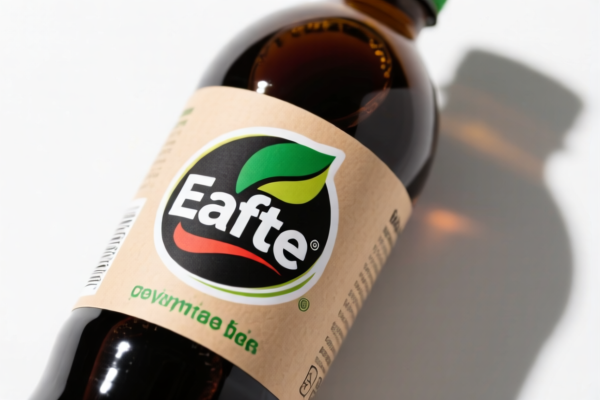
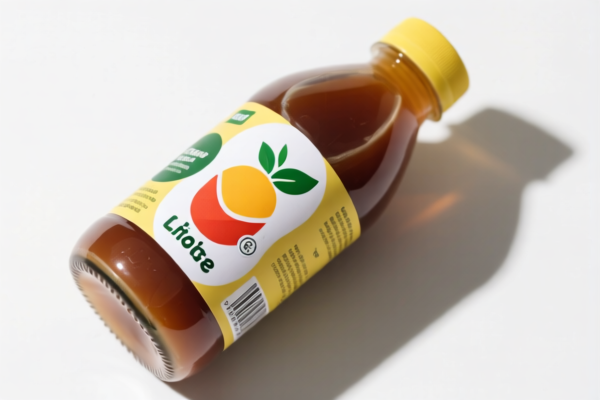
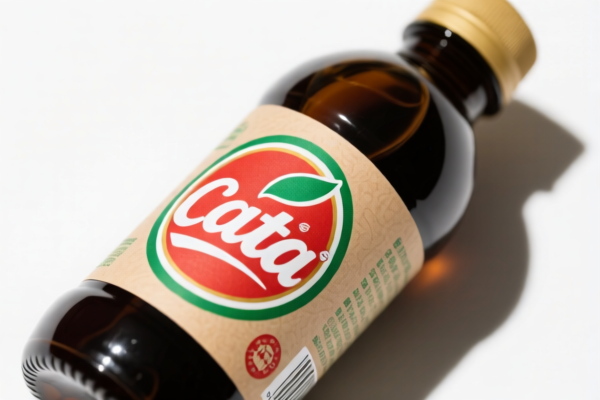
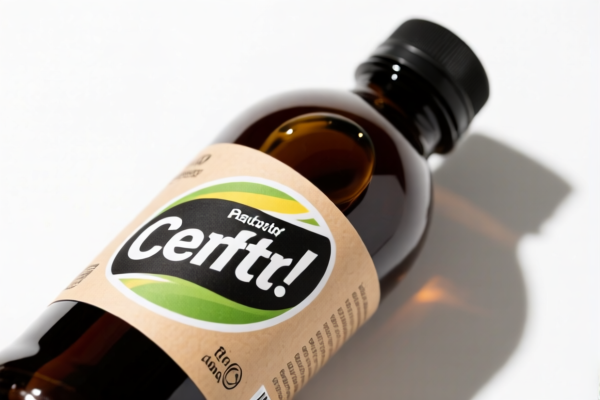
AI Analysis
🏥 Medicine Bottle Label Paper (Pharmaceutical Paper Labels)
🌐 HS Code Reference & Customs Clearance Guide | 2026 Latest Tariff Analysis | Professional Compliance Strategy
📌 I. Product Definition & Classification: What Exactly Is "Medicine Bottle Label Paper"?
Medicine bottle labels are critical components in pharmaceutical packaging, serving as the primary interface for regulatory compliance, dosage instructions, and safety warnings. In international trade, they are classified based on two main factors:
1. Material: Paper-based substrates (as specified in your data).
2. Function/State: Whether they are considered "printed goods" (under Chapter 49) or "manufactured paper articles" (under Chapter 48).
⚠️ Key Classification Distinction:
- Printed Goods (Chapter 49): If the label is primarily viewed as a printed document/information carrier with specific printing content, it may fall under "Other printed matter."
- Paper Articles (Chapter 48): If the label is viewed primarily as a manufactured paper product (e.g., coated paper, cut paper sheets) with less emphasis on the specific print content as a "book/document," it falls under various paper article subheadings.
📦 II. HS Code Classification Details (2026 Latest Tariff Authority Comparison)
| HS Code | Product Description | Classification Logic | Total Tax Rate |
|---|---|---|---|
4911.99.60.00 |
Other printed matter (Paper labels considered "printed goods") | Material: Paper; Form: Printed matter. No material conflict. Falls under "Other printed matter" umbrella. | 17.5% |
4911.99.80.00 |
Other printed matter (General printed paper labels) | Key elements: "Paper" (material) + "Label" (printed form). No material conflict. Fits the "Other printed matter" catch-all logic. | 17.5% |
4823.90.86.80 |
Other paper articles (Paper labels as paper products) | Material: Paper; Form: Other paper articles. No obvious material conflict. | 35.0% |
4823.90.67.00 |
Other paper articles (Coated paper labels) | Material: Paper; Form: Cut paper products. Fits "Coated paper or coated cardboard articles" and "Other paper articles." | 35.0% |
4821.10.40.00 |
Paper labels, printed (Pre-printed paper labels) | Material: Paper; Use: Labels. Fits the characteristic of "Printed paper labels." | 35.0% |
4821.90.40.00 |
Other paper labels (Catch-all for paper labels) | Material: Paper; Use: Labels. Fits "Paper-based" requirement. "Other" category aligns with the catch-all logic for labels with no material conflict. | 35.0% |
🔍 Key Insight:
- The 17.5% tax rate applies to classifications under Chapter 49 (Printed Matter), viewing the label primarily as a printed informational item.
- The 35.0% tax rate applies to classifications under Chapter 48 (Paper Articles), viewing the label primarily as a manufactured paper product (whether coated, cut, or pre-printed).
- Risk: Misclassification between Chapter 48 and 49 can lead to a 17.5% difference in tax liability. Customs authorities often scrutinize this based on the primary purpose and degree of printing (e.g., blank vs. fully pre-printed with regulatory info).
💰 III. 2026 Latest Tariff Rate Details (Including Surtaxes & Policy Add-ons)
✅ Applicable Country: USA (US)
✅ Country of Origin: China (CN)
✅ Effective Date: From November 10, 2025 (including subsequent imports)
🎯 1. Chapter 49 Classifications (4911.99.60.00 & 4911.99.80.00)
| Item | Details |
|---|---|
| Base Tariff | 0% (ad valorem) |
| USITC Surtax | +7.5% (Section 301 related surtax for specific items or general rate depending on specific ruling) |
| IEEPA Surtax | +10% (China/HK product surtax under International Emergency Economic Powers Act, effective Nov 10, 2025) |
| Total Tax Rate | 17.5% |
| Tax Calculation | CIF Value × 17.5% |
| De Minimis Exemption | ❌ Not Eligible (deny_de_minimis) for Section 301/IEEPA items |
| Legal Basis Path | IEEPA:9903.01.25 → IEEPA:9903.01.24 → USITC:4911.99.60.00/80.00 → FOOTNOTE:9903.88.01 |
📌 Explanation:
- The 17.5% total rate is significantly lower than Chapter 48.
- The 10% IEEPA and 7.5% USITC components are mandatory surcharges for Chinese-origin goods.
- Strategy: If your product can be legitimately classified under Chapter 49 (e.g., as "printed matter" with significant informational content), this is the preferred classification for cost efficiency.
🎯 2. Chapter 48 Classifications (4823.90.86.80, 4823.90.67.00, 4821.10.40.00, 4821.90.40.00)
| Item | Details |
|---|---|
| Base Tariff | 0% (ad valorem) |
| USITC Surtax | +25% (Standard Section 301 surtax for most paper articles) |
| IEEPA Surtax | +10% (China/HK product surtax, effective Nov 10, 2025) |
| Total Tax Rate | 35.0% |
| Tax Calculation | CIF Value × 35.0% |
| De Minimis Exemption | ❌ Not Eligible (deny_de_minimis) |
| Legal Basis Path | IEEPA:9903.01.25 → IEEPA:9903.01.24 → USITC:482x.xxxx.xx → FOOTNOTE:9903.88.01 |
📌 Explanation:
- The 35.0% total rate applies to all Chapter 48 classifications.
- The 25% USITC surtax is standard for many paper products.
- Risk: This is a high-cost classification. Misclassifying a "printed label" as a "paper article" doubles the tariff burden (17.5% vs. 35.0%).
- Specifics:
-4821.10.40.00&4821.90.40.00: Specifically for labels.
-4823.90.67.00: For coated paper products.
-4823.90.86.80: For other paper products.
🛠️ IV. Customs Clearance Practical Advice (Battle-Tested Pitfall Avoidance Guide)
✅ 1. Required Documentation Checklist (No Exceptions)
| Document | Required | Notes |
|---|---|---|
| ✅ Product Specification Sheet | ✔️ | Must specify: Material (paper type, coating), Dimensions, Print Details (number of colors, text content). |
| ✅ High-Resolution Product Photos | ✔️ | Must show the label clearly, including print quality, adhesive side (if applicable), and packaging. |
| ✅ Commercial Invoice | ✔️ | Describe as "Paper Labels for Pharmaceutical Use" or "Printed Paper Labels." Avoid vague terms like "Paper Product." |
| ✅ Packing List | ✔️ | Detail quantity, weight, and packaging units. |
| ✅ Origin Certificate (CO) | ✔️ | Mandatory for US origin determination. |
| ✅ Pre-Ruling Documentation (Optional but Recommended) | ✔️ | Provide samples + print proofs to support Chapter 49 classification if argued. |
✅ 2. Classification Strategy & Declaration Tips (Crucial Mnemonic)
🔥 “Printed Content is King, Paper is Just the Skin!”
| Scenario | Correct Declaration | Incorrect Declaration | Consequence |
|---|---|---|---|
| Label has full pharmaceutical text, dosage, warnings | 4911.99.60.00 or 4911.99.80.00 (17.5%) |
4821.10.40.00 (35.0%) |
Overpaying 17.5% tax. Customs may adjust if print content is substantial. |
| Blank paper labels (no print) | 4823.90.xxxx.xxxx or 4821.10.40.00 (35.0%) |
4911.99.xxxx.xxxx (17.5%) |
Under-declaration Risk. Blanks are usually not "printed matter" yet. |
| Labels with minimal print (e.g., only logo) | 4821.90.40.00 or 4823.90.86.80 (35.0%) |
4911.99.60.00 (17.5%) |
Misclassification. Minimal print may not qualify as "printed matter" in the customs sense. |
| Coated paper labels | 4823.90.67.00 (35.0%) |
4911.99.60.00 (17.5%) |
Risk. Coating is a key feature of Chapter 48. If print is secondary, Chapter 48 is safer. |
✅ 3. Special Handling for Pharmaceutical Labels
| Scenario | Handling Advice |
|---|---|
| Regulatory Compliance (FDA/EMA) | Ensure labels meet US FDA 21 CFR Part 201 requirements. Customs may check for proper drug identification info. |
| OEM/Custom Labels | Provide the design file/print proof to customs if challenged. Show that the content is the primary value. |
| Roll vs. Sheet Format | Both can be classified in 48 or 49. Format alone doesn't dictate chapter; content does. |
| Adhesive Type | Specify adhesive type in specs. Some adhesives may trigger different chemical regulations, but not HS classification. |
🌍 V. Global Market Customs Comparison (2026 Latest)
| Country/Region | Recommended HS Code | Tax Rate (China Origin) | Certification Requirements | Notes |
|---|---|---|---|---|
| 🇺🇸 USA | 4911.99.60.00 |
17.5% | No specific pharma cert for customs, but FDA compliance needed for import | High risk of audit; keep print proofs ready |
| 🇨🇳 China | 4823.90.86.80 |
~6-10% | No special customs cert | Lower base tax, no IEEPA |
| 🇪🇺 EU | 4823.90.86.80 |
0-6.5% | CE marking (if applicable), REACH compliance | Paper labels generally low duty in EU |
| 🇬🇧 UK | 4823.90.86.80 |
0-6.5% | UKCA marking (if applicable) | Post-Brexit rules may vary |
| 🇦🇺 Australia | 4823.90.86.80 |
5% | No special customs cert | Free Trade Agreement may apply if origin is eligible |
📌 Conclusion:
- USA is the most tax-sensitive market for paper labels due to IEEPA and Section 301 surtaxes.
- Choosing Chapter 49 (17.5%) vs. Chapter 48 (35.0%) can save 17.5% of the CIF value in tariffs.
- Justification is Key: To claim Chapter 49, you must prove the label is primarily "printed matter" (i.e., the informational content is the dominant feature).
📌 VI. Common Errors & Pitfall Avoidance (Lessons Learned)
❌ Error 1: Declaring "Paper Labels" as 4821.10.40.00 (35.0%) when they have extensive pharmaceutical text.
👉 Consequence: Overpayment of 17.5% tax. Action: Argue for 4911.99.60.00 with print proofs.
❌ Error 2: Declaring "Blank Paper Rolls" as 4911.99.60.00 (17.5%).
👉 Consequence: Customs rejection or audit. Blank items are not "printed matter." Action: Use Chapter 48 codes.
❌ Error 3: Using vague descriptions like "Paper Product" on the invoice.
👉 Consequence: Customs may assign the highest applicable duty or delay clearance. Action: Be specific: "Pre-printed Pharmaceutical Paper Labels."
❌ Error 4: Ignoring the 10% IEEPA surtax in cost calculations.
👉 Consequence: Unexpected cost overrun. Action: Always include IEEPA + USITC in landed cost models for US-bound goods from China.
✅ Correct Declaration Example:
"Pre-printed Paper Labels for Pharmaceutical Bottles, Contains Dosage Info & Warnings, Paper Substrate, Model XYZ, Certified for FDA Compliance"
🎯 VII. Conclusion: Precision Classification Saves 17.5%
🎯 Remember the Mnemonic:
🔹 "Printed Content First, Chapter 49 (17.5%); Blank or Coated Paper, Chapter 48 (35%)."
🔹 "HS Code Dictates Tax, 17.5% vs. 35% Difference is Huge. Declare Precisely, Avoid Audit Pain."
📌 Pro Tip:
If your labels are coated but have minimal print, Chapter 48 (4823.90.67.00) might be the only legitimate option despite the higher tax. Do not force Chapter 49 if the print is negligible.
For full-pharma labels with regulatory text, fight for Chapter 49 (4911.99.60.00) to save costs.
Always apply for an Advance Ruling if the classification is borderline to avoid future disputes.
📣 Immediate Action:
📞 Contact your customs broker + Provide print samples + Request HS Code Advance Ruling
🚀 Ensure your labels clear customs smoothly, minimize tax liability, and stay compliant!
✨ Professional Customs Clearance Starts with Accurate Classification!
💼 Every Cent of Tariff Saved is Pure Profit!
Customer Reviews
About HS Code Classification
The Harmonized System (HS) is an internationally standardized nomenclature developed by the World Customs Organization (WCO) to classify traded products. Over 200 countries use the HS system as the basis for customs tariffs, trade statistics, and import/export regulations.
Each HS code follows a hierarchical structure:
- Chapter (2 digits) — Broad category of goods (e.g., Chapter 84: Machinery and Mechanical Appliances)
- Heading (4 digits) — More specific grouping within the chapter
- Subheading (6 digits) — Internationally standardized breakdown, used by all WCO member countries
- National subdivisions (8-10 digits) — Country-specific extensions for further classification, such as US HTSUS 10-digit codes
Correct HS code classification is essential for smooth customs clearance, accurate duty payment, and compliance with trade regulations. Misclassification can lead to customs delays, overpayment of duties, or penalties.
When importing from CN to US, the applicable tariff rates may include:
- Most-Favored-Nation (MFN) rate — The standard duty rate applied to WTO members
- General rate — Applied to countries without trade agreements
- Trade remedy duties — Additional tariffs such as Section 301 (anti-dumping), Section 232 (national security), or countervailing duties
The information provided on this page is for reference purposes only. For official classification, please consult with your local customs authority or a licensed customs broker.