Medium Density Fiberboard
CN → US| HS Code | Tariff Rate | Origin | Destination | Doc |
|---|---|---|---|---|
| 4411123000 | 35.0% | CN | US | Official Doc |
| 4411122000 | 0.0% | CN | US | Official Doc |
Product Images
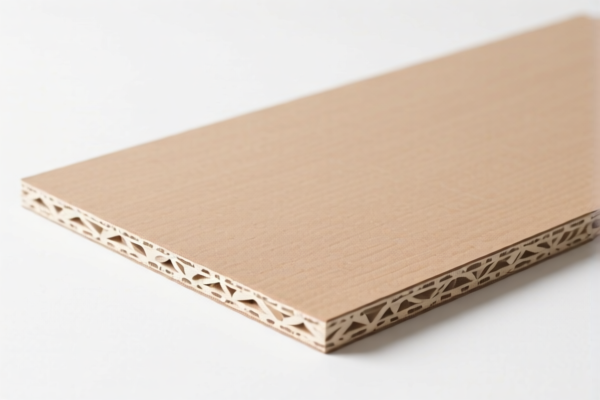
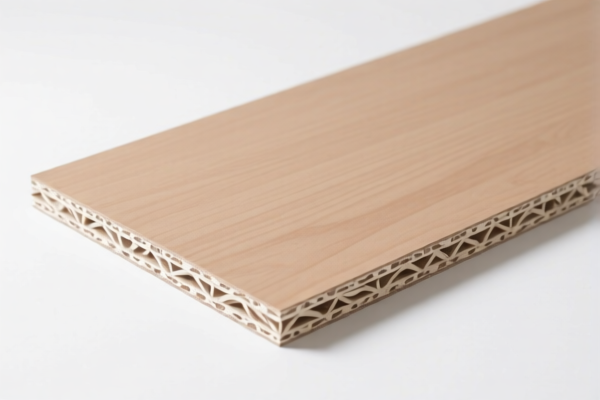
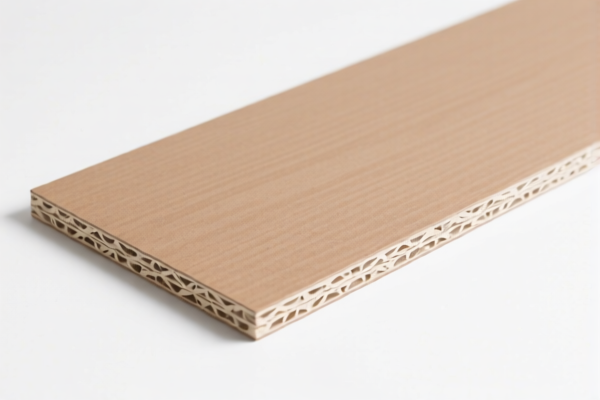
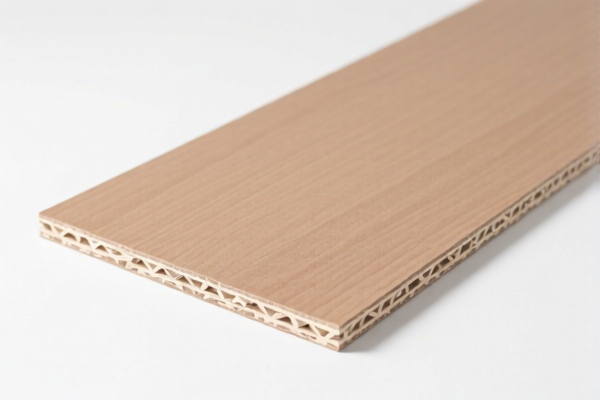
AI Analysis
🪵 Medium Density Fiberboard (MDF)
🌐 HS Code Reference & Customs Clearance Guide | 2026 Latest Tariff Analysis | Professional Entry Strategy
📌 I. Product Definition & Classification: Do You Truly Understand "MDF"?
Medium Density Fiberboard (MDF) is an engineered wood product made by breaking down hardwood or softwood residuals into wood fibers, typically in a defibrator, combining it with wax and a resin binder, and forming panels by applying high temperature and pressure.
In international trade, MDF is not a "one-size-fits-all" category. It is strictly divided based on physical structure and surface treatment:
1. Tongued, Grooved, or Rabbetted MDF (Profiled):
- Edges are mechanically shaped (T&G, rabbeted) along their entire length.
- Dedicated Use: Construction of walls, ceilings, or other building parts.
- Surface: Unlaminated, un-impregnated standard MDF core.
2. Laminated/Impregnated MDF:
- Bonded in whole or in part with synthetic resins, melamine, PVC, or wood veneers.
- Surface: Smooth, decorative, or protected by a synthetic layer.
- Use: Furniture, cabinetry, flooring underlayment, or decorative wall panels.
⚠️ Key Distinction Point:
- If the board has continuous edge profiles (T&G) for construction and is unlaminated → HS 4411.12.30.00
- If the board is laminated/impregnated with synthetic resins (regardless of edge shape) → HS 4411.12.20.00
📦 II. HS Code Classification Details (2026 Latest Authoritative Comparison)
| HS Code | Product Description | Key Features | Application |
|---|---|---|---|
4411.12.20.00 |
Laminated Boards Bonded in Whole or in Part, or Impregnated, with Synthetic Resins | Surface covered with melamine, PVC, wood veneer, or resin-impregnated paper. | High-end furniture, cabinets, decorative panels. |
4411.12.30.00 |
Other: Tongued, Grooved or Rabbetted... Dedicated for Use in Construction of Walls/Ceilings | Mechanical edge profiling (T&G). Unlaminated core. Strictly for building structure/finish. | Drywall alternatives, wall paneling systems, ceiling tiles. |
🔍 Critical Note:
- "Laminated" vs. "Profiled": If an MDF board is both laminated and tongued/grooved, lamination takes precedence for classification under4411.12.20.00. The physical structure of the edge is secondary to the surface treatment. - "Construction Dedication":4411.12.30.00is exclusive to boards specifically designed for wall/ceiling construction. Standard furniture MDF with T&G edges is generally not eligible for this code unless explicitly certified for construction use.
💰 III. 2026 Latest Tariff Rate Details (US Import from China)
✅ Applicable Country: United States (US)
✅ Origin: China (CN)
✅ Note: Rates reflect Base Tariff + Section 301/IEEPA Additional Tariffs.
🎯 1. 4411.12.20.00 —— Laminated MDF (Surface Treated)
| Item | Details |
|---|---|
| Base Tariff | 0.0% (ad valorem) |
| Additional Tariff | 0.0% |
| Total Tax Rate | 0.0% |
| Tax Calculation | CIF Value × 0% = $0 |
| Legal Basis | HTSUS 4411.12.20.00; No active Section 301 or IEEPA surcharge for this specific subheading. |
📌 Explanation:
- Zero Duty Advantage: Laminated MDF enjoys a 0% total tariff rate from China. - Why? The U.S. trade restrictions often target raw wood products or unprocessed engineered wood. Synthetic resin bonding/lamination is classified differently, potentially exempt from the highest surcharge brackets affecting standard wood fibers. - Cost Benefit: This is the most tariff-efficient way to import MDF into the US.
🎯 2. 4411.12.30.00 —— Profiled Construction MDF (Unlaminated)
| Item | Details |
|---|---|
| Base Tariff | 0.0% (ad valorem) |
| Additional Tariff | +25.0% |
| Total Tax Rate | 25.0% |
| Tax Calculation | CIF Value × 25% |
| Legal Basis | HTSUS 4411.12.30.00; Subject to USITC Footnote 9903.88.01 (Section 301). |
📌 Explanation:
- High Surcharge: This code attracts a 25% additional tariff (Section 301). - Why? Unlaminated MDF dedicated for construction is considered a vulnerable sector for domestic producers. The base rate is 0%, but the punitive trade tariff adds 25%. - Cost Impact: Significant cost increase compared to laminated MDF.
🛠️ IV. Customs Clearance Practical Advice (Pitfall Avoidance Guide)
✅ 1. Documentation Checklist (Essential)
| Document | Must Provide | Purpose |
|---|---|---|
| Product Specification Sheet | ✔️ | Must clearly state: "Medium Density Fiberboard," thickness (≤5mm), and surface treatment. |
| Technical Data Sheet (TDS) | ✔️ | Confirm resin content/lamination type. Crucial for distinguishing 20 vs 30. |
| Commercial Invoice | ✔️ | Description must match HS code precisely (e.g., "Laminated MDF Panels" vs. "Construction MDF Boards"). |
| Bill of Lading | ✔️ | Ensure no "wood packaging" penalties (fumigation certificate for pallets). |
| Certificate of Origin | ✔️ | Required for proving Chinese origin (and applicable tariffs). |
✅ 2. Declaration Strategy (Key Mnemonics)
🔥 "Laminate Free, Profile Dues!"
- Laminated/Impregnated → 0% Tax (4411.12.20.00)
- Unlaminated + Profiled → 25% Tax (4411.12.30.00)
| Scenario | Correct HS Code | Tax Rate | Error Consequence |
|---|---|---|---|
| Furniture MDF with Melamine Face | 4411.12.20.00 |
0% | Misclassifying as 30 → 25% Overpayment |
| Wall Panel MDF (T&G, No Laminate) | 4411.12.30.00 |
25% | Misclassifying as 20 → Customs Audit & Penalties |
| Raw MDF (No Laminate, No Profile) | Not in DATA | N/A | Ensure thickness ≤5mm for these codes. |
📌 Pro Tip:
- If your MDF is both laminated and tongued/grooved, always declare as4411.12.20.00to benefit from the 0% rate. The lamination defines the product's primary characteristic under HTSUS rules. - Thickness Check: Both codes require MDF ≤5 mm. If >5mm, different codes apply (not covered in this DATA).
✅ 3. Special Cases & Risk Management
| Case | Handling Advice |
|---|---|
| Mixed Shipment | If shipping both laminated and profiled MDF, separate bills of lading or clear line items. Do not mix descriptions. |
| Thickness Borderline | Ensure caliper measurements are within 5mm. Slight exceedance can lead to classification error and rejection. |
| Resin Type | "Synthetic Resins" includes melamine, urea-formaldehyde, PVC, etc. If unsure, provide chemical composition report. |
| Construction Certification | For 4411.12.30.00, provide proof of "dedication for construction" (e.g., ASTM standards, building code compliance docs). |
🌍 V. Global Market Comparison (2026)
| Country/Region | Recommended HS Code | Total Tariff (from CN) | Certification | Notes |
|---|---|---|---|---|
| 🇺🇸 USA | 4411.12.20.00 |
0% | FSC (Optional but preferred) | Best Market for Laminated MDF |
| 🇺🇸 USA | 4411.12.30.00 |
25% | FSC + Building Code Compliance | High tariff discourages unlaminated construction MDF |
| 🇨🇳 China | 4411.12.20.00 |
~0-6% (Import Duty) | N/A | Domestic market dynamics differ |
| 🇪🇺 EU | 4411.12.20.00 |
~6.5% | CE + E1/E0 Formaldehyde Standards | No Section 301 equivalent, but environmental rules strict |
📌 Conclusion:
- USA is unique in its heavy penalty (25%) for unlaminated, profiled construction MDF (30). - Laminated MDF (20) remains tariff-free, making it the strategic choice for exporters to the US. - Recommendation: If possible, design products with laminated surfaces to leverage the 0% tariff, even if edge profiling is needed.
📌 VI. Common Mistakes & Pitfalls (Blood & Tears Lessons)
❌ Mistake 1: Classifying Laminated MDF as 4411.12.30.00 because it has T&G edges.
👉 Result: Paying 25% extra duty unnecessarily.
Fix: Always prioritize surface treatment (Lamination) over edge profile.
❌ Mistake 2: Declaring "MDF" without specifying thickness or surface.
👉 Result: Customs detention, request for additional info, potential misclassification.
Fix: Specify: "MDF, 4mm, Melamine Faced, T&G Edges."
❌ Mistake 3: Ignoring the "Dedicated for Construction" clause for 30.
👉 Result: If not for construction, it might be classified as "Other," potentially attracting different duties or restrictions.
Fix: Provide end-use declaration for profiled boards.
✅ Correct Declaration Example:
"MDF Panels, 4mm thickness, Melamine-impregnated paper laminated on both sides, Tongued and Grooved edges. HS: 4411.12.20.00."
🎯 VII. Conclusion: Smart Classification, Maximize Profit!
🎯 Remember the Rule:
🔹 "Laminate = 0% | Profiled/Unlaminated = 25%"
🔹 "Surface wins over Edge!"
📌 Pro Tip:
If you are designing new products for the US market, opt for laminated finishes (4411.12.20.00). It saves 25% in tariffs and simplifies customs clearance. Avoid unlaminated construction MDF unless absolutely necessary.
📣 Immediate Action:
📞 Verify your product's surface treatment with your supplier.
📄 Ensure invoices clearly state "Laminated" or "Unlaminated."
🚀 Optimize your HS Code to save 25% on every container!
✨ Professional Clearance Starts with Accurate Classification!
💼 Your Margin Depends on Your HS Code!
Customer Reviews
About HS Code Classification
The Harmonized System (HS) is an internationally standardized nomenclature developed by the World Customs Organization (WCO) to classify traded products. Over 200 countries use the HS system as the basis for customs tariffs, trade statistics, and import/export regulations.
Each HS code follows a hierarchical structure:
- Chapter (2 digits) — Broad category of goods (e.g., Chapter 84: Machinery and Mechanical Appliances)
- Heading (4 digits) — More specific grouping within the chapter
- Subheading (6 digits) — Internationally standardized breakdown, used by all WCO member countries
- National subdivisions (8-10 digits) — Country-specific extensions for further classification, such as US HTSUS 10-digit codes
Correct HS code classification is essential for smooth customs clearance, accurate duty payment, and compliance with trade regulations. Misclassification can lead to customs delays, overpayment of duties, or penalties.
When importing from CN to US, the applicable tariff rates may include:
- Most-Favored-Nation (MFN) rate — The standard duty rate applied to WTO members
- General rate — Applied to countries without trade agreements
- Trade remedy duties — Additional tariffs such as Section 301 (anti-dumping), Section 232 (national security), or countervailing duties
The information provided on this page is for reference purposes only. For official classification, please consult with your local customs authority or a licensed customs broker.