Medium thickness bovine full grain leather for footwear
CN → US| HS Code | Tariff Rate | Origin | Destination | Doc |
|---|---|---|---|---|
| 4107111020 | 35.0% | CN | US | Official Doc |
| 4107116010 | 13.3% | CN | US | Official Doc |
Product Images
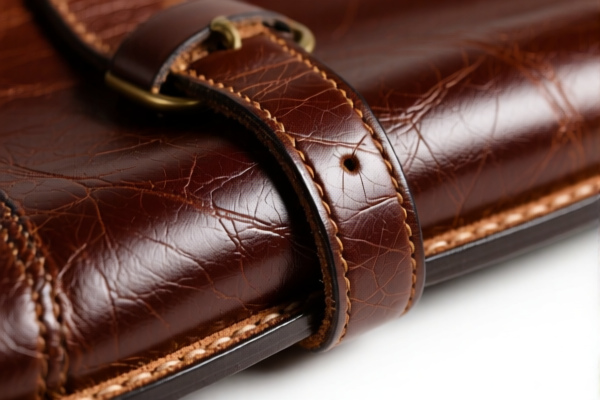
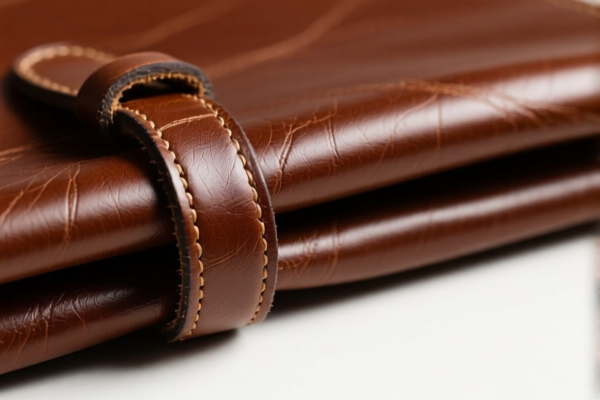
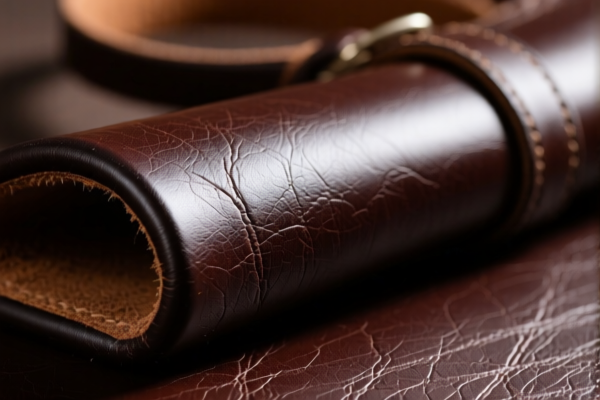
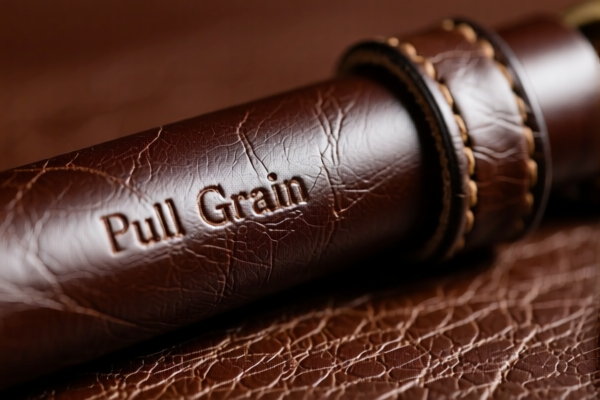
AI Analysis
👞 Bovine Full Grain Leather (Footwear Grade)
🌐 HS Code Reference & Clearance Guide | 2026 Latest Tariff Analysis | Professional Clearance Strategy
📌 I. Product Definition & Classification: Do You Really Understand "Boine Full Grain Leather"?
Bovine full grain leather is the premium raw material for high-end footwear, bags, and upholstery. In international trade, it is strictly defined by its preparation stage and physical characteristics. For footwear applications, the classification hinges on whether the leather is "Upper Leather" or "Sole Leather."
Full Grain, Unsplit (Whole Hides/Skins):
Upper Leather: Used for the main body of shoes, boots, etc. Requires specific durability and aesthetic quality.
Sole Leather: Used for shoe soles. Requires high density, abrasion resistance, and thickness (often >3mm, though "medium" suggests it might be borderline or intended for uppers depending on the specific footware part).
⚠️ Critical Distinction:
- If the leather is designated for shoe uppers (the visible part) → HS Code 4107.11.10.20
- If the leather is designated for soles or other parts (not explicitly upper) → HS Code 4107.11.60.10
- Note: The term "Medium Thickness" does not change the HS code directly, but "Full Grain, Unsplit" is the key classifier. Split leather (corrected grain) goes to different headings. This data specifically covers Full Grain, Unsplit bovine leather without hair.
📦 II. HS Code Classification Details (2026 Latest Tariff Authority Comparison)
| HS Code | Product Description | Application Scenario | Tax Rate (US Imports from CN) |
|---|---|---|---|
4107.11.10.20 |
Upper Leather; Bovine, Full Grain, Unsplit, ≤28 sq ft (2.6 m²) | Shoe uppers, boot tops, high-quality leather goods | 25.0% (Base 0% + 25% Additional) |
4107.11.60.10 |
Other (Sole/Other); Bovine, Full Grain, Unsplit, Other | Shoe soles, belting, or non-upper footwear parts | 0.0% (Base 0% + 0% Additional) |
🔍 Key Reminder:
- Do NOT confuse "Upper" and "Other/Sole"!
- If your commercial invoice and packing list clearly state "For Shoe Uppers", customs will likely classify it under4107.11.10.20(25% tax).
- If it is labeled "For Soles" or generic "Leather" without "Upper" specification, and fits the "Other" category, it may qualify for4107.11.60.10(0% tax), but this requires strict proof of end-use.
- "Medium Thickness" is a physical attribute; ensure the leather is indeed "Unsplit" (no layers removed). If split, it falls under different headings (not in this specific dataset).
💰 III. 2026 Latest Tariff Rate Detail (Including Additional Taxes)
✅ Applicable Country: United States (US)
✅ Country of Origin: China (CN)
✅ Effective Date: Current 2026 Tariff Schedule
🎯 1. 4107.11.10.20 —— Upper Leather (Footwear Uppers)
| Item | Content |
|---|---|
| Base Tariff Rate | 0% (ad valorem) |
| Additional Tariff (Section 301 / USITC) | +25% |
| Total Tariff Rate | 25.0% |
| Tax Calculation | CIF Value × 25% |
| De Minimis Eligibility | ❌ No (Deny De Minimis for China-origin leather under certain thresholds if additional duties apply) |
| Legal Basis Path | USITC:4107.11.10.20 → FOOTNOTE:301 (Section 301 Additional Duties) |
📌 Explanation:
- Although the base MFN tariff is 0%, the 25% Section 301 additional duty applies to most Chinese-origin leather products classified under HS 4107.
- This is a high-cost item for importers. The 25% rate is significant and must be factored into landed cost calculations.
- The term "Upper Leather" is specific. If goods are misdeclared to avoid this, they risk severe penalties.
🎯 2. 4107.11.60.10 —— Other (Non-Upper, e.g., Soles)
| Item | Content |
|---|---|
| Base Tariff Rate | 0% (ad valorem) |
| Additional Tariff (Section 301 / USITC) | 0% |
| Total Tariff Rate | 0.0% |
| Tax Calculation | CIF Value × 0% |
| De Minimis Eligibility | ✅ Yes (Potentially eligible for Section 321 de minimis if under $800, subject to current CBP enforcement on leather) |
| Legal Basis Path | USITC:4107.11.60.10 → Exempt from Section 301 Additional Duties |
📌 Caution:
- While the rate is 0%, proving that the leather is NOT for uppers is critical.
- If customs determines the "medium thickness" bovine leather is intended for shoe uppers (the most common use for full grain bovine), they may reclassify it to4107.11.10.20and assess the 25% duty + penalties.
- Only declare as "Other" if you have definitive documentation (e.g., purchase orders for sole manufacturing, technical specs for abrasion resistance) proving non-upper use.
🛠️ IV. Clearance Practical Advice (Battle-Tested Pitfall Guide)
✅ 1. Required Documentation List (Non-negotiable)
| Document | Mandatory? | Description |
|---|---|---|
| ✅ Commercial Invoice | ✔️ | Must clearly state: "Bovine Full Grain Leather, Unsplit, Medium Thickness". Specify end-use: "For Shoe Uppers" OR "For Shoe Soles/Other Parts". |
| ✅ Packing List | ✔️ | Detail hide/skin count, surface area (must be ≤28 sq ft for this specific HS), and weight. |
| ✅ Product Spec Sheet | ✔️ | Confirm "Full Grain, Unsplit". If split, HS changes. |
| ✅ Bill of Lading / Air Waybill | ✔️ | Standard shipping docs. |
| ✅ End-Use Declaration | ✔️ | Crucial! A letter stating the intended use. If claiming 0% tax (4107.11.60.10), you must prove it's not for uppers. |
✅ 2. Declaration Tips (Key Mantra)
🔥 “Specify End-Use! ‘Upper’ means 25%, ‘Other’ means 0% – but prove it!”
| Scenario | Correct Declaration | Incorrect Action |
|---|---|---|
| Leather for Shoe Uppers | HS: 4107.11.10.20Description: "Upper Leather" |
Declare as "Other Leather" to save tax → AUDIT RISK |
| Leather for Soles | HS: 4107.11.60.10Description: "Sole Leather" |
Declare as "Upper Leather" → Unnecessary 25% cost |
| Split Leather (Corrected) | Not in this dataset (Check 4107.21/29) | Misclassify as "Full Grain" → False Declaration |
✅ 3. Special Considerations
| Situation | Handling Advice |
|---|---|
| "Medium Thickness" Ambiguity | Thickness alone doesn't determine HS. Full Grain + Unsplit is key. Ensure specs confirm no splitting occurred. |
| Mixed Consignments | If one shipment contains both Upper and Sole leather, declare separately. Do not mix under one HS code. |
| Origin Proof | Ensure Certificate of Origin confirms China. If re-exported from Vietnam, rules of origin must be verified to avoid US penalties. |
🌍 V. Global Market Comparison (2026 Latest)
| Country/Region | Recommended HS Code | Tariff (China Origin) | Notes |
|---|---|---|---|
| 🇺🇸 USA | 4107.11.10.20 (Upper) |
25% (Total) | High duty due to Section 301 |
| 🇺🇸 USA | 4107.11.60.10 (Other) |
0% (Total) | Only if proven non-upper use |
| 🇪🇺 EU | 4107.11 | Varies (Usually 0-12%) | No Section 301, but CE/RoHS not applicable to raw leather |
| 🇨🇳 China (Export) | 4107.11 | 0% (Export) | Check local export rebates |
📌 Conclusion:
- The US market is the most sensitive to this classification due to the 25% additional duty.
- Accurate end-use declaration is the single most important factor in determining your landed cost.
- If you are importing Footwear Uppers, budget for the 25% tax. Do not attempt to misdeclare as "Other" unless you are legally certain it is not for uppers.
📌 VI. Common Mistakes & Pitfalls (Lessons Learned)
❌ Mistake 1: Declaring "Upper Leather" as "Other Leather" to avoid 25% tax
👉 Consequence: Customs audit, retroactive duty payment + penalties + potential seizure.
👉 Fix: Always match the commercial invoice description to the actual intended use.
❌ Mistake 2: Ignoring the "Unsplit" requirement
👉 Consequence: If the leather is split (e.g., nubuck from split layer), it may not fit 4107.11 if it's corrected grain/split. It might go to 4107.21 or 4107.29 (different tax rates).
👉 Fix: Verify with the supplier that it is Full Grain, Unsplit.
❌ Mistake 3: Not specifying surface area
👉 Consequence: HS 4107.11.10.20 applies to hides ≤28 sq ft (2.6 m²). Larger hides may fall under different subheadings (e.g., 4107.11.20).
👉 Fix: Check the average surface area of the hides/skins in the shipment.
✅ Correct Practice:
"Full Grain Bovine Leather, Unsplit, Medium Thickness, For Shoe Uppers, Surface Area 20-25 sq ft, Tanned, Vegetable/Chrome (Specify if known)"
🎯 VII. Conclusion: Precision Saves Money!
🎯 Remember the Mantra:
🔹 “Upper = 25%, Other = 0%, But Prove It!”
🔹 “Full Grain & Unsplit are Mandatory!”
🔹 “Surface Area Matters (≤28 sq ft)!”
📌 Pro Tip:
If you are importing large volumes, consider applying for a Binding Ruling from US Customs (CBP) to confirm the correct HS code and tax rate for your specific product specifications. This provides legal certainty and protects against retroactive audits.
📣 Immediate Action:
📞 Verify the End-Use with your buyer/supplier.
📄 Ensure the Invoice explicitly states "For Shoe Uppers" or "For Soles."
🚀 Accurate declaration = Smooth clearance + Predictable costs!
✨ Professional Clearance Starts with Accurate Classification!
💼 Your Profit Margin Depends on the Right HS Code!
Customer Reviews
About HS Code Classification
The Harmonized System (HS) is an internationally standardized nomenclature developed by the World Customs Organization (WCO) to classify traded products. Over 200 countries use the HS system as the basis for customs tariffs, trade statistics, and import/export regulations.
Each HS code follows a hierarchical structure:
- Chapter (2 digits) — Broad category of goods (e.g., Chapter 84: Machinery and Mechanical Appliances)
- Heading (4 digits) — More specific grouping within the chapter
- Subheading (6 digits) — Internationally standardized breakdown, used by all WCO member countries
- National subdivisions (8-10 digits) — Country-specific extensions for further classification, such as US HTSUS 10-digit codes
Correct HS code classification is essential for smooth customs clearance, accurate duty payment, and compliance with trade regulations. Misclassification can lead to customs delays, overpayment of duties, or penalties.
When importing from CN to US, the applicable tariff rates may include:
- Most-Favored-Nation (MFN) rate — The standard duty rate applied to WTO members
- General rate — Applied to countries without trade agreements
- Trade remedy duties — Additional tariffs such as Section 301 (anti-dumping), Section 232 (national security), or countervailing duties
The information provided on this page is for reference purposes only. For official classification, please consult with your local customs authority or a licensed customs broker.