Meeting Notebook Set
CN → US| HS Code | Tariff Rate | Origin | Destination | Doc |
|---|---|---|---|---|
| 9609908000 | 17.5% | CN | US | Official Doc |
| 9609100000 | 0.0% | CN | US | Official Doc |
| 4820102010 | 35.0% | CN | US | Official Doc |
| 4820102060 | 35.0% | CN | US | Official Doc |
| 4821902000 | 35.0% | CN | US | Official Doc |
| 4821904000 | 35.0% | CN | US | Official Doc |
Product Images
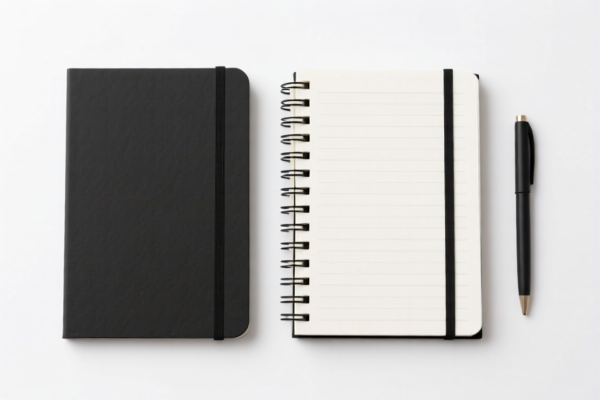
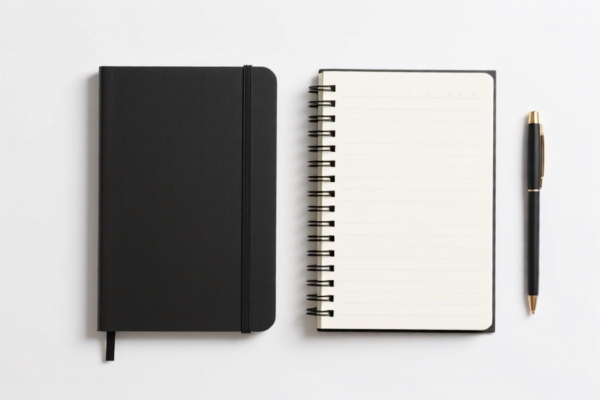
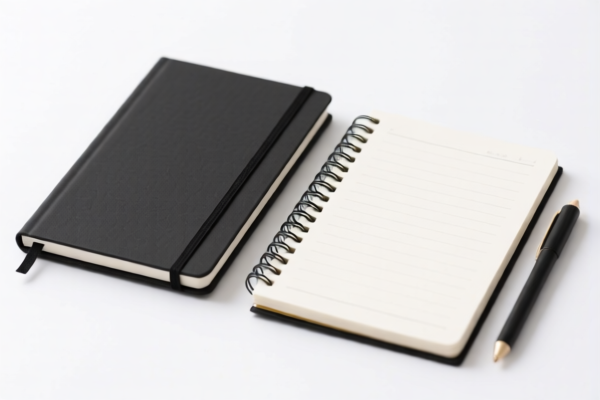
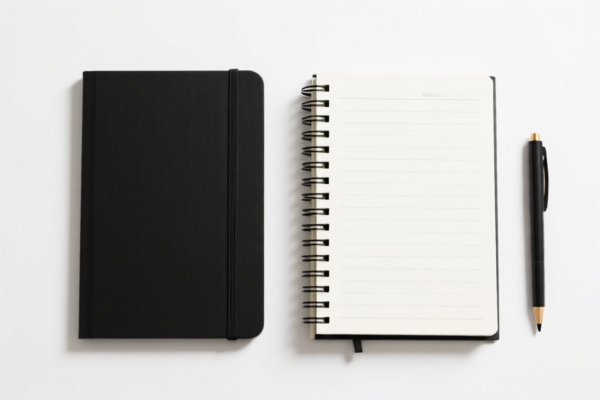
AI Analysis
📒 Meeting Notebook Set (Registers, Diaries, & Stationery Articles)
🌐 HS Code Reference & Customs Clearance Guide | 2026 Latest Tariff Analysis | Professional Compliance Strategy
📌 I. Product Definition & Classification: What Exactly is a "Meeting Notebook Set"?
A "Meeting Notebook Set" typically refers to a collection of paper-based stationery items designed for business or personal organization. In international trade, these are strictly categorized under Chapter 48 (Paper and Paperboard) and specifically under heading 4820.
The classification depends heavily on the form of the item: 1. Bound Diaries/Notebooks: Items that are stitched, glued, or sewn together, often with covers (hard or soft). 2. Loose-leaf/Memorandum Pads: Items not permanently bound as a single volume, such as tear-off pads, memo books, or refillable binder components. 3. Self-Adhesive Labels: If the "set" includes sticky notes or labels intended for pasting onto files or products.
⚠️ Critical Distinction:
- If the item is a bound diary or address book (even if used for meetings), it falls under specific subheadings for "Diaries, notebooks and address books, bound."
- If the item is not bound (e.g., loose pads, loose-leaf inserts, or simple memo books), it may fall under "Other" categories.
- If the set includes self-adhesive labels for marking, it is classified separately under "Self-adhesive labels."
📦 II. HS Code Classification Details (2026 Latest Tariff Authority Comparison)
| HS Code | Product Description | Application Scenario | Binding Type |
|---|---|---|---|
4820.10.20.10 |
Diaries, notebooks and address books, bound; memorandum pads... Diaries and address books | Bound meeting planners, weekly planners, hardcover journals used for meetings | ✅ Bound |
4820.10.20.60 |
Diaries, notebooks and address books, bound... Other | Other bound notebooks not specifically "diaries" or "address books" (e.g., generic lined notebooks) | ✅ Bound |
4821.90.20.00 |
Paper and paperboard labels of all kinds... Self-adhesive | Self-adhesive labels, sticky notes, or label sheets included in the set | ✅ Self-Adhesive |
4821.90.40.00 |
Paper and paperboard labels... Other | Other labels (non-adhesive) such as tear-off tags or paper labels | ❌ Non-Adhesive |
🔍 Key Reminder:
- Bound vs. Unbound: Customs officials scrutinize the binding method. Stitched, glued, or spiral-bound items that form a single unit are generally "bound."
- Component Clarity: If a "set" contains mixed items (e.g., a notebook + a pen), the paper product usually dictates the HS code for the paper component. Pens are classified separately (Chapter 96). This guide focuses on the paper/stationery components as per your input data.
- Labels: If the "notebook set" is primarily a collection of sticky labels, it falls under 4821.90.
💰 III. 2026 Latest Tariff Rate Breakdown (Including Surtaxes & Policy Add-ons)
✅ Applicable Country: United States (US)
✅ Country of Origin: China (CN)
✅ Effective Date: From November 10, 2025 onwards (including subsequent imports)
🎯 1. 4820.10.20.10 & 4820.10.20.60 — Bound Diaries, Notebooks & Address Books
These items cover the core "notebook" part of your meeting set.
| Item | Content |
|---|---|
| Base Tariff | 0.0% (ad valorem) |
| USITC Surcharge (Section 301) | +25.0% |
| IEEPA Surcharge | +0.0% (Not listed in provided data for this specific subheading, assuming standard Section 301 application only as per data) |
| Total Tariff Rate | 25.0% |
| Tax Calculation | CIF Value × 25.0% |
| De Minimis Exemption | ❌ Not Eligible (High duty rate typically blocks $800 de minimis for high-risk categories, but check latest CBP rulings; however, data shows high surcharge) |
| Legal Basis Path | USITC:4820.10.20.10 → FOOTNOTE:9903.88.01 (if applicable) |
📌 Explanation:
- The 25% surcharge is applied under Section 301 of the Trade Act of 1974, targeting Chinese-origin goods.
- Even though the base tariff is 0%, the add-on tariff makes it 25%.
- This rate applies uniformly to both "Diaries/Address Books" (...20.10) and "Other Bound Notebooks" (...20.60).
🎯 2. 4821.90.20.00 — Self-Adhesive Labels
If your "Meeting Notebook Set" includes sticky notes, self-adhesive file labels, or sticker sheets.
| Item | Content |
|---|---|
| Base Tariff | 0.0% (ad valorem) |
| USITC Surcharge (Section 301) | +25.0% |
| IEEPA Surcharge | +0.0% (As per provided data) |
| Total Tariff Rate | 25.0% |
| Tax Calculation | CIF Value × 25.0% |
| De Minimis Exemption | ❌ Not Eligible (High duty rate) |
| Legal Basis Path | USITC:4821.90.20.00 → FOOTNOTE:9903.88.01 (if applicable) |
📌 Note:
- Self-adhesive labels are also subject to the 25% Section 301 surcharge.
- Do not confuse "sticky notes" (often paper pads) with "self-adhesive labels" (peel-and-stick). Both may fall under 4821 if they are labels.
🎯 3. 4821.90.40.00 — Other Labels
If the set includes non-adhesive paper labels (e.g., tear-off tags).
| Item | Content |
|---|---|
| Base Tariff | 0.0% (ad valorem) |
| USITC Surcharge (Section 301) | +25.0% |
| Total Tariff Rate | 25.0% |
| Tax Calculation | CIF Value × 25.0% |
📌 Note:
- Same 25% burden as other paper products from China.
🎯 4. Related Paper Products: Registers, Account Books (Broader Category)
Note: The provided data specifically lists
4820.10.20.10and4820.10.20.60for bound diaries/notebooks. General "Registers" or "Account Books" may fall under other 4820 subheadings, but based on the strict data provided, we focus on the items listed.
🛠️ IV. Customs Clearance Practical Advice (Real-World Pitfall Avoidance)
✅ 1. Documentation Checklist (All Must-Haves)
| Document | Mandatory? | Description |
|---|---|---|
| ✅ Commercial Invoice | ✔️ | Must clearly state "Meeting Notebook Set," HS Codes, and Unit Price. |
| ✅ Packing List | ✔️ | Detail contents: Number of bound notebooks, quantity of labels, etc. |
| ✅ Product Photos | ✔️ | Show the binding type (stitched/glued) and any self-adhesive features. |
| ✅ Material Composition | ✔️ | Confirm paper percentage vs. glue/spiral binding weight. |
| ✅ Origin Certificate | ✔️ | Essential for determining if Section 301 surcharges apply (China origin triggers 25%). |
✅ 2. Declaration Strategy (Key Mnemonic)
🔥 “Bound is 25, Labels are 25, Misdeclare is Risk!”
| Scenario | Correct Declaration | Incorrect Action |
|---|---|---|
| Bound Meeting Planner | 4820.10.20.10 or 4820.10.20.60 |
Declaring as "Paper Sheets" → Wrong Chapter, Risk of Penalties |
| Self-Adhesive Sticky Notes | 4821.90.20.00 |
Declaring as "Notebooks" → Under-declaration risk if classified as 4820 |
| Mixed Set (Notebook + Pen) | Declare Notebook under 4820, Pen under 9609 separately | Merging them into one HS Code → Incorrect Classification |
| Non-Bound Memo Pads | 4820.10.20.60 (if considered "other bound") or relevant unbound code |
If truly unbound, check if it fits "Notebooks" definition; CBP may scrutinize "binding" |
📌 Crucial Tip:
- "Binding" is Key: Even a spiral-bound notebook is considered "bound" under 4820.10.
- "Labels" Definition: If it peels and sticks, it’s a label (4821). If it’s a tear-off pad, it might be a notebook (4820). Be precise in description.
✅ 3. Special Cases Handling
| Situation | Handling Advice |
|---|---|
| Gift Sets | Declare all items separately with their own HS Codes. Do not lump them into one generic code. |
| Custom Printing | Printing does not change the HS code (both 4820.10 and 4821.90 cover "whether or not printed"). |
| OEM/Private Label | Provide proof of manufacturing origin. If manufactured in China, 25% surcharge applies. If manufactured in Vietnam/Mexico, surcharge may not apply (verify latest trade rules). |
| Sample Kits | Even for samples, if value > $800 and from China, duties apply. De minimis exemption is risky for high-tariff items. |
🌍 V. Global Market Comparison (2026 Update)
| Country/Region | Recommended HS Code | Tariff Rate (China Origin) | Remarks |
|---|---|---|---|
| 🇺🇸 USA | 4820.10.20.10 / 4821.90.20.00 |
25% (Section 301) | High tariff impact; plan pricing accordingly. |
| 🇨🇳 China | 4820.10.20.10 / 4821.90.20.00 |
0% - 5% (Import Duty) | No Section 301 surcharge for imports into China. |
| 🇪🇺 EU | 4820.10 / 4821.90 |
6.5% (Standard) | No additional surcharges like US. |
| 🇬🇧 UK | 4820.10 / 4821.90 |
6.5% (Standard) | Post-Brexit tariff regime applies. |
📌 Conclusion:
- The US market is the most expensive for these products due to the 25% Section 301 surcharge.
- Europe and UK offer more competitive tariff rates (6.5% or lower for some paper products), but still higher than the 0% base rate.
- China has no surcharge for imports, making domestic consumption cheaper.
📌 VI. Common Errors & Pitfalls (Lessons Learned)
❌ Error 1: Classifying Self-Adhesive Notes as "Notebooks" (4820) instead of "Labels" (4821).
👉 Consequence: Misclassification audit risk. While rates might be similar (25%), the legal description matters for compliance.
❌ Error 2: Assuming "Notebook Set" is a single HS Code.
👉 Consequence: Customs may reject the entry or reclassify each item separately, causing delays. Declare each component individually.
❌ Error 3: Ignoring the "Origin" on the Invoice.
👉 Consequence: If the invoice doesn't specify "Made in China," Customs may apply default MFN rates (0% base), but will likely audit and assess the 25% surcharge later + penalties.
❌ Error 4: Using vague descriptions like "Office Supplies."
👉 Consequence: High risk of detention. Specific descriptions like "Bound Diary, Paper, 100 sheets" are required.
✅ Correct Declaration Example:
"Meeting Planner Notebook, Bound, Paper, Spiral Binding, 100 pages; Self-Adhesive Labels, Paper, Peel-and-Stick. Origin: China."
🎯 VII. Conclusion: Professional Declaration, Cost Control, Compliance!
🎯 Remember the Mantra:
🔹 "Bound Notes = 4820 (25% Tax)"
🔹 "Sticky Labels = 4821 (25% Tax)"
🔹 "China Origin = Pay the Surcharge!"
🔹 "Split the Set, Save the Headache!"
📌 Pro Tip:
If your "Meeting Notebook Set" is manufactured in a country other than China (e.g., Vietnam, India, or Thailand), you may avoid the 25% Section 301 surcharge in the US.
✅ Action: Ensure your Certificate of Origin clearly states the manufacturing country.
✅ Benefit: Potential tariff reduction from 25% to 0% (or base rate), significantly boosting profit margins.
📣 Immediate Action Required:
📞 Verify the Manufacturing Origin of your notebook/label components.
📄 Update your Commercial Invoice with precise HS Codes and itemized descriptions.
🚀 Ensure smooth US Customs Clearance and Maximize Profit!
✨ Professional Customs Compliance Starts with Precise Classification!
💼 Every Dollar Saved in Duty is Pure Profit!
Customer Reviews
About HS Code Classification
The Harmonized System (HS) is an internationally standardized nomenclature developed by the World Customs Organization (WCO) to classify traded products. Over 200 countries use the HS system as the basis for customs tariffs, trade statistics, and import/export regulations.
Each HS code follows a hierarchical structure:
- Chapter (2 digits) — Broad category of goods (e.g., Chapter 84: Machinery and Mechanical Appliances)
- Heading (4 digits) — More specific grouping within the chapter
- Subheading (6 digits) — Internationally standardized breakdown, used by all WCO member countries
- National subdivisions (8-10 digits) — Country-specific extensions for further classification, such as US HTSUS 10-digit codes
Correct HS code classification is essential for smooth customs clearance, accurate duty payment, and compliance with trade regulations. Misclassification can lead to customs delays, overpayment of duties, or penalties.
When importing from CN to US, the applicable tariff rates may include:
- Most-Favored-Nation (MFN) rate — The standard duty rate applied to WTO members
- General rate — Applied to countries without trade agreements
- Trade remedy duties — Additional tariffs such as Section 301 (anti-dumping), Section 232 (national security), or countervailing duties
The information provided on this page is for reference purposes only. For official classification, please consult with your local customs authority or a licensed customs broker.