Melamine Resin for Paints
CN → US| HS Code | Tariff Rate | Origin | Destination | Doc |
|---|---|---|---|---|
| 3909200000 | 41.5% | CN | US | Official Doc |
| 3208900000 | 38.2% | CN | US | Official Doc |
| 3208100000 | 38.7% | CN | US | Official Doc |
| 3909390000 | 41.5% | CN | US | Official Doc |
Product Images
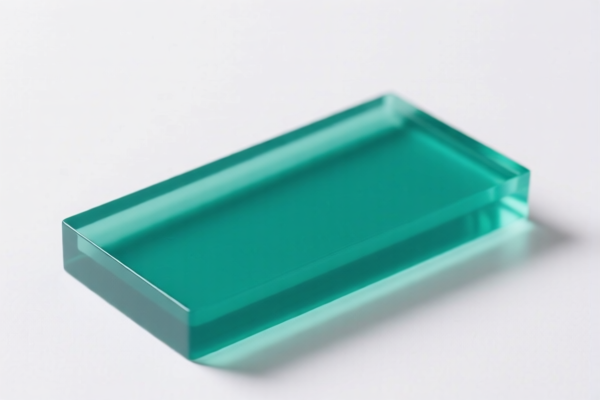

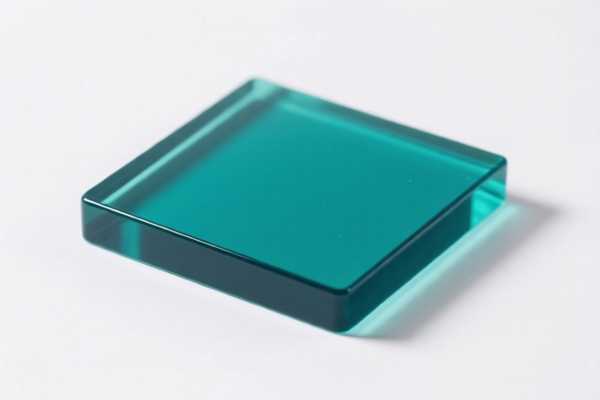
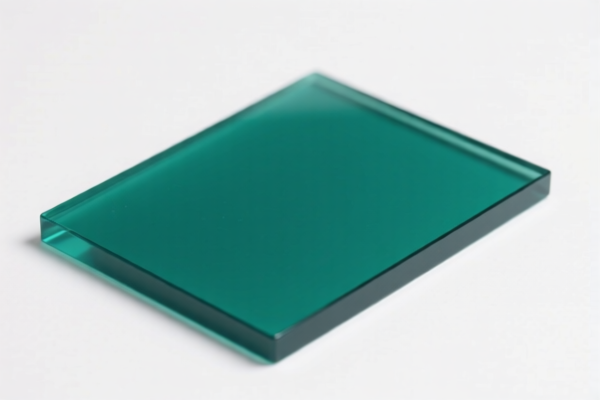
AI Analysis
🎨 Melamine Resin for Paints (Coating Materials)
🌐 HS Code Reference & Customs Clearance Guide | 2026 Latest Tariff Analysis | Professional Clearance Strategy
📌 I. Product Definition & Classification: What is "Melamine Resin for Paints"?
Melamine resin is a synthetic thermosetting polymer derived from melamine and formaldehyde. In the context of paints and coatings, it is primarily used as a cross-linking agent (hardener) to enhance durability, gloss, chemical resistance, and weathering properties of automotive finishes, industrial coatings, and powder coatings.
In international trade, the classification depends heavily on the physical state and intended use:
Form A: Primary Shape / Raw Resin (Granules, Powders, Flakes)
Logic: If the product is the basic raw material (polymer) before being dissolved or dispersed into a final paint formulation.
* Classification Logic:* Falls under Chapter 39 (Plastics), specifically Amino-resins.
Form B: Ready-to-Use Paint / Varnish / Liquid Coating
Logic: If the resin is already dispersed in a medium (solvent/water) or mixed with other binders to form a ready-to-apply paint or varnish.
* Classification Logic:* Falls under Chapter 32 (Tanning or Dyeing Extracts; Pigments; Paints and Varnishes).
⚠️ Key Distinction Point:
- If it is a raw polymer (primary shape) intended to be mixed later → HS Code 3909.
- If it is a liquid coating/varnish (dispersed in medium) or ready for application → HS Code 3208.
📦 II. HS Code Classification Details (2026 Latest Tariff Authority Reference)
Based on the provided data, here are the specific classifications for Melamine Resin used in paints, ranging from raw materials to finished coatings:
| HS Code | Product Description | Application Scenario | Tax Logic & Summary |
|---|---|---|---|
3909.20.00.00 |
Melamine Resins (Primary Shape) | Raw material form; granules, powders, or sheets for further processing into coatings. | Summary: Melamine resin coating material, consistent with primary/semi-finished application form. Tax: 41.5% |
3909.39.00.00 |
Other Amino Resins (Primary Shape) | Other types of amino-based resins, not specifically melamine, but in primary raw form. | Summary: Other amino resin, consistent with primary shape resin/raw material logic. Tax: 41.5% |
3208.90.00.00 |
Paints & Varnishes Based on Synthetic Polymers | Finished liquid coating; resin dispersed in a medium, ready for painting applications. | Summary: Coating material based on synthetic polymers, consistent with paint/varnish usage. Tax: 38.2% |
3208.10.00.00 |
Paints & Varnishes Dispersed in Non-Aqueous Media | Liquid coating form where polymer is dispersed in a solvent (non-water based). | Summary: Paint/varnish form where polymer is dispersed in a medium. Tax: 38.7% |
🔍 Critical Note:
- HS Code 3909.20.00.00 is the most common for pure melamine resin powder/granules.
- HS Code 3208.x.x.x.x applies if the product is already a liquid paint, varnish, or dispersion.
- Misclassification can lead to significant duty differences or customs delays. For example, declaring a liquid paint as a raw resin (3909) may be rejected as it doesn't match the physical description.
💰 III. 2026 Latest Tariff Rate Details (Including Surcharges, Policy Add-ons)
✅ Applicable Country: United States (US)
✅ Origin: China (CN)
✅ Effective Date: 2025/2026 Tariff Regime (Including Section 301 & IEEPA Add-ons)
🎯 1. 3909.20.00.00 & 3909.39.00.00 —— Melamine & Other Amino Resins (Primary Shape)
| Item | Detail |
|---|---|
| Base Tariff Rate | 6.5% (Ad Valorem) |
| Section 301 Surcharge (25%) | +25.0% (Additional duties under US Trade Act Section 301) |
| Section 122 / IEEPA Surcharge (10%) | +10.0% (Additional duties under International Emergency Economic Powers Act, often referred to as Section 122 or specific China tariffs) |
| Total Effective Tax Rate | 41.5% |
| Tax Calculation | CIF Value × 41.5% |
| De Minimis Eligibility | ❌ Not Eligible (De Minimis exemption does not apply to goods subject to Section 301/IEEPA tariffs) |
| Legal Path | Base Tariff 6.5% + Section 301 25% + IEEPA 10% = 41.5% |
📌 Explanation:
- The base duty for melamine resin is relatively low (6.5%) because it is a chemical intermediate.
- However, due to ongoing US-China trade tensions, 35% of additional tariffs are applied (25% from Section 301 + 10% from IEEPA/Section 122).
- Total 41.5% is a high barrier. Importers must factor this into their cost structure.
🎯 2. 3208.90.00.00 —— Paints & Varnishes Based on Synthetic Polymers
| Item | Detail |
|---|---|
| Base Tariff Rate | 3.2% (Ad Valorem) |
| Section 301 Surcharge (25%) | +25.0% |
| Section 122 / IEEPA Surcharge (10%) | +10.0% |
| Total Effective Tax Rate | 38.2% |
| Tax Calculation | CIF Value × 38.2% |
| De Minimis Eligibility | ❌ Not Eligible |
| Legal Path | Base Tariff 3.2% + Section 301 25% + IEEPA 10% = 38.2% |
📌 Note:
- Even though it is a "paint" (finished good), the base duty is very low (3.2%).
- The additional tariffs bring the total to 38.2%.
- This is slightly cheaper (3.3% less) than the raw resin classification (3909), but only if the product is legally classified as a paint/varnish.
🎯 3. 3208.10.00.00 —— Paints Dispersed in Non-Aqueous Media
| Item | Detail |
|---|---|
| Base Tariff Rate | 3.7% (Ad Valorem) |
| Section 301 Surcharge (25%) | +25.0% |
| Section 122 / IEEPA Surcharge (10%) | +10.0% |
| Total Effective Tax Rate | 38.7% |
| Tax Calculation | CIF Value × 38.7% |
| De Minimis Eligibility | ❌ Not Eligible |
| Legal Path | Base Tariff 3.7% + Section 301 25% + IEEPA 10% = 38.7% |
📌 Note:
- Similar to3208.90, but specific to non-aqueous (solvent-based) dispersions.
- Total tax is 38.7%, making it the most expensive of the paint categories due to a slightly higher base rate.
🛠️ IV. Customs Clearance Practical Advice (Pitfall Avoidance Guide)
✅ 1. Required Documentation Checklist
| Document | Must Provide | Explanation |
|---|---|---|
| ✅ Product Specification Sheet | ✔️ | Must clearly state: Chemical name (Melamine-Formaldehyde), Physical form (Powder/Liquid), Solids content, Viscosity (if liquid). |
| ✅ Safety Data Sheet (SDS) | ✔️ | Critical for identifying hazardous chemicals and proper classification. |
| ✅ Commercial Invoice | ✔️ | Must specify: "Melamine Formaldehyde Resin" or "Synthetic Polymer Paint." Avoid vague terms like "Chemical." |
| ✅ Bill of Lading | ✔️ | Ensure weight and quantity match invoice. |
| ✅ Certificate of Origin | ✔️ | To prove Chinese origin for accurate tariff application. |
| ✅ Usage Declaration | ✔️ | State whether it is a "Raw Material for Paint Manufacturing" or "Ready-to-Use Paint." |
✅ 2. Classification Strategy (Key Tips)
🔥 "Check the State: Powder is 3909, Liquid is 3208. Choose Wisely!"
| Scenario | Correct HS Code | Why? |
|---|---|---|
| Melamine Resin Powder/Granules | 3909.20.00.00 |
It is a primary shape polymer, not yet a paint. |
| Melamine Resin Solution (Liquid) | 3208.90.00.00 or 3208.10.00.00 |
If dissolved in solvent/water, it is often classified as a paint/coating. |
| Mixed Paint with Melamine | 3208.x.x.x.x |
If mixed with other binders and ready to paint, it is a paint. |
| Unclassified "Resin" | ❌ Avoid | Vague descriptions lead to customs holds. |
⚠️ Common Mistake:
Declaring a liquid melamine dispersion as3909.20.00.00(Raw Resin) because it contains "resin."
Risk: Customs may reclassify it as a paint (3208) or reject the shipment for misdescription. While the tax difference is small (41.5% vs 38.2%), compliance is key to avoiding penalties.
✅ 3. Special Circumstances
| Situation | Handling Advice |
|---|---|
| Small Samples | Even small quantities are subject to full tariffs (no de minimis for China-origin goods with Section 301 tariffs). |
| Mixed Shipments | If shipping both raw resin (3909) and paint (3208), declare separately with distinct HS codes. Do not lump them under one code. |
| Third-Party Manufacturing | If the resin is manufactured in a third country but assembled in China, origin rules apply. Ensure proper CO is issued. |
🌍 V. Global Market Comparison (2026 Latest)
| Country/Region | Recommended HS Code | Tariff (China Origin) | Certification Required | Remarks |
|---|---|---|---|---|
| 🇺🇸 USA | 3909.20.00.00 / 3208.x.x |
38.2% - 41.5% | SDS, MSDS | High tariffs due to Section 301 & IEEPA. |
| 🇨🇳 China | 3909.20.00.00 |
~6.5% (Base) | None | Export from China typically uses base rates. |
| 🇪🇺 EU | 3909.40.00 / 3208.90 |
0% - 6.5% | REACH, SDS | Lower tariffs, but strict chemical registration (REACH) required. |
| 🇯🇵 Japan | 3909.50.00 / 3208.90 |
5% - 8% | JIS Standards | Moderate tariffs, strong quality standards. |
📌 Conclusion:
- The US market is the most expensive for Melamine Resin imports from China due to the cumulative 35%+ surcharges.
- EU and Japan have lower tariffs but stricter chemical safety regulations (REACH in EU).
📌 VI. Common Errors & Pitfalls (Lessons Learned)
❌ Mistake 1: Declaring "Melamine" instead of "Melamine Formaldehyde Resin"
👉 Consequence: Customs may reject the shipment for incomplete chemical description. Melamine (the monomer) and Melamine Resin (the polymer) have different HS codes!
Correct: Always specify "Melamine Formaldehyde Resin."
❌ Mistake 2: Confusing "Raw Resin" with "Paint"
👉 Consequence: If you declare a liquid dispersion as raw resin, customs may audit and apply penalties.
Correct: Check physical state. Liquid = Paint (3208) OR Raw Dispersion (3909) depending on concentration and intent. Consult a customs broker.
❌ Mistake 3: Ignoring Section 122 / IEEPA Add-ons
👉 Consequence: Underestimating landed cost by 10%.
Correct: Always budget for the total 41.5% (for raw) or 38.2% (for paint) in US imports.
❌ Mistake 4: Not providing SDS
👉 Consequence: Shipment held at port for chemical safety review.
Correct: Always include a current, compliant SDS (Section 15: Transport Information).
🎯 VII. Conclusion: Precise Classification, Efficient Clearance!
🎯 Key Takeaways:
🔹 "Powder is 3909 (41.5%), Liquid is 3208 (38.2-38.7%). Check the Form!"
🔹 "Section 301 + IEEPA = High Tariffs. Budget accordingly."
🔹 "Melamine ≠ Melamine Resin. Be Specific."
📌 Pro Tip:
If you are importing large volumes, consider applying for a Pre-Ruling (Binding Ruling) from US Customs and Border Protection (CBP) to confirm the HS Code. This provides legal certainty and avoids disputes at the border.
📣 Immediate Action:
📞 Contact a licensed customs broker to review your SDS and Product Spec.
🚀 Ensure your Commercial Invoice explicitly states "Melamine Formaldehyde Resin" or "Synthetic Paint."
💡 Accurate classification saves time, money, and legal headaches!
✨ Professional Clearance Starts with Precise Classification!
💼 Every Percent in Tariff Matters!
Customer Reviews
About HS Code Classification
The Harmonized System (HS) is an internationally standardized nomenclature developed by the World Customs Organization (WCO) to classify traded products. Over 200 countries use the HS system as the basis for customs tariffs, trade statistics, and import/export regulations.
Each HS code follows a hierarchical structure:
- Chapter (2 digits) — Broad category of goods (e.g., Chapter 84: Machinery and Mechanical Appliances)
- Heading (4 digits) — More specific grouping within the chapter
- Subheading (6 digits) — Internationally standardized breakdown, used by all WCO member countries
- National subdivisions (8-10 digits) — Country-specific extensions for further classification, such as US HTSUS 10-digit codes
Correct HS code classification is essential for smooth customs clearance, accurate duty payment, and compliance with trade regulations. Misclassification can lead to customs delays, overpayment of duties, or penalties.
When importing from CN to US, the applicable tariff rates may include:
- Most-Favored-Nation (MFN) rate — The standard duty rate applied to WTO members
- General rate — Applied to countries without trade agreements
- Trade remedy duties — Additional tariffs such as Section 301 (anti-dumping), Section 232 (national security), or countervailing duties
The information provided on this page is for reference purposes only. For official classification, please consult with your local customs authority or a licensed customs broker.