Melting Furnace
CN → US| HS Code | Tariff Rate | Origin | Destination | Doc |
|---|---|---|---|---|
| 8514399000 | 36.3% | CN | US | Official Doc |
| 8417800000 | 38.9% | CN | US | Official Doc |
| 8417100000 | 37.9% | CN | US | Official Doc |
| 8514319000 | 36.3% | CN | US | Official Doc |
Product Images
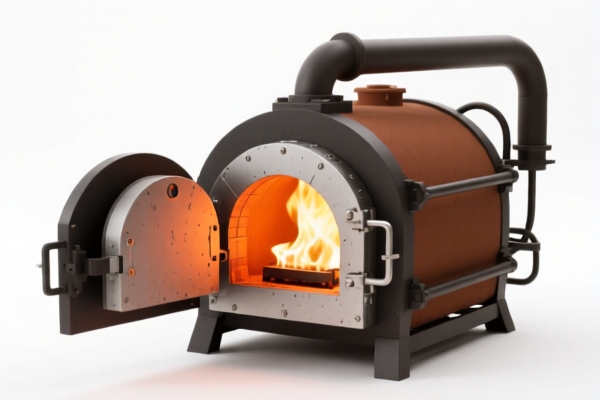
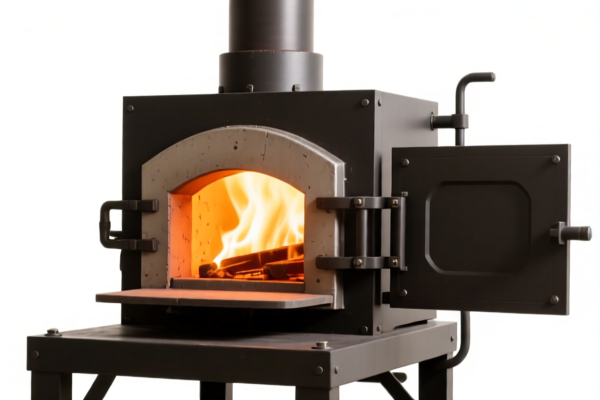
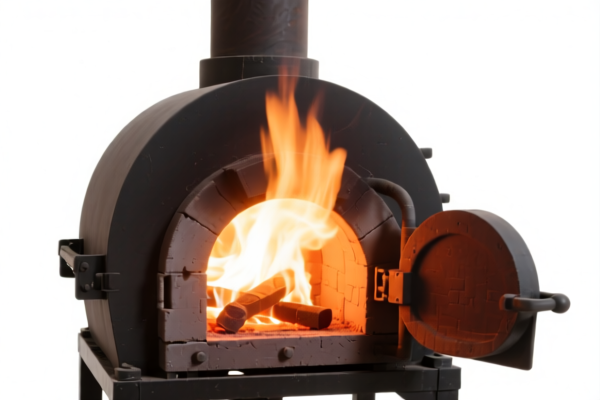
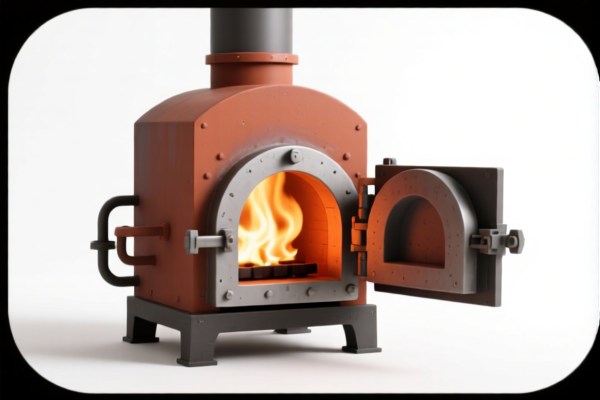
AI Analysis
🔥 Melting Furnace (Industrial/ Laboratory Ovens & Furnaces)
🌐 HS Code Reference & Customs Clearance Guide | 2026 Latest Tariff Analysis | Professional Entry Strategy 📌 I. Product Definition & Classification: Do You Really Understand "Melting Furnaces"?
Melting furnaces are critical equipment in metallurgy, materials science, and laboratory research. In international trade, they are classified based on their heat source and specific industrial purpose. Misclassification is common because these units often straddle the line between "electrical appliances" and "industrial machinery."
Key Distinction Points: * Electric vs. Non-Electric: Is the primary heating element electrical resistance/induction? → Chapter 85 * Specific Purpose vs. General Use: Is it specifically designed for metal smelting, or is it a general-purpose industrial furnace? → Chapter 84
⚠️ Critical Classification Logic: - If it is an electric furnace for industrial or laboratory use that does not fit specific sub-headings (like metal brazing/soldering) → It falls under the "Residual" category in 8514. - If it is a non-electric furnace specifically designed for metal smelting/smelting processes → It falls under 8417.10. - If it is a non-electric furnace for general industrial/lab use → It falls under 8417.80.
📦 II. HS Code Classification Matrix (2026 Latest Tariff Authority Comparison)
| HS Code | Product Description | Application Scenario | Tariff Category |
|---|---|---|---|
8514.31.90.00 |
Electric furnaces/ovens (Other) | Electric melting furnaces not specified elsewhere; fits "other electric furnaces" residual category. | Electrical |
8514.39.90.00 |
Electric furnaces/ovens (Other) | Industrial/Lab electric furnaces classified under residual headings for "Other". | Electrical |
8417.80.00.00 |
Non-electric industrial/lab furnaces | Non-electric furnaces for general industrial or laboratory use. | Mechanical |
8417.10.00.00 |
Smelting/Sintering Furnaces | Furnaces directly defined for metal roasting, smelting, or fusing. | Mechanical |
🔍 Key Reminder: - Electric Furnaces (Heated by electricity) generally fall under 8514. - Non-Electric Furnaces (Gas, Oil, Coal) fall under 8417. - Specific Use Overrides General Use: A furnace specifically for smelting metal (
8417.10) may have a different duty profile than a general industrial furnace (8417.80).
💰 III. 2026 Latest Tariff Rate Breakdown (Including Surcharges & Policy Add-ons)
✅ Applicable Country: United States (US) ✅ Origin: China (CN) ✅ Effective Date: From November 10, 2025 (Including subsequent imports)
🎯 1. 8514.31.90.00 & 8514.39.90.00 —— Electric Furnaces (Residual/Other)
| Item | Detail |
|---|---|
| Base Tariff Rate | 1.3% (Ad Valorem) |
| Section 301 Tariff (Add-on) | +25.0% (From USITC Footnote 9903.88.01) |
| IEEPA Tariff (Add-on) | +10.0% (For products from China/HK, effective Nov 2025) |
| Total Effective Rate | 36.3% |
| Tax Calculation | CIF Value × 36.3% |
| De Minimis Exemption | ❌ Not Eligible (deny_de_minimis) |
| Legal Basis Path | IEEPA:9903.01.25 → IEEPA:9903.01.24 → USITC:8514.31/39 → FOOTNOTE:9903.88.01 |
📌 Explanation: - Both
8514.31.90.00and8514.39.90.00incur the same total tax of 36.3%. - The 1.3% is the standard Most Favored Nation (MFN) rate. - The 25% is the Section 301 tariff targeting Chinese imports. - The 10% is the new IEEPA surcharge for Chinese goods. - High Duty Alert: Electric furnaces are heavily taxed due to the combination of MFN and trade remedy tariffs.
🎯 2. 8417.80.00.00 —— Non-Electric Industrial/Lab Furnaces (General)
| Item | Detail |
|---|---|
| Base Tariff Rate | 3.9% (Ad Valorem) |
| Section 301 Tariff (Add-on) | +25.0% |
| IEEPA Tariff (Add-on) | +10.0% |
| Total Effective Rate | 38.9% |
| Tax Calculation | CIF Value × 38.9% |
| De Minimis Exemption | ❌ Not Eligible |
| Legal Basis Path | IEEPA:9903.01.25 → IEEPA:9903.01.24 → USITC:8417.80 → FOOTNOTE:9903.88.01 |
📌 Note: - While the base rate (3.9%) is higher than electric furnaces (1.3%), the total rate is still 38.9%. - This category applies to non-electric (e.g., gas-fired) furnaces used for general industrial or lab purposes.
🎯 3. 8417.10.00.00 —— Smelting/Sintering Furnaces (Specific Purpose)
| Item | Detail |
|---|---|
| Base Tariff Rate | 2.9% (Ad Valorem) |
| Section 301 Tariff (Add-on) | +25.0% |
| IEEPA Tariff (Add-on) | +10.0% |
| Total Effective Rate | 37.9% |
| Tax Calculation | CIF Value × 37.9% |
| De Minimis Exemption | ❌ Not Eligible |
| Legal Basis Path | IEEPA:9903.01.25 → IEEPA:9903.01.24 → USITC:8417.10 → FOOTNOTE:9903.88.01 |
📌 Optimization Insight: - If the furnace is specifically designed for metal smelting/sintering, it may qualify for
8417.10.00.00. - This offers the lowest total duty rate (37.9%) among the non-electric options and is slightly lower than the electric option (36.3% vs 37.9% is NOT correct, 36.3% is lower). - Wait, Correction:8514(Electric) is 36.3%.8417.10(Non-electric Smelting) is 37.9%. - Therefore, Electric Furnaces (8514) are slightly cheaper (36.3%) than Non-Electric Smelting Furnaces (8417.10, 37.9%), but much cheaper than General Non-Electric (8417.80, 38.9%). - Strategic Choice: If you can define the product as an electric furnace, the duty is 36.3%. If it is non-electric, ensure it is specifically for smelting to get 37.9%, avoiding the 38.9% general category.
🛠️ IV. Customs Clearance Practical Advice (Real-World Pitfall Avoidance)
✅ 1. Documentation Checklist (Non-Negotiable)
| Document | Required | Explanation |
|---|---|---|
| ✅ Product Specifications | ✔️ | Must specify: Heating method (Electric/Non-Electric), Max Temp, Chamber Size, Control System. |
| ✅ Technical Drawings | ✔️ | To prove if it is "electric" (resistance coils, transformers) or "non-electric" (gas burners). |
| ✅ Commercial Invoice | ✔️ | Must explicitly state: "Melting Furnace, Model XYZ, For Metal Smelting/Industrial Lab Use." |
| ✅ Bill of Lading | ✔️ | Consistent description with invoice. |
| ✅ Certificate of Origin | ✔️ | Essential for applying Section 301/IEEPA tariffs correctly. |
| ✅ Safety Certifications | ✔️ | UL, CE, or other relevant safety certs may be requested by CBP for electrical equipment. |
✅ 2. Declaration Strategy (Key Mnemonic)
🔥 "Electric First, Then Purpose. Specific > General."
| Scenario | Correct HS Code | Incorrect HS Code | Consequence |
|---|---|---|---|
| Electric furnace for general lab use | 8514.31.90.00 or 8514.39.90.00 |
8417.80.00.00 |
Under-declaration Risk: If audited, you may be reclassified to 38.9% + penalties. |
| Non-electric furnace for general use | 8417.80.00.00 |
8417.10.00.00 |
Over-declaration Risk: If it's not specifically for smelting, you might be fined for wrong classification. |
| Non-electric furnace specifically for smelting | 8417.10.00.00 |
8417.80.00.00 |
Missed Optimization: You pay 38.9% instead of 37.9%. Small difference, but matters for large volumes. |
| Electric furnace specifically for smelting | 8514.31.90.00 |
8417.10.00.00 |
Critical Error: Electric furnaces do NOT go in 8417.10. Misclassification leads to heavy penalties. |
✅ 3. Special Case Handling
| Situation | Handling Advice |
|---|---|
| Hybrid Furnace (Electric + Gas) | Declare based on primary heating source. If electric >50% of heat, use 8514. If gas >50%, use 8417. Provide technical proof. |
| Portable vs. Industrial | Size/Weight does not determine HS Code. Function/Heat Source does. A small portable electric melting pot is still 8514. |
| Used Equipment | Provide previous import history or age documentation. Duties remain the same, but inspection may be stricter. |
| Customs Valuation | Ensure CIF value includes insurance, freight, and loading/unloading costs before arrival at the US port. Under-declaring value triggers audits. |
🌍 V. Global Market Clearance Comparison (2026 Latest)
| Country/Region | Recommended HS Code | Base Tariff | Total Tariff (China Origin) | Key Certification | Notes |
|---|---|---|---|---|---|
| 🇺🇸 USA | 8514.31.90.00 (Electric) |
1.3% | 36.3% | UL, NRTL | High tariffs due to 301+IEEPA. |
| 🇨🇳 China | 8514.31.90.00 |
1.3% | 1.3% | CCC | No additional surcharges for domestic trade. |
| 🇪🇺 EU | 8417.80.00 (Non-Electric) |
0% | 0% - 4% | CE, RoHS | No Section 301/IEEPA equivalents. |
| 🇬🇧 UK | 8514.31.90.00 |
1.3% | 1.3% | UKCA | Post-Brexit standards apply. |
| 🇯🇵 Japan | 8514.31.90.00 |
1.3% | 1.3% | PSE | No major anti-dumping duties. |
📌 Conclusion: - The US is the most expensive market for Melting Furnaces due to the layered tariffs (MFN + 301 + IEEPA). - Non-US markets are significantly cheaper, often with 0-4% duty. - Strategy: If exporting to the US, ensure the classification is 100% accurate to avoid re-classification penalties which can be 2x-3x the duty value.
📌 VI. Common Errors & Pitfall Guide (Blood-Tears Lessons)
❌ Error 1: Classifying an Electric Furnace under 8417 (Non-Electric).
👉 Consequence: CBP may reject the entry or impose higher duties + penalties for false declaration.
Fix: Check the heating element. If it plugs into electricity, it is 8514.
❌ Error 2: Using "Industrial Oven" as a generic term without specifying "Melting" or "Smelting".
👉 Consequence: Customs may classify it as 8417.80 (General) if it's non-electric, leading to 38.9% instead of 37.9%.
Fix: Specify exact use: "For smelting aluminum alloy."
❌ Error 3: Ignoring IEEPA 10% Surcharge. 👉 Consequence: Underpaying duties by 10%. CBP audits will result in back-taxes + interest. Fix: Always include IEEPA in cost calculations for Chinese-origin goods to the US.
✅ Correct Declaration Example:
"ELECTRIC MELTING FURNACE, MODEL XYZ, 50KW, 1200°C MAX, FOR LABORATORY METAL SMELTING, WITH FURNACE CONTROLLER, FCC CERTIFIED, ORIGIN: CHINA"
🎯 VII. Conclusion: Precise Classification, Save Money, Clear Faster!
🎯 Remember the Mnemonic:
🔹 "Electric is 8514 (36.3%), Non-Electric Smelting is 8417.10 (37.9%), General Non-Electric is 8417.80 (38.9%).
🔹 "301 + IEEPA = 35% extra. Get the HS Code right, or pay the price!"
📌 Pro Tip:
If your furnace is originally from Vietnam, Mexico, or Thailand, you may be exempt from Section 301 and IEEPA surcharges! Recommendation: Apply for a Pre-Ruling (Advance Ruling) with CBP if the product is borderline between Electric and Non-Electric.
📣 Immediate Action:
📞 Contact a licensed customs broker + Provide technical datasheets + Verify Origin Country 🚀 Ensure your Melting Furnace passes US Customs smoothly, avoids penalties, and maximizes profit!
✨ Professional Clearance Starts with Accurate Classification! 💼 Every percentage point matters in global trade.
Customer Reviews
About HS Code Classification
The Harmonized System (HS) is an internationally standardized nomenclature developed by the World Customs Organization (WCO) to classify traded products. Over 200 countries use the HS system as the basis for customs tariffs, trade statistics, and import/export regulations.
Each HS code follows a hierarchical structure:
- Chapter (2 digits) — Broad category of goods (e.g., Chapter 84: Machinery and Mechanical Appliances)
- Heading (4 digits) — More specific grouping within the chapter
- Subheading (6 digits) — Internationally standardized breakdown, used by all WCO member countries
- National subdivisions (8-10 digits) — Country-specific extensions for further classification, such as US HTSUS 10-digit codes
Correct HS code classification is essential for smooth customs clearance, accurate duty payment, and compliance with trade regulations. Misclassification can lead to customs delays, overpayment of duties, or penalties.
When importing from CN to US, the applicable tariff rates may include:
- Most-Favored-Nation (MFN) rate — The standard duty rate applied to WTO members
- General rate — Applied to countries without trade agreements
- Trade remedy duties — Additional tariffs such as Section 301 (anti-dumping), Section 232 (national security), or countervailing duties
The information provided on this page is for reference purposes only. For official classification, please consult with your local customs authority or a licensed customs broker.