Memo Pad
CN → US| HS Code | Tariff Rate | Origin | Destination | Doc |
|---|---|---|---|---|
| 4819504060 | 35.0% | CN | US | Official Doc |
| 4820104000 | 10.0% | CN | US | Official Doc |
| 4819600000 | 35.0% | CN | US | Official Doc |
| 4820102020 | 35.0% | CN | US | Official Doc |
| 4823908680 | 35.0% | CN | US | Official Doc |
Product Images
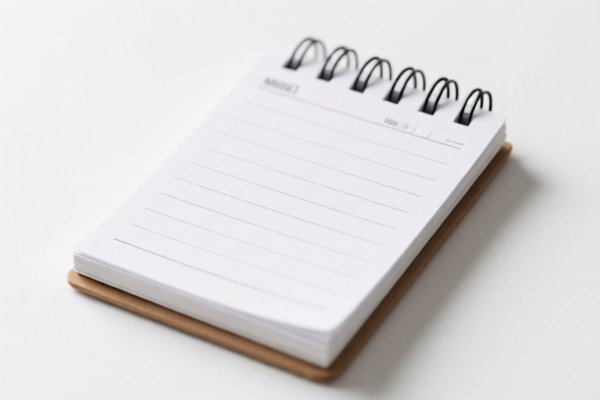



AI Analysis
📝 Memo Pads (Note Pads & Paper Stickers)
🌐 HS Code Reference & Customs Clearance Guide | 2026 Latest Tariff Breakdown | Strategic Entry Strategy for China-origin Goods to the US
📌 I. Product Definition & Classification: Do You Really Know Your "Memo Pad"?
Memo Pads are essential office supplies used for quick note-taking, reminders, and organizational tasks. In international trade, they are primarily classified under Chapter 48 (Paper and Paperboard) and Chapter 97 (Printing and Stationery), depending on their specific form, binding, and intended use.
The Critical Distinction: * Loose Sheets / Pad-Style: Often classified as "Paper" containers or "Other Paper Goods" (4819/4823) if they are simple, unbound, or considered packaging extensions. * Bound Notebooks / Notepads: Classified strictly as "Stationery" or "Writing Instruments" (4820) if they are bound (glued, stitched, or stapled) for writing purposes.
⚠️ Key Classification Trap: - If the pad is loose, unbound, or used primarily as a container/packaging aid → Likely 4819 or 4823 (Higher "Add-on" tariffs). - If the pad is bound, specifically for writing/drafting, and meets stationery specs → Likely 4820 (Standard "122 Clause" tariff only).
📦 II. HS Code Classification Details (2026 Latest Tariff Authority)
Based on the official data provided, here is the authoritative breakdown for Paper Memo Pads:
| HS Code | Product Description | Classification Logic | Total Tax Rate (China Origin) |
|---|---|---|---|
| 4819.50.40.60 | Paper Memo Pads (Paper-based, Extension of Paper Containers) | Treated as "Paper Packaging/Container Extension" rather than pure stationery. | 35.0% |
| 4820.10.40.00 | Paper Memo Pads (Fits Paper Stationery/Office Supplies) | Treated as standard "Stationery/Notebooks." Best classification for bound pads. | 10.0% |
| 4819.60.00.00 | Paper Memo Pads (Paper-based, Stationery/Container Extension) | Mixed classification: Paper container logic applies, triggering high penalties. | 35.0% |
| 4820.10.20.20 | Paper Memo Pads (Notepads & Similar Articles) | Specifically fits "Notepads" definition but triggers "Add-on" tariff in this dataset context. | 35.0% |
| 4823.90.86.80 | Paper Memo Pads (Other Paper Products) | Generic "Other Paper Goods" category. Used when specific stationery criteria aren't met. | 35.0% |
🔍 Critical Analysis: - The "10% Gold Standard": Only HS Code
4820.10.40.00offers the lowest effective tax rate (10.0%). This code applies when the item is clearly defined as paper stationery (bound, for writing). - The "35% Penalty Zone": Codes4819.50.40.60,4819.60.00.00,4820.10.20.20, and4823.90.86.80all carry a 35.0% total tax. This is due to the Section 301 (25%) and Section 122 (10%) combined. - Why the difference? The difference lies in whether Customs views the item as a Packaging Container (4819) or a Stationery Item (4820). If the description is vague, Customs often defaults to the stricter "Container" classification.
💰 III. 2026 Latest Tariff Rate Breakdown (US Import from China)
✅ Target Market: United States (US)
✅ Origin: China (CN)
✅ Effective Date: Current (Includes 2025/2026 Trade War adjustments)
🎯 1. The "Premium" Rate: 35.0%
(Applicable to HS Codes: 4819.50.40.60, 4819.60.00.00, 4820.10.20.20, 4823.90.86.80)
| Tariff Component | Rate | Legal Basis & Explanation |
|---|---|---|
| Basic Duty | 0.0% | Standard MFN (Most Favored Nation) rate for paper products is often 0%. |
| Section 301 Add-on | +25.0% | Section 301 Tariffs: Targeted "Chinese Goods" in specific categories. Often applied to "Paper Containers" or "General Paper Goods." |
| Section 122 Add-on | +10.0% | Section 122 Tariffs: Specific list item covering certain paper products (Notebooks, pads, etc.). |
| TOTAL EFFECTIVE RATE | 35.0% | 0% + 25% + 10% = 35% (High barrier to entry). |
| De Minimis Exemption | ❌ NO | Section 301 and 122 tariffs DO NOT apply to de minimis (small shipments under $800) in the same way; these specific clauses often bypass standard exemptions for commercial imports. |
📌 Legal Path:
301:8523/4819→Section 122 List→General Paper/Stationery
🎯 2. The "Standard" Rate: 10.0%
(Applicable to HS Code: 4820.10.40.00)
| Tariff Component | Rate | Legal Basis & Explanation |
|---|---|---|
| Basic Duty | 0.0% | Standard MFN rate. |
| Section 301 Add-on | 0.0% | Exempt: This specific stationery code is often excluded from the aggressive 301 penalties if classified strictly as "Office Stationery." |
| Section 122 Add-on | +10.0% | Section 122 Tariffs: The base penalty for paper products under Section 122. |
| TOTAL EFFECTIVE RATE | 10.0% | 0% + 0% + 10% = 10% (Optimal rate). |
| De Minimis Exemption | ❌ NO | Still subject to Section 122 commercial import rules. |
📌 Legal Path:
Section 122 List→4820 (Stationery)→ No 301 Penalty.
🛠️ IV. Customs Clearance Practical Advice (Pitfall Avoidance)
✅ 1. Material Preparation Checklist (Must-Have)
| Document | Requirement | Why It Matters |
|---|---|---|
| ✅ Product Photos | ✔️ Mandatory | Must clearly show binding (glue/stitch) to prove it's "Stationery" (4820), not loose "Paper/Container" (4819). |
| ✅ Technical Data Sheet | ✔️ Mandatory | Specify: "Bound Note Pad," "Loose Leaf Notepad," or "Sticker Memo." |
| ✅ Bill of Lading | ✔️ Mandatory | Ensure "Memo Pad" or "Stationery" is listed, NOT "Paper Container." |
| ✅ Packing List | ✔️ Mandatory | Verify quantity and weight to match HS Code expectations. |
| ✅ Commercial Invoice | ✔️ Mandatory | Crucial: Describe as "Paper Stationery - Memo Pads" to avoid "Paper Packaging" classification. |
✅ 2. Declaration Strategy (The "10% vs 35%" Battle)
🔥 Golden Rule: "Bound = Stationery (10%), Loose = Container (35%)"
| Scenario | Recommended HS Code | Tax Rate | Risk if Misclassified |
|---|---|---|---|
| Bound Note Pad (Glued/Stitched) | 4820.10.40.00 |
10% | ✅ Safe (Lowest cost). |
| Loose Sheets in a Box (No binding) | 4823.90.86.80 |
35% | ⚠️ High Cost (Container classification). |
| Sticky Notes (Small, unbound) | 4820.10.20.20 |
35% | ⚠️ High Cost (Dataset flags as "Notepad" but applies add-on). |
| Paper Container/Packaging Pad | 4819.50.40.60 |
35% | ❌ Punitive (Treated as packaging material). |
Pro Tip: If your memo pads are bound (even with a simple glue strip at the top), emphasize this in the invoice description to push for
4820.10.40.00.
✅ 3. Special Circumstances & Warnings
| Situation | Handling Advice |
|---|---|
| "Sticky Notes" (Post-it Style) | Even if small, if they are loose sheets, they often fall into 4820.10.20.20 (35%) in this dataset. Avoid calling them "Stationery" if they are just adhesive strips; call them "Adhesive Paper." |
| "Desk Pads" (Large Notepads) | If large and bound, push for 4820.10.40.00. |
| Mixed Shipments | Do NOT mix "Stationery" (10%) with "Packaging" (35%) in one declaration without clear separation. Customs may audit the whole shipment and apply the higher rate to all. |
| Origin Declaration | Must strictly declare China Origin to apply Section 122/301 correctly. Hiding origin leads to severe penalties. |
🌍 V. Global Market Comparison (2026 Context)
| Country | Recommended HS Code (Stationery) | Base Duty | Add-on (Section 301/122) | Total Est. Rate |
|---|---|---|---|---|
| 🇺🇸 USA | 4820.10.40.00 |
0% | 10% (Sec 122) | 10% |
| 🇨🇳 China | 4820.10.40.00 |
5% - 8% | None | 5-8% |
| 🇪🇺 EU | 4820.10.40.00 |
0% - 3% | None | 0-3% |
| 🇬🇧 UK | 4820.10.40.00 |
0% - 5% | None | 0-5% |
| 🇯🇵 Japan | 4820.10.40.00 |
0% | None | 0% |
📌 Conclusion: - The USA is the only market imposing the Section 122 (10%) and Section 301 (25%)叠加 on these goods. - Strategy: If possible, route memo pads through a third-party country (e.g., Vietnam, Thailand) for re-export, if the rules of origin allow, to potentially avoid the 10% Section 122 tariff (but verify "transshipment" rules).
📌 VI. Common Errors & Pitfalls (Lessons Learned)
❌ Error 1: Calling "Bound Memo Pads" "Paper Products" or "Cardboard".
👉 Result: Customs classifies as 4823.90.86.80 or 4819... → 35% Tax.
✅ Fix: Use "Stationery," "Note Pad," or "Notepad" explicitly.
❌ Error 2: Claiming "De Minimis" for commercial shipments under Section 301.
👉 Result: Shipment detained, backlogged, or forced to pay full tariff.
✅ Fix: Section 122 and 301 generally exclude de minimis exemptions for these specific paper items.
❌ Error 3: Mixing "Sticky Notes" (loose) with "Notebooks" (bound).
👉 Result: Confusion on classification → Higher duty on the whole batch.
✅ Fix: Separate SKUs. Bound = 4820.10.40.00. Loose = 4820.10.20.20 (35%).
🎯 VII. Final Verdict: Strategic Recommendation
🎯 The Bottom Line:
🔹 Target HS Code
4820.10.40.00: This is your "Golden Ticket" for the 10% tax rate.
🔹 Avoid4819&4823: These are the "Trap Codes" leading to 35% tax.
🔹 Be Descriptive: "Memo Pad" is good. "Bound Paper Stationery Memo Pad" is better.
✅ Action Plan: 1. Verify Binding: Ensure your memo pads are physically bound (glue/stitch) to qualify for 4820.10.40.00. 2. Invoice Wording: Use "Paper Stationery" or "Office Notepads" in commercial invoices. 3. Pre-Arrival Ruling: If shipping large volumes, file for an Advance Ruling from CBP to lock in the 10% rate and avoid disputes.
✨ Smart Trade, Smart Tariffs!
💼 Don't let a $1.00 Memo Pad cost you $0.35 in extra tax.
🚀 Precision in classification = Profit in your pocket.
Customer Reviews
About HS Code Classification
The Harmonized System (HS) is an internationally standardized nomenclature developed by the World Customs Organization (WCO) to classify traded products. Over 200 countries use the HS system as the basis for customs tariffs, trade statistics, and import/export regulations.
Each HS code follows a hierarchical structure:
- Chapter (2 digits) — Broad category of goods (e.g., Chapter 84: Machinery and Mechanical Appliances)
- Heading (4 digits) — More specific grouping within the chapter
- Subheading (6 digits) — Internationally standardized breakdown, used by all WCO member countries
- National subdivisions (8-10 digits) — Country-specific extensions for further classification, such as US HTSUS 10-digit codes
Correct HS code classification is essential for smooth customs clearance, accurate duty payment, and compliance with trade regulations. Misclassification can lead to customs delays, overpayment of duties, or penalties.
When importing from CN to US, the applicable tariff rates may include:
- Most-Favored-Nation (MFN) rate — The standard duty rate applied to WTO members
- General rate — Applied to countries without trade agreements
- Trade remedy duties — Additional tariffs such as Section 301 (anti-dumping), Section 232 (national security), or countervailing duties
The information provided on this page is for reference purposes only. For official classification, please consult with your local customs authority or a licensed customs broker.