Memo Paper
CN → US| HS Code | Tariff Rate | Origin | Destination | Doc |
|---|---|---|---|---|
| 4817202000 | 35.0% | CN | US | Official Doc |
| 4822900000 | 35.0% | CN | US | Official Doc |
| 4820104000 | 35.0% | CN | US | Official Doc |
| 4820102020 | 35.0% | CN | US | Official Doc |
| 4817204000 | 35.0% | CN | US | Official Doc |
Product Images
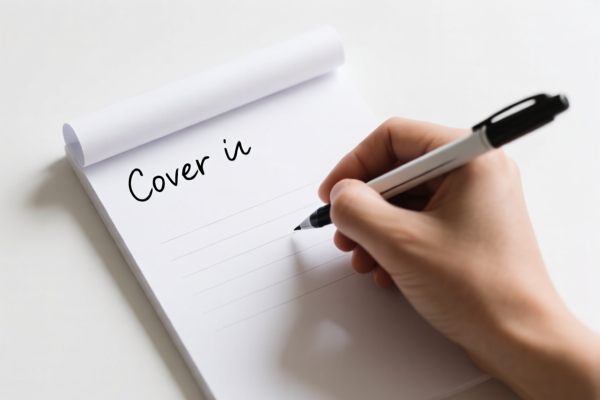
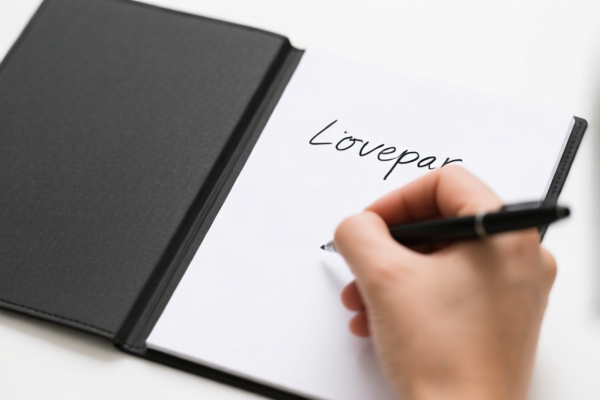
AI Analysis
📝 Memo Paper (Memorandum Pads & Notebooks)
🌐 HS Code Reference & Customs Clearance Guide | 2026 Latest Tariff Analysis | Professional Compliance Strategy
📌 I. Product Definition & Classification: Do You Really Understand "Memo Paper"?
Memo paper, in the context of international trade and customs classification, refers specifically to paper stationery items designed for writing and record-keeping. It is not a generic term for loose sheets of paper (which fall under Chapter 48 as paper itself), but rather finished or semi-finished stationery articles.
In the provided data, "Memo Paper" maps primarily to two distinct categories based on their binding and usage:
- Memorandum Pads (Loose-leaf or unbound pads): Often referred to as "letter pads" or "memo pads" in customs terminology.
- Notebooks/Address Books (Bound): If the memo paper is bound into a notebook format.
⚠️ Key Distinction Point:
- If the item is a pad where pages are only partially glued or stitched at the top/bottom, allowing sheets to be removed → It falls under "Letter pads, memorandum pads and similar articles".
- If the item is a bound book (stitched or glued spine, like a diary or notebook) → It falls under "Diaries, notebooks and address books, bound".
- Crucial: Loose, unbound sheets of paper (A4/Letter) are not memo pads; they are classified under different HS codes (e.g., 4802). The data provided focuses on stationery products.
📦 II. HS Code Classification Details (2026 Latest Tariff Authority Comparison)
Based on the provided <DATA>, "Memo Paper" corresponds to Chapter 48 (Paper and paperboard; articles of paper pulp, of paper or paperboard), specifically Heading 4820.
| HS Code | Product Description | Application Scenario | Binding Type |
|---|---|---|---|
4820.10.20.20 |
Registers, account books, notebooks...: Diaries, notebooks and address books, bound; memorandum pads, letter pads and similar articles | Office memo pads, school notebooks, address books, bound diaries | ✅ Bound or Pad-form |
4820.10.40.00 |
Registers, account books...: Other (Registers, account books, notebooks... Other) | Other stationery articles not specifically listed above (e.g., specialized accounting books, unlisted notebooks) | ✅ Varied |
4817.20.20.00 |
Envelopes, letter cards...: Sheets of writing paper, with border gummed or perforated, with or without inserts, prepared for use as combination sheets and envelopes | Not standard memo pads. Refers to letter cards or stationery sets with gummed borders or inserts. | ❌ Not a standard memo pad |
4822.10.00.00 |
Bobbins, spools...: Of a kind used for winding textile yarn | Irrelevant. This is for textile industry spools, not paper stationery. | ❌ N/A |
4822.90.00.00 |
Bobbins, spools...: Other | Irrelevant. Other paper supports for winding. | ❌ N/A |
🔍 Key Clarification for "Memo Paper":
- The most accurate classification for standard office memo pads or notebooks is4820.10.20.20.
- If the product is a specific type of bound notebook not explicitly named as "diary" or "address book" but fits the general category of "other registers/notebooks," it may fall under4820.10.40.00.
- Exclusion: Do not use4817(Letter cards) or4822(Spools) for standard memo paper. These are for different product types.
💰 III. 2026 Latest Tariff Rate Details (Including Surcharges, Policy Add-ons)
✅ Applicable Country: United States (US)
✅ Country of Origin: China (CN)
✅ Effective Date: Ongoing (Based on current data provided)
🎯 1. 4820.10.20.20 —— Memorandum Pads, Letter Pads, Bound Notebooks
| Item | Content |
|---|---|
| Base Tariff Rate | 0.0% (Ad valorem) |
| Section 301 Surcharge | +25.0% (From USITC Footnote) |
| Total Tariff Rate | 25.0% |
| Tax Calculation | CIF Value × 25% |
| De Minimis Exemption | ❌ Not Applicable (For Section 301 goods, de minimis usually does not apply if value exceeds thresholds or if specifically excluded) |
| Legal Basis Path | USITC:4820.10.20.20 → Section 301 Footnote |
📌 Explanation:
- The base rate for paper stationery is 0%, reflecting low duty on basic paper products.
- However, due to Section 301 Trade Remedy Measures against Chinese goods, an additional 25% surcharge is applied.
- Total Effective Rate: 25%. This is a significant cost driver for paper-based exports to the US.
🎯 2. 4820.10.40.00 —— Other Registers, Notebooks, Stationery Articles
| Item | Content |
|---|---|
| Base Tariff Rate | 0.0% (Ad valorem) |
| Section 301 Surcharge | +25.0% |
| Total Tariff Rate | 25.0% |
| Tax Calculation | CIF Value × 25% |
| De Minimis Exemption | ❌ Not Applicable |
| Legal Basis Path | USITC:4820.10.40.00 → Section 301 Footnote |
📌 Note:
- Identical tax treatment to4820.10.20.20.
- Any "other" paper stationery articles in Chapter 48 falling under this heading are subject to the same 25% total tariff.
🛠️ IV. Customs Clearance Practical Advice (Real-World Pitfall Avoidance)
✅ 1. Documentation Checklist (Essential)
| Document | Required | Description |
|---|---|---|
| ✅ Product Specification Sheet | ✔️ | Must specify: Product name (e.g., "Memo Pad"), paper weight (gsm), binding type (stitched, glued, wire-o), number of pages, size. |
| ✅ Product Photos | ✔️ | Clear images of the front, back, binding mechanism, and interior pages to prove it is a "pad" or "notebook," not loose paper. |
| ✅ Commercial Invoice | ✔️ | Clearly state: "Memo Paper Pads" or "Bound Notebooks," not just "Paper." |
| ✅ Packing List | ✔️ | Detail items per carton, total quantity, gross/net weight. |
| ✅ HS Code Pre-ruling | ✔️ | Highly recommended to confirm 4820.10.20.20 vs 4820.10.40.00 with US Customs (CBP) if unsure. |
✅ 2. Declaration Tips (Key Mnemonics)
🔥 "Bound is Notebook, Pad is Memo, 25% Tax is Inevitable!"
| Scenario | Correct Declaration | Common Mistake |
|---|---|---|
| Standard office memo pad | 4820.10.20.20"Memorandum Pads" |
Misclassifying as loose paper → Incorrect chapter |
| Bound notebook/diary | 4820.10.20.20"Bound Notebooks" |
Confusing with 4817 (Letter cards) |
| Generic stationery kit | 4820.10.40.00"Other Stationery" |
Over-generalizing |
| Loose A4 Paper | 4802 (Not in provided data) |
Using 4820 for loose sheets → Wrong HS Code |
⚠️ Critical Warning:
- Do not describe items as "Stationery Paper" without specifying "Pad" or "Notebook."
- If the item is loose sheets with gummed edges (like a notepad but with a gummed side for sticking), it might be classified under4817.20.20.00(Letter cards/stationery sets). Ensure the description matches the physical form (bound/pad vs. loose/stick-on).
✅ 3. Special Case Handling
| Situation | Handling Advice |
|---|---|
| Custom Branded Memo Pads | Provide brand authorization letters if applicable. The HS code remains 4820.10.20.20 regardless of branding. |
| Eco-Friendly/Recycled Paper | Declare as "Recycled Paper Notebooks." HS code remains the same, but may appeal to eco-conscious buyers. |
| Children’s Drawing Pads | Still classified under 4820.10.20.20 or 4820.10.40.00. No special duty reduction for "children's items" in this category. |
| Digital Notebooks (e.g., Remarkable) | Not Paper! These are electronic devices (Chapter 85 or 90). Do not use 4820 codes. |
🌍 V. Global Market Comparison (2026 Latest)
| Country/Region | Recommended HS Code | Duty Rate | Notes |
|---|---|---|---|
| 🇺🇸 USA | 4820.10.20.20 |
25% | High duty due to Section 301. Must pay 25% on CIF value. |
| 🇨🇳 China | 4820.10.20.20 |
Varies | Check latest Chinese import tariffs. Usually low or 0% for paper products. |
| 🇪🇺 EU | 4820.10.00.00 |
~6.5% | Standard EU duty for paper stationery. No equivalent to US Section 301 surcharge. |
| 🇬🇧 UK | 4820.10.00.00 |
~6.5% | Post-Brexit tariff structure similar to EU for paper products. |
| 🇨🇦 Canada | 4820.10.00.00 |
0-6.5% | CUSMA agreement may offer 0% for qualifying Canadian goods. |
📌 Conclusion:
- The US market is the most expensive for importing memo paper/notebooks from China due to the 25% Section 301 surcharge.
- For other markets, the duty is significantly lower (typically 0-7%).
- Strategy: Consider sourcing from non-China origins (e.g., Vietnam, India) to potentially mitigate the 25% surcharge if exporting to the US.
📌 VI. Common Errors & Pitfalls (Blood & Tears Lessons)
❌ Mistake 1: Classifying loose sheets of paper as "Memo Pads"
👉 Consequence: Incorrect HS Code (4820 vs 4802). While both may have 0% base rate, the 301 surcharge might apply differently or trigger additional scrutiny. Penalty + Delay.
❌ Mistake 2: Using 4817.20.20.00 for standard memo pads
👉 Consequence: This code is for Letter Cards/Postcards or gummed stationery sets. If your product is a standard spiral-bound or glued memo pad, this is incorrect classification. Risk of Audit.
❌ Mistake 3: Ignoring the 25% Surcharge in cost calculations
👉 Consequence: Profit margin erosion. If you calculate duty as 0% (base rate), you will underpay by 25%. Back taxes + Interest + Penalties.
❌ Mistake 4: Failing to distinguish Bound vs. Unbound
👉 Consequence: Misclassification between 4820.10.20.20 and 4820.10.40.00. While both have 25% duty, incorrect description can lead to customs holds for verification.
✅ Correct Approach:
"Memo Pad, 50 sheets, 80gsm, gummed top binding, Brown Kraft Paper, Model MP-01"
HS Code:4820.10.20.20
Duty: 25% (Base 0% + Section 301 25%)
🎯 VII. Conclusion: Precision in Paper, Profit in Peace of Mind!
🎯 Remember the Mantra:
🔹 "Memo Pads & Notebooks: HS 4820, Duty 25%, Don't Get Shook!"
🔹 "Loose Paper is 4802, Pad is 4820, Get the Code Right, Save Time and Energy!"
📌 Pro Tip:
If your memo paper is made from recycled content or has special eco-certifications, highlight this in the invoice. While it doesn't change the HS Code, it may help with marketing and customer preferences in the US/EU markets.
For large volume imports to the US, consider applying for an Exclusion under Section 301 if applicable (though rare for basic stationery). Alternatively, explore transshipment or foreign direct investment benefits if available.
📣 Immediate Action:
📞 Contact a licensed customs broker to verify the exact classification of your specific memo pad design.
📦 Prepare detailed product photos and specifications before shipment.
🧮 Calculate landed cost including 25% duty to ensure profitability.
✨ Professional customs clearance starts with accurate classification!
💼 Every dollar of duty counts—get it right the first time!
Customer Reviews
About HS Code Classification
The Harmonized System (HS) is an internationally standardized nomenclature developed by the World Customs Organization (WCO) to classify traded products. Over 200 countries use the HS system as the basis for customs tariffs, trade statistics, and import/export regulations.
Each HS code follows a hierarchical structure:
- Chapter (2 digits) — Broad category of goods (e.g., Chapter 84: Machinery and Mechanical Appliances)
- Heading (4 digits) — More specific grouping within the chapter
- Subheading (6 digits) — Internationally standardized breakdown, used by all WCO member countries
- National subdivisions (8-10 digits) — Country-specific extensions for further classification, such as US HTSUS 10-digit codes
Correct HS code classification is essential for smooth customs clearance, accurate duty payment, and compliance with trade regulations. Misclassification can lead to customs delays, overpayment of duties, or penalties.
When importing from CN to US, the applicable tariff rates may include:
- Most-Favored-Nation (MFN) rate — The standard duty rate applied to WTO members
- General rate — Applied to countries without trade agreements
- Trade remedy duties — Additional tariffs such as Section 301 (anti-dumping), Section 232 (national security), or countervailing duties
The information provided on this page is for reference purposes only. For official classification, please consult with your local customs authority or a licensed customs broker.