Mesh Rhinestone Socks
CN → US| HS Code | Tariff Rate | Origin | Destination | Doc |
|---|---|---|---|---|
| 6115966010 | 36.3% | CN | US | Official Doc |
| 6217109550 | 32.1% | CN | US | Official Doc |
| 6217909085 | 32.1% | CN | US | Official Doc |
| 6115966020 | 36.3% | CN | US | Official Doc |
Product Images
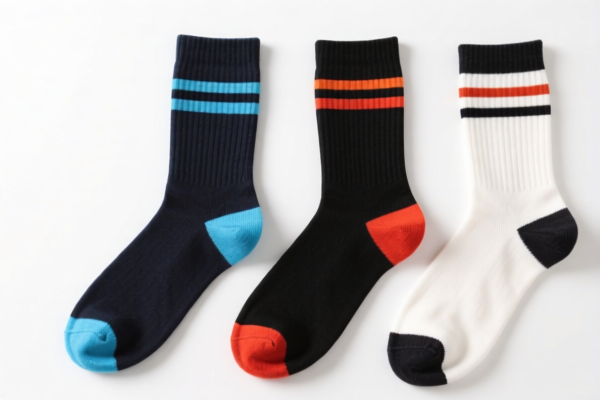
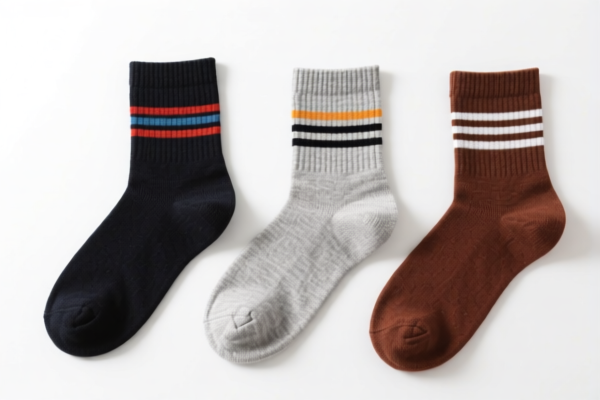
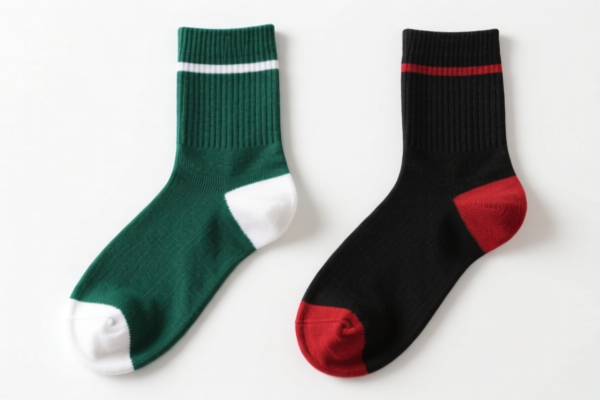
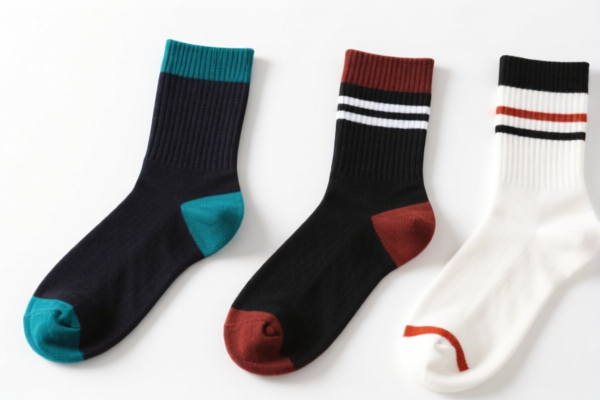
AI Analysis
🕸️ Mesh Rhinestone Socks (Fashion Accessories & Apparel)
🌐 HS Code Reference & Customs Clearance Guide | 2026 Latest Tariff Analysis | Strategic Compliance Strategy
📌 I. Product Definition & Classification: What Exactly Are "Mesh Rhinestone Socks"?
Mesh Rhinestone Socks are fashion-forward hosiery products characterized by two main features:
1. Structure/Morphology: They are socks (hosiery) or made-up clothing accessories. The key distinction lies in whether they are classified as "footwear/hosiery" (Chapter 61) or "other made-up clothing accessories" (Chapter 62).
2. Material & Composition: The base fabric is primarily composed of synthetic fibers (e.g., polyester, nylon, elastane) or man-made fibers. The "rhinestone" component is an embellishment (glass/plastic crystals) attached to the mesh structure, which does not change the fundamental classification of the base textile.
⚠️ Key Classification Divergence:
- If the product is explicitly designed as socks/stockings (covering the foot and ankle/leg) → It falls under Chapter 61 (Knitted or Crocheted Apparel).
- If the product is considered a generic accessory (e.g., decorative leg warmers, non-foot-covering bands, or ambiguous "made-up" items not strictly defined as socks) → It may fall under Chapter 62 (Non-Knitted or Crocheted Apparel Accessories).
- Crucial Note: For most standard "rhinestone socks" sold in pairs for wearing, Chapter 61 (6115) is the more accurate classification. However, importers sometimes attempt 6217 for lower duty rates, which requires strict justification.
📦 二、HS Code Classification Matrix (Based on Provided Data)
| HS Code | Product Description | Morphology Match | Material Match | Tax Rate (Total) |
|---|---|---|---|---|
6115.96.60.10 |
Socks, hosiery, with mesh structure | ✅ Socks/Mesh | ✅ Synthetic Fibers | 36.3% |
6115.96.60.20 |
Socks, hosiery (generic synthetic) | ✅ Socks | ✅ Synthetic Fibers | 36.3% |
6217.10.95.50 |
Made-up clothing accessories (e.g., decorative bands) | ✅ Made-up Accessories | ✅ Man-made/Cotton Fibers | 32.1% |
6217.90.90.85 |
Other made-up clothing accessories | ✅ Clothing Accessories | ✅ Man-made Fibers | 32.1% |
🔍 Critical Insight:
- Chapter 61 (6115) is the standard for socks. If your product covers the foot and is knitted/crocheted, use6115.96.60.10or.20.
- Chapter 62 (6217) is for non-knitted made-up accessories. If your "socks" are actually woven decorative bands that do not function as standard hosiery, you might argue for6217. Risk: Customs may reclassify as 6115 if they deem them socks, leading to penalties.
- Tax Difference: 36.3% vs. 32.1% is a 4.2% variance. While seemingly small, on high-volume shipments, this is significant. However, misclassification carries higher risks.
💰 三、2026 Tariff Structure Deep Dive (High-Tariff Regime)
✅ Applicable Country: United States (US)
✅ Origin: China (CN)
✅ Effective Date: Current (2025-2026 Trade Policies)
🎯 1. Classification: 6115.96.60.10 / 6115.96.60.20 (Socks)
| Item | Details |
|---|---|
| Base Tariff (MFN) | 18.8% (Ad Valorem) |
| Section 301 Tariff | +7.5% (List 4B / Specific Exclusions may apply, but general rate shown) |
| Section 122 Tariff | +10% (Specific provision for certain textile/apparel items from China) |
| Total Effective Rate | 36.3% |
| Calculation Base | CIF Value (Cost + Insurance + Freight) |
| De Minimis Exemption? | ❌ NO (Section 321 De Minimis ($800) does NOT apply to goods subject to Section 301/122 tariffs from China) |
| Legal Path | HTSUS:6115.96.60.10/20 → USITC Footnote → IEEPA/Section 301 → Section 122 |
📌 Explanation:
- The 18.8% base rate is the standard WTO MFN rate for synthetic socks.
- The 7.5% Section 301 tariff is the punitive trade war tariff on Chinese textiles/apparel.
- The 10% Section 122 tariff is a lesser-known but impactful provision targeting specific categories of Chinese goods.
- Result: A $10,000 shipment incurs $3,630 in duties.
🎯 2. Classification: 6217.10.95.50 / 6217.90.90.85 (Accessories)
| Item | Details |
|---|---|
| Base Tariff (MFN) | 14.6% (Ad Valorem) |
| Section 301 Tariff | +7.5% |
| Section 122 Tariff | +10% |
| Total Effective Rate | 32.1% |
| Calculation Base | CIF Value |
| De Minimis Exemption? | ❌ NO |
| Legal Path | HTSUS:6217.10.95.50/90.90.85 → USITC Footnote → IEEPA/Section 301 → Section 122 |
📌 Explanation:
- These codes are for "other made-up clothing accessories."
- Why try this? A 4.2% reduction (from 36.3% to 32.1%) is attractive.
- Risk: If CBP determines these are "socks" (functional foot coverings), you face reclassification, back taxes, and penalties. Only use if the item is not a standard sock (e.g., decorative leg cuffs, non-hosiery fashion items).
🛠️ 四、Customs Clearance Best Practices (Avoiding Pitfalls)
✅ 1. Documentation Checklist (Mandatory)
| Document | Requirement | Purpose |
|---|---|---|
| Product Description | Must specify: "Knitted/Synthetic Socks with Rhinestone Embellishment" | Clarifies morphology and material. Avoid vague terms like "Fashion Item." |
| Material Composition | e.g., "80% Nylon, 15% Polyester, 5% Elastane" | Determines Chapter 61 vs. 62 (if woven) and duty rate. |
| Photos (Clear) | Front, back, inside label, and close-up of rhinestones | Proves "mesh" structure and "sock" shape. |
| Commercial Invoice | List unit price, total value, HS Code, Country of Origin (China) | Primary customs document. |
| Packing List | Number of pairs, weight, dimensions | Verifies shipment volume. |
| Labeling | "Made in China" | Mandatory for Section 301/122 enforcement. |
✅ 2. Declaration Strategy (Key Tips)
🔥 "Be Accurate, Not Clever. Misclassification is Costly!"
| Scenario | Recommended HS Code | Reasoning |
|---|---|---|
| Standard Socks (cover foot/ankle) | 6115.96.60.10 |
Correct morphology. Rhinestones are embellishments, not changing classification. |
| Socks with Mesh Panel | 6115.96.60.10 |
"Mesh" is a structural feature of the sock, not a separate category. |
| Decorative Leg Bands (No foot cover) | 6217.90.90.85 |
If truly not socks, but accessories. High Risk of Audit. |
| Cotton Socks with Rhinestones | 6115.96.60.10 (if mixed) |
If >50% synthetic, stays 6115. If >50% cotton, may fall under 6115.96.50.20 (check specific cotton rates). |
✅ 3. Special Considerations for "Rhinestone" Elements
- Do NOT declare as "Jewelry" (Chapter 71). Rhinestones on socks are textile embellishments, not standalone jewelry.
- Value Allocation: If the rhinestones are high-value, customs may scrutinize the declared value. Ensure the invoice reflects the total retail value of the sock, not just the fabric cost.
🌍 五、Global Market Comparison (2026)
| Market | Recommended HS Code | Est. Total Duty | Notes |
|---|---|---|---|
| 🇺🇸 USA | 6115.96.60.10 |
36.3% | High due to Section 301 + 122. No De Minimis. |
| 🇨🇳 China | 6115.96.60.10 |
~10-12% | Lower base rates. Import duties apply to outgoing Chinese goods? (Usually exports are 0% or low). |
| 🇪🇺 EU | 6115.96.60.10 |
~12% + VAT | No Section 301/122. Standard MFN applies. |
| 🇬🇧 UK | 6115.96.60.10 |
~12% + VAT | Post-Brexit, aligned with UK Taric. |
📌 Conclusion:
- The USA is the highest-cost market due to punitive tariffs.
- EU/UK are significantly cheaper, but VAT (20-25%) still applies.
- De Minimis ($800) is NOT available for China-origin goods in the US under current rules.
📌 六、Common Mistakes & Pitfalls (Lessons Learned)
❌ Mistake 1: Declaring Rhinestone Socks as "Textile Accessories" (6217) to save 4.2%.
👉 Consequence: CBP audits may reclassify to 6115, resulting in back duties + interest + potential fraud penalties.
❌ Mistake 2: Ignoring the "Section 122" tariff.
👉 Consequence: Underpaying duties by 10%. CBP audits will catch this.
❌ Mistake 3: Assuming De Minimis ($800) applies.
👉 Consequence: 100% seizure or forced payment of full duty. Section 301 goods from China are excluded.
❌ Mistake 4: Vague Description ("Fashion Socks").
👉 Consequence: CBP issues "Request for Information" (RFI), delaying clearance by weeks.
✅ Correct Approach:
"Knitted Synthetic Fiber Socks with Rhinestone Embellishment, HS 6115.96.60.10, Made in China"
🎯 七、Final Recommendations: Cost Optimization & Compliance
- Stick to
6115.96.60.10for standard socks. The 36.3% rate is predictable and compliant. - Avoid
6217unless you have a strong legal opinion that the product is not a sock (e.g., a decorative leg cuff). - Calculate Landed Cost Accurately:
- Landed Cost = Product Cost + Shipping + Insurance + 36.3% Duty + Clearance Fees.
- Monitor Policy Changes: Section 122 and 301 tariffs are subject to review. Stay updated.
- Consider Transshipment? ⚠️ High Risk. Transshipping Chinese goods to avoid tariffs is illegal (smuggling). Use only if you have genuine free-trade agreements (e.g., NAFTA/USMCA origin from Mexico/Canada), which is not applicable for China-origin textiles.
📌 Pro Tip:
If you are importing large volumes, consider binding tariff ruling (Advance Ruling) from CBP. This provides legal certainty and protects you from retroactive penalties.
📣 Immediate Action:
📞 Contact your freight forwarder to confirm the Section 122 applicability for your specific shipment.
📝 Review your invoice to ensure "Rhinstone Socks" are described as Textile/Hosiery, not Jewelry or General Accessories.
🚀 Plan your cash flow for the 36.3% duty payment at US entry.
✨ Compliance is Profit Protection!
💼 Accurate HS Codes Save Thousands.
Customer Reviews
About HS Code Classification
The Harmonized System (HS) is an internationally standardized nomenclature developed by the World Customs Organization (WCO) to classify traded products. Over 200 countries use the HS system as the basis for customs tariffs, trade statistics, and import/export regulations.
Each HS code follows a hierarchical structure:
- Chapter (2 digits) — Broad category of goods (e.g., Chapter 84: Machinery and Mechanical Appliances)
- Heading (4 digits) — More specific grouping within the chapter
- Subheading (6 digits) — Internationally standardized breakdown, used by all WCO member countries
- National subdivisions (8-10 digits) — Country-specific extensions for further classification, such as US HTSUS 10-digit codes
Correct HS code classification is essential for smooth customs clearance, accurate duty payment, and compliance with trade regulations. Misclassification can lead to customs delays, overpayment of duties, or penalties.
When importing from CN to US, the applicable tariff rates may include:
- Most-Favored-Nation (MFN) rate — The standard duty rate applied to WTO members
- General rate — Applied to countries without trade agreements
- Trade remedy duties — Additional tariffs such as Section 301 (anti-dumping), Section 232 (national security), or countervailing duties
The information provided on this page is for reference purposes only. For official classification, please consult with your local customs authority or a licensed customs broker.