Messenger Bag
CN → USProduct Images
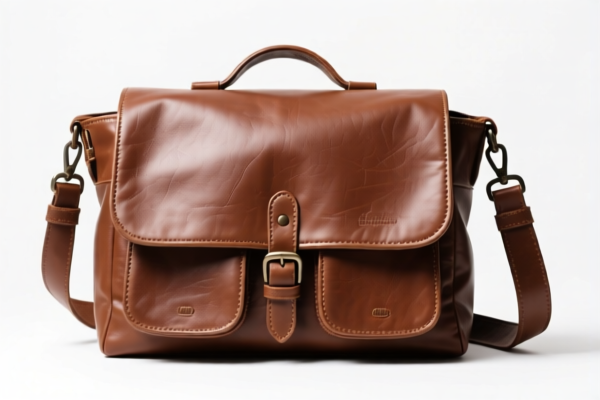
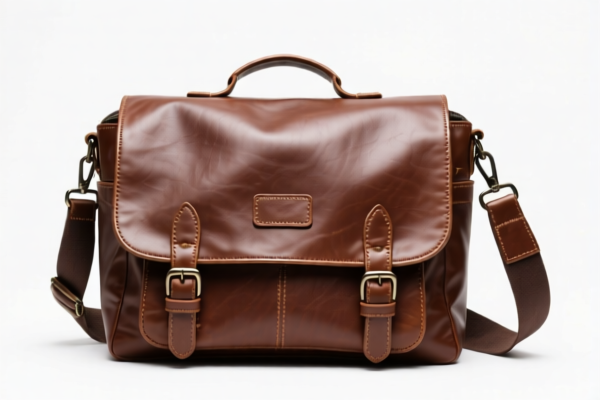
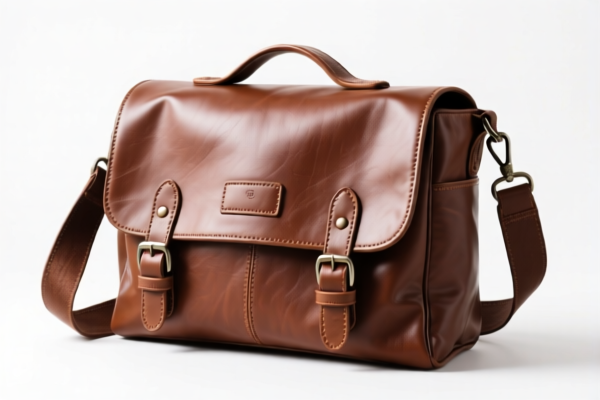
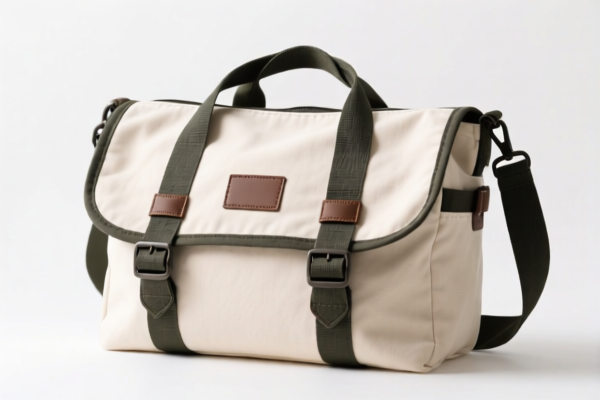
AI Analysis
Here is the professional Wiki-style guide for Messenger Bags, formatted with colorful icons, clear structures, and actionable customs advice.
🎒 Messenger Bag (Handbags & Similar Containers)
🌐 HS Code Reference & Customs Clearance Guide | 2026 Global Tariff Breakdown | Strategic Logistics Strategy
📌 I. Product Definition & Classification: Do You Know Your "Messenger Bag"?
A Messenger Bag is a type of handbag, typically worn over the shoulder, originally designed for postal delivery personnel but now widely used by cyclists, students, and professionals. In international trade, its classification is not based on the material alone but on its primary function and construction.
Key Distinctions in Trade: * Functional Handbags (8528/4202): Bags designed to be carried by hand or on the shoulder for personal items (wallets, phones, documents). * School Bags (4202.12/4202.13): Specifically designed for books/school use (often rigid, multi-compartment). * Sport/Outdoor Bags (4202.92): Designed for hiking, camping, or gym use (high durability, specific straps).
⚠️ Critical Classification Point:
- If it resembles a briefcase or is used for documents/laptops → HS Code 4202.21 (Shoe/Travel cases).
- If it is a soft, over-the-shoulder bag for general use → HS Code 4202.12/4202.19.
- Mistake Alert: Do not classify a "Messenger Bag" as a "School Bag" unless it has specific rigid book compartments.
📦 II. HS Code Breakdown (2026 Latest Tariff Schedule)
| HS Code | Product Description | Usage Scenario | Material/Feature |
|---|---|---|---|
| 4202.12.20 | Handbags with outer surface of textile materials | Fashion bags, canvas totes, fabric messenger bags | ✅ Textile (Polyester, Nylon, Cotton) |
| 4202.12.90 | Handbags with outer surface of other materials | Leather, synthetic leather, PVC messenger bags | ✅ Leather/Synthetic |
| 4202.21.00 | Shoe boxes, trunks, suitcases, vanity cases, etc. | Hard-shell briefcases, rigid laptop cases, travel bags | ✅ Rigid Structure (often confused) |
| 4202.22.00 | Trunks, suitcases, vanity cases, etc. | Leather-based briefcases or rigid cases | ✅ Leather + Rigid |
| 4202.32.00 | Purses, wallets, coin purses, cardholders | Small pouches, inserts inside the bag | ✅ Too small to be a bag |
| 4202.92.90 | Other containers, with outer surface of plastics/textiles | Sports equipment bags, heavy-duty outdoor messenger bags | ✅ Specialized/Outdoor |
🔍 Focus Reminder:
- Most standard Fabric Messenger Bags (nylon/canvas) fall under 4202.12.20.
- Leather Messenger Bags fall under 4202.12.90.
- If the bag has a hard, rigid structure (like a briefcase), it often falls under 4202.21.00, which may have different tariff implications.
💰 III. 2026 Latest Tariff Rate Analysis (US & Global Context)
✅ Target Market: United States (US)
✅ Origin: China (CN)
✅ Effective Date: November 10, 2025 (Section 301 & IEEPA rules)
🎯 1. Fabric Messenger Bags (4202.12.20)
| Item | Content |
|---|---|
| Base Tariff | 3.5% (ad valorem) - Standard MFN Rate |
| USITC Section 301 | +25% (Additional Duty for China Origin) |
| IEEPA (US-China) | +10% (Emergency Economic Powers Act surcharge) |
| Total Duty Rate | 38.5% |
| De Minimis Exemption | ❌ NO (Section 321 de minimis < $800 does NOT apply to these tariffs if declared via Form 8611) |
| Legal Path | USITC:4202.12.20 → Section 301:4202.12.20 → IEEPA:9903.01.24 |
📌 Explanation:
- The 3.5% is the standard Most Favored Nation (MFN) rate for handbags.
- The +25% is the "Section 301" tariff specifically targeting Chinese textile/apparel goods.
- The +10% is the new IEEPA surcharge effective late 2025.
- Total: 38.5% is the landing cost for a standard nylon/canvas messenger bag from China to the US.
🎯 2. Leather/Synthetic Messenger Bags (4202.12.90)
| Item | Content |
|---|---|
| Base Tariff | 3.5% (ad valorem) |
| USITC Section 301 | +25% |
| IEEPA | +10% |
| Total Duty Rate | 38.5% |
| De Minimis Exemption | ❌ NO |
| Legal Path | USITC:4202.12.90 → Section 301:4202.12.90 → IEEPA:9903.01.24 |
📌 Note:
- Leather goods are treated similarly to textile bags under current Section 301 rules.
- Synthetic Leather (PU/PVC) is still classified as "other materials" but attracts the same high tariff.
🎯 3. Rigid Cases / Briefcases (4202.21.00)
| Item | Content |
|---|---|
| Base Tariff | 3.5% |
| USITC Section 301 | +25% |
| IEEPA | +10% |
| Total Duty Rate | 38.5% |
| De Minimis Exemption | ❌ NO |
| Legal Path | USITC:4202.21.00 → Section 301:4202.21.00 → IEEPA:9903.01.24 |
📌 Warning:
- Even if marketed as a "Briefcase," if the outer surface is textile, it might still be 4202.12. Check the structure. Rigid cases often face the same scrutiny and rates.
🛠️ IV. Customs Clearance Practical Advice (Real-World Pitfall Guide)
✅ 1. Documentation Checklist (Must Have)
| Document | Required? | Details |
|---|---|---|
| ✅ Product Photos | ✔️ | Front, back, side, inner lining, and strap detail. Must show material texture. |
| ✅ Material Composition Sheet | ✔️ | Crucial: e.g., "Outer: 100% Polyester, Lining: 100% Cotton, Hardware: Zinc Alloy". |
| ✅ Bill of Materials (BOM) | ✔️ | Breakdown of fabric type (knitted vs. woven) as it affects HS Code. |
| ✅ Commercial Invoice | ✔️ | Must state "Messenger Bag" + "For Personal/Professional Use". Avoid "School Bag" unless true. |
| ✅ Packing List | ✔️ | Weight and dimensions (to calculate volumetric weight). |
| ✅ Origin Certificate | ✔️ | Form A or Certificate of Origin to prove manufacturing location. |
✅ 2. Declaring Techniques (Golden Rules)
🔥 口诀 (Mantra): "Material First, Function Second, Label Clearly!"
| Scenario | Correct Declaration | Mistake to Avoid |
|---|---|---|
| Canvas/Messenger Bag | 4202.12.20 (Handbags, textile) |
❌ Labeling as "School Bag" (4202.11) → Wrong rate/risk of audit. |
| Leather Messenger Bag | 4202.12.90 (Handbags, other) |
❌ Labeling as "Leather Briefcase" (4202.21) → Risk of over/under-taxing. |
| Soft vs. Rigid | Soft = 4202.12 Rigid = 4202.21 |
❌ Calling a hard-shell case a "soft bag" to avoid scrutiny → Fraud risk. |
| Accessories | Include zippers/pads in bag value | ❌ Splitting straps/zippers as separate items → Higher administrative fees. |
✅ 3. Special Situation Handling
| Situation | Handling Suggestion |
|---|---|
| OEM/Custom Bags | Provide design drawings and "Made to Order" agreements to prove unique value. |
| "Eco-Friendly" Bags | If using recycled materials (rPET), provide sustainability certs (can help marketing, but not tariff reduction in US). |
| Laptop Pockets | Adding a padded laptop pocket does not change HS Code from 4202.12 to 4202.21 unless the whole structure is rigid. |
| Cross-Border E-Commerce (De Minimis) | Warning: Under current 2025/2026 rules, Section 321 (de minimis < $800) exemptions are being scrutinized for textiles. Do not rely on it for high-volume textile imports. |
🌍 V. Global Market Comparison (2026)
| Country/Region | Recommended HS Code | Tariff (China Origin) | Certification | Notes |
|---|---|---|---|---|
| 🇺🇸 USA | 4202.12.20/90 |
38.5% (Base+301+IEEPA) | FTC, CPSIA (if kids) | Highest Tariff; strict material check. |
| 🇪🇺 EU | 4202.12.20/90 |
~4.2% | CE, REACH | No Section 301, but strict chemical regulations. |
| 🇨🇳 China | 4202.12.20/90 |
5-10% | CCC | Import duty varies; export rebates may apply. |
| 🇦🇺 Australia | 4202.12.20/90 |
10% (with FTA) | RCMS | Check FTA eligibility for 0% if from Vietnam. |
| 🇯🇵 Japan | 4202.12.20/90 |
0-3% | PSE (for electrical parts if any) | No major anti-dumping duties on bags. |
📌 Conclusion:
- USA is the most expensive market due to the 38.5% total rate.
- Europe is more favorable but has strict REACH (chemical) compliance.
- Strategy: If exporting to the US, consider Vietnam or Thailand sourcing to avoid Section 301 tariffs.
📌 VI. Common Errors & Pitfalls (Blood and Tears Lessons)
❌ Error 1: Calling a "Messenger Bag" a "School Bag" to lower taxes.
👉 Consequence: US Customs may detect structural differences (lack of rigid book compartments) → Seizure + Penalties.
❌ Error 2: Splitting the bag into "Strap + Body + Pouch" to avoid de minimis.
👉 Consequence: If declared separately, each part is taxed individually, and the total duty may exceed 40%.
❌ Error 3: Incorrect Material Declaration (e.g., "Synthetic Leather" vs. "Textile").
👉 Consequence: HS Code error (4202.12.20 vs 4202.12.90) → Customs Audit and Back-dated fines.
✅ Correct Practice:
"Messenger Bag, 100% Polyester Outer, Nylon Lining, Zinc Alloy Hardware, Model MB-2026, Waterproof, No Rigid Structure."
🎯 VII. Conclusion: Precision in Classification, Profit in Logistics!
🎯 Remember the Mantra:
🔹 "Textile = 12.20, Leather = 12.90, Rigid = 21.00."
🔹 "China to US = 38.5%, Vietnam to US = 0% (if compliant)."
🔹 "Never split the bag, declare the whole unit!"
📌 Pro Tip:
If your Messenger Bag is sourced from Vietnam, Thailand, or Malaysia, you can apply for Section 301 Exclusion or benefit from lower tariffs (0-5%) due to non-China origin rules.
Recommendation: Apply for a Binding Ruling (Advance Ruling) from CBP before large-scale shipments to confirm the HS Code and avoid surprises.
📣 Immediate Action:
📞 Contact a Licensed Customs Broker + Submit Material Specs + Request HS Code Pre-Ruling
🚀 Ensure your Messenger Bag passes customs smoothly, stays profitable, and hits the market fast!
✨ Professional Customs Clearance Starts with Accurate Classification!
💼 Every dollar saved on duty is pure profit.
Customer Reviews
About HS Code Classification
The Harmonized System (HS) is an internationally standardized nomenclature developed by the World Customs Organization (WCO) to classify traded products. Over 200 countries use the HS system as the basis for customs tariffs, trade statistics, and import/export regulations.
Each HS code follows a hierarchical structure:
- Chapter (2 digits) — Broad category of goods (e.g., Chapter 84: Machinery and Mechanical Appliances)
- Heading (4 digits) — More specific grouping within the chapter
- Subheading (6 digits) — Internationally standardized breakdown, used by all WCO member countries
- National subdivisions (8-10 digits) — Country-specific extensions for further classification, such as US HTSUS 10-digit codes
Correct HS code classification is essential for smooth customs clearance, accurate duty payment, and compliance with trade regulations. Misclassification can lead to customs delays, overpayment of duties, or penalties.
When importing from CN to US, the applicable tariff rates may include:
- Most-Favored-Nation (MFN) rate — The standard duty rate applied to WTO members
- General rate — Applied to countries without trade agreements
- Trade remedy duties — Additional tariffs such as Section 301 (anti-dumping), Section 232 (national security), or countervailing duties
The information provided on this page is for reference purposes only. For official classification, please consult with your local customs authority or a licensed customs broker.