Metal Anti corrosion Passivation Liquid
CN → US| HS Code | Tariff Rate | Origin | Destination | Doc |
|---|---|---|---|---|
| 3824999397 | 40.0% | CN | US | Official Doc |
| 3824993990 | 35.0% | CN | US | Official Doc |
| 3809925000 | 41.0% | CN | US | Official Doc |
| 3810902000 | 35.0% | CN | US | Official Doc |
| 3809935000 | 41.0% | CN | US | Official Doc |
Product Images
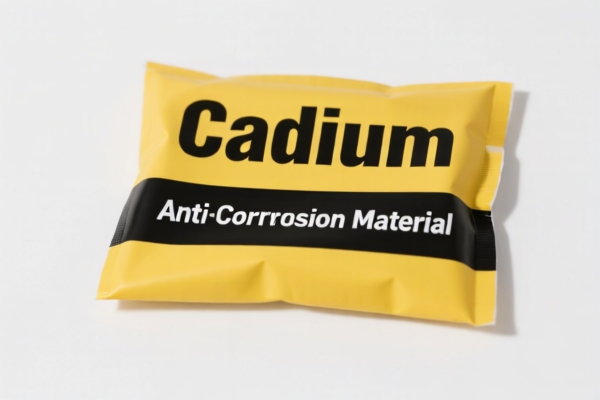
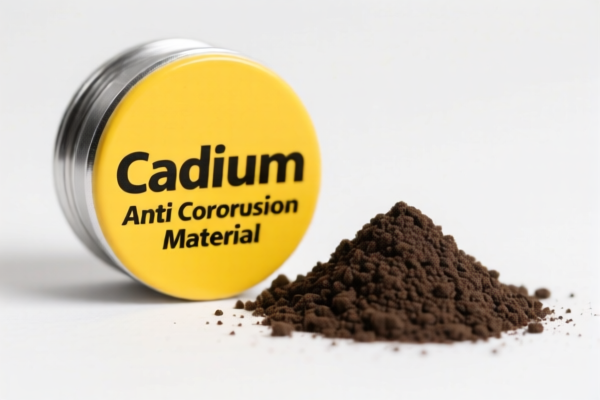
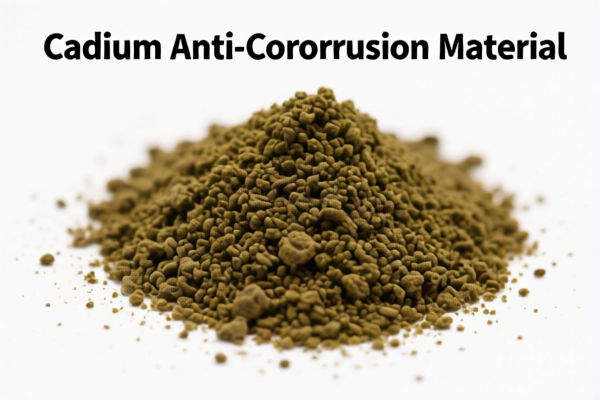

AI Analysis
🛡️ Metal Anti-corrosion Passivation Liquid (Industrial Chemical Agents)
🌐 HS Code Reference & Customs Clearance Guide | 2026 Latest Tariff Analysis | Professional Entry Strategies
📌 I. Product Definition & Classification: Do You Really Understand “Passivation Liquid”?
Metal Anti-corrosion Passivation Liquid is a specialized chemical agent used to create a passive, protective oxide layer on metal surfaces (typically stainless steel, aluminum, or copper). This process inhibits corrosion and improves surface finish. In international trade, the classification depends heavily on its specific chemical composition and primary industrial application.
⚠️ Key Distinction Point:
- Is it a general-purpose chemical preparation? → Look at Chapter 38 (Miscellaneous Chemical Products).
- Is it specifically for preparing metals for plating? → Look at 3810 (Preparation for Metal Surface Treatments).
- Is it primarily a cleaning/finishing agent for manufactured goods? → Look at 3809 (Finishing Agents).
📦 II. HS Code Classification Details (2026 Latest Tariff Authority Comparison)
Based on the provided data, here are the five most likely HS Codes for "Metal Anti-corrosion Passivation Liquid," ranging from specific use cases to general chemical residues.
| HS Code | Product Description | Application Scenario | Tax Impact (Total) |
|---|---|---|---|
3810.90.20.00 |
Preparations for metal surface treatments; consisting wholly of inorganic substances | Best Fit: Inorganic passivation agents used specifically for metal surface prep (e.g., rust prevention before plating). | 35.0% |
3824.99.39.90 |
Other chemical products & preparations (Miscellaneous); mixtures of inorganic compounds | Alternative: If the product is a complex mixture of inorganic salts not specifically listed elsewhere. | 35.0% |
3824.99.93.97 |
Other chemical products & preparations; "Other" category (Catch-all for miscellaneous chemicals) | General: If the specific formulation doesn't fit strictly into "inorganic-only" or "surface prep" categories. | 40.0% |
3809.92.50.00 |
Finishing agents, dressings, etc., for textiles, paper, etc.; or other preparations for finishing | Less Likely: If marketed as a general industrial finishing agent rather than a dedicated chemical prep. | 41.0% |
3809.93.50.00 |
Other finishing agents for other materials (e.g., leather, fur) | Least Likely: Usually applies to non-metallic finishes, but sometimes broadly interpreted as "industrial finishing." | 41.0% |
🔍 Critical Analysis:
-3810.90.20.00is often the most favorable code (35% total tax) if the product is confirmed to be wholly inorganic (e.g., nitric acid/citric acid-based rust inhibitors).
-3824.99.39.90is also 35% tax and is a strong candidate if the product is a mixture of inorganic compounds.
-3824.99.93.97carries a higher risk (40% tax) because it lacks the specific "inorganic" or "surface prep" justification, falling into the general "other" bucket.
💰 III. 2026 Latest Tariff Rate Details (Including Surcharges & Policy Add-ons)
✅ Applicable Country: United States (US)
✅ Origin: China (CN)
✅ Effective Time: November 10, 2025 onwards (for subsequent imports)
🎯 1. 3810.90.20.00 & 3824.99.39.90 —— Optimal Classification (35% Total Tax)
| Item | Content |
|---|---|
| Base Tariff | 0% (ad valorem) |
| USITC Additional Duty | +25% (Under Section 301, USITC Footnote 9903.88.01) |
| IEEPA Additional Duty | +10% (Against Chinese/HK products, effective Nov 10, 2025) |
| Total Tax Rate | 35.0% |
| Tax Calculation | CIF Value × 35% |
| De Minimis Exemption? | ❌ NO (deny_de_minimis) |
| Legal Authority Path | IEEPA:9903.01.25 → IEEPA:9903.01.24 → USITC:3810.90.20.00 / 3824.99.39.90 → FOOTNOTE:9903.88.01 |
📌 Explanation:
- Both codes benefit from a 0% base tariff, which is significantly lower than the 5-6% base rate of the 3809/3824-93 categories.
- The 25% Section 301 and 10% IEEPA surcharges apply equally, resulting in the same final 35% burden.
- Key Advantage: Avoiding the 5-6% base tariff saves 5-6% of the CIF value compared to the 40-41% categories.
🎯 2. 3824.99.93.97 —— General Chemical Category (40% Total Tax)
| Item | Content |
|---|---|
| Base Tariff | 5.0% (ad valorem) |
| USITC Additional Duty | +25% |
| IEEPA Additional Duty | +10% |
| Total Tax Rate | 40.0% |
| Tax Calculation | CIF Value × 40% |
| De Minimis Exemption? | ❌ NO |
📌 Note:
- The higher base tariff (5%) pushes the total to 40%.
- This code is used if the chemical composition is organic-inorganic mix or if it doesn't strictly meet the "wholly inorganic" requirement for3810.90.20.00.
🎯 3. 3809.92.50.00 & 3809.93.50.00 —— Finishing Agents (41% Total Tax)
| Item | Content |
|---|---|
| Base Tariff | 6.0% (ad valorem) |
| USITC Additional Duty | +25% |
| IEEPA Additional Duty | +10% |
| Total Tax Rate | 41.0% |
| Tax Calculation | CIF Value × 41% |
| De Minimis Exemption? | ❌ NO |
📌 Warning:
- These codes have the highest base tariffs (6%).
- They are generally not recommended for pure metal passivation liquids unless the product is explicitly marketed as a "finishing agent" for non-metallic substrates or a general industrial cleaner with incidental passivation properties.
🛠️ IV. Customs Clearance Practical Advice (Battle-Tested Pitfall Avoidance)
✅ 1. Documentation Checklist (Non-negotiable)
| Document | Required? | Explanation |
|---|---|---|
| ✅ Material Safety Data Sheet (MSDS) | ✔️ | Crucial for determining chemical nature (inorganic vs. organic). Must clearly state if it contains only inorganic substances for 3810.90.20.00. |
| ✅ Product Specification Sheet | ✔️ | Details active ingredients (e.g., Nitric Acid, Citric Acid, Chromates). |
| ✅ Certificate of Composition | ✔️ | Declares % of active ingredients. Helps prove "wholly inorganic" claim. |
| ✅ Commercial Invoice | ✔️ | Must clearly state: "Metal Passivation Agent, Inorganic Based, Model XYZ." Avoid vague terms like "Chemical Liquid." |
| ✅ Bill of Lading / Packing List | ✔️ | Ensure weight/volume matches MSDS density. |
| ✅ Import Security Filing (ISF) | ✔️ | Must be filed 24 hours prior to loading. |
✅ 2. Declaration Strategy (Key Tips)
🔥 “Inorganic Proof, Base Tariff Zero, Avoid the 41% Trap!”
| Scenario | Correct Declaration | Wrong Approach |
|---|---|---|
| Pure Acid Passivation (e.g., Citric/Nitric) | HS: 3810.90.20.00 Desc: "Inorganic Metal Surface Preparation Agent" |
Declaring as "General Chemical" → 40% Tax |
| Complex Mixture with Inhibitors | HS: 3824.99.39.90 Desc: "Inorganic Compound Mixture for Metal Treatment" |
Declaring as "Finishing Agent" → 41% Tax |
| Organic/Inorganic Hybrid | HS: 3824.99.93.97 Desc: "Other Chemical Preparation" |
Mislabeling as Inorganic → Customs Penalties |
| Liquid Paste/Gel Form | HS: 3824.99.39.90 or 3824.99.93.97 |
Confusing it with solid salts → Misclassification |
✅ 3. Special Handling Cases
| Case | Advice |
|---|---|
| OEM/Private Label | Ensure the MSDS matches the brand listed on the invoice. Discrepancies cause delays. |
| Highly Corrosive | Must declare UN Number (e.g., UN1789 for Acid). Requires proper hazmat packaging and placarding. |
| Chromium-Based Passivation | High Scrutiny. EPA and OSHA regulations may apply. Ensure REACH/TSCA compliance. |
| Citric Acid-Based (Passivation) | Best Candidate for 3810.90.20.00. Citric acid is inorganic in this context. Provide lab test proving no organic solvents. |
🌍 V. Global Market Clearance Comparison (2026 Latest)
| Country/Region | Recommended HS Code | Tariff (China Origin) | Certification Req. | Notes |
|---|---|---|---|---|
| 🇺🇸 USA | 3810.90.20.00 |
35% (0% Base + 25% + 10%) | SDS + Hazmat Compliance | Highest scrutiny on chemical composition. |
| 🇨🇳 China | 3810.90.20.00 |
5% | None (for export) | No additional surcharges. |
| 🇪🇺 EU | 3824.99.97 |
0% - 4.7% | REACH Registration | No Section 301/IEEPA surcharges. |
| 🇯🇵 Japan | 3824.99.90 |
0% - 5% | JIS Standard | Often 0% base if not restricted. |
| 🇦🇺 Australia | 3824.99.90 |
5% | ADR Transport | Moderate base tariff. |
📌 Conclusion:
- USA is the most expensive market due to the 35% effective rate.
- EU/Japan offer significant cost advantages (0-5%) if you can adjust supply chains or origins.
- Proving "Inorganic" is the single biggest lever to save 5-6% in the US market.
📌 VI. Common Errors & Pitfall Guide (Lessons Learned)
❌ Error 1: Declaring a Citric Acid Passivation Gel as "Organic Chemical"
👉 Consequence: Assigned to 3824.99.93.97 → 40% Tax instead of 35%.
👉 Fix: Provide lab report confirming citric acid is used in its inorganic salt form or pure acid form without organic carriers.
❌ Error 2: Using vague terms like "Metal Cleaner"
👉 Consequence: Customs may classify under 3809.92.50.00 (Finishing) → 41% Tax.
👉 Fix: Use precise language: "Passivation Agent for Stainless Steel."
❌ Error 3: Ignoring Hazmat Classification
👉 Consequence: Shipment held at port, fined, or returned.
👉 Fix: Always include UN Number and Proper Shipping Name on the B/L and Invoice.
❌ Error 4: Assuming "Liquid" = 3824.99.93.97
👉 Consequence: Missing the 0% base tariff opportunity in 3810.
👉 Fix: Focus on chemical composition, not physical state.
✅ Correct Approach:
"Metal Passivation Agent, Inorganic Composition, Citric/Nitric Acid Base, Liquid Form, Model XYZ, SDS Attached."
🎯 VII. Conclusion: Precise Classification Saves Money!
🎯 Remember the Mantra:
🔹 "Inorganic = 0% Base = 35% Total. Organic/General = 5-6% Base = 40-41% Total."
🔹 "Prove your chemistry, or pay the premium."
📌 Pro Tip:
If your product is Citric Acid-Based (common for "passivation gels"), aggressively pursue 3810.90.20.00. It is the lowest-cost option for the US market. Request a Pre-Ruling (Advance Ruling) from CBP if the chemical composition is complex.
📣 Immediate Action:
📞 Consult with a customs broker to verify MSDS alignment with HS Code.
📄 Ensure your MSDS explicitly states "Inorganic" if targeting3810.90.20.00.
🚀 Optimize your HS Code, lower your duty, and boost your margin!
✨ Professional Clearance Starts with Precise Classification!
💼 Every percentage point matters in the age of tariffs!
Customer Reviews
About HS Code Classification
The Harmonized System (HS) is an internationally standardized nomenclature developed by the World Customs Organization (WCO) to classify traded products. Over 200 countries use the HS system as the basis for customs tariffs, trade statistics, and import/export regulations.
Each HS code follows a hierarchical structure:
- Chapter (2 digits) — Broad category of goods (e.g., Chapter 84: Machinery and Mechanical Appliances)
- Heading (4 digits) — More specific grouping within the chapter
- Subheading (6 digits) — Internationally standardized breakdown, used by all WCO member countries
- National subdivisions (8-10 digits) — Country-specific extensions for further classification, such as US HTSUS 10-digit codes
Correct HS code classification is essential for smooth customs clearance, accurate duty payment, and compliance with trade regulations. Misclassification can lead to customs delays, overpayment of duties, or penalties.
When importing from CN to US, the applicable tariff rates may include:
- Most-Favored-Nation (MFN) rate — The standard duty rate applied to WTO members
- General rate — Applied to countries without trade agreements
- Trade remedy duties — Additional tariffs such as Section 301 (anti-dumping), Section 232 (national security), or countervailing duties
The information provided on this page is for reference purposes only. For official classification, please consult with your local customs authority or a licensed customs broker.