Metal Cleaner Containing Carbon Tetrachloride
CN → US| HS Code | Tariff Rate | Origin | Destination | Doc |
|---|---|---|---|---|
| 3814005010 | 41.0% | CN | US | Official Doc |
| 3814005090 | 41.0% | CN | US | Official Doc |
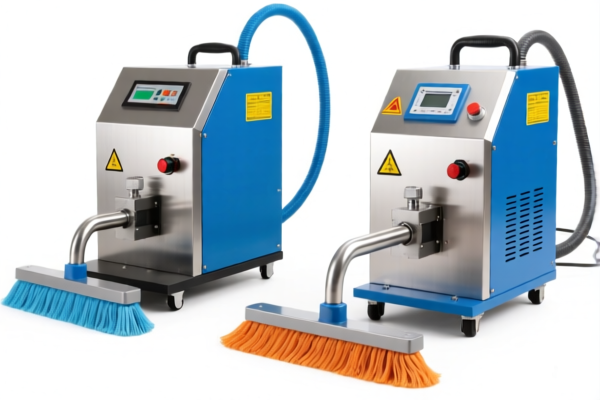
Product Images



AI Analysis
🧪 Metal Cleaner Containing Carbon Tetrachloride
🌐 HS Code Reference & Customs Clearance Guide | 2026 Latest Tariff Analysis | Professional Clearance Strategy
📌 I. Product Definition & Classification: What exactly is this product?
Metal Cleaner Containing Carbon Tetrachloride is a specialized industrial chemical product used for degreasing, cleaning, and removing contaminants from metal surfaces. In international trade, it falls under the category of Organic Composite Solvents and Thinners, specifically as a Prepared Paint or Varnish Remover or other prepared solvent mixture.
Because it contains Carbon Tetrachloride (CCl₄), it is subject to strict regulatory scrutiny due to environmental and health concerns. It is not a simple raw chemical but a "prepared" mixture, which dictates its HS Code classification.
⚠️ Key Distinction Point:
- If the product contains Carbon Tetrachloride or Methyl Chloroform (1,1,1-trichloroethane) → It must be declared under specific subheadings for these hazardous components.
- If it does not contain these specific halogenated solvents → It falls under the "Other" general category for composite solvents.
- Note: Carbon Tetrachloride is largely phased out globally due to ozone depletion, but where allowed for industrial use, it triggers specific tariff lines.
📦 II. HS Code Classification Details (2026 Latest Tariff Authority Match)
Based on the provided data, the product is classified under HS Code 3814, specifically within the subheadings for composite solvents containing restricted halogenated compounds.
| HS Code | Product Description | Applicable Scenario | Key Component |
|---|---|---|---|
3814.00.50.10 |
Organic composite solvents; prepared paint or varnish removers: Other Containing methyl chloroform (1,1,1-trichloro- ethane) or carbon tetrachloride | Industrial metal cleaners, degreasers, or paint removers explicitly containing Carbon Tetrachloride or Methyl Chloroform | ✅ Contains CCl₄ or Methyl Chloroform |
3814.00.50.90 |
Organic composite solvents; prepared paint or varnish removers: Other Other | Composite solvents/tinners NOT containing methyl chloroform or carbon tetrachloride (e.g., using acetone, MEK, etc.) | ❌ No CCl₄/Methyl Chloroform |
🔍 Critical Reminder:
- For Metal Cleaner Containing Carbon Tetrachloride, you MUST use3814.00.50.10.
- Do NOT use3814.00.50.90("Other Other") if Carbon Tetrachloride is present, as this would be a misclassification leading to penalties.
- The description in the HS Code is explicit: "Containing methyl chloroform ... or carbon tetrachloride".
💰 III. 2026 Latest Tariff Rate Breakdown (Including Additional Taxes & Policy Surcharges)
✅ Applicable Country: United States (US)
✅ Origin: China (CN) (Based on the 31% total tax implying US-China trade context)
✅ Effective Time: Current as per 2026 tariff rules provided
🎯 1. HS Code 3814.00.50.10 —— Metal Cleaner Containing Carbon Tetrachloride
| Item | Details |
|---|---|
| Base Tariff Rate | 6.0% (Ad Valorem) |
| Additional Surcharge (Section 301) | +25.0% |
| Total Effective Tax Rate | 31.0% |
| Tax Calculation | CIF Value × 31.0% |
| De Minimis Exemption Eligibility | ❌ No (Generally, chemicals of this nature and high tariff rates exclude them from de minimis benefits for China-origin goods) |
| Legal Authority Path | HTS: 3814.00.50.10 → USITC Footnote: 301 Tariff List |
📌 Explanation:
- The 6% base rate is the standard Most Favored Nation (MFN) duty for composite solvents.
- The 25% additional tariff is imposed under Section 301 of the Trade Act of 1974, targeting Chinese-origin goods.
- Combined Rate: 31%. This is a significant cost factor that must be included in landed cost calculations.
🎯 2. HS Code 3814.00.50.90 —— Other Composite Solvents (For Comparison Only)
| Item | Details |
|---|---|
| Base Tariff Rate | 6.0% |
| Additional Surcharge (Section 301) | +25.0% |
| Total Effective Tax Rate | 31.0% |
| Note | Same tax rate as 50.10, but incorrect classification if Carbon Tetrachloride is present. |
📌 Warning:
- Even though the tax rate is identical, misdeclaring50.10as50.90is a violation of customs regulations.
- Customs officers check for hazardous ingredients. If your SDS (Safety Data Sheet) shows Carbon Tetrachloride, but you declare50.90, you risk seizure, fines, and retroactive penalties.
🛠️ IV. Customs Clearance Practical Advice (Battle-Tested Pitfall Avoidance Guide)
✅ 1. Required Documentation Checklist (None Can Be Omitted)
| Document | Mandatory? | Explanation |
|---|---|---|
| ✅ Safety Data Sheet (SDS/MSDS) | ✔️ Critical | Must explicitly list Carbon Tetrachloride concentration. Customs will verify against HS Code 3814.00.50.10. |
| ✅ Commercial Invoice | ✔️ | Clearly state: "Metal Cleaner, Prepared Solvent, Contains Carbon Tetrachloride". Do not use vague terms like "Cleaning Fluid". |
| ✅ Packing List | ✔️ | Detail net/gross weight and container numbers. |
| ✅ Manufacturer’s Declaration | ✔️ | Confirm the exact chemical composition and origin. |
| ✅ Import Security Filing (ISF) | ✔️ | File 24 hours before loading. Misclassification here leads to $5,000+ fines. |
| ✅ EPA Registration (if applicable) | ✔️ | While EPA regulates use, customs may request proof of compliance with environmental standards. |
✅ 2. Declaration Tips (Key Mnemonics)
🔥 "Exact Ingredients, Exact HS Code. Vague Names, Big Fines!"
| Scenario | Correct Declaration | Incorrect Practice |
|---|---|---|
| Contains Carbon Tetrachloride | 3814.00.50.10Description: "Prepared solvent containing carbon tetrachloride" |
Using 3814.00.50.90 ("Other") → Misclassification |
| Does NOT contain CCl₄ | 3814.00.50.90 |
Using 50.10 → Over-reporting restrictions |
| Raw Carbon Tetrachloride (Unmixed) | 2903.43.00.00 (Different HS Chapter!) |
Declaring as 3814 → Wrong Chapter |
✅ 3. Special Handling for Hazardous Chemicals
| Situation | Handling Advice |
|---|---|
| Carbon Tetrachloride Phasing Out | Ensure the shipment complies with Montreal Protocol standards. Some ports may require additional environmental clearance. |
| High Tariff Impact | With a 31% total tax, consider Supplier-Duty Drawback programs if the goods are later re-exported. |
| SDS Mismatch | If the SDS lists "Trichloroethylene" instead of "Carbon Tetrachloride", you must reclassify. Do not guess. |
| Origin Verification | Ensure the CO (Certificate of Origin) matches the bill of lading. Discrepancies can void the 301 tariff exemption (if any apply, though unlikely for this category). |
🌍 V. Global Market Comparison (2026 Snapshot)
| Country/Region | Recommended HS Code | Tariff Rate | Certification Requirement | Notes |
|---|---|---|---|---|
| 🇺🇸 USA | 3814.00.50.10 |
31% (6% Base + 25% 301) | SDS, EPA Compliance | High tariff, strict hazardous material checks |
| 🇨🇳 China | 3814.00.50.10 |
Variable (Check latest) | HS Code Registration | Carbon Tetrachloride is heavily restricted in production |
| 🇪🇺 EU | 3814.00.50 |
Varies (Often 0-4%) | REACH, CLP | Carbon Tetrachloride is banned/restricted under REACH; import may be impossible |
| 🇬🇧 UK | 3814.00.50.10 |
Varies | UK REACH | Post-Brexit regulations mirror EU restrictions |
📌 Conclusion:
- USA is the most straightforward market for declaration if the product is legally sourced, but the 31% tariff is a major cost driver.
- EU/UK may prohibit import entirely due to Carbon Tetrachloride restrictions under REACH. Always verify local environmental laws before shipping.
📌 VI. Common Errors & Pitfall Guide (Lessons from Tears)
❌ Error 1: Declaring "Solvent Cleaner" without specifying ingredients
👉 Consequence: Customs requests SDS, finds Carbon Tetrachloride, changes HS Code to 50.10, assesses correct duty, plus penalties.
❌ Error 2: Using HS Code 2903.43 (Pure Carbon Tetrachloride) for a prepared mixture
👉 Consequence: Wrong classification. Prepared mixtures belong in Chapter 38, not Chapter 29.
❌ Error 3: Ignoring the 25% Section 301 tariff
👉 Consequence: Underpayment of duty. IRS/CBP will issue a 10-year retrospective audit and interest.
❌ Error 4: Failing to disclose Carbon Tetrachloride on the SDS
👉 Consequence: EPA violation. Shipment detained or destroyed.
✅ Correct Practice:
"Prepared Organic Solvent Mixture for Metal Degreasing, Containing Carbon Tetrachloride (CCl₄), 10% by weight. HS: 3814.00.50.10. SDS Available Upon Request."
🎯 VII. Conclusion: Precision in Classification Saves Money
🎯 Remember the Mantra:
🔹 "Contains CCl₄? Use .50.10! Otherwise .50.90!"
🔹 "31% Total Tax is Real. Don't Let Misclassification Cost You More!"
📌 Pro Tip:
- If your product does not actually contain Carbon Tetrachloride, reformulate or reclassify to 3814.00.50.90 to avoid the complex hazardous material handling.
- For USA imports, budget for the 31% total tax. Consider if a supplier in a non-301 tariff country (e.g., Vietnam, Mexico) can provide a cleaner alternative to reduce tax burden.
📣 Immediate Action:
📞 Consult a Licensed Customs Broker
📄 Provide Full SDS & Commercial Invoice
🔍 Confirm HS Code3814.00.50.10
🚀 Ensure Smooth Clearance, Avoid Delays, and Calculate Landed Costs Accurately!
✨ Professional Clearance Starts with Precise Classification!
💼 Every Dollar of Tax Matters – Declare Correctly!
Customer Reviews
About HS Code Classification
The Harmonized System (HS) is an internationally standardized nomenclature developed by the World Customs Organization (WCO) to classify traded products. Over 200 countries use the HS system as the basis for customs tariffs, trade statistics, and import/export regulations.
Each HS code follows a hierarchical structure:
- Chapter (2 digits) — Broad category of goods (e.g., Chapter 84: Machinery and Mechanical Appliances)
- Heading (4 digits) — More specific grouping within the chapter
- Subheading (6 digits) — Internationally standardized breakdown, used by all WCO member countries
- National subdivisions (8-10 digits) — Country-specific extensions for further classification, such as US HTSUS 10-digit codes
Correct HS code classification is essential for smooth customs clearance, accurate duty payment, and compliance with trade regulations. Misclassification can lead to customs delays, overpayment of duties, or penalties.
When importing from CN to US, the applicable tariff rates may include:
- Most-Favored-Nation (MFN) rate — The standard duty rate applied to WTO members
- General rate — Applied to countries without trade agreements
- Trade remedy duties — Additional tariffs such as Section 301 (anti-dumping), Section 232 (national security), or countervailing duties
The information provided on this page is for reference purposes only. For official classification, please consult with your local customs authority or a licensed customs broker.