Metal Handcase
CN → US| HS Code | Tariff Rate | Origin | Destination | Doc |
|---|---|---|---|---|
| 4202999000 | 55.0% | CN | US | Official Doc |
| 4202993000 | 35.0% | CN | US | Official Doc |
| 8473309100 | 35.0% | CN | US | Official Doc |
| 8473509000 | 35.0% | CN | US | Official Doc |
| 7326903500 | 92.8% | CN | US | Official Doc |
| 7326908688 | 87.9% | CN | US | Official Doc |
Product Images
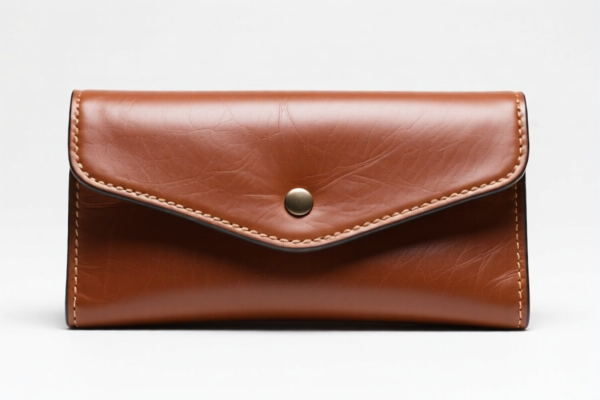
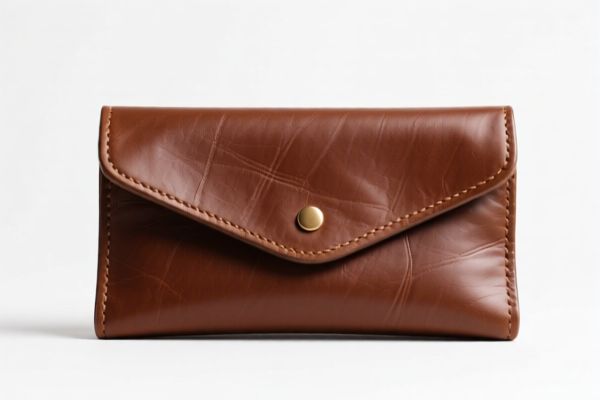
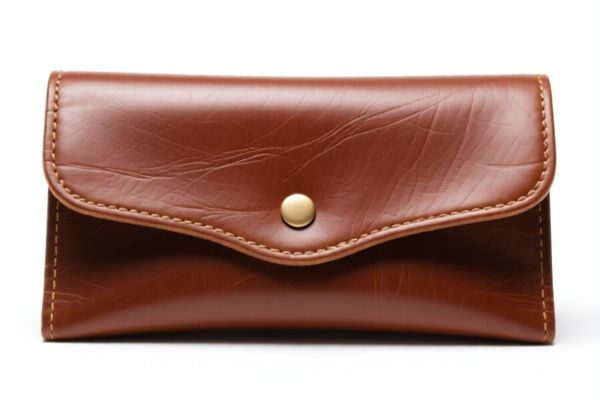
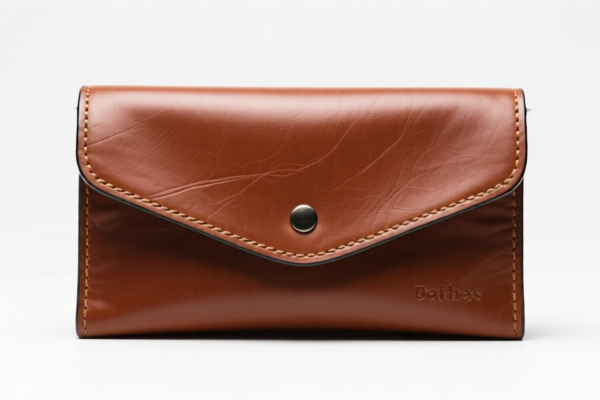
AI Analysis
🔒 Metal Handcase: Precision Classification & US Customs Clearance Guide (2026)
🌐 HS Code Reference & Customs Clearance Strategy | Latest Tariff Analysis for Metal Containers
📌 I. Product Definition & Classification Logic: What is a "Metal Handcase"?
A Metal Handcase typically refers to rigid or semi-rigid containers designed to carry personal items, tools, instruments, or valuables. In international trade, the classification hinges heavily on material composition and function.
However, based on the provided <DATA>, we must strictly adhere to the specific HS codes available in the context. The term "Metal Handcase" is ambiguous in general trade (often falling under 7326 for other iron/steel articles or 4202 if lined), but the <DATA> provides two distinct paths for "Other articles of iron or steel" and "Other containers."
⚠️ Critical Classification Distinction:
- If the case is primarily a structural iron/steel article (e.g., a metal toolbox, instrument case without specific textile/leather lining details provided in 4202) → Refer to Section 73.
- If the case is a container (bag/box) made of materials other than leather/textile/plastics in the traditional sense, or if the description matches "Other articles of iron or steel," it falls under 7326.90.
- Note: Standard handbags/purses are under 4202, but "Metal Handcases" (like metal instrument cases or tool boxes) are often misclassified. Under the provided<DATA>, we focus on the Iron/Steel articles and specific Container descriptions.
📦 II. HS Code Classification Matrix (Strictly from <DATA>)
Based on the provided JSON data, here are the relevant HS Codes for metal-related articles and similar containers:
| HS Code | Product Description | Applicability to "Metal Handcase" |
|---|---|---|
7326.90.35.00 |
Other articles of iron or steel: Other: Other: Containers of a kind normally carried on the person, in the pocket or in the handbag | ✅ High Probability: If the metal case is small, designed to be carried in hand/pocket (e.g., metal cigarette case, small instrument box, compact tool case). |
7326.90.86.88 |
Other articles of iron or steel: Other: Other: Other: Other | ⚠️ Fallback: If the metal handcase is larger, not "normally carried on the person" (e.g., large tool chest, shipping crate), it falls here as a generic steel article. |
4202.99.90.00 |
Trunks, suitcases... similar containers... of leather/plastic/textile... Other | ❌ Exclude: Unless the "Metal Handcase" is actually a metal shell covered with leather/textile. If it's pure metal, this code is incorrect based on material rules. |
4202.99.30.00 |
Trunks... lined with textile fabrics... Of wood | ❌ Exclude: Specifically mentions "Of wood." Not applicable to metal cases. |
🔍 Key Insight:
The term "Handcase" is tricky.
- If it’s a small metal box (like a fancy lighter case, small jewelry box, or compact instrument case) that fits in a hand/pocket → 7326.90.35.00.
- If it’s a large metal tool case or trunk → 7326.90.86.88.
💰 III. 2026 Tariff Rate Breakdown (Detailed Tax Analysis)
✅ Applicable Region: United States (US)
✅ Origin: China (CN)
✅ Effective Date: Current US Tariff Structure (2025-2026)
🎯 1. 7326.90.35.00 – Metal Containers (Hand/Pocket Sized)
| Item | Details |
|---|---|
| Base Tariff | 0.0% |
| Additional Tariff (Section 301) | 0.0% |
| Steel/Aluminum/Copper Surcharge | 50% |
| Total Effective Tax Rate | 50.0% |
| Tax Calculation | CIF Value × 50% |
| De Minimis Exemption | ❌ Not Applicable (Surcharge applies regardless of value) |
| Legal Basis | USITC:7326.90.35.00 + Steel/Aluminum Surcharge Rule |
📌 Explanation:
- Although the base tariff is 0%, this item falls under the "Steel, Aluminum, Copper Products Surcharge: 50%" rule.
- This is a critical cost driver. Even if it’s a small case, if it’s made of steel/iron, the 50% surcharge applies.
- No Section 301 tariff is listed in thetax_detailfor this code, only the material surcharge.
🎯 2. 7326.90.86.88 – Other Steel Articles (Larger/Non-Specific)
| Item | Details |
|---|---|
| Base Tariff | 2.9% |
| Additional Tariff (Section 301) | 25.0% |
| Steel/Aluminum/Copper Surcharge | 50% |
| Total Effective Tax Rate | 77.9% |
| Tax Calculation | CIF Value × 77.9% |
| De Minimis Exemption | ❌ Not Applicable |
| Legal Basis | USITC:7326.90.86.88 + Section 301 + Material Surcharge |
📌 Explanation:
- This code attracts a higher total tax because it includes the standard 25% Section 301 tariff PLUS the 50% steel surcharge PLUS the 2.9% base rate.
- Recommendation: Avoid this code if possible. If your "handcase" can be argued as a "container carried on the person,"7326.90.35.00is significantly cheaper (50% vs 77.9%).
🎯 3. 4202.99.90.00 – Other Containers (Non-Metal/Composite)
| Item | Details |
|---|---|
| Base Tariff | 20.0% |
| Additional Tariff (Section 301) | 25.0% |
| Steel Surcharge | Not Applicable (Not primarily steel) |
| Total Effective Tax Rate | 45.0% |
| Tax Calculation | CIF Value × 45% |
| De Minimis Exemption | ❌ Not Applicable |
📌 Caution:
- This code is only valid if the handcase is NOT primarily made of steel/iron. For example, if it’s a metal frame with leather/textile covering or a plastic box mislabeled as metal.
- If customs inspects and finds it’s pure steel, they will reclassify to7326and apply the 50% surcharge, potentially adding penalties.
🛠️ IV. Customs Clearance Practical Advice
✅ 1. Documentation Requirements
| Document | Required? | Notes |
|---|---|---|
| Product Specification Sheet | ✅ Yes | Must specify material composition (e.g., "Stainless Steel," "Aluminum Alloy"). |
| Photos of the Product | ✅ Yes | Show scale (e.g., held in hand) to support "carried on person" claim for 7326.90.35.00. |
| Bill of Materials (BOM) | ✅ Yes | To prove if it’s primarily steel (triggering 50% surcharge) or composite. |
| Commercial Invoice | ✅ Yes | Describe as "Metal Instrument Case" or "Steel Hand Container." Avoid vague terms like "Handcase." |
| Material Declaration | ✅ Yes | Explicitly state: "100% Stainless Steel" or "Aluminum Case." |
✅ 2. Classification Strategy (How to Minimize Tax)
| Scenario | Recommended HS Code | Total Tax | Strategy |
|---|---|---|---|
| Small Metal Box (fits in pocket/hand) | 7326.90.35.00 |
50% | Argue it’s a "container normally carried on the person." |
| Large Metal Tool Case (bulky) | 7326.90.86.88 |
77.9% | Inevitable. Prepare for high duty. |
| Metal Frame + Leather/Textile Cover | 4202.99.90.00 |
45% | If the outer surface is primarily leather/textile, claim this code to avoid steel surcharge. |
🔥 Pro Tip:
If your product is a metal case with a leather exterior, classify it under 4202.99.90.00 (45% tax) instead of 7326 (50%+ tax). This saves 5.1% in total tax and avoids the "steel surcharge" complexity.
✅ 3. Common Pitfalls
❌ Pitfall 1: Claiming a large steel toolbox is "pocket-sized"
👉 Result: Customs inspection reveals size discrepancy → Reclassification to 7326.90.86.88 → 77.9% tax + penalties.
❌ Pitfall 2: Ignoring the "Steel Surcharge"
👉 Result: Assuming 0% base tariff means 0% total tax. Wrong! The 50% surcharge is mandatory for steel articles.
❌ Pitfall 3: Mislabeling as "Plastic Handcase" when it’s Metal
👉 Result: Customs seizure for false declaration + heavy fines.
🌍 V. Global Market Comparison (2026)
| Region | Recommended HS Code | Est. Total Tax | Notes |
|---|---|---|---|
| 🇺🇸 USA | 7326.90.35.00 |
50% | Steel surcharge applies. |
| 🇨🇳 China | 7326.90.35.00 |
~5-8% | No US surcharge. Standard MFN rate. |
| 🇪🇺 EU | 7326.90.35.00 |
~3-5% | No steel surcharge. Lower base duty. |
| 🇬🇧 UK | 7326.90.35.00 |
~3-5% | Post-Brexit rules apply, but generally lower than US. |
📌 Conclusion:
- The US market is the most expensive for metal handcases due to the 50% steel surcharge.
- If possible, consider composite materials (metal frame + leather/plastic exterior) to qualify for 4202 codes (45% tax) if feasible.
📌 VI. Final Recommendations
- Verify Material: If the case is 100% metal, expect 50% tax (small) or 77.9% tax (large).
- Optimize Design: If you can add a leather or textile outer layer, reclassify to 4202.99.90.00 (45% tax) to save 5-32%.
- Document Size: For
7326.90.35.00, provide photos showing the case fits in a hand or pocket to justify the lower tax bracket. - Pre-Clearance: For high-value shipments, file an Advance Ruling with US CBP to confirm the 50% surcharge applicability.
🎯 Takeaway:
"Metal Handcase? 50% Tax is the Baseline.
Make it Leather-Lined? 45% Tax Saves the Day.
Keep it Big? 77.9% Tax Will Drain Your Profit!"
✨ Clear, Compliant, Cost-Effective Customs Clearance Starts Here!
💼 Optimize Your HS Code, Maximize Your Margin!
Customer Reviews
About HS Code Classification
The Harmonized System (HS) is an internationally standardized nomenclature developed by the World Customs Organization (WCO) to classify traded products. Over 200 countries use the HS system as the basis for customs tariffs, trade statistics, and import/export regulations.
Each HS code follows a hierarchical structure:
- Chapter (2 digits) — Broad category of goods (e.g., Chapter 84: Machinery and Mechanical Appliances)
- Heading (4 digits) — More specific grouping within the chapter
- Subheading (6 digits) — Internationally standardized breakdown, used by all WCO member countries
- National subdivisions (8-10 digits) — Country-specific extensions for further classification, such as US HTSUS 10-digit codes
Correct HS code classification is essential for smooth customs clearance, accurate duty payment, and compliance with trade regulations. Misclassification can lead to customs delays, overpayment of duties, or penalties.
When importing from CN to US, the applicable tariff rates may include:
- Most-Favored-Nation (MFN) rate — The standard duty rate applied to WTO members
- General rate — Applied to countries without trade agreements
- Trade remedy duties — Additional tariffs such as Section 301 (anti-dumping), Section 232 (national security), or countervailing duties
The information provided on this page is for reference purposes only. For official classification, please consult with your local customs authority or a licensed customs broker.