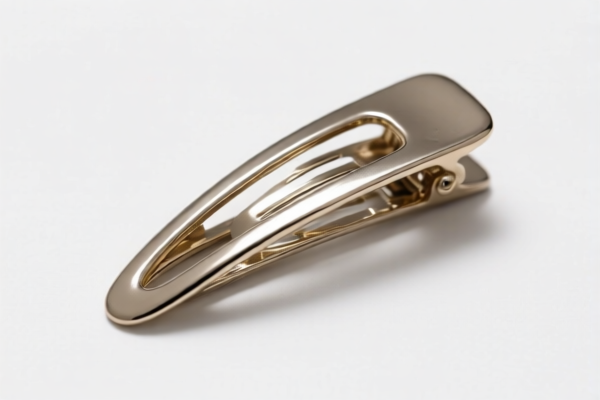
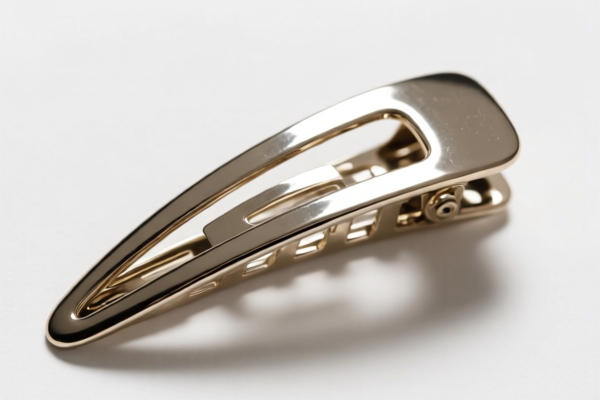
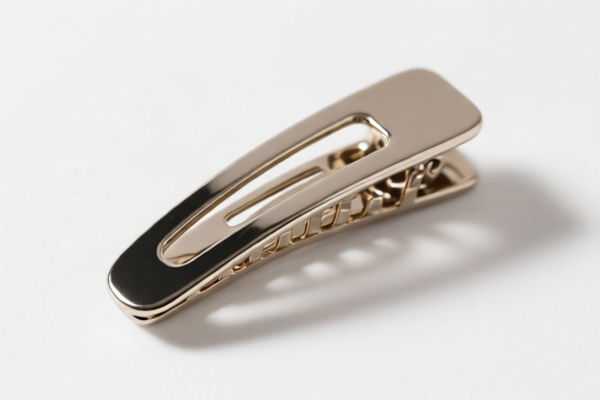
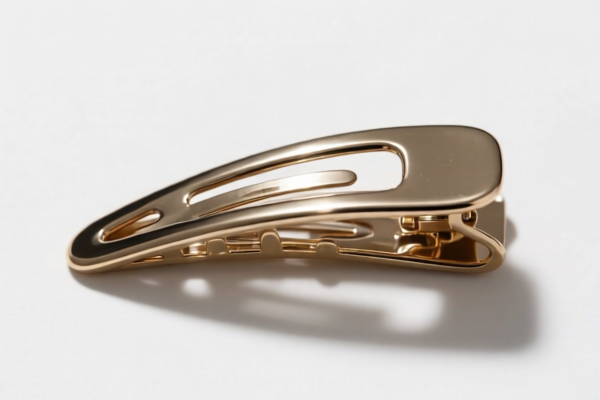
Metal Long Tail Clip
CN → US| HS Code | Tariff Rate | Origin | Destination | Doc |
|---|---|---|---|---|
| 7326190080 | 87.9% | CN | US | Official Doc |
| 7326200090 | 88.9% | CN | US | Official Doc |
| 3926100000 | 15.3% | CN | US | Official Doc |
| 3926908500 | 24.0% | CN | US | Official Doc |
Product Images
AI Analysis
📎 Metal Long Tail Clip (Binder Clip / Paper Clip Variant)
🌐 HS Code Classification & US Customs Clearance Guide | 2026 Tax Regime Analysis | Strategic Compliance Strategy
📌 I. Product Definition & Classification: Decoding the "Long Tail Clip"
The "Metal Long Tail Clip" typically refers to a binding device made of metal (iron or steel), often featuring long lever arms (tails) for ergonomic gripping. In international trade, these are generally classified based on their primary material and function as "fasteners" or "stationery."
However, a critical distinction exists in customs classification: 1. All-Metal Clips: If the clip is made entirely of iron/steel wire (even if coated), it falls under Chapter 73 (Articles of Iron or Steel). 2. Composite/Plastic-Coated Clips: If the clip contains significant plastic components, or if the "long tails" are primarily plastic handles over a metal spring, it may fall under Chapter 39 (Plastics) or specific stationery codes.
⚠️ Key Distinction for "Long Tail Clip": - Scenario A (Pure Metal): If the item is a standard metal binder clip with long steel arms → HS 7326 (Other articles of iron or steel). - Scenario B (Plastic/Office Use): If the item is marketed specifically as an "office supply" with plastic parts or is a composite plastic-metal hybrid → HS 3926 (Other articles of plastics). - Scenario C (Generic Fastener): If it is a simple wire clip without office-specific branding → HS 7326 or 3926 depending on composition.
📦 II. HS Code Classification Matrix (Based on Provided Data)
| HS Code | Product Description | Material Composition | Key Feature |
|---|---|---|---|
7326.19.00.80 |
Other articles of iron or steel | Metal (Steel/Iron) | General metal fastener; not specifically a spring |
7326.20.00.90 |
Other articles of wire of iron or steel | Wire (Iron/Steel) | Made primarily from wire, not sheet metal |
3926.10.00.00 |
Office or school supplies | Plastic/Metal Hybrid | Defined as "Office Supply" with plastic components |
3926.90.85.00 |
Other articles of plastics | Plastic Dominant | Plastic fastener or clip, not primarily metal |
💰 III. Detailed Tariff Rate Analysis (US Market, China Origin)
✅ Applicable Country: United States (US)
✅ Origin: China (CN)
✅ Effective Time: 2025–2026 (Subject to ongoing trade policies)
🎯 1. 7326.19.00.80 – Other Articles of Iron or Steel
Best for: Pure metal long-tail clips, steel binder clips, all-metal fasteners.
| Item | Detail |
|---|---|
| Base Tariff | 2.9% |
| Section 301 Tariff | 25.0% |
| Section 122 / Section 232 (Steel/Aluminum) | 50.0% |
| Total Effective Rate | 87.9% |
| Calculation | CIF Value × 87.9% |
| De Minimis Exemption? | ❌ No (Deny De Minimis) |
| Legal Basis | USITC 7326.19.00.80 + Section 301 Footnote + Section 232/122 Add-ons |
📌 Explanation:
- This is the highest tax bracket for metal clips. - The 50% "122/232" tariff is applied to steel/aluminum products imported from China. - Total burden: ~88%. This effectively kills the margin for low-cost metal clips. - Warning: Do not underestimate the 50% surcharge on steel.
🎯 2. 7326.20.00.90 – Other Articles of Wire of Iron or Steel
Best for: Clips made primarily from bent wire (e.g., simple wire clips, not formed sheet metal).
| Item | Detail |
|---|---|
| Base Tariff | 3.9% |
| Section 301 Tariff | 25.0% |
| Section 122 / Section 232 (Steel/Aluminum) | 50.0% |
| Total Effective Rate | 88.9% |
| Calculation | CIF Value × 88.9% |
| De Minimis Exemption? | ❌ No |
| Legal Basis | USITC 7326.20.00.90 + Section 301 + Section 232/122 |
📌 Note:
- Slightly higher base rate (3.9%) than7326.19(2.9%). - Still subject to the devastating 50% steel tariff. - Total burden: ~89%.
🎯 3. 3926.10.00.00 – Office or School Supplies (Plastic/Composite)
Best for: Clips marketed as "Office Supplies" with plastic handles or significant plastic components.
| Item | Detail |
|---|---|
| Base Tariff | 5.3% |
| Section 301 Tariff | 0.0% (Exempt/Reduced for this subheading) |
| Section 122 Tariff | 10.0% |
| Total Effective Rate | 15.3% |
| Calculation | CIF Value × 15.3% |
| De Minimis Exemption? | ✅ Yes (If value < $800 per shipment) |
| Legal Basis | USITC 3926.10.00.00 + Section 122 (10%) |
📌 Critical Opportunity:
- Massive Tax Savings: 15.3% vs. 87.9%! - De Minimis Eligibility: If shipped via postal小包 (e.g., USPS, YunExpress), and value < $800, $0 tax may apply. - Condition: Must be clearly defined as "Office Supply" and contain plastic components (e.g., plastic-coated handles, plastic backs). Pure metal clips cannot use this code.
🎯 4. 3926.90.85.00 – Other Articles of Plastics
Best for: Plastic clips, or clips where plastic is the primary material by weight.
| Item | Detail |
|---|---|
| Base Tariff | 6.5% |
| Section 301 Tariff | 7.5% |
| Section 122 Tariff | 10.0% |
| Total Effective Rate | 24.0% |
| Calculation | CIF Value × 24.0% |
| De Minimis Exemption? | ❌ No (Section 301 applies) |
| Legal Basis | USITC 3926.90.85.00 + Section 301 + Section 122 |
📌 Note:
- Better than metal, but worse than3926.10. - Used if the clip is not primarily an "office supply" (e.g., industrial plastic clips) but still plastic. - Total burden: 24%.
🛠️ IV. Customs Clearance Strategy & Recommendations
✅ 1. Product Design & Labeling Strategy (Crucial!)
| Strategy | Action | Impact on HS Code | Tax Rate |
|---|---|---|---|
| ✅ Optimal | Add Plastic Handles/Coating | Shift from 7326 to 3926.10 |
15.3% |
| ✅ Optimal | Label as "Office Supply" | Justifies 3926.10.00.00 |
15.3% |
| ✅ Optimal | Ship via De Minimis (<$800) | Avoids tariffs entirely | 0% |
| ⚠️ Risk | Pure Metal Clip | Locked into 7326 |
87.9% |
| ❌ Avoid | Misclassify Plastic as Metal | Audit risk, penalties | High |
🔥 Golden Rule:
"If it's metal, it's expensive. If it's plastic/office, it's cheap."
Modify your product: Add plastic grips, plastic backs, or colorful plastic coatings to qualify for HS 3926.10.
✅ 2. Documentation Requirements
| Document | Requirement | Notes |
|---|---|---|
| Product Description | "Plastic-Handled Binder Clip, Office Supply" | Avoid "Steel Clip" if using HS 3926 |
| Material Composition | Specify % of Plastic vs. Metal | Must show plastic is significant |
| Photos | Show plastic handles/coating | Critical for CBP verification |
| Invoice | List as "Office Accessories" | Not "Hardware Fasteners" |
| Country of Origin | China (CN) | Triggers Section 301/122 |
✅ 3. Clearance Pitfalls & Solutions
| Pitfall | Consequence | Solution |
|---|---|---|
| Misclassifying Metal as Plastic | CBP Audit, Retroactive Tax + Penalties | Ensure actual product matches HS code description |
| Using HS 3926.10 for Pure Metal | Rejected by CBP, Delayed Shipment | Use HS 7326 if truly metal; accept 87.9% |
| Ignoring Section 122 Steel Tariff | Unexpected 50% charge | Verify if steel tariff applies to your specific metal type |
| De Minimis Abuse | Shipment Rejected | Ensure individual package value < $800 |
🌍 V. Global Market Comparison (2026)
| Market | HS Code | Total Tax Rate | De Minimis? | Strategy |
|---|---|---|---|---|
| 🇺🇸 US | 3926.10.00.00 |
15.3% | ✅ Yes (<$800) | Best Option |
| 🇺🇸 US | 7326.19.00.80 |
87.9% | ❌ No | Avoid if possible |
| 🇨🇳 China (Import) | 7326.19 |
~5-10% | No | Standard clearance |
| 🇪🇺 EU | 7326.19 |
~6.5% | No | Lower than US |
| 🇬🇧 UK | 7326.19 |
~6.5% | No | Post-Brexit rules apply |
📌 Conclusion:
The US market is the most challenging due to Section 301 and Section 232/122 tariffs.
Strategy: Use HS 3926.10 with plastic components and De Minimis shipping for maximum profit.
📌 VI. Common Errors & Best Practices
❌ Error 1: Declaring a pure metal clip as "Office Plastic Clip"
👉 Result: CBP inspection reveals metal → 87.9% tax + Penalty
❌ Error 2: Using HS 7326 for a plastic-coated clip
👉 Result: Overpaying tax (87.9% vs 15.3%) → Profit Loss
❌ Error 3: Ignoring Section 122 Steel Tariff
👉 Result: Unexpected 50% charge on steel items
✅ Best Practice:
"Plastic Handles + Office Label = 15.3% Tax + De Minimis Eligible"
"Pure Steel = 87.9% Tax = Loss Leader"
🎯 VII. Final Recommendation
- Product Modification: Add plastic grips, plastic backs, or colorful plastic coating to your metal clips.
- HS Code Selection: Use
3926.10.00.00(Office/Plastic) instead of7326(Metal). - Shipping Method: Use De Minimis channels (e.g., USPS, small parcels) for orders < $800 to pay $0 tax.
- Documentation: Label as "Plastic-Handled Office Binder Clip", not "Metal Clip".
🚀 Result: Reduce tax burden from 87.9% → 15.3% or 0%!
✨ Professional Compliance from Precise Classification!
💼 Your Bottom Line Depends on This Decision!
Customer Reviews
About HS Code Classification
The Harmonized System (HS) is an internationally standardized nomenclature developed by the World Customs Organization (WCO) to classify traded products. Over 200 countries use the HS system as the basis for customs tariffs, trade statistics, and import/export regulations.
Each HS code follows a hierarchical structure:
- Chapter (2 digits) — Broad category of goods (e.g., Chapter 84: Machinery and Mechanical Appliances)
- Heading (4 digits) — More specific grouping within the chapter
- Subheading (6 digits) — Internationally standardized breakdown, used by all WCO member countries
- National subdivisions (8-10 digits) — Country-specific extensions for further classification, such as US HTSUS 10-digit codes
Correct HS code classification is essential for smooth customs clearance, accurate duty payment, and compliance with trade regulations. Misclassification can lead to customs delays, overpayment of duties, or penalties.
When importing from CN to US, the applicable tariff rates may include:
- Most-Favored-Nation (MFN) rate — The standard duty rate applied to WTO members
- General rate — Applied to countries without trade agreements
- Trade remedy duties — Additional tariffs such as Section 301 (anti-dumping), Section 232 (national security), or countervailing duties
The information provided on this page is for reference purposes only. For official classification, please consult with your local customs authority or a licensed customs broker.