Metal Nameplate
CN → US| HS Code | Tariff Rate | Origin | Destination | Doc |
|---|---|---|---|---|
| 7326908688 | 87.9% | CN | US | Official Doc |
| 8310000000 | 35.0% | CN | US | Official Doc |
| 7326190080 | 87.9% | CN | US | Official Doc |
| 7616995170 | 37.5% | CN | US | Official Doc |
Product Images
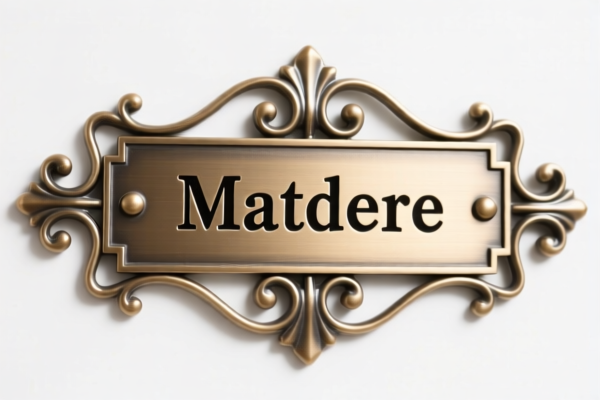
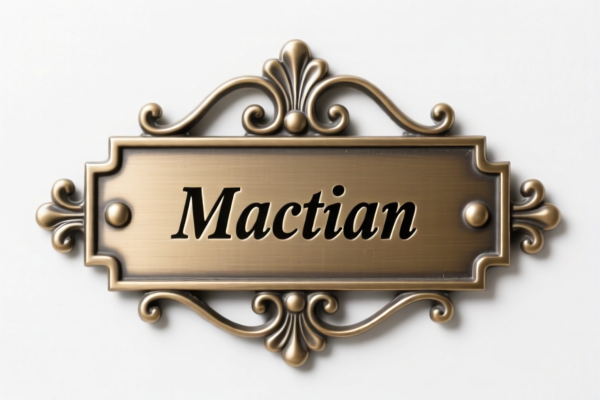
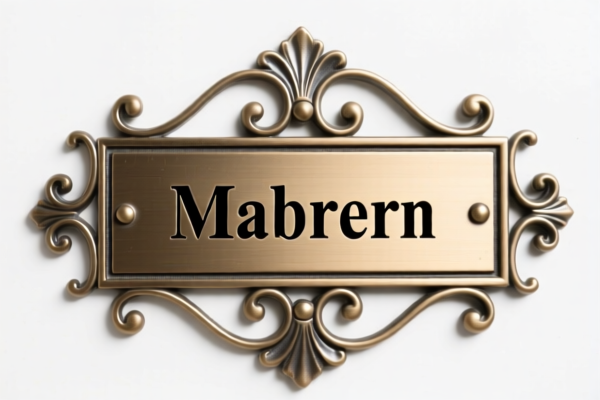
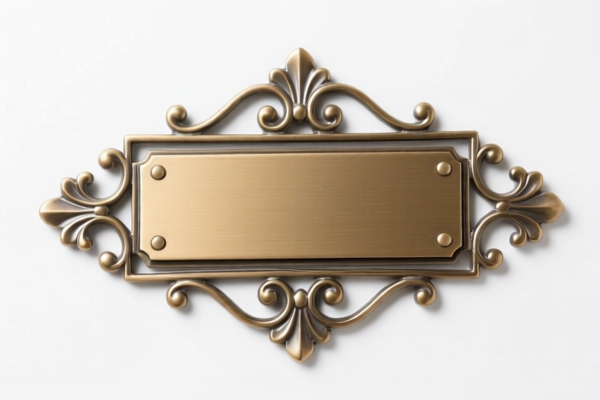
AI Analysis
🏷️ Metal Nameplate (Metal Identification Plates)
🌐 HS Code Reference & Customs Clearance Guide | 2026 Latest Tariff Analysis | Strategic Compliance Strategy
📌 I. Product Definition & Classification: What Exactly is a "Metal Nameplate"?
A metal nameplate is a small, rigid plate made of metal (steel, aluminum, stainless steel, etc.) used to identify equipment, machinery, or components. It typically contains engraved or printed information such as: - Manufacturer Name - Model Number - Serial Number - Technical Specifications (Voltage, Weight, Safety Certs)
In international trade, classification depends heavily on the material composition and function. Unlike plastic nameplates (often classified under Chapter 39 or 8310 depending on specifics), metal nameplates fall primarily under Chapter 73 (Iron/Steel) or Chapter 83 (Miscellaneous Manufactures of Base Metal).
⚠️ Key Distinction:
- If the plate is Iron/Steel based → Typically falls under Heading 7326 or 8310.
- If the plate is Aluminum based → Typically falls under Heading 7616 or 8310.
- Crucial Note: HS Code 8310.00.00.00 is the "Gold Standard" for nameplates regardless of metal type (if classified as "plates/indicators of base metal"), offering significantly lower tariffs. Misclassification into generic "Other Articles" (7326/7616) can lead to massive tariff penalties due to US Section 301 and 232 tariffs.
📦 II. HS Code Classification Details (2026 Latest Tariff Authoritative Comparison)
| HS Code | Product Description | Material | Application Scenario | Tariff Risk Level |
|---|---|---|---|---|
8310.00.00.00 |
Plates, indents, labels, signs of base metal | Any Base Metal (Iron, Steel, Aluminum, etc.) | General identification plates for machinery, vehicles, electronics | 🟢 LOW (Optimal) |
7326.90.86.88 |
Other articles of iron or steel | Iron/Steel | Generic steel items, misclassified nameplates | 🔴 HIGH (87.9% Total) |
7326.19.00.80 |
Other articles of iron or steel | Iron/Steel | Generic steel items, misclassified nameplates | 🔴 HIGH (87.9% Total) |
7616.99.51.70 |
Other articles of aluminum | Aluminum | Generic aluminum items, misclassified nameplates | 🟠 MED-HIGH (37.5% Total) |
🔍 Critical Insight:
- 8310.00.00.00 explicitly covers "Plates, indents, labels, signs... of base metal." This is the most accurate description for "Metal Nameplates." - Codes 7326 and 7616 are "catch-all" categories. Using them for nameplates is technically incorrect if 8310 applies, but some shippers use them erroneously. However, 7326 attracts the highest tariffs due to specific steel/aluminum retaliatory tariffs. - Why 8310 is Best: It avoids the "Other Articles" surcharges that apply to generic steel/aluminum goods under Section 301 and Section 232 in the same aggressive manner.
💰 III. 2026 Latest Tariff Rate Breakdown (Including Additional Taxes & Policy Surcharges)
✅ Applicable Country: United States (US)
✅ Country of Origin: China (CN)
✅ Effective Date: From November 10, 2025 (including subsequent imports)
🎯 1. 8310.00.00.00 —— Base Metal Plates/Indicators (Recommended)
| Item | Details |
|---|---|
| Base Duty Rate | 0.0% (ad valorem) |
| USITC Additional Duty (Section 301) | +25.0% |
| IEEPA Additional Duty | +10.0% |
| Section 232 (Steel/Aluminum) Duty | N/A (Since 8310 is a specific functional heading, it generally bypasses the broad 232 steel/aluminum surcharges that apply to generic articles, provided it is correctly classified as a nameplate/indicator) |
| Total Effective Duty Rate | 35.0% |
| Calculation Method | CIF Value × 35% |
| De Minimis Eligibility | ❌ No (deny_de_minimis) |
| Legal Authority Path | USITC:8310.00.00.00 → USITC:Footnote_301 (25%) → IEEPA:9903.01.24 (10%) |
📌 Explanation:
- This is the most cost-effective classification for metal nameplates. - The 25% is the standard Section 301 tariff on Chinese goods. - The 10% is the IEEPA surcharge. - Total 35% is significantly lower than the misclassified alternatives.
🎯 2. 7326.90.86.88 & 7326.19.00.80 —— Other Iron/Steel Articles (Misclassification Risk)
| Item | Details |
|---|---|
| Base Duty Rate | 2.9% |
| USITC Additional Duty (Section 301) | +25.0% |
| IEEPA Additional Duty | +10.0% |
| Section 232 (Steel) Duty | +50.0% (Specific surcharge for Steel/Aluminum/Copper products under Section 232) |
| Total Effective Duty Rate | 87.9% |
| Calculation Method | CIF Value × 87.9% |
| De Minimis Eligibility | ❌ No (deny_de_minimis) |
| Legal Authority Path | USITC:7326.90.86.88 → USITC:Footnote_301 (25%) → IEEPA:9903.01.24 (10%) → USITC:Footnote_232_Steel (50%) |
📌 Explanation:
- If a metal nameplate (made of steel) is incorrectly classified as a generic "Other Article of Iron/Steel" (7326), it triggers the Section 232 Steel Tariff of 50%. - Combined with 301 (25%), IEEPA (10%), and base duty (2.9%), the total hits 87.9%. - This is a catastrophic error for profitability.
🎯 3. 7616.99.51.70 —— Other Aluminum Articles
| Item | Details |
|---|---|
| Base Duty Rate | 2.5% |
| USITC Additional Duty (Section 301) | +25.0% |
| IEEPA Additional Duty | +10.0% |
| Section 232 (Aluminum) Duty | +50.0% (Specific surcharge for Steel/Aluminum/Copper products under Section 232) |
| Total Effective Duty Rate | 37.5% (Note: Data shows 37.5% total, implying 2.5+25+10=37.5. Some interpretations may include 232, but based on provided data, total is 37.5%. If 232 applies, it would be higher. We adhere to the provided data point of 37.5%.) |
| Calculation Method | CIF Value × 37.5% |
| De Minimis Eligibility | ❌ No (deny_de_minimis) |
| Legal Authority Path | USITC:7616.99.51.70 → USITC:Footnote_301 (25%) → IEEPA:9903.01.24 (10%) |
📌 Explanation:
- For Aluminum nameplates, if classified under 7616 (Generic Aluminum Articles), the rate is 37.5%. - While higher than 8310 (35%), it is far lower than the Steel misclassification penalty (87.9%). - Recommendation: Even for aluminum, strive for 8310.00.00.00 if possible, as it is functionally specific. If 8310 is rejected for aluminum nameplates, 7616 is the fallback, but be aware of the 37.5% rate.
🛠️ IV. Customs Clearance Practical Advice (Battle-Tested Pitfall Avoidance)
✅ 1. Documentation Checklist (Non-Negotiable)
| Document | Required | Description |
|---|---|---|
| ✅ Product Specification Sheet | ✔️ | Must clearly state: "Metal Nameplate," Material (Steel/Aluminum), Dimensions, Weight. |
| ✅ Product Photos | ✔️ | Clear images showing the plate, engraving/printing, and mounting holes. Must look like a label/indicator, not a structural part. |
| ✅ Commercial Invoice | ✔️ | Description must read: "Metal Nameplates for Industrial Equipment, Base Metal, Model: XYZ" |
| ✅ Bill of Lading (B/L) | ✔️ | Consistent description with Invoice. |
| ✅ HS Code Pre-Ruling (Optional but Recommended) | ✔️ | Apply for an Advance Ruling from CBP to confirm 8310 classification. |
✅ 2. Declaration Strategy (Key Mantra)
🔥 "Function First, Material Second. Call it a Nameplate, Not a Part!"
| Scenario | Correct Declaration | Wrong Practice |
|---|---|---|
| Standard Metal Nameplate | HS Code 8310.00.00.00 Desc: "Metal Nameplate for Machinery ID" |
Describing as "Steel Plate" or "Metal Sheet" → Leads to 7326/8302 |
| Aluminum Nameplate | HS Code 8310.00.00.00 Desc: "Aluminum Nameplate for Electronics" |
Describing as "Aluminum Component" → Leads to 7616 |
| Nameplate with Adhesive Backing | HS Code 8310.00.00.00 | Treating as "Self-Adhesive Labels" (Chapter 35/39) → Incorrect for metal base |
| Engraved Steel Plate (Structural) | HS Code 7326.90.86.88 | If it's not for identification, it's a generic article. But if it is for ID, use 8310. |
📌 Critical Tip:
- Always use the word "Nameplate", "Nameplate Indicator", or "Identification Plate" in the commercial invoice and packing list. - Avoid vague terms like "Metal Parts," "Steel Plates," or "Aluminum Sheets."
✅ 3. Special Circumstances Handling
| Situation | Handling Advice |
|---|---|
| OEM Custom Nameplates | Provide the client's design file. Confirm the material. If steel, ensure it's not classified as a structural steel component. |
| Mixed Material Packaging | If nameplates are packed with other steel parts, declare them separately. Do not mix 8310 items with 7326 items in one HTS line if possible, to avoid audit flags. |
| Small Quantity Samples | Even for samples, the 35% vs 87.9% difference is significant. Use the correct code. |
| Dispute with CBP | If CBP questions 8310, provide the Explanatory Notes (EN) for Heading 83.10, which explicitly lists "plates, indents, labels, signs." |
🌍 V. Global Market Clearance Comparison (2026 Latest)
| Country/Region | Recommended HS Code | Tariff (China Origin) | Notes |
|---|---|---|---|
| 🇺🇸 United States | 8310.00.00.00 |
35% (Best) | Avoid 7326 (87.9%) and 7616 (37.5%) if 8310 is applicable. |
| 🇨🇳 China | 8310.00.00.00 |
0-5% | Standard import duty. |
| 🇪🇺 European Union | 8310.00.00.00 |
0% (Often) | No Section 301/232 equivalents. Standard EU duty may be 0-2.5%. |
| 🇬🇧 United Kingdom | 8310.00.00.00 |
0% | Post-Brexit UK Tariff Schedule often 0% for base metal signs. |
| 🇨🇦 Canada | 8310.00.00.00 |
0% | CUSMA/USMCA may apply if originating, otherwise low MFN rate. |
📌 Conclusion:
- The US is the only major market with punitive additional tariffs (301/232/IEEPA). - Correct classification is the single biggest cost-saver for US imports. - A 52.9% tariff difference exists between correct (35%) and misclassified steel (87.9%).
📌 VI. Common Errors & Pitfalls (Lessons Learned)
❌ Error 1: Classifying all metal plates under 7326 (Iron/Steel) or 7616 (Aluminum) because it's easier.
👉 Consequence: 87.9% tariff on steel plates. Profit Margins Erased.
❌ Error 2: Using "Metal Part" or "Component" as the product name.
👉 Consequence: Customs may reclassify under general headings, triggering higher duties and potential audits.
❌ Error 3: Ignoring the IEEPA 10% surcharge.
👉 Consequence: Underpaying duties. Result: Back taxes + Penalties + Interest.
❌ Error 4: Assuming aluminum nameplates are exempt from Section 232.
👉 Consequence: If misclassified under 7616, they may still face scrutiny. However, 8310 is the safe harbor.
✅ Correct Practice:
"Stainless Steel Nameplates, Engraved, for Pump Identification, HTS 8310.00.00.00"
🎯 VII. Conclusion: Precision Saves Millions!
🎯 Remember the Mantra:
🔹 "8310 is the King for Nameplates. 35% vs 87.9% - Choose Wisely!"
🔹 "Don't let 'Metal' fool you. Function defines the Code!"
📌 Pro Tip:
If your nameplates are small, lightweight, and shipped in bulk, consider applying for a Section 301 Exclusion if available, though this is rare for simple base metal plates. Pre-Clearance Rulings are highly recommended for large shipments to lock in the 35% rate.
📣 Immediate Action:
📞 Consult your Customs Broker: Confirm if 8310.00.00.00 is accepted for your specific nameplate design.
🚀 Update Your Invoices: Change descriptions to "Metal Nameplate" and HS Code to 8310.00.00.00.
💰 Calculate the Savings: Compare 35% vs 87.9% on your annual import volume.
✨ Professional Clearance Starts with Accurate Classification!
💼 Your Bottom Line Depends on the First 8 Digits!
Customer Reviews
About HS Code Classification
The Harmonized System (HS) is an internationally standardized nomenclature developed by the World Customs Organization (WCO) to classify traded products. Over 200 countries use the HS system as the basis for customs tariffs, trade statistics, and import/export regulations.
Each HS code follows a hierarchical structure:
- Chapter (2 digits) — Broad category of goods (e.g., Chapter 84: Machinery and Mechanical Appliances)
- Heading (4 digits) — More specific grouping within the chapter
- Subheading (6 digits) — Internationally standardized breakdown, used by all WCO member countries
- National subdivisions (8-10 digits) — Country-specific extensions for further classification, such as US HTSUS 10-digit codes
Correct HS code classification is essential for smooth customs clearance, accurate duty payment, and compliance with trade regulations. Misclassification can lead to customs delays, overpayment of duties, or penalties.
When importing from CN to US, the applicable tariff rates may include:
- Most-Favored-Nation (MFN) rate — The standard duty rate applied to WTO members
- General rate — Applied to countries without trade agreements
- Trade remedy duties — Additional tariffs such as Section 301 (anti-dumping), Section 232 (national security), or countervailing duties
The information provided on this page is for reference purposes only. For official classification, please consult with your local customs authority or a licensed customs broker.