Metal Non Injectable Needles
CN → US| HS Code | Tariff Rate | Origin | Destination | Doc |
|---|---|---|---|---|
| 8209000030 | 39.6% | CN | US | Official Doc |
| 8209000060 | 39.6% | CN | US | Official Doc |
| 7319909000 | 70.4% | CN | US | Official Doc |
| 9018320000 | 110.0% | CN | US | Official Doc |
| 7319901000 | 67.5% | CN | US | Official Doc |
Product Images
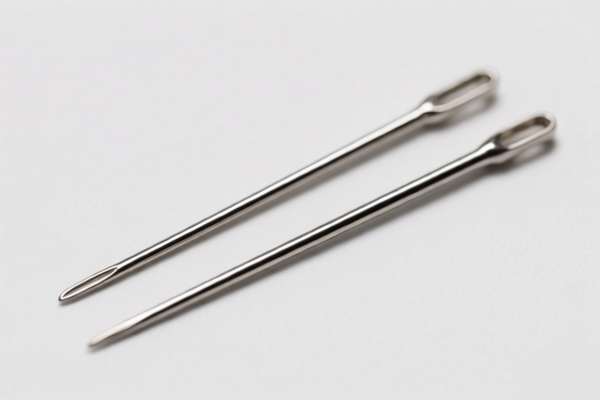
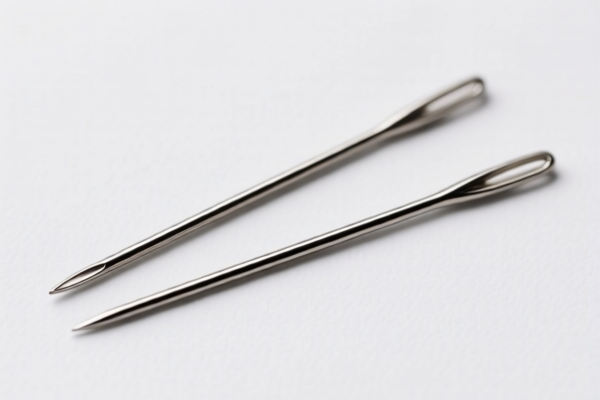
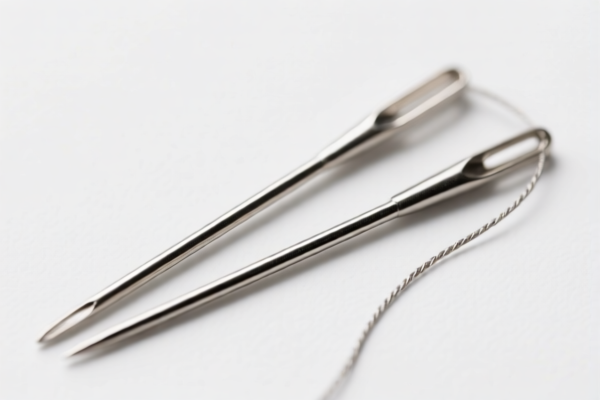
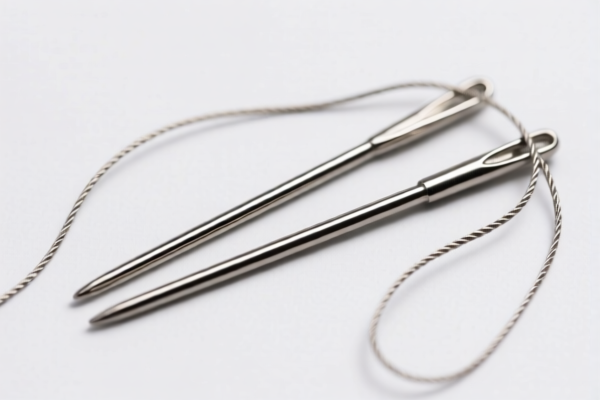
AI Analysis
📌 Metal Non-Injectable Needles: HS Code Classification & Customs Clearance Guide (2026 Edition)
🌐 HS Code Reference & Customs Clearance Strategy | 2026 Latest Tariff Analysis | Professional Level Entry Guide
📌 I. Product Definition & Classification: What Exactly Are "Metal Non-Injectable Needles"?
Non-Injectable Needles are metal pin-like products primarily used for mechanical, industrial, cosmetic, or specific surgical purposes that do not penetrate the skin for fluid transfer (unlike hypodermic needles). Their classification depends heavily on the material composition, specific use case, and physical structure.
In international trade, these are broadly categorized into two main groups: 1. Ceramic/Cermet Tool Parts (Unassembled): Metal tips, pins, or blanks intended for use in manufacturing tools (e.g., ceramic saw blades, industrial cutters). 2. General Steel/Iron or Medical Devices: Standard steel pins for sewing/industrial use, or specific tube-shaped devices for medical/surgical applications (if non-injectable but invasive).
⚠️ Key Distinction Point:
- If the needle is a raw material or unassembled part for a tool (e.g., a ceramic saw tip): → Chapter 82
- If the needle is a finished steel product for general use (sewing, industrial piercing): → Chapter 73
- If the needle is a specialized medical device (tube-shaped, surgical): → Chapter 90
📦 II. HS Code Classification Details (2026 Latest Tariff Authority Comparison)
Based on the provided data, here are the specific HS Codes, their application scenarios, and tax implications:
| HS Code | Product Description | Application Scenario | Material/Feature | Total Tax Rate (China Origin to US) |
|---|---|---|---|---|
8209.00.00.30 |
Metal Pins for Ceramic Tools | Unassembled pins/blanks for ceramic saw blades, drills, or cutting tools. | Metal/Cermet, Unassembled | 39.6% |
8209.00.00.60 |
Metal Tips/Points | Tips for metal-ceramic tools, matching shape/material of ceramic tool points. | Metal Tip, Tool Component | 39.6% |
7319.90.90.00 |
Steel/Iron Pins (General) | Sewing needles, industrial pins, non-subcutaneous metal needles. | Steel/Iron, General Use | 70.4% |
9018.32.00.00 |
Tube-Shaped Metal Needles | Medical/Surgical instruments (non-injectable, but invasive/tubular). | Metallic, Medical Device | 110.0% |
7319.90.10.00 |
Steel/Iron Pins (Specific) | Steel needles based on non-subcutaneous description. | Steel/Iron, Specific Form | 67.5% |
🔍 Critical Reminder:
-8209Codes: Apply only if the needle is part of a tool system (e.g., for ceramic saws) and is unassembled. Do not use for finished consumer sewing needles.
-7319Codes: Apply to standard steel needles (sewing, industrial, etc.). High tariffs due to Section 301 and IEEPA additions.
-9018Code: Apply ONLY if the product is a medical/surgical instrument (e.g., trocars, cannulas, tubular needles). Do not misdeclare industrial needles as medical devices to avoid scrutiny. If misclassified, penalties are severe.
💰 III. 2026 Latest Tariff Rate Breakdown (Detailed Tax Clause Explanation)
✅ Applicable Country: United States (US)
✅ Country of Origin: China (CN)
✅ Effective Date: From November 10, 2025 onwards
🎯 1. 8209.00.00.30 & 8209.00.00.60 — Tool Parts (Ceramic/Metal)
| Item | Detail |
|---|---|
| Base Duty | 4.6% (MFN Rate for Chapter 82) |
| Section 301 Duty | +25.0% (List 3/4 Items) |
| Section 122 Duty | +10.0% (Specific addition for certain metal tools/parts) |
| Total Tax Rate | 39.6% |
| Calculation Base | CIF Value × 39.6% |
| De Minimis Exemption | ❌ Not Eligible (Deny_de_minimis applies) |
| Legal Basis | USITC Footnote for 8209 + Section 301 + IEEPA 122 |
📌 Explanation:
- These are considered industrial tool components.
- The 4.6% is the standard import duty.
- The 25% is the standard Section 301 tariff for Chinese goods in this category.
- The 10% is an additional layer under "Section 122" (specifically targeting metal products/tools).
- Total: 39.6%. This is a high but manageable rate for industrial components.
🎯 2. 7319.90.90.00 & 7319.90.10.00 — Steel/Iron Needles (General Use)
| Item | Detail |
|---|---|
| Base Duty | 0.0% – 2.9% (Varies by subheading) |
| Section 301 Duty | +7.5% |
| Steel/Aluminum/Copper Surcharge | +50.0% (Critical: Section 232 or specific steel tariffs) |
| Section 122 Duty | +10.0% |
| Total Tax Rate | 67.5% – 70.4% |
| Calculation Base | CIF Value × 67.5%~70.4% |
| De Minimis Exemption | ❌ Not Eligible |
| Legal Basis | USITC Footnote for 7319 + Steel Tariffs + IEEPA |
📌 Explanation:
- Base Duty: Low (0-2.9%).
- The Trap: Steel products from China are subject to a 50% additional tariff (often under Section 232 or specific trade remedies).
- Section 301: Adds another 7.5%.
- Section 122: Adds 10%.
- Total: ~70%. This is a very high barrier. If your needles are steel, expect a heavy tax hit.
🎯 3. 9018.32.00.00 — Medical/Surgical Tube Needles
| Item | Detail |
|---|---|
| Base Duty | 0.0% |
| Section 301 Duty | +100.0% |
| Section 122 Duty | +10.0% |
| Total Tax Rate | 110.0% |
| Calculation Base | CIF Value × 110.0% |
| De Minimis Exemption | ❌ Not Eligible |
| Legal Basis | USITC Footnote for 9018 + IEEPA 100% + Section 122 |
📌 Explanation:
- Base Duty: 0% for medical devices.
- The Shock: 100% Section 301 Tariff applies to certain medical devices from China.
- Section 122: Adds another 10%.
- Total: 110%. This is a prohibitive tariff. Importing tubular medical needles from China is currently economically unviable unless you have a specific exemption or different origin.
🛠️ IV. Customs Clearance Practical Advice (Avoiding Pitfalls)
✅ 1. Documentation Checklist (Must-Have)
| Document | Required? | Purpose |
|---|---|---|
| Product Specification Sheet | ✅ Yes | Clearly state: "Non-Injectable," material, dimensions, intended use (e.g., "for ceramic saw blades"). |
| Technical Diagram | ✅ Yes | Show if it’s a pin, tip, or tube. Crucial for distinguishing 8209 vs 9018. |
| Product Photos | ✅ Yes | Clear images of the needle, packaging, and any labels. |
| Commercial Invoice | ✅ Yes | Must explicitly state "Metal Non-Injectable Needles" and the specific HS Code. Avoid vague terms like "parts." |
| Certificate of Origin (CO) | ✅ Yes | If not China-origin, claim preferential rates. |
| FCC/CE Certifications | ⚠️ If Applicable | If marketed as medical or electronic-assisted, certifications may be requested. |
✅ 2. Declaration Tips (Key Strategies)
🔥 "Be Specific, Don’t Generalize, Match the Use!"
| Scenario | Correct HS Code | Why? |
|---|---|---|
| Needles for ceramic saw blades | 8209.00.00.30 |
They are tool parts, not finished tools. Clearly state "Unassembled." |
| Standard sewing/industrial steel pins | 7319.90.90.00 |
General steel product. Expect ~70% tax. |
| Tubular medical needles (non-injectable) | 9018.32.00.00 |
Classified as medical instruments. Very high tax (110%). |
| Metal tips for drills/cutters | 8209.00.00.60 |
Fits "tip" description. Check if it’s a replaceable part. |
⚠️ Critical Warning:
- Do NOT declare steel needles as "medical devices" to avoid the 70% steel tariff. If they are not FDA-approved or intended for medical use, this is fraud.
- Do NOT declare industrial pins as "general goods" to avoid Section 301. The 50% steel surcharge is hard to waive.
🌍 V. Global Market Comparison (2026)
| Country | Recommended HS Code | Estimated Tax (China Origin) | Notes |
|---|---|---|---|
| 🇺🇸 USA | 8209.00.00.30 / 7319.90.90.00 |
39.6% – 70.4% | High tariffs due to Section 301, 122, and steel surcharges. |
| 🇪🇺 EU | 8208/8209 / 7319 | Low (0-4%) | No Section 301. Standard MFN rates apply. Much cheaper entry. |
| 🇨🇳 China | 8209 / 7319 | Low (0-5%) | If exporting to China, taxes are minimal. |
| 🇬🇧 UK | 8209 / 7319 | Low (0-5%) | Post-Brexit, rates similar to EU for most goods. |
📌 Strategy:
If your primary market is the US, consider third-country manufacturing (e.g., Vietnam, Thailand) to avoid Section 301 and IEEPA surcharges. For EU/UK, direct shipment is cost-effective.
📌 VI. Common Mistakes & Pitfalls (Learn from Others’ Errors)
❌ Mistake 1: Declaring "Metal Needles" generally.
👉 Consequence: Customs will reclassify to the highest applicable rate (likely 9018 or 7319 with steel surcharge) → Massive补税 (Back Tax) + Penalties.
❌ Mistake 2: Using "Sewing Needle" for industrial ceramic tool pins.
👉 Consequence: Wrong HS Code (7319 instead of 8209). You pay 70% tax instead of 39.6%. Loss of profit margin.
❌ Mistake 3: Assuming "Non-Injectable" means no medical scrutiny.
👉 Consequence: If the product is tubular or surgical, it may still be flagged as 9018 (Medical). If not properly declared, it leads to FDA/Customs hold.
❌ Mistake 4: Ignoring the "Section 122" and "Steel Surcharge."
👉 Consequence: Budgeting based only on base duty (e.g., 4.6%) leads to unexpected 30-50% cost overrun.
✅ Correct Approach:
"Metal Unassembled Pins for Ceramic Saw Blades, Model XYZ, Made of Tungsten Carbide/Steel, for Industrial Cutting Applications"
🎯 VII. Conclusion: Precision is Profit
🎯 Key Takeaways:
1. Identify the Use: Tool part (8209) vs. General Steel (7319) vs. Medical (9018).
2. Expect High US Taxes: Even "low" base rates become 39.6%–110% with Section 301, 122, and steel surcharges.
3. Document Carefully: Use precise technical descriptions. Vague terms lead to reclassification.
4. Consider Supply Chain Shift: For the US market, non-China origins may be significantly cheaper despite higher base duties.
📌 Pro Tip:
If you are importing steel needles for the US market, calculate the total landed cost including the 50% steel surcharge. If it exceeds your margin, explore alternative materials or markets.
📣 Immediate Action:
📞 Consult a Customs Broker: Get a pre-shipment ruling for your specific needle type.
📋 Verify HS Code: Confirm8209vs7319vs9018with your supplier.
💰 Budget for Taxes: Assume 40–70% of product value will be tax.
✨ Clear Classification, Clear Customs, Clear Profits!
💼 Every percentage point matters in international trade!
Customer Reviews
About HS Code Classification
The Harmonized System (HS) is an internationally standardized nomenclature developed by the World Customs Organization (WCO) to classify traded products. Over 200 countries use the HS system as the basis for customs tariffs, trade statistics, and import/export regulations.
Each HS code follows a hierarchical structure:
- Chapter (2 digits) — Broad category of goods (e.g., Chapter 84: Machinery and Mechanical Appliances)
- Heading (4 digits) — More specific grouping within the chapter
- Subheading (6 digits) — Internationally standardized breakdown, used by all WCO member countries
- National subdivisions (8-10 digits) — Country-specific extensions for further classification, such as US HTSUS 10-digit codes
Correct HS code classification is essential for smooth customs clearance, accurate duty payment, and compliance with trade regulations. Misclassification can lead to customs delays, overpayment of duties, or penalties.
When importing from CN to US, the applicable tariff rates may include:
- Most-Favored-Nation (MFN) rate — The standard duty rate applied to WTO members
- General rate — Applied to countries without trade agreements
- Trade remedy duties — Additional tariffs such as Section 301 (anti-dumping), Section 232 (national security), or countervailing duties
The information provided on this page is for reference purposes only. For official classification, please consult with your local customs authority or a licensed customs broker.