Metal Numbering Stamp Equipment
CN → US| HS Code | Tariff Rate | Origin | Destination | Doc |
|---|---|---|---|---|
| 8456121010 | 38.5% | CN | US | Official Doc |
| 8456111010 | 38.5% | CN | US | Official Doc |
| 8205593080 | 35.0% | CN | US | Official Doc |
| 8205595560 | 40.3% | CN | US | Official Doc |
| 8472906000 | 35.0% | CN | US | Official Doc |
Product Images
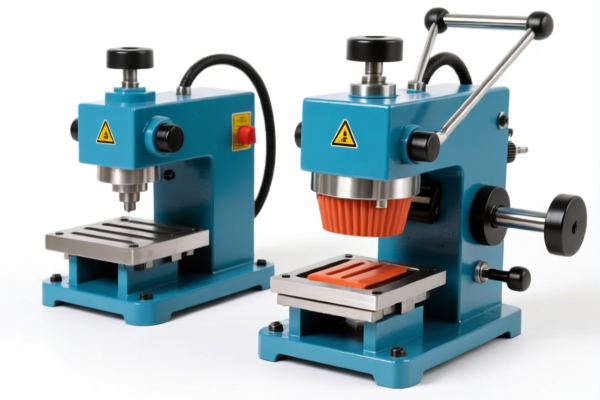
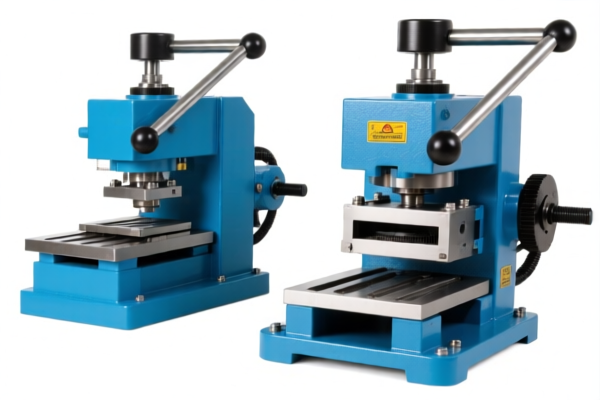
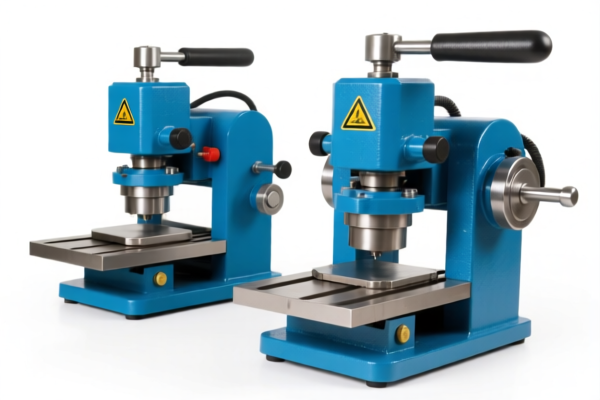
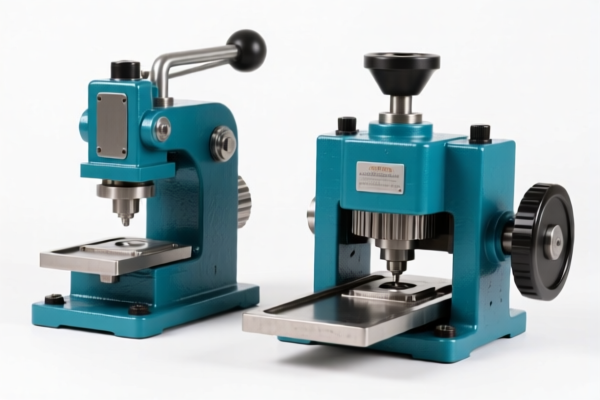
AI Analysis
🏷️ Metal Numbering Stamp Equipment
🌐 HS Code Reference & Customs Clearance Guide | 2026 Latest Tariff Analysis | Professional Entry Strategies
📌 I. Product Definition & Classification: What Exactly is "Metal Numbering Stamp Equipment"?
Metal numbering stamp equipment is a critical tool in industrial manufacturing, used to imprint serial numbers, dates, lot codes, or barcodes onto metal surfaces. In international trade, this category is split into two distinct functional groups based on automation level and power source:
1. Digital/Laser Marking Machines (Automated/CNC): High-speed, computer-controlled devices that use lasers or beams to etch metal. These are considered "machines for working metal by laser or other light or photo beam." 2. Mechanical Hand Stamps (Manual): Physical tools (usually made of steel or iron) struck by hand to imprint characters. These are classified as "hand tools."
⚠️ Critical Distinction Point:
- If the device is electrically powered, CNC-controlled, or laser-based → It falls under Chapter 84 (Machinery).
- If the device is a simple metal chisel/stamp struck by hand → It falls under Chapter 82 (Hand Tools).
- Note: Misclassifying a high-tech laser marker as a simple hand tool, or vice versa, can lead to significant customs delays or incorrect duty assessments.
📦 II. HS Code Classification Details (2026 Latest Tariff Authority Cross-Reference)
Based on the provided data, here are the specific HS codes and their corresponding tax implications. The market context is clearly the United States (indicated by Section 301/122 tariffs).
| HS Code | Product Description | Application Scenario | Mechanism Type |
|---|---|---|---|
8456.12.10.10 |
Metal digital marking equipment; conforms to metal material and laser or beam processing purposes | Industrial laser marking, automated serial numbering | ⚡ Laser/Beam (Digital) |
8456.11.10.10 |
Metal digital marking equipment, with numerical control (CNC) function, for laser processing of metal | CNC-controlled laser engravers, automated production lines | ⚡ Laser/CNC (Digital) |
8205.59.30.80 |
Metal numbering stamp, belongs to other hand tools, material is metal | Manual stamping hammers, handheld metal punches | 🖐️ Manual (Hand Tool) |
8205.59.55.60 |
Metal numbering stamp, made of iron or steel, belongs to other hand tools | Standard steel hand stamps, chisel-type numberers | 🖐️ Manual (Hand Tool) |
8472.90.60.00 |
Metal numbering stamp, purpose is numbering, fits the "fallback" category for office machines | Edge Case: Unusual devices that don't fit laser or standard hand tool definitions perfectly, often used for administrative numbering | ❓ Special/Office Fallback |
🔍 Key Reminder:
-8456.xxxxxxcodes attract the highest total tax burden (38.5%) due to the inclusion of Section 301 and Section 122 tariffs on advanced manufacturing equipment. -8205.xxxxxxcodes are for simple, low-tech tools. While base duties may be lower or zero, they still suffer from the 25% Section 301 tariff and 10% Section 122 tariff. -8472.xxxxxxis a niche classification. It implies the equipment is viewed as an accessory to office machinery rather than industrial metalworking. Use with caution; customs may challenge this if the device is clearly industrial.
💰 III. 2026 Latest Tariff Rate Breakdown (Including Additional Taxes & Policy Add-ons)
✅ Applicable Country: United States (US)
✅ Origin: China (CN)
✅ Effective Time: Current tariffs (Section 301 & Section 122)
🎯 1. 8456.12.10.10 & 8456.11.10.10 —— Digital/Laser Metal Marking Machines
| Item | Content |
|---|---|
| Base Tariff | 3.5% (ad valorem) |
| Section 301 Add-on | +25.0% (Retaliatory tariff on Chinese goods) |
| Section 122 Add-on | +10.0% (UFLPA/Enforce and Protect Act related surcharge on specific tech/manufacturing goods) |
| Total Effective Rate | 38.5% |
| Tax Calculation | CIF Value × 38.5% |
| De Minimis Exemption | ❌ Not Eligible (Deny de_minimis) |
| Legal Basis Path | USITC:8456.11/12 → SECTION301:25% → SECTION122:10% |
📌 Explanation:
- These codes cover high-tech automation. The 38.5% total rate is punitive.
- Section 122 is particularly new and aggressive, targeting goods that may have supply chain vulnerabilities or strategic importance.
- Total Cost Impact: For a $10,000 machine, you pay $3,850 in duties alone.
🎯 2. 8205.59.30.80 —— Metal Numbering Stamp (Other Hand Tools, Metal)
| Item | Content |
|---|---|
| Base Tariff | 0.0% |
| Section 301 Add-on | +25.0% |
| Section 122 Add-on | +10.0% |
| Total Effective Rate | 35.0% |
| Tax Calculation | CIF Value × 35.0% |
| De Minimis Exemption | ❌ Not Eligible |
📌 Note:
- Although the base duty is 0%, the 35% total effective rate is still very high due to the叠加 (stacking) of Section 301 and 122 tariffs.
- This applies to generic metal stamps not specifically defined as iron/steel in the next code.
🎯 3. 8205.59.55.60 —— Metal Numbering Stamp (Iron or Steel Hand Tools)
| Item | Content |
|---|---|
| Base Tariff | 5.3% |
| Section 301 Add-on | +25.0% |
| Section 122 Add-on | +10.0% |
| Total Effective Rate | 40.3% |
| Tax Calculation | CIF Value × 40.3% |
| De Minimis Exemption | ❌ Not Eligible |
📌 Note:
- This is the highest tariff category (40.3%) for manual tools because it has a base duty of 5.3%.
- Customs scrutinizes "iron/steel" classifications heavily. If the tool is made of tungsten carbide or other alloys,8205.59.30.80(0% base) might be argued, but requires proof.
🎯 4. 8472.90.60.00 —— Metal Numbering Stamp (Office Machine Fallback)
| Item | Content |
|---|---|
| Base Tariff | 0.0% |
| Section 301 Add-on | +25.0% |
| Section 122 Add-on | +10.0% |
| Total Effective Rate | 35.0% |
| Tax Calculation | CIF Value × 35.0% |
| De Minimis Exemption | ❌ Not Eligible |
📌 Warning:
- This code is a "catch-all" for office machines. Using this for industrial metal stamping equipment is risky.
- CBP (Customs and Border Protection) may reject this classification if the device is clearly used in heavy industry, not office administration.
- If accepted, the rate is 35%, same as the other hand tools, but the risk of audit is higher.
🛠️ IV. Customs Clearance Practical Advice (Battle-Tested Pitfall Avoidance)
✅ 1. Required Documentation Checklist (Non-Negotiable)
| Document | Must Provide | Explanation |
|---|---|---|
| ✅ Product Specification Sheet | ✔️ | Must detail: Power source (Electric vs. Manual), Material (Steel, Carbide, etc.), and Method (Laser vs. Impact). |
| ✅ Technical Drawings/Photos | ✔️ | Clear images showing controls, lasers, or handle grips. Critical for distinguishing 8456 (CNC) from 8205 (Hand). |
| ✅ Commercial Invoice | ✔️ | Must explicitly state: "Laser Marking Machine" or "Hand Stamp." Avoid vague terms like "Equipment." |
| ✅ Origin Certificate | ✔️ | Confirms Country of Origin (China). Essential for applying Section 301/122 rates accurately. |
| ✅ List of Packing | ✔️ | Shows if accessories (power cables, software discs, stamps) are included. |
✅ 2. Declaration Strategy (Key Mantra)
🔥 “Digital Laser = 8456 (38.5%), Hand Tool = 8205 (35-40%), Office Fallback = 8472 (35% but Risky).”
| Scenario | Correct Classification | Wrong Classification | Consequence |
|---|---|---|---|
| Laser Marker with CNC Panel | 8456.11.10.10 or 8456.12.10.10 |
8205.59.55.60 |
Under-declaration of duty → Penalty + Back taxes |
| Handheld Steel Stamp | 8205.59.55.60 |
8456.12.10.10 |
Over-declaration → Unnecessary 38.5% tax instead of 40.3% (wait, 40.3% is higher, so actually misclassification could be either way) → Audit Risk |
| Simple Metal Punch | 8205.59.30.80 |
8472.90.60.00 |
Risk of Rejection → CBP may argue it's not an "office machine" |
✅ 3. Special Handling
| Situation | Recommendation |
|---|---|
| Mixed Shipments | If shipping both laser machines and hand stamps, declare separately. Do not bundle into one line item. |
| Accessories | If a laser machine includes "stamp bits" (interchangeable tips), declare them as part of the machine (8456) if they are integral. Do not separate them unless they are general-purpose hand tools. |
| Pre-Ruling | For high-value laser equipment, apply for a Binding Ruling from CBP. It costs money but provides legal certainty on the HS Code, preventing post-entry audits. |
🌍 V. Global Market Comparison (2026 Latest)
| Country/Region | Recommended HS Code | Effective Tariff Rate | Certification Requirements | Notes |
|---|---|---|---|---|
| 🇺🇸 USA | 8456.12.10.10 (Laser) |
38.5% | FCC (for laser) | High tariffs due to Sec 301 & 122. |
| 🇺🇸 USA | 8205.59.55.60 (Hand) |
40.3% | None | Highest duty for manual tools. |
| 🇪🇺 EU | 8456.10.00 |
~2.7% + VAT | CE, RoHS | No Section 301/122 equivalents. |
| 🇨🇳 China | 8456.10.00 |
~5-10% | CCC | Lower import duties, but VAT applies. |
| 🇬🇧 UK | 8456.10.00 |
~2.7% + VAT | UKCA | Post-Brexit standards. |
📌 Conclusion:
- USA is the most expensive market for these goods due to the cumulative 35-40% tariff burden.
- EU and UK offer significantly lower entry costs (~2.7% base), making them more attractive for re-export hubs.
- Cost Optimization: Consider supply chain adjustments. If shipping to the US, ensure the HS Code is perfectly aligned to avoid penalties that could exceed the duty savings.
📌 VI. Common Mistakes & Pitfall Guide (Blood Lessons)
❌ Mistake 1: Calling a Laser Marker a "Stamp" in the description.
👉 Consequence: CBP may classify it as 8205 (Hand Tool) or 8472 (Office), leading to misclassification penalties if they determine it's clearly industrial laser equipment (8456).
❌ Mistake 2: Ignoring Section 122 Tariff.
👉 Consequence: Failing to declare the 10% surcharge results in underpayment of duties. CBP audits will flag this, leading to back-taxes, interest, and potential fraud accusations.
❌ Mistake 3: Bundling Laser Machines and Hand Stamps in one invoice.
👉 Consequence: Confusion at customs. The 38.5% vs 35%/40.3% difference requires clear line-item separation.
❌ Mistake 4: Assuming "De Minimis" applies.
👉 Consequence: These goods are explicitly denied de minimis exemption. Shipping small batches via USPS/UPS without proper declaration will lead to seizure or return.
✅ Correct Approach:
"Laser Marking Machine, CNC Controlled, for Metal Etching, Model XYZ, FCC Certified"
vs.
"Hand-Strike Metal Numbering Stamp, Steel Head, Rubber Handle"
🎯 VII. Conclusion: Precision in Classification Saves Money!
🎯 Remember the Mantra:
🔹 "Laser/CNC = 8456 (38.5%), Steel Hand Stamp = 8205 (40.3%), Metal Hand Tool = 8205 (35%).
🔹 "Section 122 is real, don't skip the 10%. Audit risk is high, declare it right!"
📌 Pro Tip:
If your product is borderline (e.g., a semi-automatic numbering device), request a Pre-Ruling from CBP. The cost of a ruling is far less than the penalty for misclassification.
📣 Immediate Action:
📞 Contact your customs broker with detailed product photos and specs.
🚀 Verify Section 122 applicability for your specific item.
💼 Ensure your commercial invoice matches the HS Code description exactly.
✨ Professional Customs Clearance Starts with Accurate Classification!
💼 Every percentage point of duty matters in your profit margin!
Customer Reviews
About HS Code Classification
The Harmonized System (HS) is an internationally standardized nomenclature developed by the World Customs Organization (WCO) to classify traded products. Over 200 countries use the HS system as the basis for customs tariffs, trade statistics, and import/export regulations.
Each HS code follows a hierarchical structure:
- Chapter (2 digits) — Broad category of goods (e.g., Chapter 84: Machinery and Mechanical Appliances)
- Heading (4 digits) — More specific grouping within the chapter
- Subheading (6 digits) — Internationally standardized breakdown, used by all WCO member countries
- National subdivisions (8-10 digits) — Country-specific extensions for further classification, such as US HTSUS 10-digit codes
Correct HS code classification is essential for smooth customs clearance, accurate duty payment, and compliance with trade regulations. Misclassification can lead to customs delays, overpayment of duties, or penalties.
When importing from CN to US, the applicable tariff rates may include:
- Most-Favored-Nation (MFN) rate — The standard duty rate applied to WTO members
- General rate — Applied to countries without trade agreements
- Trade remedy duties — Additional tariffs such as Section 301 (anti-dumping), Section 232 (national security), or countervailing duties
The information provided on this page is for reference purposes only. For official classification, please consult with your local customs authority or a licensed customs broker.