Metal Tableware and Kitchen Utensils
CN → US| HS Code | Tariff Rate | Origin | Destination | Doc |
|---|---|---|---|---|
| 7323930045 | 62.0% | CN | US | Official Doc |
| 7418100004 | 70.5% | CN | US | Official Doc |
| 7615107180 | 63.1% | CN | US | Official Doc |
| 7323930035 | 62.0% | CN | US | Official Doc |
| 7418100053 | 70.5% | CN | US | Official Doc |
Product Images
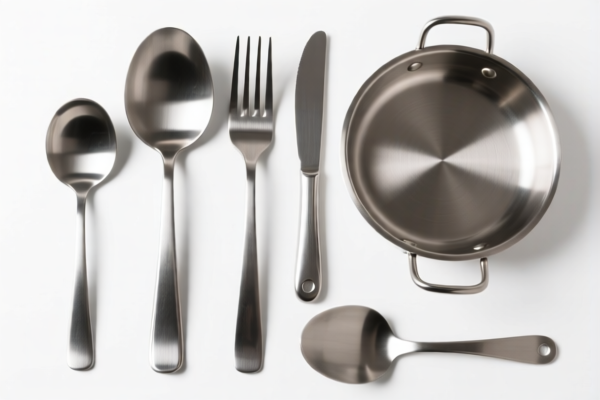
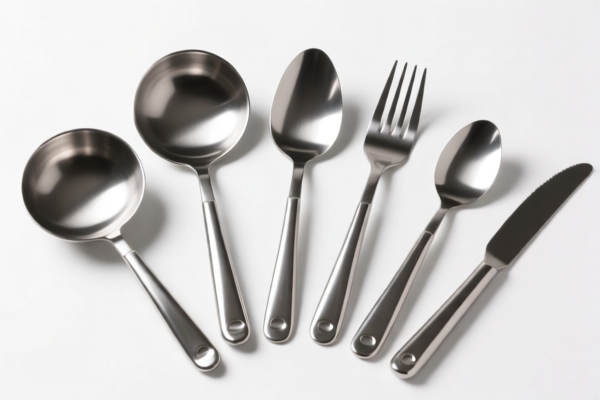
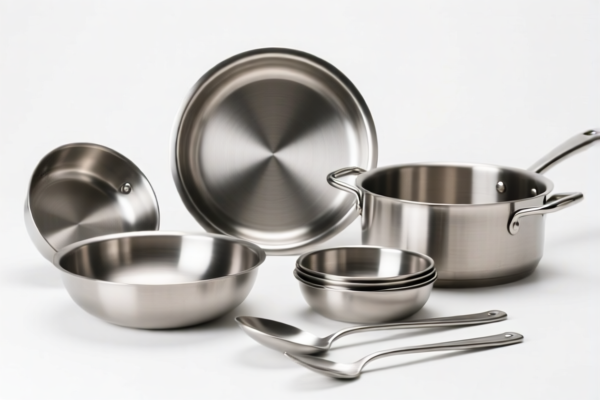
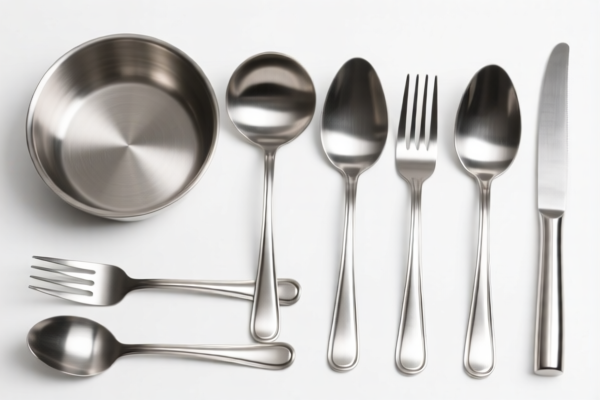
AI Analysis
🍳 Metal Tableware and Kitchen Utensils (Metal Kitchen Ware)
🌐 HS Code Reference & Customs Clearance Guide | 2026 Latest Tariff Analysis | Professional Clearance Strategy
📌 I. Product Definition and Classification: Do You Really Understand "Metal Kitchen Utensils"?
Metal tableware and kitchen utensils encompass a wide range of household items used for cooking, serving, and food preparation. In international trade, these goods are primarily classified under Chapter 73 (Articles of Iron or Steel), Chapter 74 (Articles of Copper), and Chapter 76 (Articles of Aluminum).
The correct classification depends heavily on two factors: 1. Material Composition: Is it stainless steel, aluminum, copper, or an alloy? 2. Specific Use: Is it for general cooking (pots/pans), serving (flatware), or general kitchen utility?
⚠️ Key Distinction:
- Steel Products: Most common for pots, pans, and durable utensils. Falls under HS 7323.
- Copper Products: Premium cookware or decorative items. Falls under HS 7418.
- Aluminum Products: Lightweight cookware or baking sheets. Falls under HS 7615.
📦 II. HS Code Classification Details (2026 Latest Tariff Authority Comparison)
| HS Code | Product Description | Material & Usage Scenario | Summary from Data |
|---|---|---|---|
7323.93.00.45 |
Metal tableware & kitchen utensils | Stainless Steel / Iron; Cooking appliances | Metal kitchen ware, matching stainless steel/iron materials with cooking appliance use |
7418.10.00.04 |
Metal tableware & kitchen utensils | Copper / Metal Alloy; Kitchen household items | Metal kitchen ware, matching copper/metal materials with kitchen household item use |
7615.10.71.80 |
Metal tableware & kitchen utensils | Aluminum / Other Metals; General kitchen use | Metal kitchen ware, matching aluminum/other metal materials with kitchen utensil use |
7323.93.00.35 |
Metal tableware & kitchen utensils | Stainless Steel; Cookware specifically | Metal kitchen ware, matching stainless steel material with cookware use |
7418.10.00.53 |
Metal tableware & kitchen utensils | Copper / Non-Copper Zinc Alloy; Cooking/Kitchen supplies | Metal kitchen ware, matching copper/non-copper zinc alloy materials with cooking/kitchen supply use |
🔍 Key Reminder:
- Stainless Steel Items: Look for 7323.93.xx. Distinguish between general kitchen use (...45) and specific cookware (...35). - Copper Items: Look for 7418.10.xx. Note that both pure copper and zinc alloys fall here, but the sub-code differs based on specific material mix. - Aluminum Items: Look for 7615.10.xx. This covers a broad range of aluminum kitchen tools.
💰 III. 2026 Latest Tariff Rate Detail (Including Surcharges, Policy Add-ons)
✅ Applicable Country: United States (US)
✅ Origin: China (CN)
✅ Effective Time: Current Trade Policy Enforced
🎯 1. 7323.93.00.45 & 7323.93.00.35 —— Stainless Steel & Iron Kitchen Ware
| Item | Content |
|---|---|
| Base Tariff | 2.0% (Ad Valorem) |
| Section 301 Surcharge | 0.0% (Note: Data specifies 0.0% for this specific sub-category in the provided dataset, likely due to specific exclusion or product type) |
| Section 122 Tariff | 10% (Applied to Steel, Aluminum, Copper products) |
| Section 232 Tariff | 50% (Applied to Steel, Aluminum, Copper products) |
| Total Tax Rate | 62.0% |
| Tax Calculation | CIF Value × 62.0% |
| De Minimis Eligibility | ❌ Not Eligible (High tariff rates generally exclude de minimis benefits) |
| Legal Basis Path | Section 122: Steel/Al/Cu 10% → Section 232: Steel/Al/Cu 50% → Base: 2.0% |
📌 Explanation:
- Although the Section 301 surcharge is listed as 0.0% in this specific dataset entry, the Section 122 (10%) and Section 232 (50%) tariffs are significant. - Section 232 is crucial for steel products, reflecting national security concerns. - Total Effective Rate: 62.0%. This is a very high tariff cost.
🎯 2. 7418.10.00.04 & 7418.10.00.53 —— Copper Kitchen Ware
| Item | Content |
|---|---|
| Base Tariff | 3.0% (Ad Valorem) |
| Section 301 Surcharge | 7.5% |
| Section 122 Tariff | 10% (Applied to Steel, Aluminum, Copper products) |
| Section 232 Tariff | 50% (Applied to Steel, Aluminum, Copper products) |
| Total Tax Rate | 70.5% |
| Tax Calculation | CIF Value × 70.5% |
| De Minimis Eligibility | ❌ Not Eligible |
| Legal Basis Path | Section 301: 7.5% → Section 122: 10% → Section 232: 50% → Base: 3.0% |
📌 Explanation:
- Copper products attract a higher base tariff (3.0% vs 2.0%). - Unlike the stainless steel entry above, Section 301 (7.5%) is explicitly listed here. - Section 122 (10%) and Section 232 (50%) still apply to copper/steel/aluminum categories. - Total Effective Rate: 70.5%. This is the highest tariff category among the listed codes.
🎯 3. 7615.10.71.80 —— Aluminum Kitchen Ware
| Item | Content |
|---|---|
| Base Tariff | 3.1% (Ad Valorem) |
| Section 301 Surcharge | 0.0% |
| Section 122 Tariff | 10% (Applied to Steel, Aluminum, Copper products) |
| Section 232 Tariff | 50% (Applied to Steel, Aluminum, Copper products) |
| Total Tax Rate | 63.1% |
| Tax Calculation | CIF Value × 63.1% |
| De Minimis Eligibility | ❌ Not Eligible |
| Legal Basis Path | Section 122: 10% → Section 232: 50% → Base: 3.1% |
📌 Explanation:
- Aluminum products have a base rate of 3.1%. - Section 301 is 0.0% in this specific dataset entry. - Section 122 (10%) and Section 232 (50%) are applicable. - Total Effective Rate: 63.1%. Slightly higher than stainless steel due to a higher base rate.
🛠️ IV. Customs Clearance Practical Advice (Real-World Pitfall Avoidance)
✅ 1. Preparation Checklist (All Documents Required)
| Document | Must Provide | Description |
|---|---|---|
| ✅ Product Specifications | ✔️ | Material composition (e.g., "304 Stainless Steel", "Pure Copper"), dimensions, weight. |
| ✅ Material Certification | ✔️ | Mill test certificates or material safety data sheets (MSDS) to prove alloy composition. |
| ✅ Product Photos | ✔️ | Clear images of the item, label, and packaging. Show handles, joints, and finishes. |
| ✅ Commercial Invoice | ✔️ | Must specify "Metal Kitchen Utensils" and detailed material description. Avoid vague terms like "Household Goods". |
| ✅ Packing List | ✔️ | Detail net/gross weight and carton contents. |
| ✅ Origin Certificate | ✔️ | Proof of Chinese origin. Critical for applying correct Section 232/122 rates. |
✅ 2. Declaration Tips (Key Mantra)
🔥 "Material First, Use Second, Code Specific, Tariff Accurate!"
| Scenario | Correct Declaration | Wrong Practice |
|---|---|---|
| Stainless Steel Pot | 7323.93.00.35 or ...45 (Specify "Cookware") |
Vague "Steel Kitchen Item" → Risk of misclassification |
| Copper Pan | 7418.10.00.04 or ...53 (Specify "Copper/Zinc Alloy") |
Classify as Steel → Wrong HS Code, penalties |
| Aluminum Baking Sheet | 7615.10.71.80 (Specify "Aluminum") |
Classify as Plastic → Severe penalty |
| Mixed Set (Steel + Wood Handle) | Classify by Metal Component (7323 or 7615) |
Split declaration → Complex & risky |
✅ 3. Special Circumstances Handling
| Scenario | Handling Advice |
|---|---|
| OEM Custom Cookware | Provide design specs and material certs. Ensure "Stainless Steel 304" is clearly stated to avoid "Other Steel" classifications. |
| Decorative Copper Items | If primarily decorative, ensure it's not misclassified as "Household Utensils". Check if it falls under "Statuary" or other chapters. |
| Aluminum Non-Stick Pans | Still classified under 7615 (Aluminum base). The coating does not change the primary material classification. |
| Gift Sets (Mixed Metals) | If sold as a single unit, the classification may depend on the component giving the item its essential character. Consult a customs broker. |
🌍 V. Global Main Market Clearance Comparison (2026 Latest)
| Country/Region | Recommended HS Code | Tariff Estimate | Certification Requirements | Notes |
|---|---|---|---|---|
| 🇺🇸 USA | 7323.93.xx, 7418.10.xx, 7615.10.xx |
62% - 70.5% (China Origin) | FDA (if food contact), Prop 65 | High Section 232/122 taxes apply. |
| 🇨🇳 China | Same HS Codes | ~5-10% | CCC (if applicable) | Lower taxes for domestic trade. |
| 🇪🇺 EU | Same HS Codes | 0-6% | LFGB (Food Safety), REACH | No Section 232 tariffs. Focus on Food Contact Safety. |
| 🇬🇧 UK | Same HS Codes | 0-6% | UKCA, Food Standards Agency | Post-Brexit standards apply. |
| 🇯🇵 Japan | Same HS Codes | 0-3% | JIS Standards | High quality standards for food contact. |
📌 Conclusion:
- USA is the most challenging market due to Section 232 (50%) and Section 122 (10%) tariffs on metal goods. - EU and Asia are much more favorable, with tariffs often under 10%. - Cost Calculation: A $100 item shipped to the US could incur $62-$70 in duties alone, plus shipping and insurance.
📌 VI. Common Errors & Pitfall Avoidance (Blood Lessons)
❌ Error 1: Classifying all metal kitchenware under one generic code.
👉 Consequence: Misclassification leads to audits, back-taxes, and penalties. Steel, Copper, and Aluminum have different base rates and surcharge rules.
❌ Error 2: Ignoring Section 232 and 122 tariffs.
👉 Consequence: Underpaying duties by 60%. US Customs will assess the difference + interest + penalties.
❌ Error 3: Vague Description: "Kitchen Utensils".
👉 Consequence: Customs may request additional documentation, delaying clearance by weeks.
✅ Correct Description: "Stainless Steel Cooking Pot, 20cm Diameter, Model XYZ, Made in China"
❌ Error 4: Confusing "Decorative" with "Functional".
👉 Consequence: If a copper item is purely decorative, it might fall under Chapter 71 or 74 as "Artistic Work", potentially different rates. Ensure it is for kitchen use.
🎯 VII. Conclusion: Professional Declaration, Save Time and Money!
🎯 Remember the Mantra:
🔹 "Steel 62%, Copper 70%, Aluminum 63% – Tariffs are high!"
🔹 "Material defines the Code, Section 232 adds 50% – Plan ahead!"
🔹 "Declare accurately, avoid penalties, protect your margin!"
📌 Pro Tip:
If your metal kitchenware is originating from Vietnam, Mexico, or Thailand, you may exempt from Section 232 and certain Section 301 tariffs (depending on the specific trade agreement and rules of origin).
Recommendation:
📞 Contact a professional customs broker + Provide material certs + Apply for Advance Ruling (if possible)
🚀 Ensure your metal kitchenware clears customs smoothly, efficiently, and profitably!
✨ Professional Clearance Starts with Accurate Classification!
💼 Every cent of your cost deserves precise calculation!
Customer Reviews
About HS Code Classification
The Harmonized System (HS) is an internationally standardized nomenclature developed by the World Customs Organization (WCO) to classify traded products. Over 200 countries use the HS system as the basis for customs tariffs, trade statistics, and import/export regulations.
Each HS code follows a hierarchical structure:
- Chapter (2 digits) — Broad category of goods (e.g., Chapter 84: Machinery and Mechanical Appliances)
- Heading (4 digits) — More specific grouping within the chapter
- Subheading (6 digits) — Internationally standardized breakdown, used by all WCO member countries
- National subdivisions (8-10 digits) — Country-specific extensions for further classification, such as US HTSUS 10-digit codes
Correct HS code classification is essential for smooth customs clearance, accurate duty payment, and compliance with trade regulations. Misclassification can lead to customs delays, overpayment of duties, or penalties.
When importing from CN to US, the applicable tariff rates may include:
- Most-Favored-Nation (MFN) rate — The standard duty rate applied to WTO members
- General rate — Applied to countries without trade agreements
- Trade remedy duties — Additional tariffs such as Section 301 (anti-dumping), Section 232 (national security), or countervailing duties
The information provided on this page is for reference purposes only. For official classification, please consult with your local customs authority or a licensed customs broker.