Metal Welding Powder
CN → US| HS Code | Tariff Rate | Origin | Destination | Doc |
|---|---|---|---|---|
| 8311900000 | 35.0% | CN | US | Official Doc |
| 8311306000 | 35.0% | CN | US | Official Doc |
| 7205210000 | 35.0% | CN | US | Official Doc |
| 8311900000 | 35.0% | CN | US | Official Doc |
Product Images
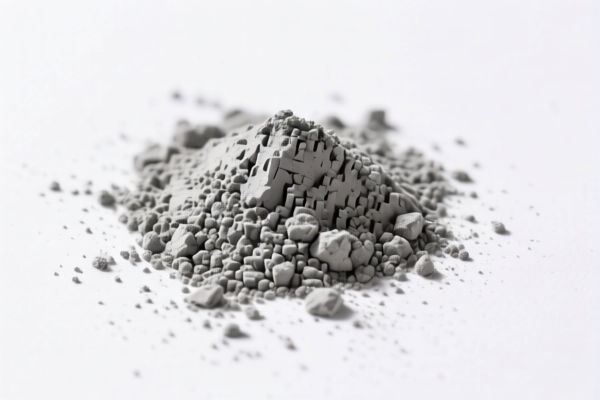
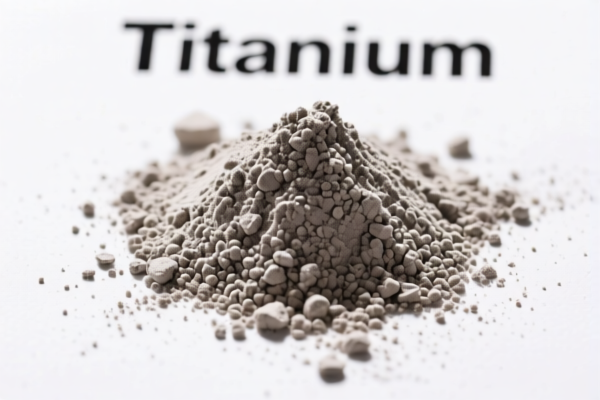
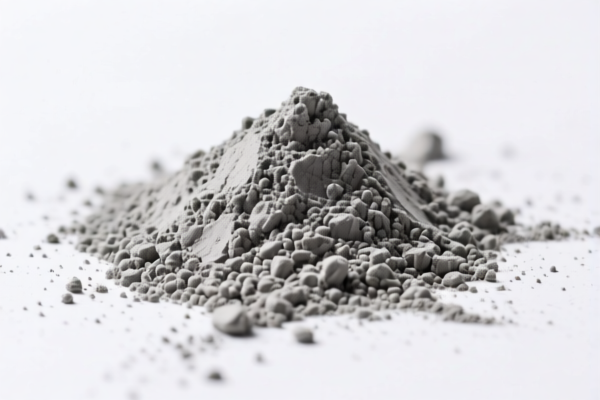
AI Analysis
🔥 Metal Welding Powder (金属焊接粉末)
🌐 HS Code Reference & Clearance Guide | 2026 Latest Tariff Analysis | Professional Customs Strategy
📌 I. Product Definition & Classification: What Exactly is "Metal Welding Powder"?
Metal welding powder is a specialized consumable used in advanced welding, soldering, and brazing processes. It consists of finely ground metallic particles designed to act as filler material or flux carrier. In international trade, these are not classified by the specific metal type (e.g., stainless steel vs. carbon steel) at the first two digits, but rather by their function and form as welding consumables.
Key Distinction:
- Welding Powders (Powder Form): Used for Gas Tungsten Arc Welding (GTAW/TIG), Plasma Arc Welding, or automated powder welding. They are free-flowing particulates.
- Welding Pastes/Greases: Often contain flux or binders in a semi-solid state, used for braising or specific low-temperature applications.
- Sintered Metals: While some powders are "sintered metals," if they are specifically formulated for welding/filling, they fall under Heading 8311, not the general metal powder headings (like 8112 or 8113) unless they are raw materials not yet processed for welding.
⚠️ Critical Classification Point:
- If the product is a metal powder specifically for welding/soldering/brazing → It generally falls under HS 8311.
- Exception: If it is a specific alloy steel powder (like stainless steel powder) not primarily marketed as a welding consumable but as a raw material for metallurgy, it might fall under HS 7205 (Powder of Iron or Steel). However, for typical "welding powder" products, 8311 is the primary category.
📦 II. HS Code Classification Details (2026 Latest Tariff Authority Match)
Based on the provided data, here are the applicable HS Codes and their specific rationales:
| HS Code | Product Description | Applicable Scenario | Tax Rate |
|---|---|---|---|
8311.90.00.00 |
Metal Welding Powder (General) Material: Metal Form: Powder |
General metal welding powders (e.g., bronze, aluminum, nickel alloys) for spraying, welding, or brazing. Fits the description of "sintered non-ferrous metal powders for metal spraying" or general welding fillers. | 35% |
8311.30.60.00 |
Metal Welding Paste/Grease Material: Base Metal Form: Welding Filler/Paste |
Semi-solid welding consumables. Often used for braising where flux and filler are combined. Classified as "other articles of base metal... for soldering, brazing, or welding." | 35% |
7205.21.00.00 |
Stainless Steel Welding Powder Material: Stainless Steel (Steel Category) Form: Powder |
Specific powder made from stainless steel (an alloy of iron and steel). Classified under "Powder of stainless steel" because it is a steel powder, distinct from general base metal powders in 8311. | 35% |
8311.90.00.00 |
Metal Welding Paste (General) Material: Metal Form: Paste/Grease |
Similar to 8311.30.60.00 but may refer to different sub-descriptions within the "other" category of 8311. Covers pastes used for welding/brazing. |
35% |
🔍 Key Insight:
- Why 8311? Heading 8311 covers "Electrodes and Conductors... and other articles... for soldering, brazing, welding or other joining of metals." Welding powder is a classic "filler" for welding, thus landing here.
- Why 7205.21.00? Stainless steel is technically a "steel." If the powder is identified as a raw steel powder (even if used for welding), customs may classify it under Chapter 72 (Steel) rather than Chapter 83 (Articles of Base Metal). This distinction is crucial for accuracy.
💰 III. 2026 Latest Tariff Rate Breakdown (US-China Trade Context)
✅ Applicable Country: United States (US)
✅ Origin: China (CN)
✅ Effective Date: Post-November 2025 (Current Regime)
🎯 1. 8311.90.00.00 —— General Metal Welding Powder/Paste
| Item | Detail |
|---|---|
| Base Tariff | 0.0% (Most Favored Nation) |
| Section 301 Tariff (Additional) | +25.0% |
| Section 122 Tariff (IEEPA) | +10.0% (Specific to certain Chinese metal articles/consumables) |
| Total Tariff Rate | 35.0% |
| Tax Calculation | CIF Value × 35% |
| De Minimis Eligibility | ❌ Not Eligible (Generally, Section 301 and 122 tariffs apply even to small parcels; verify with latest CBP rulings) |
| Legal Reference Path | HTSUS:8311.90.00.00 → Section 301 Footnote 9903.88.01 → IEEPA Executive Order 14117 |
📌 Explanation:
- 0% Base: Welding consumables generally have low base MFN rates.
- +25% Section 301: Applies to a vast majority of Chinese steel and metal products.
- +10% Section 122: Recent additions targeting specific metal powders and related industrial supplies from China.
- Total 35%: This is a significant cost factor. Importers must budget for this heavily.
🎯 2. 8311.30.60.00 —— Metal Welding Paste
| Item | Detail |
|---|---|
| Base Tariff | 0.0% |
| Section 301 Tariff (Additional) | +25.0% |
| Section 122 Tariff (IEEPA) | +10.0% |
| Total Tariff Rate | 35.0% |
| Tax Calculation | CIF Value × 35% |
📌 Note:
- Same tariff structure as general welding powder. The form (paste vs. powder) does not exempt it from the 301/122 duties.
🎯 3. 7205.21.00.00 —— Stainless Steel Welding Powder
| Item | Detail |
|---|---|
| Base Tariff | 0.0% |
| Section 301 Tariff (Additional) | +25.0% |
| Section 122 Tariff (IEEPA) | +10.0% |
| Total Tariff Rate | 35.0% |
| Tax Calculation | CIF Value × 35% |
📌 Note:
- Even though it is classified under Chapter 72 (Steel), if the product is imported from China, it is subject to the same Section 301 and 122 tariffs as metal articles in Chapter 83. No tax advantage is gained by classifying under 7205 if the origin is China.
🛠️ IV. Customs Clearance Practical Advice (Real-World Pitfall Guide)
✅ 1. Required Documentation Checklist
| Document | Required? | Explanation |
|---|---|---|
| ✅ Product Spec Sheet | ✔️ | Must specify: Metal composition (e.g., 304SS, Bronze), particle size, intended welding process (TIG, Braze). |
| ✅ Safety Data Sheet (SDS) | ✔️ | Mandatory for powder/paste due to dust/fire hazards and chemical flux content. |
| ✅ Commercial Invoice | ✔️ | Clearly state "Welding Powder" or "Welding Paste," NOT just "Metal Powder" (which could trigger random classification audits). |
| ✅ Certificate of Origin | ✔️ | To prove Chinese origin for tariff calculation. |
| ✅ Labeling | ✔️ | Packages must show net weight, brand, and composition. |
✅ 2. Declaration Best Practices
🔥 "Be Specific, Not Generic!"
| Scenario | Correct Declaration | Incorrect Declaration | Risk |
|---|---|---|---|
| General Welding Powder | "Metal Welding Powder for TIG Welding, Composition: [X]% Bronze" | "Metal Powder" | High risk of misclassification → 20-30% penalty. |
| Stainless Steel Powder | "Stainless Steel Powder, Grade 316, for Welding" | "Steel Scrap" or "Iron Powder" | 316 Stainless is high value; miscoding leads to massive tax differences. |
| Welding Paste | "Welding Paste for Brazing, Flux-Containing" | "Adhesive" or "Glue" | Adhesives have different HS codes and potentially lower/higher taxes. |
✅ 3. Special Considerations
| Issue | Handling Suggestion |
|---|---|
| Flux Content | If the powder/paste contains significant non-metal flux materials, verify if it still qualifies as "welding article" (8311) or if it becomes a "chemical preparation" (Chapter 38). Usually, welding consumables stay in 8311. |
| Particle Size | Fine powders may be considered "hazardous" for air freight. Ensure IATA DGR compliance. |
| Anti-Dumping (AD) | Check if specific stainless steel powders from China are under AD orders. Note: The provided data does not list AD, but always verify with U.S. Commerce Dept. |
🌍 V. Global Market Comparison (2026)
| Country/Region | Recommended HS Code | Total Tariff (China Origin) | Key Requirement |
|---|---|---|---|
| 🇺🇸 USA | 8311.90.00.00 or 7205.21.00.00 |
35% (25% Sec 301 + 10% Sec 122) | SDS, Detailed Composition |
| 🇨🇳 China | 8311 or 7205 |
0% - 5% | Standard Import Declaration |
| 🇪🇺 EU | 8311 |
~0-2% (Check specific national rates) | CE, REACH Compliance |
| 🇬🇧 UK | 8311 |
~0-5% | UKCA Marking (if applicable) |
📌 Conclusion:
- The US market is the most expensive due to the layered 35% tariff.
- EU and UK are significantly more favorable for these products.
- If possible, consider supply chain diversification (e.g., sourcing from Vietnam or India) to avoid the 301/122 tariffs, though verify if those countries have their own anti-dumping measures on steel powders.
📌 VI. Common Mistakes & Pitfall Avoidance
❌ Mistake 1: Classifying all metal powders as "Iron Powder" (7205)
👉 Consequence: If it's non-ferrous (e.g., bronze, aluminum), it should be 8311. Wrong classification leads to audits.
❌ Mistake 2: Ignoring Section 122 Tariff
👉 Consequence: Underpaying by 10%. US Customs is actively enforcing 122 on metal products. Total 35% is mandatory.
❌ Mistake 3: Declaring "Welding Rods" for Powder
👉 Consequence: Different HS code (8315 vs 8311). While tax rate might be similar, inconsistency flags your account.
✅ Correct Approach:
"Importing Stainless Steel Welding Powder, HS 7205.21.00.00, Origin China, Subject to 35% Total Duty (0% Base + 25% Sec 301 + 10% Sec 122)."
🎯 VII. Conclusion: Smart Tariff Management
🎯 Key Takeaway:
🔹 "Welding Powder is 35% in the US."
🔹 "Don't try to hide it as 'Raw Steel' or 'Chemical'—SDS and Specs will expose you."
🔹 "Check for Anti-Dumping on Stainless Steel Powder separately!"
📌 Pro Tip:
If you are a large importer, consider applying for a Tariff Classification Ruling from U.S. CBP before shipping. This provides legal certainty and protects you from retroactive penalties.
📣 Immediate Action:
📞 Contact your freight forwarder to confirm SDS requirements.
📊 Calculate landed cost: Add 35% to your FOB price + insurance + freight.
🚀 Optimize your supply chain: Evaluate if sourcing from non-China origins can save you 35% in duties.
✨ Professional Customs Clearance Starts with Accurate Classification!
💼 Your Profit Margin Depends on These Details!
Customer Reviews
About HS Code Classification
The Harmonized System (HS) is an internationally standardized nomenclature developed by the World Customs Organization (WCO) to classify traded products. Over 200 countries use the HS system as the basis for customs tariffs, trade statistics, and import/export regulations.
Each HS code follows a hierarchical structure:
- Chapter (2 digits) — Broad category of goods (e.g., Chapter 84: Machinery and Mechanical Appliances)
- Heading (4 digits) — More specific grouping within the chapter
- Subheading (6 digits) — Internationally standardized breakdown, used by all WCO member countries
- National subdivisions (8-10 digits) — Country-specific extensions for further classification, such as US HTSUS 10-digit codes
Correct HS code classification is essential for smooth customs clearance, accurate duty payment, and compliance with trade regulations. Misclassification can lead to customs delays, overpayment of duties, or penalties.
When importing from CN to US, the applicable tariff rates may include:
- Most-Favored-Nation (MFN) rate — The standard duty rate applied to WTO members
- General rate — Applied to countries without trade agreements
- Trade remedy duties — Additional tariffs such as Section 301 (anti-dumping), Section 232 (national security), or countervailing duties
The information provided on this page is for reference purposes only. For official classification, please consult with your local customs authority or a licensed customs broker.