Metal Welding Special Coolant
CN → US| HS Code | Tariff Rate | Origin | Destination | Doc |
|---|---|---|---|---|
| 3824405000 | 40.0% | CN | US | Official Doc |
| 3824991100 | 35.0% | CN | US | Official Doc |
Product Images
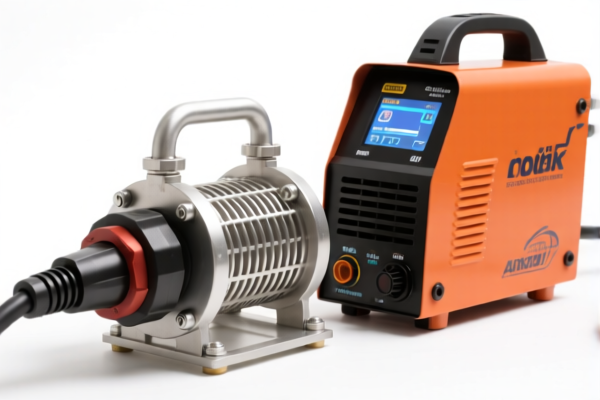
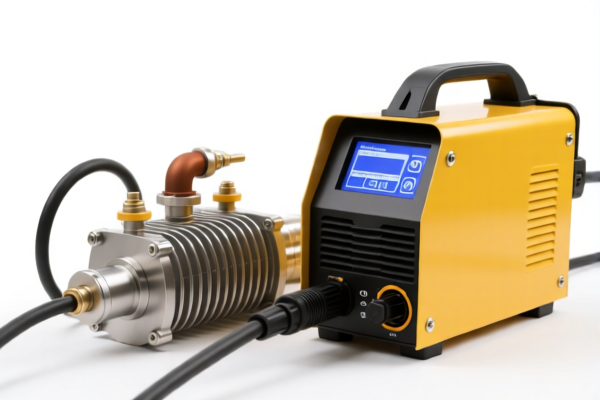
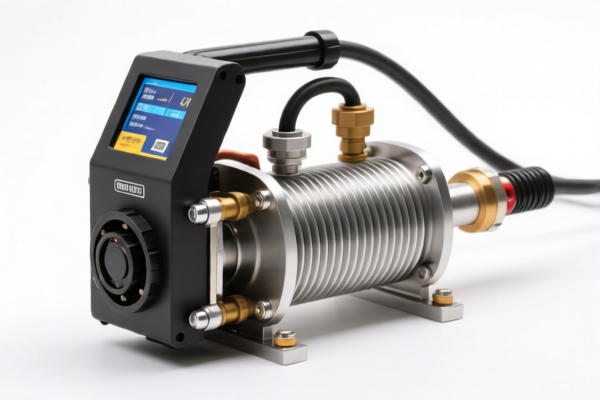
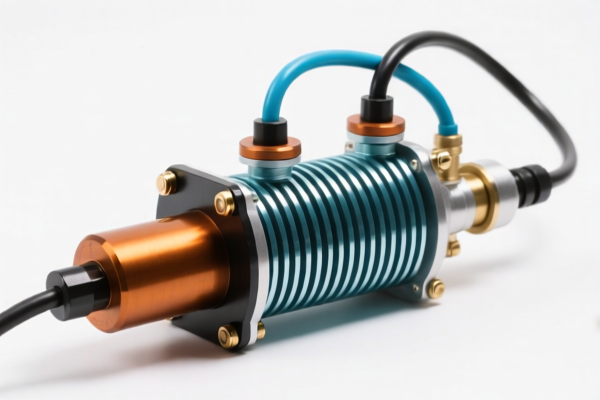
AI Analysis
🧊 Metal Welding Special Coolant (Welding Coolants & Lubricants)
🌐 HS Code Reference & Customs Clearance Guide | 2026 Latest Tariff Analysis | Professional Clearance Strategy 📌 1. Product Definition & Classification: What Exactly is "Metal Welding Special Coolant"?
Metal welding special coolants are chemical preparations used during the welding process to dissipate heat, lubricate contact areas, prevent oxidation, and improve weld quality. In international trade, these are not classified as general machinery parts or simple chemicals, but specifically under Chapter 38: Prepared Binders for Foundry Molds or Cores; Chemical Products and Preparations of the Chemical or Allied Industries...
The key distinction lies in whether the product is a preparation/additive (HS 3824) or a pure chemical substance. Most commercial "welding coolants," "sprays," or "liquids" are mixtures or preparations, thus falling under HS Code 3824.40.50.00 or 3824.99.11.00 depending on specific composition and form.
⚠️ Critical Distinction:
- If the product is a preparation/mixture (e.g., water-based coolant with additives, oils, or chemicals) → HS 3824.40.50.00 (Prepared binders/additives).
- If the product is a cultured crystal (rare in welding coolants, but possible in industrial chemical forms) → HS 3824.99.11.00.
- Do NOT classify as pure chemical substances (Chapter 28/29) unless it is an unaltered single chemical.
📦 2. HS Code Classification Details (2026 Latest Tariff Authority Comparison)
| HS Code | Product Description | Applicable Scenario | Contains Drive Circuit? |
|---|---|---|---|
3824.40.50.00 |
Prepared binders for foundry molds or cores; chemical products and preparations...: Prepared additives for cements, mortars or concretes: Other | Most common welding coolants, liquid sprays, chemical mixtures used in welding processes | ❌ N/A (Chemical) |
3824.99.11.00 |
Other chemical products...: Other: Cultured crystals (other than optical elements)...: In the form of ingots | Rare: Specific industrial chemical forms (e.g., crystalline welding flux additives in ingot form) | ❌ N/A (Chemical) |
🔍 Key Reminder:
- 95% of commercial "welding coolants" are liquid or semi-liquid preparations → Use3824.40.50.00.
- Only if the product is specifically a cultured crystal in ingot form (solid, weighed ≥2.5g) → Use3824.99.11.00.
- Misclassification Risk: Declaring as "chemicals" (Chapter 28/29) without specifying "prepared" can lead to misclassification penalties.
💰 3. 2026 Latest Tariff Rate Details (Including Additional Taxes, Policy Add-ons)
✅ Applicable Country: United States (US)
✅ Country of Origin: China (CN)
✅ Effective Date: From November 10, 2025 (including subsequent imports)
🎯 1. 3824.40.50.00 —— Prepared Binders/Additives (Most Welding Coolants)
| Item | Content |
|---|---|
| Base Tariff | 5.0% (Ad Valorem) |
| Additional Tariff (Section 301) | +25.0% |
| Total Tariff | 30.0% |
| Tax Calculation | CIF Value × 30% |
| De Minimis Exemption Available? | ❌ No (Denied) |
| Legal Basis Path | Section 301: 3824.40.50.00 → Footnote: 9903.88.01 |
📌 Explanation:
- The 5% base tariff is the standard Most Favored Nation (MFN) rate for this chemical preparation.
- The 25% additional tariff is imposed under Section 301 of the Trade Act of 1974 against Chinese-origin goods.
- Total Duty: 30%. This is a significant cost factor that must be factored into pricing strategies.
🎯 2. 3824.99.11.00 —— Cultured Crystals (Rare Case)
| Item | Content |
|---|---|
| Base Tariff | 0.0% |
| Additional Tariff (Section 301) | +25.0% |
| Total Tariff | 25.0% |
| Tax Calculation | CIF Value × 25% |
| De Minimis Exemption Available? | ❌ No (Denied) |
| Legal Basis Path | Section 301: 3824.99.11.00 → Footnote: 9903.88.01 |
📌 Note:
- Although the base tariff is 0%, the 25% Section 301 tariff still applies.
- This code is only for specific crystalline forms, not typical liquid/gel coolants.
- Total Duty: 25%. Slightly lower than3824.40.50.00, but rarely applicable to standard welding coolants.
🛠️ 4. Customs Clearance Practical Advice (Real-World Pitfall Avoidance)
✅ 1. Required Documentation Checklist (No Exceptions)
| Document | Mandatory? | Description |
|---|---|---|
| ✅ Product Specification Sheet | ✔️ | Must detail chemical composition, pH, viscosity, and intended use (welding cooling). |
| ✅ Safety Data Sheet (SDS) | ✔️ | Critical for chemical imports. Must comply with OSHA GHS standards. |
| ✅ Certificate of Origin (CO) | ✔️ | Proves origin for Section 301 tariff application. |
| ✅ Commercial Invoice | ✔️ | Clearly state: "Prepared Welding Coolant, Chemical Preparation." |
| ✅ Packing List | ✔️ | Specify net/gross weight, volume, and hazardous material indicators (if any). |
| ✅ Non-Hazardous Declaration | If applicable | If the product is not classified as hazardous, provide proof to avoid DOT/PHMSA delays. |
✅ 2. Declaration Tips (Key Mantra)
🔥 "Prepare, Don't Just Chemist; Declare Mixture, Not Element!"
| Scenario | Correct Declaration | Incorrect Action |
|---|---|---|
| Liquid/Gel Welding Coolant | 3824.40.50.00 ("Prepared Additive") |
Declare as "Pure Chemical" → Misclassification Penalty |
| Crystalline Flux Additive | 3824.99.11.00 ("Cultured Crystal") |
Declare as "General Chemical" → Delay/Rejection |
| Mixed with Water/Oil | 3824.40.50.00 |
Declare as "Water" or "Oil" → Tariff Evasion Risk |
✅ 3. Special Case Handling
| Scenario | Handling Advice |
|---|---|
| Hazardous Material | If SDS indicates flammability or toxicity, declare as Hazmat. Requires additional DOT packaging and labeling. Tariff remains 30%, but clearance takes longer. |
| OEM/Private Label | Provide customer order + design specs. Avoid vague terms like "Welding Liquid." Use "Prepared Chemical Preparation for Welding." |
| Samples vs. Commercial | Both subject to 30% tariff. De Minimis (Section 321) does NOT apply to China-origin goods under current enforcement. |
| Transshipment | If shipped from Vietnam/Malaysia, prove substantial transformation. Simple re-packing does not change origin. Still subject to 30% if Chinese origin. |
🌍 5. Global Major Market Comparison (2026 Latest)
| Country/Region | Recommended HS Code | Tariff (China Origin) | Certification Requirements | Notes |
|---|---|---|---|---|
| 🇺🇸 USA | 3824.40.50.00 |
30% (5% Base + 25% 301) | SDS, OSHA Compliance | High duty; no de minimis |
| 🇨🇳 China | 3824.40.50.00 |
5% | No additional | Import tariff applies |
| 🇪🇺 EU | 3824.90.98 |
6.5% | REACH, CLP | No Section 301 equivalent |
| 🇦🇺 Australia | 3824.40.50.00 |
5% | GHS, WHS | Low tariff |
| 🇯🇵 Japan | 3824.90.90 |
6.5% | Chemical Subst. Control Law | Standard MFN rate |
📌 Conclusion:
- USA is the only major market imposing a 25% Section 301 additional tariff on this chemical preparation.
- Total 30% duty makes US-bound welding coolants significantly less competitive vs. other markets.
- Consider supply chain diversification if targeting the US market heavily.
📌 6. Common Mistakes & Pitfall Guide (Blood & Tears Lessons)
❌ Mistake 1: Declaring "Welding Coolant" as "Water" or "Oil"
👉 Consequence: Misclassification → Fine + Back Tax + Potential Fraud Charges
❌ Mistake 2: Assuming "De Minimis" (Under $800) Applies
👉 Consequence: No De Minimis for China since 2020. All shipments subject to 30% duty.
❌ Mistake 3: Using Vague Description "Chemical" on Invoice
👉 Consequence: Customs Request for Information (RFI) → 15-30 Day Delay
❌ Mistake 4: Ignoring SDS Hazmat Classification
👉 Consequence: Carrier rejection → Return Shipment + Fees
✅ Correct Practice:
"Prepared Chemical Coolant for Metal Welding, Water-Based, Contains Corrosion Inhibitors, SDS Available, HS Code 3824.40.50.00"
🎯 7. Conclusion: Professional Declaration Saves Costs!
🎯 Remember the Mantra:
🔹 "Prepare, Don't Just Chemist; 30% Duty, No De Minimis!"
🔹 "HS Code Defines Cost; 3824.40.50.00 is Key for Liquid Coolants!"
📌 Pro Tip:
If your welding coolant is original from Vietnam, Mexico, or Thailand, it may be eligible for lower tariffs (0-5% base, no Section 301).
Recommendation: Apply for a Binding Tariff Ruling with US CBP to confirm classification before bulk shipping.
📣 Immediate Action:
📞 Contact a licensed Customs Broker + Provide SDS + Apply for HS Code Pre-Ruling
🚀 Let your welding coolants clear smoothly, cost-effectively, and efficiently!
✨ Professional Customs Clearance Starts with Accurate Classification!
💼 Every Dollar of Duty Saved is Profit Earned!
Customer Reviews
About HS Code Classification
The Harmonized System (HS) is an internationally standardized nomenclature developed by the World Customs Organization (WCO) to classify traded products. Over 200 countries use the HS system as the basis for customs tariffs, trade statistics, and import/export regulations.
Each HS code follows a hierarchical structure:
- Chapter (2 digits) — Broad category of goods (e.g., Chapter 84: Machinery and Mechanical Appliances)
- Heading (4 digits) — More specific grouping within the chapter
- Subheading (6 digits) — Internationally standardized breakdown, used by all WCO member countries
- National subdivisions (8-10 digits) — Country-specific extensions for further classification, such as US HTSUS 10-digit codes
Correct HS code classification is essential for smooth customs clearance, accurate duty payment, and compliance with trade regulations. Misclassification can lead to customs delays, overpayment of duties, or penalties.
When importing from CN to US, the applicable tariff rates may include:
- Most-Favored-Nation (MFN) rate — The standard duty rate applied to WTO members
- General rate — Applied to countries without trade agreements
- Trade remedy duties — Additional tariffs such as Section 301 (anti-dumping), Section 232 (national security), or countervailing duties
The information provided on this page is for reference purposes only. For official classification, please consult with your local customs authority or a licensed customs broker.