Metal Wire, Rope, Cable and Similar Articles
CN → US| HS Code | Tariff Rate | Origin | Destination | Doc |
|---|---|---|---|---|
| 7413001000 | 88.0% | CN | US | Official Doc |
| 7413005000 | 87.0% | CN | US | Official Doc |
| 7312109090 | 85.0% | CN | US | Official Doc |
| 7312106060 | 85.0% | CN | US | Official Doc |
Product Images
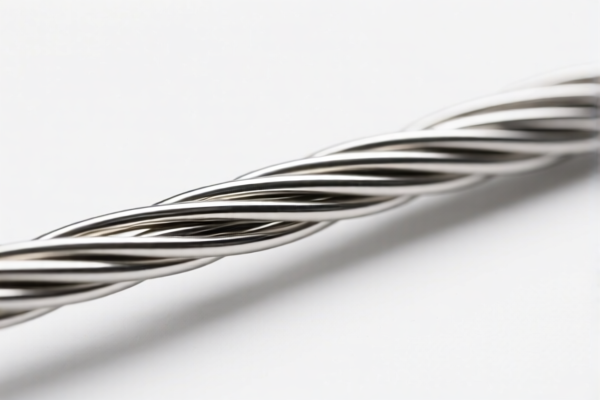
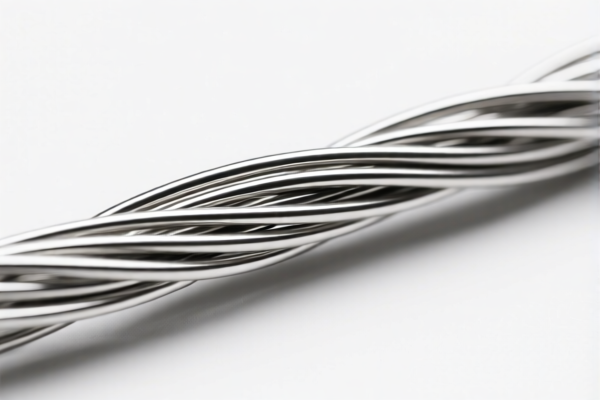
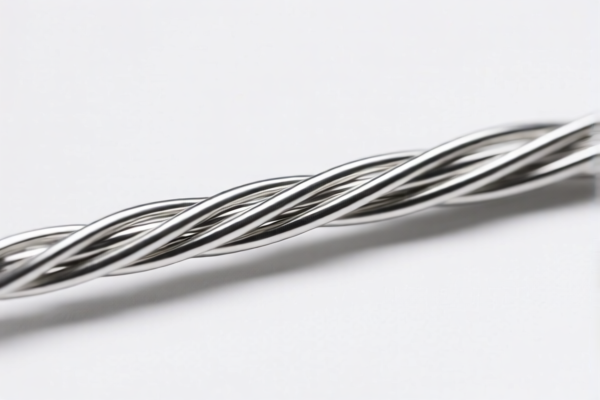
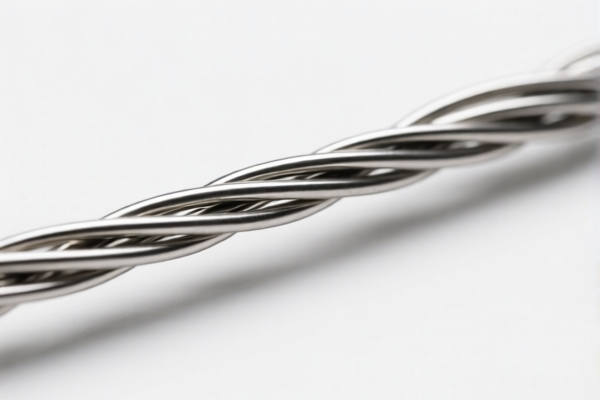
AI Analysis
🔗 Metal Wire, Rope, Cable & Similar Articles
🌐 HS Code Reference & Customs Clearance Guide | 2026 Latest Tariff Analysis | Professional Compliance Strategy
📌 I. Product Definition & Classification: What Are "Metal Wires and Cables"?
Metal wires, ropes, cables, and similar articles are fundamental components used in construction, power transmission, mechanical reinforcement, and lifting operations. In international trade, these products are primarily classified based on their material composition (Copper vs. Iron/Steel) and structure (Stranded, Braided, or Solid).
1. Copper-Based Articles (HS Chapter 74): - Typically used for electrical conductivity (wiring, busbars). - Includes copper-wire strands, ropes, cables, and braided bands.
2. Iron/Steel-Based Articles (HS Chapter 73): - Typically used for mechanical strength (lifting, construction, fencing). - Includes galvanized steel wire ropes, stainless steel cables, and general steel strands.
⚠️ Key Distinction Point:
- If the product is made of Copper and fits the description of strands/cables → Chapter 74
- If the product is made of Iron/Steel (including stainless steel) and is a rope/cable → Chapter 73
📦 II. HS Code Classification Details (2026 Tariff Authority Match)
Based on your input data, here are the specific HS Codes inferred from the product descriptions.
| HS Code | Product Description (Inferred) | Material | Structure/Type | Total Tax Rate |
|---|---|---|---|---|
7413.00.10.00 |
Metal wires, strands, ropes, cables & similar articles of copper | Copper | Strands/Cables/Braided | 88.0% |
7413.00.50.00 |
Metal wires, strands, ropes, cables & similar articles of copper | Copper | Strands/Cables/Braided | 87.0% |
7312.10.90.90 |
Strands & ropes of iron or steel | Iron/Steel | General Steel Rope/Cable | 85.0% |
7312.10.60.60 |
Strands & ropes of stainless steel | Stainless Steel | Stainless Steel Rope/Cable | 85.0% |
🔍 Critical Note:
- Copper vs. Steel: Misclassifying steel cable as copper (or vice versa) leads to significant tax discrepancies and potential customs penalties.
- Subheading Differences (10vs50in Ch. 74): The difference between7413.00.10.00(88%) and7413.00.50.00(87%) lies in the specific structural form or additional processing. You must match the physical product structure to the correct subheading.
💰 III. 2026 Latest Tariff Rate Breakdown (Including Surcharges)
✅ Applicable Country: United States (US)
✅ Origin: China (CN)
✅ Effective Time: Current rates as per provided data
All listed HS Codes are subject to high punitive tariffs due to current US trade policies against Chinese steel and aluminum/copper products.
🎯 1. Copper Categories (7413.00.10.00 & 7413.00.50.00)
A. HS Code 7413.00.10.00 (Copper Strands/Cables)
| Item | Detail |
|------|--------|
| Base Duty | 3.0% |
| Section 301 Surcharge | +25.0% |
| Section 232 Surcharge (122 Clauses) | +10.0% + 50.0% (Specific to Steel, Aluminum, Copper) |
| Total Tariff Rate | 88.0% |
| Calculation Base | CIF Value × 88.0% |
| De Minimis Exemption | ❌ Not Eligible (High-risk category) |
B. HS Code 7413.00.50.00 (Other Copper Articles)
| Item | Detail |
|------|--------|
| Base Duty | 2.0% |
| Section 301 Surcharge | +25.0% |
| Section 232 Surcharge (122 Clauses) | +10.0% + 50.0% |
| Total Tariff Rate | 87.0% |
| Calculation Base | CIF Value × 87.0% |
| De Minimis Exemption | ❌ Not Eligible |
📌 Explanation of "Section 232/122 Clauses":
The data indicates a complex layered tariff structure: 1. Base Duty: Standard MFN rate (2-3%). 2. Section 301: 25% tariff on Chinese goods. 3. Section 232 (National Security): Often cited as "122 clauses" in domestic databases, adding a specific surcharge (10% + 50%) for strategic metals like steel and copper. 4. Result: The cumulative tax rate exceeds 85%, making direct export from China to the US extremely cost-prohibitive.
🎯 2. Iron/Steel Categories (7312.10.90.90 & 7312.10.60.60)
A. HS Code 7312.10.90.90 (Iron/Steel Ropes)
| Item | Detail |
|------|--------|
| Base Duty | 0.0% |
| Section 301 Surcharge | +25.0% |
| Section 232 Surcharge (122 Clauses) | +10.0% + 50.0% |
| Total Tariff Rate | 85.0% |
| Calculation Base | CIF Value × 85.0% |
| De Minimis Exemption | ❌ Not Eligible |
B. HS Code 7312.10.60.60 (Stainless Steel Ropes)
| Item | Detail |
|------|--------|
| Base Duty | 0.0% |
| Section 301 Surcharge | +25.0% |
| Section 232 Surcharge (122 Clauses) | +10.0% + 50.0% |
| Total Tariff Rate | 85.0% |
| Calculation Base | CIF Value × 85.0% |
| De Minimis Exemption | ❌ Not Eligible |
📌 Note on Stainless Steel: Even though stainless steel is a high-value product, it is still subject to the same heavy surcharges as standard carbon steel when imported from China.
🛠️ IV. Customs Clearance Practical Advice (Pitfall Avoidance)
✅ 1. Documentation Checklist (Must Have)
| Document | Required? | Purpose |
|---|---|---|
| Product Specification Sheet | ✔️ | Must clearly state Material (Copper vs. Steel) and Structure (Stranded/Braided). |
| Material Certificate | ✔️ | Mill test certificate proving the alloy composition (e.g., 99.9% Copper or 304 Stainless Steel). |
| Product Photos | ✔️ | Clear shots of the end product, including cross-sections to prove stranded/braided structure. |
| Commercial Invoice | ✔️ | Accurate description: "Copper Cable" or "Steel Wire Rope". Do not use vague terms like "Wire". |
| Certificate of Origin (CO) | ✔️ | Critical to prove Origin. Note: Originating from Vietnam/Mexico may help avoid Section 232/301, but requires rigorous supply chain proof. |
✅ 2. Declaration Tips
🔥 Mantra: "Material First, Structure Second, No Vague Names!"
| Scenario | Correct Declaration | Wrong Practice |
|---|---|---|
| Copper Cable | 7413.00.10.00 or 7413.00.50.00 |
Misdeclaring as "Electronic Parts" → High risk of audit & penalty. |
| Steel Lifting Rope | 7312.10.90.90 |
Misdeclaring as "Tools" → 85% vs. potential 0-5% (if misclassified). |
| Stainless Steel Cable | 7312.10.60.60 |
Confusing with copper cables → Tax rate error (85% vs 87/88%). |
| Knotted/Braided Wire | Must specify "Braided" | If not specified, customs may default to the higher scrutiny code. |
✅ 3. Special Handling
| Situation | Recommendation |
|---|---|
| OEM Custom Cables | Provide design drawings and material specs to confirm if it fits 10 or 50 subheading in Ch. 74. |
| Mixed Containers | Do not mix Copper and Steel items in one declaration line. Declare separately to avoid confusion. |
| Small Samples | Even small samples of metal wire/rope from China are subject to 85-88% duty. Do not rely on de minimis (Section 321) as these items are often excluded from low-value exemptions in high-tariff categories. |
🌍 V. Global Market Comparison (2026 Context)
| Region | Recommended HS Code | Est. Duty (CN Origin) | Key Requirement |
|---|---|---|---|
| 🇺🇸 USA | 7413.xx or 7312.xx |
85% - 88% | Section 301 + 232 Surcharges Apply |
| 🇨🇳 China | 7413 or 7312 |
0% - 5% | Export Declaration Standard |
| 🇪🇺 EU | 7413 or 7312 |
5% - 8% | CE Marking (if applicable), No 232 Tariffs |
| 🇻🇳 Vietnam | 7413 or 7312 |
0% - 5% | Must prove substantial transformation to avoid US anti-circumvention probes |
📌 Conclusion:
- The US market is currently closed to affordable Chinese metal wire/rope imports due to punitive tariffs exceeding 85%.
- Supply Chain Diversification is Key: Sourcing from Southeast Asia (Vietnam, Thailand) or other non-China origins is highly recommended if targeting the US market.
📌 VI. Common Errors & Pitfalls (Lessons Learned)
❌ Error 1: Calling "Stainless Steel Wire Rope" as "Copper Wire" to avoid Section 232.
👉 Consequence: Customs inspection reveals material mismatch → Confiscation + Fine.
❌ Error 2: Using generic terms like "Metal Cord" without specifying material.
👉 Consequence: Customs assigns the highest default duty rate or requires lengthy verification delays.
❌ Error 3: Assuming small shipments are exempt.
👉 Consequence: Metal products are often excluded from de minimis thresholds when subject to Section 301/232. Tax is due on every shipment.
✅ Correct Practice:
"Stranded Copper Cable, 2mm Diameter, Used for Electrical Conduction, HS 7413.00.10.00, Origin: Vietnam"
🎯 VII. Final Advice: Professional Clearance, Cost Control!
🎯 Remember:
🔹 "Material is King, Structure is Queen. China Origin = 85%+ Tax."
🔹 "HS Code accuracy saves you from 10x penalties."
📌 Pro Tip:
If your customers require metal wires/ropes, consider sourcing from third-party countries (e.g., Vietnam, India, Mexico) that have favorable trade relations or lower tariff structures for these specific metal articles. Always request a Pre-Ruling from CBP (Customs and Border Protection) if the classification is ambiguous.
📣 Immediate Action:
📞 Consult a licensed customs broker.
📄 Prepare material certificates.
🚀 Optimize your supply chain to bypass the 88% tariff wall!
✨ Professional Customs Clearance Starts with Accurate Classification!
💼 Every percentage point of tax matters!
Customer Reviews
About HS Code Classification
The Harmonized System (HS) is an internationally standardized nomenclature developed by the World Customs Organization (WCO) to classify traded products. Over 200 countries use the HS system as the basis for customs tariffs, trade statistics, and import/export regulations.
Each HS code follows a hierarchical structure:
- Chapter (2 digits) — Broad category of goods (e.g., Chapter 84: Machinery and Mechanical Appliances)
- Heading (4 digits) — More specific grouping within the chapter
- Subheading (6 digits) — Internationally standardized breakdown, used by all WCO member countries
- National subdivisions (8-10 digits) — Country-specific extensions for further classification, such as US HTSUS 10-digit codes
Correct HS code classification is essential for smooth customs clearance, accurate duty payment, and compliance with trade regulations. Misclassification can lead to customs delays, overpayment of duties, or penalties.
When importing from CN to US, the applicable tariff rates may include:
- Most-Favored-Nation (MFN) rate — The standard duty rate applied to WTO members
- General rate — Applied to countries without trade agreements
- Trade remedy duties — Additional tariffs such as Section 301 (anti-dumping), Section 232 (national security), or countervailing duties
The information provided on this page is for reference purposes only. For official classification, please consult with your local customs authority or a licensed customs broker.