Metal Wire, Rope, Cable and Similar Metal Products
CN → US| HS Code | Tariff Rate | Origin | Destination | Doc |
|---|---|---|---|---|
| 8544110020 | 38.5% | CN | US | Official Doc |
| 7312900000 | 85.0% | CN | US | Official Doc |
| 8544110030 | 38.5% | CN | US | Official Doc |
| 7312103080 | 85.0% | CN | US | Official Doc |
Product Images
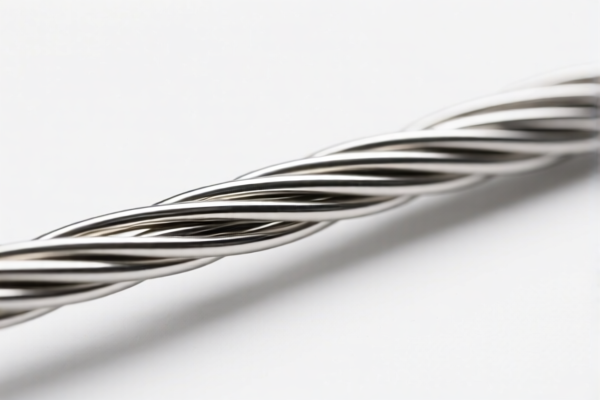
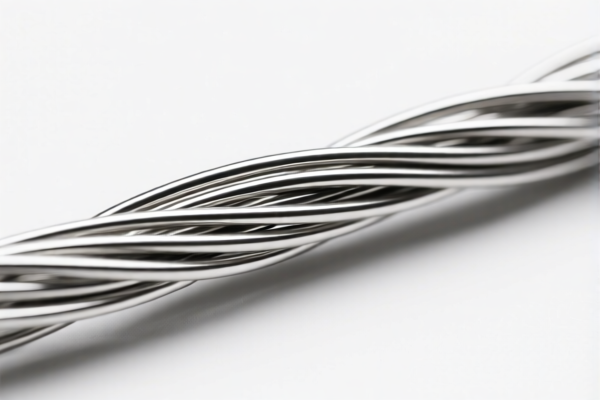
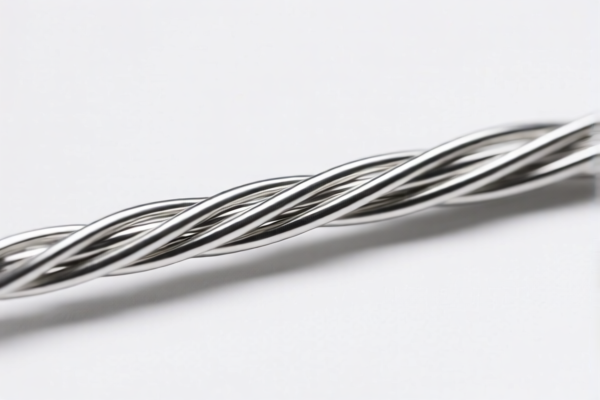
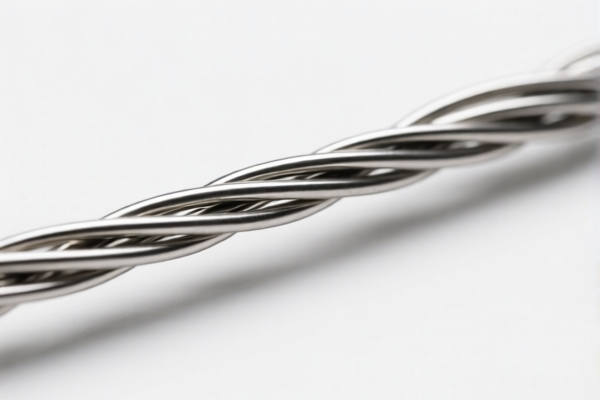
AI Analysis
🧵 Metal Wire, Rope, Cable & Similar Products (Iron/Steel & Copper)
🌐 HS Code Reference & Customs Clearance Guide | 2026 Latest Tariff Analysis | Professional Clearance Strategy
📌 I. Product Definition & Classification: Do You Know the Difference Between "Wire" and "Cable"?
Metal wires, ropes, and cables are foundational components in construction, industry, and electronics. In international trade, they are strictly divided by material (Iron/Steel vs. Copper) and insulation status. Misclassification is the #1 cause of customs delays for this category.
1. Non-Electrically Insulated Stranded Wire/Rope (Iron/Steel)
Used for physical support, lifting, fencing, or structural reinforcement.
Key Feature: No electrical insulation; made of steel/iron.
Common Uses: Cranes, elevators, bridges, fencing, slings.
2. Insulated Winding Wire (Copper)
Used in electric motors, transformers, and generators.
Key Feature: Highly insulated (enameled/anodized); extremely thin gauge (finer wire).
Common Uses: Motor windings, transformer coils.
⚠️ Critical Distinction:
- If it is steel/iron and used for lifting/structure → Chapter 73.
- If it is copper and used for electricity (windings) → Chapter 85.
- Do not mix these up! Steel wire ropes have vastly different tariffs compared to copper winding wires.
📦 II. HS Code Classification Details (2026 Latest Tariff Authority)
Based on the provided data, here is the precise breakdown for the two main categories: Non-Insulated Steel Wires and Insulated Copper Winding Wires.
| HS Code | Product Description | Material | Key Characteristics | Applicable Scenario |
|---|---|---|---|---|
7312.10.30.80 |
Stranded Wire, Ropes, Cables... Of Iron or Steel | Iron/Steel | Not electrically insulated; Stranded wire; "Other" category | General industrial steel ropes, crane cables, structural strands |
7312.90.00.00 |
Stranded Wire, Ropes, Cables... Other | Iron/Steel | Not electrically insulated; Other forms | Steel slings, bars, or non-stranded steel wire products |
8544.11.00.20 |
Insulated Wire, Cable... Winding Wire: Of Copper 33 AWG (0.18 mm) and finer | Copper | Insulated (Enamelled/Anodized); Diameter ≤ 0.18 mm | Precision motor windings, fine electronics, transformer coils |
8544.11.00.30 |
Insulated Wire, Cable... Winding Wire: Of Copper 22 AWG (0.643 mm) and finer but larger than 33 AWG | Copper | Insulated (Enamelled/Anodized); 0.18 mm < Diameter ≤ 0.643 mm | Standard motor windings, larger transformers, general electrical coils |
🔍 Focus Point:
- Steel vs. Copper: The HS codes are in completely different chapters (73 vs. 85).
- Insulation: Copper wires in this context are specifically "Winding Wire" with enamel/anodization. General power cables (like household wires) are not listed here.
- Gauge Matters: For copper, the diameter (AWG/mm) determines the sub-heading.
💰 III. 2026 Latest Tariff Rate Breakdown (Including Additional Duties)
✅ Applicable Country: United States (US)
✅ Origin: China (CN)
✅ Effective Time: Current rates apply (Note: Steel tariffs often have specific footnotes)
🎯 1. 7312.10.30.80 & 7312.90.00.00 —— Iron/Steel Stranded Wires & Ropes
| Item | Content |
|---|---|
| Base Tariff | 0.0% (Ad Valorem) |
| Section 301 Additional Duty (Steel) | 25.0% |
| Section 232 / Additional Steel Duty | 50.0% |
| Total Effective Tax Rate | 75.0% |
| Tax Calculation | CIF Value × 75% |
| Legal Basis | Steel, Aluminum, and Copper Products Surcharge: 50% + Section 301: 25% |
📌 Explanation:
- Steel products face extremely high tariffs. The "50%" surcharge mentioned in the data applies specifically to steel, aluminum, and copper products under specific trade actions.
- Combined with the standard 25% Section 301 duty, the total burden is 75%.
- This is a prohibitive tariff for most steel rope imports unless a specific exclusion or alternative origin is secured.
🎯 2. 8544.11.00.20 & 8544.11.00.30 —— Insulated Copper Winding Wires
| Item | Content |
|---|---|
| Base Tariff | 0.0% (Ad Valorem) |
| Additional Duty (Section 301) | 0.0% |
| Total Effective Tax Rate | 0.0% |
| Tax Calculation | No duty payable |
| Legal Basis | Specific exclusion or low base rate for certain electronic components/winding wires |
📌 Explanation:
- Despite being copper, these specific winding wires (fine gauge, insulated) have a 0% total tax rate in the provided data.
- This is a significant advantage for electronics manufacturers.
- Caution: Ensure the product is strictly "Winding Wire" (enameled/anodized) and not general power cordage, which might have different rates.
🛠️ IV. Customs Clearance Practical Advice (Real-World Pitfall Avoidance)
✅ 1. Preparation Checklist (Non-Negotiable)
| Document | Mandatory? | Description |
|---|---|---|
| ✅ Material Certificate | ✔️ | Must explicitly state "Steel/Iron" or "Copper". Misstating material leads to fraud penalties. |
| ✅ Technical Data Sheet | ✔️ | For Copper: Must show AWG/mm diameter and Insulation Type (e.g., Enamel, Polyurethane). For Steel: Show Strand Count and Tensile Strength. |
| ✅ Product Photos | ✔️ | Show the coil/rope, labels, and cross-section (if possible) to prove insulation or stranded structure. |
| ✅ Commercial Invoice | ✔️ | Clearly describe as "Steel Wire Rope" or "Copper Enamelled Winding Wire". Avoid vague terms like "Metal Wire". |
| ✅ Usage Declaration | ✔️ | For Copper: "For winding electric motors." For Steel: "For lifting equipment." |
✅ 2. Declaration Tips (Key Mnemonics)
🔥 “Steel Rope High Tariff, Copper Wire Zero Tax!”
| Scenario | Correct Declaration | Incorrect Practice |
|---|---|---|
| Steel Rope for Cranes | 7312.10.30.80 (75% Tax) |
Declare as "Hardware" → 75% + Penalties for misclassification |
| Copper Wire < 0.18mm | 8544.11.00.20 (0% Tax) |
Declare as "General Wire" → Risk of audit and back-tariffs |
| Copper Wire 0.20mm | 8544.11.00.30 (0% Tax) |
Mix with steel codes → Delayed Clearance |
| Uninsulated Steel | 7312.90.00.00 (75% Tax) |
Declare as "Insulated Cable" → Customs rejection |
⚠️ Critical Warning:
- Steel Tariffs are Sticky: The 75% rate is hard to avoid. Consider supply chain diversification if volume is high.
- Copper Precision: The diameter boundary (0.18 mm) is critical. A slight measurement error can change the HS code, though both are 0% in this data, it affects classification accuracy.
🌍 V. Global Market Comparison (2026 Latest)
| Country/Region | Recommended HS Code | Tariff (China Origin) | Certification | Notes |
|---|---|---|---|---|
| 🇺🇸 USA | 7312.10.30.80 (Steel) |
75.0% | None specific | Highest burden for steel |
| 🇺🇸 USA | 8544.11.00.20 (Copper) |
0.0% | UL (if sold in US) | Highly competitive entry |
| 🇪🇺 EU | 7312.10 (Steel) | Varies (MFN ~5-10%) | CE (if part of machine) | No massive Section 301 equivalent |
| 🇪🇺 EU | 8544.11 (Copper) | 0% (MFN) | RoHS/REACH | Standard electronic component |
📌 Conclusion:
- USA is the only market listed with extreme 75% tariffs on Steel Wire Ropes.
- Copper Winding Wires have a clear 0% advantage in the US market according to the provided data, making them a favorable import commodity.
📌 VI. Common Errors & Pitfalls (Lessons Learned)
❌ Error 1: Declaring "Steel Cable" as "Electrical Cable"
👉 Consequence: Attempting to avoid the 75% steel duty by misclassifying as copper.
Result: Severe penalties, seizure of goods, and blacklisting. Customs can easily detect material via X-ray or lab test.
❌ Error 2: Ignoring the "Insulated" Requirement for Copper
👉 Consequence: Declaring uninsulated copper wire as 8544.11 (Insulated).
Result: Incorrect classification. Uninsulated copper wire falls under different HTS codes (e.g., 7413.00), potentially incurring different duties.
❌ Error 3: Vague Description "Wire"
👉 Consequence: Customs officers will classify based on the worst-case scenario or request detailed info, causing delays.
Result: Clearance delay of 2-4 weeks.
✅ Correct Action:
"Steel Wire Rope, 19mm, 6x36 Structure, Galvanized, for Construction Lifting, HTS 7312.10.30.80"
"Copper Enamelled Winding Wire, 38 AWG (0.10mm), Polyurethane Insulation, for Transformer Coils, HTS 8544.11.00.20"
🎯 VII. Conclusion: Professional Declaration, Save Costs, Ensure Compliance
🎯 Remember the Rule:
🔹 “Steel Rope = 75% Tax (USA). Copper Winding = 0% Tax (USA).”
🔹 “Material and Insulation are King. Be Specific or Pay the Price!”
📌 Pro Tip:
If you are importing Steel Wire Ropes, consult with a trade lawyer about Exclusion Requests or Alternative Sourcing (e.g., Vietnam, Thailand) to mitigate the 75% tariff.
For Copper Winding Wire, ensure your diameter measurements are precise to maintain the 0% classification integrity.
📣 Immediate Action:
📞 Engage a licensed customs broker.
📋 Provide exact technical specs (AWG, Diameter, Material, Insulation).
🚀 Clear your goods efficiently and legally!
✨ Professional Customs Clearance Starts with Precise Classification!
💼 Every percent of duty saved is pure profit!
Customer Reviews
About HS Code Classification
The Harmonized System (HS) is an internationally standardized nomenclature developed by the World Customs Organization (WCO) to classify traded products. Over 200 countries use the HS system as the basis for customs tariffs, trade statistics, and import/export regulations.
Each HS code follows a hierarchical structure:
- Chapter (2 digits) — Broad category of goods (e.g., Chapter 84: Machinery and Mechanical Appliances)
- Heading (4 digits) — More specific grouping within the chapter
- Subheading (6 digits) — Internationally standardized breakdown, used by all WCO member countries
- National subdivisions (8-10 digits) — Country-specific extensions for further classification, such as US HTSUS 10-digit codes
Correct HS code classification is essential for smooth customs clearance, accurate duty payment, and compliance with trade regulations. Misclassification can lead to customs delays, overpayment of duties, or penalties.
When importing from CN to US, the applicable tariff rates may include:
- Most-Favored-Nation (MFN) rate — The standard duty rate applied to WTO members
- General rate — Applied to countries without trade agreements
- Trade remedy duties — Additional tariffs such as Section 301 (anti-dumping), Section 232 (national security), or countervailing duties
The information provided on this page is for reference purposes only. For official classification, please consult with your local customs authority or a licensed customs broker.