Metal Wire Curtain
CN → US| HS Code | Tariff Rate | Origin | Destination | Doc |
|---|---|---|---|---|
| 7314493000 | 60.0% | CN | US | Official Doc |
| 6303990060 | 28.8% | CN | US | Official Doc |
| 8306290000 | 10.0% | CN | US | Official Doc |
| 7314496000 | 85.0% | CN | US | Official Doc |
Product Images
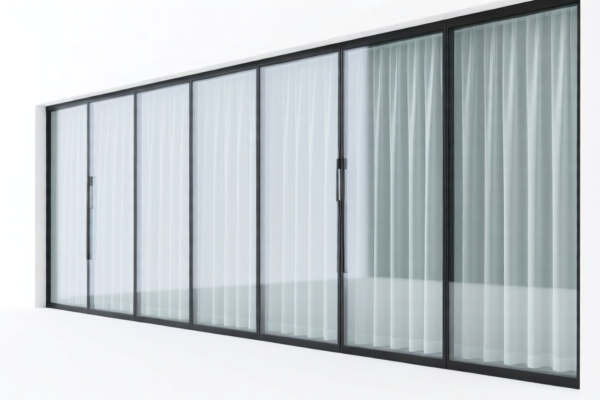


AI Analysis
🪟 Metal Wire Curtain: Complete HS Code Classification & 2026 Tariff Strategy Guide
🌐 Global Clearance Guide | 2026 Duty Breakdown | Expert Customs Strategy
📌 One Product, Four Potential Classifications: Avoiding the "Curtain" Tax Trap!
The Metal Wire Curtain is a versatile decorative and functional item, appearing in industrial, commercial, and residential settings. Its classification is highly dependent on the specific material composition and the intended structure (e.g., is it a flexible textile or a rigid barrier?). Misclassification can lead to massive duty discrepancies (from 10% to 85%) or clearance delays.
Below is the definitive analysis of the four primary HS Code paths provided in the data, detailed tax implications, and expert clearance advice.
📦 II. HS Code Classification Matrix (2026 Data Analysis)
| HS Code | Product Description & Logic | Material Focus | Structure/Use Case |
|---|---|---|---|
| 8306.29.00.00 | Metal Wire Curtain as "Decoration" | Base Metal (Non-precious) | Decorative curtain, ornamental use. Classified under "Other base metal articles." |
| 6303.99.00.60 | Metal Wire Curtain as "Textile" | Woven Fabric (Metal thread) | Treated as a textile curtain. Metal wire acts as the "other textile material" weave. |
| 7314.49.30.00 | Metal Wire Curtain as "Net" | Iron/Steel Wire | Structured netting/fencing. Metal wire forms a mesh barrier. |
| 7314.49.60.00 | Metal Wire Curtain as "Steel Fence" | Iron/Steel Wire | Heavy-duty mesh. Treated specifically as "steel" fencing/grounding. |
⚠️ Critical Observation: The same product name "Metal Wire Curtain" triggers four different tax rates depending on how the customs authority views the product (Decoration vs. Textile vs. Netting vs. Steel). Selection of the correct code is the difference between paying 10% and 85%.
💰 III. 2026 Tariff Rate Deep Dive (China to US Context)
✅ Applicable Origin: China (CN)
✅ Target Market: United States (US)
✅ 生效日期: 2025-2026 Period (Based on 122 Section & Section 301 rules)
🎯 1. 8306.29.00.00 — The "Low-Risk" Decorator Path
Logic: Classified as "Small statuettes and other ornamental articles of base metal."
| Item | Content |
|---|---|
| Base Tariff | 0.0% |
| Additional Tariff | 0.0% |
| Section 301 (122) | +10% (Base metal products) |
| Total Tax Rate | 10.0% |
| Legal Path | Section 301: 10% (Base Metal) |
| Pros | Lowest duty rate. Ideal if the curtain is primarily for aesthetic decoration (e.g., glass partition curtains, boutique decor). |
| Cons | Must prove the product is not a functional "net" or "textile" curtain. |
🎯 2. 6303.99.00.60 — The "Textile" Path
Logic: Classified under "Curtains (other than drapes)" where metal wire is the "other textile material."
| Item | Content |
|---|---|
| Base Tariff | 11.3% |
| Additional Tariff | +7.5% (Section 301) |
| Section 301 (122) | +10% (10% surcharge on specific items) |
| Total Tax Rate | 28.8% |
| Legal Path | Base 11.3% + Section 301 7.5% + 122 Section 10% |
| Pros | Suitable if the curtain is marketed as a textile product (e.g., woven mesh). |
| Cons | Higher duty than the decorative path. Requires proof of "textile" weave structure. |
🎯 3. 7314.49.30.00 — The "Steel/Iron Net" Path
Logic: Classified as "Woven fabrics, felt, and non-woven fabrics; netting" (Iron/Steel wire).
| Item | Content |
|---|---|
| Base Tariff | 0.0% |
| Additional Tariff | 0.0% |
| Section 301 (122) | +50% (Steel/Aluminum/Copper Products) |
| Total Tax Rate | 60.0% |
| Legal Path | Base 0% + Section 301 50% |
| Pros | Matches strict "Iron/Steel" definition. |
| Cons | Extremely High Tax! The 50% steel surcharge makes this code very expensive. Avoid unless the product is strictly a "fence" and not a curtain. |
🎯 4. 7314.49.60.00 — The "Heavy Steel Fence" Path (Highest Risk)
Logic: Classified as "Other articles of iron or steel" (Mesh/Fencing).
| Item | Content |
|---|---|
| Base Tariff | 0.0% |
| Additional Tariff | +25.0% (Section 301) |
| Section 301 (122) | +50% (Steel/Aluminum/Copper Products) |
| Total Tax Rate | 85.0% |
| Legal Path | Base 0% + Section 301 25% + Steel Surcharge 50% |
| Pros | Matches strict "fencing" definition for steel. |
| Cons | CATASTROPHIC TAX RATE (85%). This path is almost never chosen for "curtains" unless it is an industrial steel barrier. |
🔍 Tax Summary Comparison: *
8306.29.00.00: 10% (Best Option for Decor) *6303.99.00.60: 28.8% (Middle Option for Textile) *7314.49.30.00: 60% (High Risk - Steel Net) *7314.49.60.00: 85% (Avoid - Steel Fence)
🛠️ IV. Expert Clearance Strategy & Recommendations
To minimize costs and ensure smooth customs clearance, follow these actionable steps:
✅ 1. Material & Usage Documentation (The "Definitional Shield")
You must align your product documentation with the lowest duty HS Code (8306.29.00.00).
* Avoid terms like "Steel Fence," "Wire Mesh," or "Industrial Net" in the Commercial Invoice.
* Use terms like: "Decorative Metal Wire Curtain," "Ornamental Base Metal Partition," "Aesthetic Wire Screen."
* Requirement: Provide photos showing the product used for interior decoration (e.g., behind glass, in a retail store) rather than security fencing.
✅ 2. Structural Proof for 8306.29.00.00
To justify the 10% tax over the 85% tax: * Flexibility: Prove the product is flexible (drapable) like a textile, not rigid like a fence. * Finish: If the metal wire is coated, painted, or treated for aesthetics, emphasize the decorative finish. * Application: Explicitly state "Used for Interior Partitioning / Decoration" in the description.
✅ 3. Avoid the "Steel" Trap (7314.49.60.00)
- DO NOT classify a flexible curtain as a "fence" or "barrier."
- Customs will apply the 50% steel surcharge if they believe the product is a "steel mesh" intended for fencing.
- Strategy: If the product is 100% steel wire, argue it falls under "ornamental articles of base metal" (
8306) rather than "iron/steel wire cloth" (7314).
✅ 4. Required Clearance Documents
| Document | Purpose |
|---|---|
| Detailed Product Description | Must explicitly state "Decorative Curtain," NOT "Fence" or "Mesh." |
| Material Declaration | Confirm "Base Metal" (Iron/Steel) but emphasize ornamental use. |
| Photos | Show the curtain hanging as a partition (e.g., in a shop window), not as a rigid gate. |
| Bill of Materials | List "Metal Wire" but group it under "Ornamental Base Metal Articles." |
| Origin Certificate (CO) | Required to verify China origin and apply correct Section 301/122 rates. |
🚨 V. Common Pitfalls & "Blood Test" Warnings
❌ Pitfall 1: Calling it a "Wire Mesh"
👉 Result: Customs may reclassify to 7314.49.60.00 (85% Tax).
✅ Fix: Call it a "Decorative Curtain."
❌ Pitfall 2: Calling it a "Fence"
👉 Result: Automatic 50% Steel Surcharge.
✅ Fix: Use "Partition Screen" or "Curtain" language only.
❌ Pitfall 3: Mixing Textile and Metal Claims
👉 Result: Ambiguity leads to 6303.99.00.60 (28.8% Tax).
✅ Fix: If you want the 10% tax, emphasize the metal aspect as the primary material for decoration, not the textile weave.
🌍 VI. Strategic Conclusion
For "Metal Wire Curtains," the goal is 8306.29.00.00 (10% Tax).
This classification treats the product as a decorative ornament rather than a functional steel fence or textile net.
🎯 Golden Rule for Shippers:
"If you sell a 'Curtain', declare it as 'Decoration'. If you declare it as 'Fence', you pay 85%."
Action Plan:
1. Rephrase all commercial invoices to: "Decorative Metal Wire Curtain (Base Metal Ornament)."
2. Verify photos show the product as a flexible, hanging partition.
3. Select 8306.29.00.00 for the Customs Declaration to secure the 10% rate.
4. Avoid 7314 codes unless the product is a rigid, non-hanging steel fence (which contradicts the "curtain" nature).
🚀 Ready to Ship?
Ensure your supplier provides a clear Material Composition Statement and Usage Photo to support the 8306 classification. This single step can save you 75% in tariffs compared to the steel fence classification.
✨ Precision Classification = Maximum Profit!
💼 Don't let a 75% tax difference ruin your margins.
Customer Reviews
About HS Code Classification
The Harmonized System (HS) is an internationally standardized nomenclature developed by the World Customs Organization (WCO) to classify traded products. Over 200 countries use the HS system as the basis for customs tariffs, trade statistics, and import/export regulations.
Each HS code follows a hierarchical structure:
- Chapter (2 digits) — Broad category of goods (e.g., Chapter 84: Machinery and Mechanical Appliances)
- Heading (4 digits) — More specific grouping within the chapter
- Subheading (6 digits) — Internationally standardized breakdown, used by all WCO member countries
- National subdivisions (8-10 digits) — Country-specific extensions for further classification, such as US HTSUS 10-digit codes
Correct HS code classification is essential for smooth customs clearance, accurate duty payment, and compliance with trade regulations. Misclassification can lead to customs delays, overpayment of duties, or penalties.
When importing from CN to US, the applicable tariff rates may include:
- Most-Favored-Nation (MFN) rate — The standard duty rate applied to WTO members
- General rate — Applied to countries without trade agreements
- Trade remedy duties — Additional tariffs such as Section 301 (anti-dumping), Section 232 (national security), or countervailing duties
The information provided on this page is for reference purposes only. For official classification, please consult with your local customs authority or a licensed customs broker.