Metal reinforced plastic pipe for construction
CN → US| HS Code | Tariff Rate | Origin | Destination | Doc |
|---|---|---|---|---|
| 3917400050 | 40.3% | CN | US | Official Doc |
| 3917390010 | 38.1% | CN | US | Official Doc |
| 3926909940 | 22.8% | CN | US | Official Doc |
| 3917390010 | 38.1% | CN | US | Official Doc |
| 4016996010 | 37.5% | CN | US | Official Doc |
Product Images
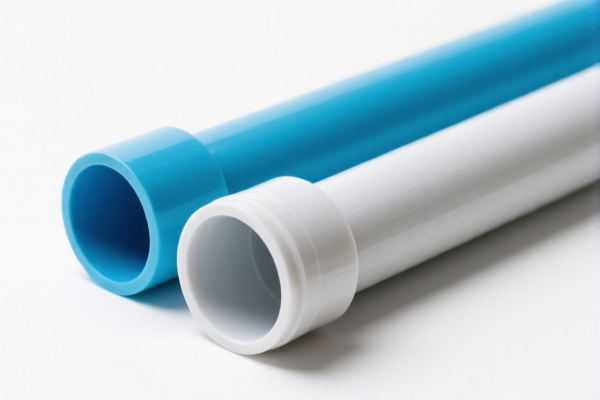
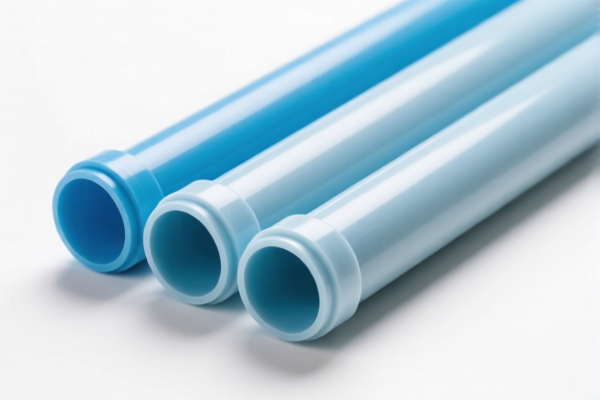

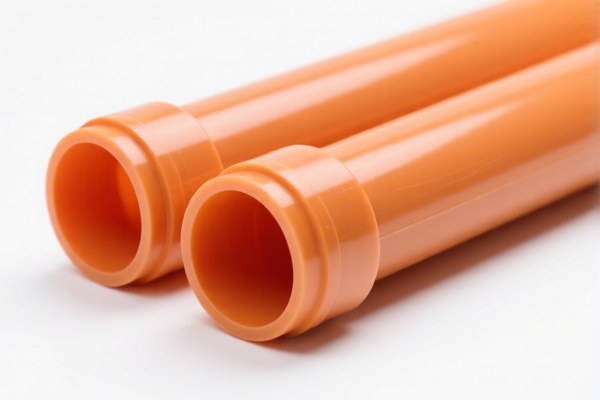
AI Analysis
🏗️ Metal Reinforced Plastic Pipes for Construction (MRPP)
🌐 HS Code Reference & Customs Clearance Guide | 2026 Latest Tariff Analysis | Professional Entry Strategy
📌 Product Category: Industrial/Construction Piping Systems (Drainage & Fluid Transport)
Metal Reinforced Plastic Pipes (MRPP) are composite pipes combining the corrosion resistance and lightweight nature of plastics with the structural strength of metal. In international trade, classification depends heavily on the dominant material, reinforcement structure, and specific application.
Below is the detailed breakdown of potential HS Code classifications based on the provided data, along with tax implications and clearance strategies.
📦 II. HS Code Classification Details (Based on Provided Data)
| HS Code | Product Summary | Tax Rate (Total) | Tax Detail Breakdown | Key Classification Logic |
|---|---|---|---|---|
| 3917.40.00.50 | Metal-reinforced plastic drainage pipes | 40.3% | Base: 5.3%, Section 301: 25.0%, Section 122: 10% | Core material is plastic; metal reinforcement does not create a material conflict. Focused on "drainage" application. |
| 3917.39.00.10 | Metal-reinforced plastic pipes | 38.1% | Base: 3.1%, Section 301: 25.0%, Section 122: 10% | Explicitly includes metal reinforcement features. Form is plastic pipe. Perfect match for general metal-reinforced plastic pipes. |
| 3926.90.99.40 | Metal-reinforced plastic drainage products | 22.8% | Base: 5.3%, Section 301: 7.5%, Section 122: 10% | Core material is plastic; form is drainage-related product. Classified under general plastic articles. Lower tariff due to different Section 301 rate. |
| 3917.39.00.10 | Stainless steel reinforced plastic pipes | 38.1% | Base: 3.1%, Section 301: 25.0%, Section 122: 10% | Contains stainless steel reinforcement. Fits "metal-reinforced" definition. Form is plastic pipe. No material conflict. |
| 4016.99.60.10 | Metal-reinforced rubber pipes | 37.5% | Base: 2.5%, Section 301: 25.0%, Section 122: 10% | Note: This code is for Rubber pipes, not plastic. Included for comparison if the material is misidentified or if the product is actually rubber-based. |
🔍 Critical Distinction:
- Plastic vs. Rubber: Ensure the pipe material is strictly Plastic (Thermoplastic) and not Rubber. If it is rubber, HS Code 4016.99.60.10 applies.
- Reinforcement Type: Codes 3917.39.00.10 and 3917.40.00.50 are the primary candidates for plastic pipes. The difference lies in the specific wording of the summary ("drainage" vs. "general pipe") and the resulting base tax rate.
- Tariff Discrepancy: Notice the significant difference in Section 301 tariffs (25.0% vs 7.5%) between 3917 and 3926. This can lead to a 17.5% difference in total duty, making correct classification crucial for cost savings.
💰 III. 2026 Latest Tariff Rate Details (Including Surcharges)
✅ Applicable Country: United States (US)
✅ Origin: China (CN) (Assumed based on Section 301/122 reference)
✅ Effective Time: Current policies apply
🎯 Scenario A: Standard Metal-Reinforced Plastic Pipes (HS Code: 3917.39.00.10 or 3917.40.00.50)
| Item | Detail |
|---|---|
| Base Duty | 3.1% (for 3917.39) or 5.3% (for 3917.40) |
| Section 301 Duty | +25.0% |
| Section 122 Duty | +10.0% |
| Total Tariff Rate | 38.1% (for 3917.39) or 40.3% (for 3917.40) |
| Calculation Basis | CIF Value × Total Rate |
| De Minimis Exemption | ❌ Not Eligible |
| Legal Path | USITC:3917.39.00.10 → Section301:Footnote → Section122 |
📌 Explanation:
- The 25% Section 301 tariff is the standard punitive tariff on Chinese goods under the Trade Act of 1974.
- The 10% Section 122 tariff applies to specific items under the International Emergency Economic Powers Act (IEEPA) or related national security provisions.
- Total Cost Impact: A $10,000 shipment will incur $3,810–$4,030 in duties alone.
🎯 Scenario B: Plastic Drainage Articles (HS Code: 3926.90.99.40)
| Item | Detail |
|---|---|
| Base Duty | 5.3% |
| Section 301 Duty | +7.5% (Note: Lower rate than 3917) |
| Section 122 Duty | +10.0% |
| Total Tariff Rate | 22.8% |
| Calculation Basis | CIF Value × 22.8% |
| De Minimis Exemption | ❌ Not Eligible |
| Legal Path | USITC:3926.90.99.40 → Section301:Footnote → Section122 |
📌 Strategic Advantage:
- If the product can be argued as a "general plastic article" rather than a "pipe" (HS 3917), the Section 301 tariff drops from 25% to 7.5%.
- Risk: CBP (Customs and Border Protection) may challenge this classification if the product is clearly a pipe. Misclassification can lead to penalties.
🛠️ IV. Customs Clearance Practical Advice
✅ 1. Documentation Checklist (Mandatory)
| Document | Required? | Description |
|---|---|---|
| ✅ Product Specification Sheet | ✔️ | Must detail: Inner plastic layer, outer plastic layer, reinforcement material (steel/aluminum), thickness, pressure rating. |
| ✅ Material Composition Report | ✔️ | Proof that plastic is the principal material (for HS 3917/3926). |
| ✅ Product Photos | ✔️ | Clear images of cross-section showing reinforcement layers. |
| ✅ Commercial Invoice | ✔️ | Must state: "Metal Reinforced Plastic Pipe," not just "Plastic Pipe." |
| ✅ Packing List | ✔️ | Include weight and dimensions. |
| ✅ Certificate of Origin | ✔️ | For origin determination (China vs. non-China). |
✅ 2. Classification Strategy & Tips
🔥 "Material First, Function Second, Structure Third!"
| Situation | Recommended HS Code | Risk Level | Reason |
|---|---|---|---|
| Standard Drainage Pipe | 3917.40.00.50 |
Medium | Explicitly mentions "drainage." High tax (40.3%). |
| General Pressure Pipe | 3917.39.00.10 |
Medium | "Metal-reinforced" is explicitly stated. Lower base tax (38.1%). |
| Generic Plastic Article | 3926.90.99.40 |
High | Only if CBP accepts it as a "plastic article" rather than a pipe. Significant savings (22.8%) but high audit risk. |
| Rubber Pipe | 4016.99.60.10 |
Low | Only if material is rubber. Do not use for plastic pipes. |
⚠️ Warning:
- Do not mix plastic and rubber descriptions.
- Ensure the "metal reinforcement" is visible and described. If it’s just a plastic pipe with a metal fitting, it may not qualify for HS 3917.
- Section 301 Rate Arbitrage: If you can legitimately classify under HS 3926 (22.8% total), you save 15.3% in duties compared to HS 3917 (38.1%). However, this must be justifiable.
✅ 3. Special Circumstances
| Scenario | Handling Advice |
|---|---|
| Stainless Steel Reinforcement | Clearly state "Stainless Steel" in description. May help in arguing for specific sub-headings but likely still falls under HS 3917.39.00.10. |
| Large Diameter Pipes | Ensure they fit the definition of "pipes" (hollow, cylindrical). Large diameter may raise questions about whether they are "tubes" or "pipes," but HS 3917 covers both. |
| Composite Pipes with Multiple Layers | Provide a layer-by-layer breakdown. The principal material (usually the outer plastic layer) determines the heading. |
🌍 V. Global Market Comparison (2026)
| Country/Region | Recommended HS Code | Duty Rate | Certifications | Notes |
|---|---|---|---|---|
| 🇺🇸 USA | 3917.39.00.10 or 3917.40.00.50 |
38.1% - 40.3% | NSF/ANSI 61, UL | High tariffs due to Section 301/122. |
| 🇨🇳 China | 3917.39.00.10 |
~3-5% | GB Standards | Low import duty for foreign pipes. |
| 🇪🇺 EU | 3917.21 or 3917.29 |
~4-5% | CE, WRAS | No Section 301/122. Standard EU duty applies. |
| 🇦🇺 Australia | 3917.39.00.10 |
~5% | AS/NZS Standards | Moderate duty. |
| 🇯🇵 Japan | 3917.39.00.10 |
~0-5% | JIS Standards | Low duty, strict quality checks. |
📌 Conclusion:
- USA is the most expensive market due to additional punitive tariffs.
- EU/Asia markets offer significantly lower duty burdens.
- Consider supply chain diversification if targeting the US market heavily.
📌 VI. Common Errors & Pitfalls
❌ Error 1: Classifying as 3917.40.00.90 (Other pipes) without specifying "metal-reinforced."
👉 Consequence: CBP may reassess to 3917.39.00.10 with higher scrutiny, or reject the declaration if details don't match.
❌ Error 2: Claiming 3926.90.99.40 for obvious pipes to avoid 25% tariff.
👉 Consequence: High risk of audit, penalties, and back taxes if CBP determines it’s a pipe.
❌ Error 3: Ignoring Section 122 tariffs.
👉 Consequence: Underpayment of duties. Section 122 is mandatory for many Chinese goods.
❌ Error 4: Confusing "Metal-Reinforced Plastic" with "Metal Pipe with Plastic Lining."
👉 Consequence: Different HS Code (e.g., 7304 for steel pipes). Ensure the principal material is plastic.
✅ Correct Approach:
"Metal-Reinforced Polyethylene (PE) Pipe, DN100, Pressure 10bar, Cross-linked PE Outer Layer, Steel Mesh Reinforcement, PE Inner Layer"
🎯 VII. Conclusion: Professional Classification, Cost Savings, Compliance
🎯 Key Takeaways:
🔹 "Know Your Material: Plastic = HS 3917, Rubber = HS 4016"
🔹 "Section 301 is the Big Hit: 25% vs 7.5% can save thousands"
🔹 "Document Everything: Cross-section photos are your best friend"
🔹 "Don’t Risk Misclassification: Saving 15% on tariff isn’t worth a 200% penalty"
📌 Pro Tip:
- If you are importing large volumes, consider applying for a Binding Ruling from CBP to lock in the HS Code and tariff rate.
- Evaluate if the product can be shipped from a third country (e.g., Vietnam, Mexico) to avoid Section 301 tariffs, but ensure substantial transformation rules are met.
📣 Immediate Action:
📞 Contact your customs broker with the product’s technical specifications.
🚀 Request a pre-classification ruling if unsure about HS 3917 vs. 3926.
💼 Precision in classification saves money and prevents delays!
✨ Expert Customs Clearance Starts with Accurate Classification!
💼 Every dollar of duty is critical—get it right!
Customer Reviews
About HS Code Classification
The Harmonized System (HS) is an internationally standardized nomenclature developed by the World Customs Organization (WCO) to classify traded products. Over 200 countries use the HS system as the basis for customs tariffs, trade statistics, and import/export regulations.
Each HS code follows a hierarchical structure:
- Chapter (2 digits) — Broad category of goods (e.g., Chapter 84: Machinery and Mechanical Appliances)
- Heading (4 digits) — More specific grouping within the chapter
- Subheading (6 digits) — Internationally standardized breakdown, used by all WCO member countries
- National subdivisions (8-10 digits) — Country-specific extensions for further classification, such as US HTSUS 10-digit codes
Correct HS code classification is essential for smooth customs clearance, accurate duty payment, and compliance with trade regulations. Misclassification can lead to customs delays, overpayment of duties, or penalties.
When importing from CN to US, the applicable tariff rates may include:
- Most-Favored-Nation (MFN) rate — The standard duty rate applied to WTO members
- General rate — Applied to countries without trade agreements
- Trade remedy duties — Additional tariffs such as Section 301 (anti-dumping), Section 232 (national security), or countervailing duties
The information provided on this page is for reference purposes only. For official classification, please consult with your local customs authority or a licensed customs broker.