Metal wire, rope and cable for bundling or packaging
CN → US| HS Code | Tariff Rate | Origin | Destination | Doc |
|---|---|---|---|---|
| 7312103080 | 85.0% | CN | US | Official Doc |
| 7312109090 | 85.0% | CN | US | Official Doc |
| 8307903000 | 38.8% | CN | US | Official Doc |
Product Images
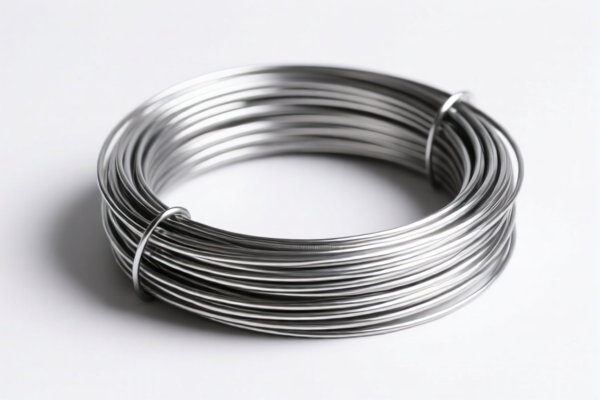
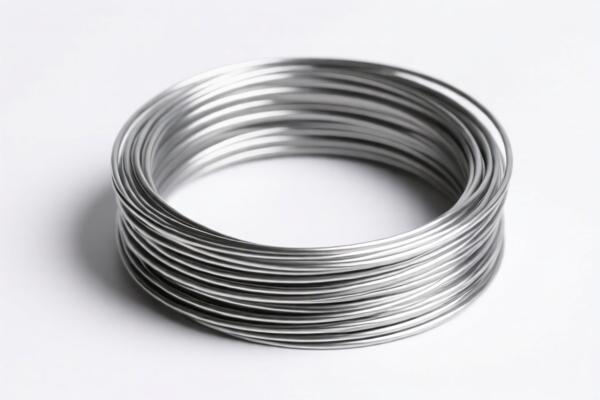
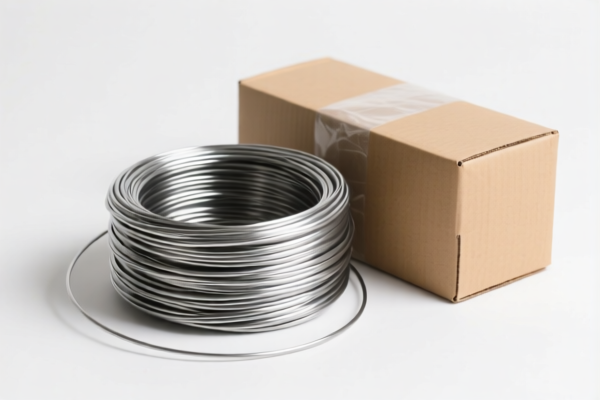
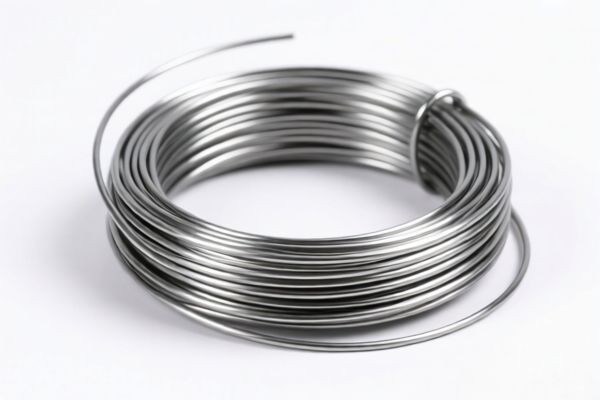
AI Analysis
🧵 Metal Wire, Rope, and Cable for Bundling or Packaging
🌐 HS Code Reference & Customs Clearance Guide | 2026 Latest Tariff Analysis | Professional-Level Clearance Strategy 📌 I. Product Definition & Classification: Are You Sure You Know "Metal Wire/Rope"?
Metal wires, ropes, and cables designed for bundling or packaging are industrial consumables widely used in logistics, construction, and manufacturing. In international trade, these products are strictly divided based on material composition and physical form. Improper classification can lead to severe tariff penalties due to recent trade policy adjustments.
1. Iron/Steel Wire, Rope, and Cable (Chapters 73): - Stranded Wires/Ropes/Cables: Specifically twisted or stranded strands made of iron or steel. - Application: Heavy-duty bundling, lifting, or packaging reinforcement. - Key Distinction: If it’s steel/iron and used for bundling, it generally falls under Heading 7312.
2. Base Metal Wire, Rope, and Cable (Chapter 83): - General Base Metal: Wires or cables made of metals other than iron/steel (e.g., copper, aluminum, brass), or flexible tubes/hoses made of base metal. - Application: Lighter duty bundling, electrical shielding, or specific packaging needs. - Key Distinction: If the material is not iron/steel, or if it takes the form of a "tube" rather than a standard rope, it may fall under Heading 8307.
⚠️ Critical Classification Point:
- If the material is Iron or Steel and formed as Stranded Wire/Rope/Cable → Use 7312 Series.
- If the material is Other Base Metal (or specific forms like tubes) → Use 8307 Series.
- Do not mix "Iron/Steel" with "Other Base Metal" codes, as tariff rates differ significantly.
📦 II. HS Code Classification Details (2026 Latest Tariff Authority Comparison)
| HS Code | Product Description | Applicable Scenario | Material/Form |
|---|---|---|---|
7312.10.30.80 |
Other wire, rope, and cable of iron or steel | General steel bundling wire, non-specific industrial use | Iron/Steel; Stranded/Rope/Cable |
7312.10.90.90 |
Other wire, rope, and cable of iron or steel | Specifically for bundling or packaging | Iron/Steel; Stranded/Rope/Cable |
8307.90.30.00 |
Other wire, rope, and cable of base metal | Non-ferrous metals or metal tubes for bundling | Base Metal (Non-Fe/Steel); Tube/Form |
🔍 Key Reminder:
- The 7312 codes are reserved strictly for Iron and Steel products.
- The 8307 code applies to Base Metals (like copper, aluminum, etc.) or specific forms like tubes.
- Note on "Other": Even if the specific end-use is slightly different, if it’s steel bundling wire, it typically falls under 7312.10.90.90. The 7312.10.30.80 category is often a catch-all for "other" steel wires not specifically earmarked for standard bundling packaging functions in some sub-regions, but in this dataset, it carries the same high tariff risk.
💰 III. 2026 Latest Tariff Rate Breakdown (Including Surtaxes & Policy Add-ons)
✅ Applicable Country: United States (US)
✅ Origin: China (CN)
✅ Effective Time: Ongoing (including subsequent imports under current trade policies)
🎯 1. 7312.10.30.80 —— Iron/Steel Wire, Rope, Cable (Other)
| Item | Content |
|---|---|
| Basic Tariff | 0.0% (Ad Valorem) |
| Surtax (General) | +25.0% |
| Section 122 Tax (Steel) | +10.0% |
| Steel/Aluminum/Copper Surtax | +50.0% |
| Total Effective Rate | 85.0% |
| Tax Calculation | CIF Value × 85.0% |
| De Minimis Eligibility | ❌ No (Denied) |
| Legal Basis Path | General: 25% → Section 122: 10% (Steel) → Steel/Al/Cu Surcharge: 50% |
📌 Explanation:
- "Surtax 25%": Standard additional tariff under US trade remedy laws.
- "Section 122 10%": Specifically targeted at steel products.
- "Steel/Al/Cu Surcharge 50%": A critical additional levy on steel products.
- Total 85%: This is an extremely high tariff. Importers must prepare for significant cost increases.
🎯 2. 7312.10.90.90 —— Iron/Steel Wire, Rope, Cable (For Bundling/Packaging)
| Item | Content |
|---|---|
| Basic Tariff | 0.0% (Ad Valorem) |
| Surtax (General) | +25.0% |
| Section 122 Tax (Steel) | +10.0% |
| Steel/Aluminum/Copper Surtax | +50.0% |
| Total Effective Rate | 85.0% |
| Tax Calculation | CIF Value × 85.0% |
| De Minimis Eligibility | ❌ No (Denied) |
| Legal Basis Path | General: 25% → Section 122: 10% (Steel) → Steel/Al/Cu Surcharge: 50% |
📌 Note:
- Identical tax structure to7312.10.30.80.
- The distinction in HS code does not reduce the tariff burden for steel products.
- Whether for general use or specific packaging, steel bundling wire faces the full 85% levy.
🎯 3. 8307.90.30.00 —— Base Metal Wire, Rope, Cable (Other)
| Item | Content |
|---|---|
| Basic Tariff | 3.8% (Ad Valorem) |
| Surtax (General) | +25.0% |
| Section 122 Tax | +10.0% |
| Steel/Aluminum/Copper Surtax | ⚠️ Not Applied (See Note Below) |
| Total Effective Rate | 38.8% |
| Tax Calculation | CIF Value × 38.8% |
| De Minimis Eligibility | ❌ No (Denied) |
| Legal Basis Path | Basic: 3.8% → General: 25% → Section 122: 10% |
📌 Important Clarification:
- The tax detail for this code lists: "Basic: 3.8%, Surtax: 25.0%, Section 122: 10%".
- Crucially, the 50% Steel/Al/Copper Surcharge is NOT applied to this specific code in the provided data, likely because it is classified as "Base Metal" (potentially non-ferrous or tube form) rather than direct "Steel" under the specific surcharge definition, or it is already covered by the 10% Section 122 tax.
- Total 38.8%: While still high, this is less than half the cost of steel-specific codes.
- Check material composition carefully: If it is actually steel but misclassified as 8307, it will be re-classified and taxed at 85%.
🛠️ IV. Customs Clearance Practical Advice (Battle-Proven Pitfall Avoidance)
✅ 1. Preparation Checklist (No Exceptions)
| Document | Must Provide | Description |
|---|---|---|
| ✅ Product Specification Sheet | ✔️ | Must clearly state: Material (Iron/Steel vs. Other Base Metal), Form (Stranded/Rope/Tube), Diameter, Tensile Strength. |
| ✅ Material Certificate | ✔️ | Proof of material composition. Critical to distinguish between "Iron/Steel" (7312) and "Other Base Metal" (8307). |
| ✅ Product Photos | ✔️ | Clear images showing texture (stranded vs. solid), ends (cut/looped), and packaging. |
| ✅ Commercial Invoice | ✔️ | Must describe as "Metal Wire/Rope for Bundling/Packaging". Avoid vague terms like "Hardware". |
| ✅ Packing List | ✔️ | Detailed weight and quantity. |
| ✅ HS Code Ruling (Optional but Recommended) | ✔️ | If uncertain, apply for a binding ruling to avoid 85% surprise. |
✅ 2. Declaration Tactics (Key Mantra)
🔥 “Material First, Form Second, Steel Tax High, Check Twice!”
| Scenario | Correct Declaration | Wrong Action |
|---|---|---|
| Steel Bundling Wire | 7312.10.90.90 |
Misdeclare as plastic or rubber → Smuggling risk |
| Steel Wire (Other Use) | 7312.10.30.80 |
Try to avoid 85% by vague description → Audit trigger |
| Copper/Aluminum Rope | 8307.90.30.00 |
Classify as steel → 85% instead of 38.8% |
| Metal Tube for Packaging | 8307.90.30.00 |
Classify as wire → Incorrect form classification |
✅ 3. Special Situation Handling
| Situation | Handling Advice |
|---|---|
| Mixed Shipment (Steel + Non-Steel) | Declare Separately! Do not combine. Steel parts go to 7312, others to 8307. Mixed declaration leads to rejection or total audit. |
| "Galvanized Steel" | Still Iron/Steel. Falls under 7312. No exemption. |
| Wire with Plastic Coating | If the coating is minimal, it’s still steel. If it changes the essential character, consult a broker. Usually still 7312. |
| Importing from Vietnam/Mexico | Check if USMCA or other FTAs apply. However, steel products often face universal surcharges regardless of origin. |
🌍 V. Global Market Comparison (2026 Latest)
| Country/Region | Recommended HS Code | Tariff Rate (China Origin) | Remarks |
|---|---|---|---|
| 🇺🇸 USA | 7312.10.90.90 |
85.0% | Extremely high. Consider supply chain shift. |
| 🇨🇳 China | 7312.10.90.90 |
~5-10% | Lower entry barrier, but high US export tax. |
| 🇪🇺 EU | 7312.10 |
~2-5% | No Section 122 or IEEPA surcharges. |
| 🇬🇧 UK | 7312.10 |
~2-5% | Post-Brexit tariffs may differ slightly but no US-style surcharges. |
| 🇯🇵 Japan | 7312.10 |
~2-3% | Low tariffs, no additional surcharges. |
📌 Conclusion:
- USA is the only major market with punitive 85% tariffs on steel bundling wire.
- EU, UK, Japan, and China remain viable low-tariff markets.
- If targeting the US, consider supply chain diversification or value-add processing in a third country (though origin rules may still apply).
📌 VI. Common Errors & Pitfall Guide (Lessons Learned)
❌ Error 1: Declaring "Steel Wire" as "Copper Wire" to get 38.8% instead of 85%.
👉 Consequence: Customs audit, seizure, fines, and loss of trust. Material certificates will reveal the truth.
❌ Error 2: Ignoring the "Section 122" 10% tax on steel.
👉 Consequence: Underpayment of duty. Even if you pay 25%, you still owe 60% more.
❌ Error 3: Assuming "Packaging" means it’s plastic.
👉 Consequence: If it’s metal, it’s taxed as metal. Vague descriptions lead to reclassification.
❌ Error 4: Not separating steel and non-steel items in one shipment.
👉 Consequence: The entire shipment may be audited, delaying clearance by weeks.
✅ Correct Practice:
"Galvanized Steel Stranded Wire, for Industrial Bundling, Diameter 2mm, ASTM A641 Standard"
(Clearly defines material, form, and standard)
🎯 VII. Conclusion: Precision Classification Saves Money
🎯 Remember the Mantra:
🔹 "Steel is 85%, Other Metal is 39%. Check Material First!"
🔹 "Section 122 and 50% Surcharge hit Steel Hard. Prepare Cash Flow!"
📌 Pro Tip:
If your steel wire is essential for your US-bound goods, consider if it can be incorporated into a larger assembly before entry (though rules of origin still apply). Alternatively, explore duty drawback programs if re-exported.
Always verify the "Steel" definition with your customs broker before shipment.
📣 Immediate Action:
📞 Contact your customs broker + Provide Material Spec + Apply for HS Code Pre-Ruling if high value.
🚀 Ensure Compliance, Avoid Seizure, Protect Margins!
✨ Professional Clearance Starts with Accurate Classification!
💼 Your Cost Efficiency Depends on This 8-Digit Code!
Customer Reviews
About HS Code Classification
The Harmonized System (HS) is an internationally standardized nomenclature developed by the World Customs Organization (WCO) to classify traded products. Over 200 countries use the HS system as the basis for customs tariffs, trade statistics, and import/export regulations.
Each HS code follows a hierarchical structure:
- Chapter (2 digits) — Broad category of goods (e.g., Chapter 84: Machinery and Mechanical Appliances)
- Heading (4 digits) — More specific grouping within the chapter
- Subheading (6 digits) — Internationally standardized breakdown, used by all WCO member countries
- National subdivisions (8-10 digits) — Country-specific extensions for further classification, such as US HTSUS 10-digit codes
Correct HS code classification is essential for smooth customs clearance, accurate duty payment, and compliance with trade regulations. Misclassification can lead to customs delays, overpayment of duties, or penalties.
When importing from CN to US, the applicable tariff rates may include:
- Most-Favored-Nation (MFN) rate — The standard duty rate applied to WTO members
- General rate — Applied to countries without trade agreements
- Trade remedy duties — Additional tariffs such as Section 301 (anti-dumping), Section 232 (national security), or countervailing duties
The information provided on this page is for reference purposes only. For official classification, please consult with your local customs authority or a licensed customs broker.