Metallic Leather Handbag
CN → US| HS Code | Tariff Rate | Origin | Destination | Doc |
|---|---|---|---|---|
| 4202219000 | 44.0% | CN | US | Official Doc |
| 4202216000 | 45.0% | CN | US | Official Doc |
| 4114207000 | 36.6% | CN | US | Official Doc |
| 4114204000 | 38.6% | CN | US | Official Doc |
Product Images

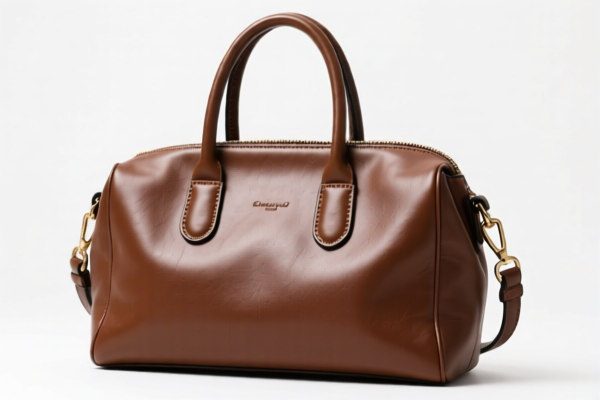


AI Analysis
🛍️ Metallic Leather Handbag: Complete HS Code Guide & US Customs Clearance Strategy (2026)
🌐 HS Code Reference & Customs Clearance Guide | 2026 Latest Tariff Analysis | Professional Strategy
📌 I. Product Definition & Classification: Do You Really Understand "Metallic Leather Handbags"?
The Metallic Leather Handbag is a fashion accessory characterized by a processed leather surface with a metallic finish, often used for luxury, retail, and promotional purposes. In international trade, its classification depends heavily on the material composition and the specific manufacturing process of the leather.
Key Distinction Criteria: 1. Outer Surface Material: Is it genuine leather or synthetic? 2. Core Material Definition: Is the "metallic" part the defining characteristic (metalized leather) or just a surface finish? 3. HS Code Hierarchy: * Heading 4202: Handbags (finished goods) where the outer surface is leather. * Heading 4114: Metalized leather (the material itself) used as the core component.
⚠️ Critical Differentiator: * Genuine Leather + Metallic Finish → Generally falls under 4202.21.x. * Metalized Leather (Chemically treated with metal foil/sheets) → May fall under 4114.20.x (Material definition) or 4202 depending on the "essential character" rule.
📦 II. HS Code Classification Details (2026 Authoritative Tariff Schedule)
| HS Code | Product Description | Applicable Scenario | Total Tax Rate | Tax Composition |
|---|---|---|---|---|
4202.21.90.00 |
Metallic Leather Handbag, Outer surface is leather (Genuine) | High-end genuine leather bags with metallic coating. | 44.0% | Base (9.0%) + Additional (25.0%) + 122 Clause (10%) |
4202.21.60.00 |
Metallic Leather Handbag, Outer surface is leather or synthetic | Bags where the leather type is mixed or synthetic leather is used with metallic finish. | 45.0% | Base (10.0%) + Additional (25.0%) + 122 Clause (10%) |
4114.20.70.00 |
Metallic Leather Handbag, Core Material is Metalized Leather | Bags where the defining feature is "metalized leather" (a specific processed material) as the core. | 36.6% | Base (1.6%) + Additional (25.0%) + 122 Clause (10%) |
4114.20.40.00 |
Metallic Leather Handbag, Meets Metalized Leather Material Requirements | Bags certified specifically under the "Metalized Leather" material definition criteria. | 38.6% | Base (3.6%) + Additional (25.0%) + 122 Clause (10%) |
🔍 Key Insight: *
4202.21.xis the standard "Handbag" category. The rate varies slightly (44% vs 45%) based on whether the leather is strictly genuine or includes synthetics. *4114.20.xis a "Material-based" classification. If the customs authority deems the material (metalized leather) to be the primary characteristic rather than the "handbag" form, these codes apply. Note the lower Base Tax (1.6%-3.6%) compared to 4202 (9%-10%), but the Additional & 122 Clause taxes remain high.
💰 III. 2026 Latest Tariff Rate Breakdown (Including Add-on Taxes & Policy Fees)
✅ Applicable Country: United States (US)
✅ Country of Origin: China (CN)
✅ Effective Date: Based on 2026 tariff adjustments (Post-2025 rules)
🎯 Scenario 1: 4202.21.90.00 (Genuine Leather Handbag)
| Item | Content |
|---|---|
| Base Tariff | 9.0% (Standard Ad Valorem) |
| Section 301 / Additional Tax | +25.0% (Countermeasures on China) |
| Section 122 Clause Tax | +10.0% (Specific trade policy add-on) |
| Total Effective Rate | 44.0% |
| Tax Calculation | CIF Value × 44% |
| De Minimis Exemption | ❌ NOT Applicable (Deny De Minimis for Section 301/122 items) |
| Legal Pathway | USITC:4202.21.90.00 → 301:Additional → 122 Clause |
📌 Explanation:
The 9% base is standard for leather handbags. The 25% is the Section 301 tariff. The 10% "122 Clause" is a specific policy add-on (often related to specific trade remedies or emergency measures). Total: 44%.
🎯 Scenario 2: 4202.21.60.00 (Leather/Synthetic Mix)
| Item | Content |
|---|---|
| Base Tariff | 10.0% (Slightly higher for synthetic mix) |
| Section 301 / Additional Tax | +25.0% |
| Section 122 Clause Tax | +10.0% |
| Total Effective Rate | 45.0% |
| Tax Calculation | CIF Value × 45% |
| De Minimis Exemption | ❌ NOT Applicable |
| Legal Pathway | USITC:4202.21.60.00 → 301:Additional → 122 Clause |
📌 Note:
Using synthetic leather or a mix increases the base rate by 1%, pushing the total to 45%. This is the highest cost scenario.
🎯 Scenario 3: 4114.20.70.00 (Core Material: Metalized Leather)
| Item | Content |
|---|---|
| Base Tariff | 1.6% (Significantly lower for material classification) |
| Section 301 / Additional Tax | +25.0% |
| Section 122 Clause Tax | +10.0% |
| Total Effective Rate | 36.6% |
| Tax Calculation | CIF Value × 36.6% |
| De Minimis Exemption | ❌ NOT Applicable |
| Legal Pathway | USITC:4114.20.70.00 → 301:Additional → 122 Clause |
📌 Strategic Advantage:
If the product can be legally classified under4114(focusing on the "Metalized Leather" material rather than the "Handbag" form), the total tax drops from 44-45% to 36.6%. This saves 7.4% - 8.4% on the CIF value.
🎯 Scenario 4: 4114.20.40.00 (Meets Material Requirements)
| Item | Content |
|---|---|
| Base Tariff | 3.6% |
| Section 301 / Additional Tax | +25.0% |
| Section 122 Clause Tax | +10.0% |
| Total Effective Rate | 38.6% |
| Tax Calculation | CIF Value × 38.6% |
| De Minimis Exemption | ❌ NOT Applicable |
| Legal Pathway | USITC:4114.20.40.00 → 301:Additional → 122 Clause |
🛠️ IV. Customs Clearance Practical Advice (Avoiding Pitfalls)
✅ 1. Preparation Checklist (Must-Haves)
| Document | Required? | Why? |
|---|---|---|
| Product Photos (Macro & Global) | ✅ | To prove the "metallic" nature and leather texture. |
| Material Composition Certificate | ✅ | Critical: Must specify if the leather is "Metalized" (processed) or just "Genuine with coating". |
| Technical Specification Sheet | ✅ | Details the metallization process (e.g., vacuum deposition vs. surface painting). |
| Commercial Invoice | ✅ | Must explicitly state "Metalized Leather Handbag" and the specific HS Code. |
| Bill of Lading | ✅ | Ensure packaging weight matches declaration. |
| Origin Certificate (CO) | ✅ | Essential for proving Chinese origin (to apply the correct 301/122 rates). |
✅ 2. Declaration Strategy (Key Tips)
🔥 Golden Rule: "Material Definition > Form Definition" for Tax Optimization.
| Scenario | Recommended Action | Risk if Wrong |
|---|---|---|
| Genuine Leather + Paint | Declare as 4202.21.90.00 |
Low risk, standard 44% |
| Synthetic Leather + Metal | Declare as 4202.21.60.00 |
High cost (45%) if misdeclared as genuine. |
| True Metalized Leather (Core) | Try to declare 4114.20.70.00 |
Savings: 36.6% vs 44%. Requires strong material proof. |
| Handbag sold separately from metalized sheet | Declare as Handbag (4202) |
Do not mix codes. |
⚠️ Warning: * Do NOT claim
4114if the metallic layer is just a superficial paint or foil on standard leather. Customs may audit and reclassify to4202, resulting in back taxes + penalties. * The 122 Clause is non-negotiable. Ensure your invoice clearly mentions "122 Clause Tax Applicable".
✅ 3. Special Handling for "Metalized Leather"
- Definition Check: "Metalized Leather" in
4114usually implies a specific manufacturing process where metal particles or foil are integrated into or onto the leather in a way that changes its fundamental nature. - Proof of Process: Provide a factory process description (e.g., "Vacuum Metallization," "Sputtering") to justify the
4114classification. - Customs Audit: If audited, the focus is on the percentage of metallic content and the binding agent used.
🌍 V. Global Market Comparison (2026)
| Market | Recommended HS Code | Effective Rate (China Origin) | Key Requirement |
|---|---|---|---|
| 🇺🇸 USA | 4202.21.90.00 or 4114.20.70.00 |
36.6% - 45.0% | High Section 301 + 122 Clause |
| 🇨🇳 China | 4202.21.90.00 |
5.0% | No 301/122 Clause |
| 🇪🇺 EU | 4202.21.90.00 |
12.0% (Est.) | No 122 Clause, check CE/REACH |
| 🇯🇵 Japan | 4202.21.90.00 |
5.0% | No 301/122 Clause |
📌 Conclusion: The US market is the most challenging due to the 122 Clause + Section 301 combination. * Best Strategy: If your product is truly "Metalized Leather" (core material), aggressively pursue
4114.20.70.00to reduce the base tax. * Worst Strategy: Misdeclaring a synthetic bag as genuine leather (or vice versa) leads to 45% tax.
📌 VI. Common Errors & Pitfall Avoidance
❌ Error 1: Calling it "Leather Handbag" without specifying "Metalized".
👉 Result: Customs may default to the higher tax rate 4202.21.90.00 (44%) instead of 4114 (36.6%).
❌ Error 2: Claiming "De Minimis" for small shipments. 👉 Result: Rejected. Section 301 and 122 Clause items are excluded from de minimis exemptions. You must pay the full tax even for small packages.
❌ Error 3: Confusing "Metallic Leather" with "Leather with Metal Embellishments".
👉 Result: If the metal is just a buckle or zipper, the bag is still 4202. If the leather itself is metalized, it might be 4114.
✅ Correct Action:
"Handbag, Metallic Leather (Core Material: Metalized Cowhide), Vacuum Deposited Aluminum Layer, Model XYZ, Made in China."
🎯 VII. Conclusion: Strategic Classification for Profit
🎯 Remember the Formula:
Base Tax + 25% (301) + 10% (122) = Total Liability
- Standard Bag (
4202): 9% + 25% + 10% = 44% - Synthetic Mix (
4202): 10% + 25% + 10% = 45% - Metalized Core (
4114): 1.6% + 25% + 10% = 36.6% (Save ~8%)
💡 Pro Tip: Consult a Pre-Ruling: Before shipping large volumes to the US, file an Advance Ruling request with US Customs (CBP) specifically for the
4114classification. Provide the metallization process details. This prevents costly reclassification at the port.
📌 Quick Summary for Your Team: 1. Verify Material: Is it truly metalized leather (4114) or coated leather (4202)? 2. Check Origin: If China, expect 36.6% to 45.0%. 3. No De Minimis: Every single bag is taxed. 4. Document the Process: Have the metallization process ready for Customs.
✨ Professional Customs, From Precise Classification to Maximum Savings!
💼 Your margins are too precious to be lost to the 122 Clause!
Customer Reviews
About HS Code Classification
The Harmonized System (HS) is an internationally standardized nomenclature developed by the World Customs Organization (WCO) to classify traded products. Over 200 countries use the HS system as the basis for customs tariffs, trade statistics, and import/export regulations.
Each HS code follows a hierarchical structure:
- Chapter (2 digits) — Broad category of goods (e.g., Chapter 84: Machinery and Mechanical Appliances)
- Heading (4 digits) — More specific grouping within the chapter
- Subheading (6 digits) — Internationally standardized breakdown, used by all WCO member countries
- National subdivisions (8-10 digits) — Country-specific extensions for further classification, such as US HTSUS 10-digit codes
Correct HS code classification is essential for smooth customs clearance, accurate duty payment, and compliance with trade regulations. Misclassification can lead to customs delays, overpayment of duties, or penalties.
When importing from CN to US, the applicable tariff rates may include:
- Most-Favored-Nation (MFN) rate — The standard duty rate applied to WTO members
- General rate — Applied to countries without trade agreements
- Trade remedy duties — Additional tariffs such as Section 301 (anti-dumping), Section 232 (national security), or countervailing duties
The information provided on this page is for reference purposes only. For official classification, please consult with your local customs authority or a licensed customs broker.