Micro Fuse
CN → US| HS Code | Tariff Rate | Origin | Destination | Doc |
|---|---|---|---|---|
| 8536100040 | 37.7% | CN | US | Official Doc |
| 8535100020 | 37.7% | CN | US | Official Doc |
| 8536100020 | 37.7% | CN | US | Official Doc |
| 8535100040 | 37.7% | CN | US | Official Doc |
| 8548000000 | 35.0% | CN | US | Official Doc |
Product Images
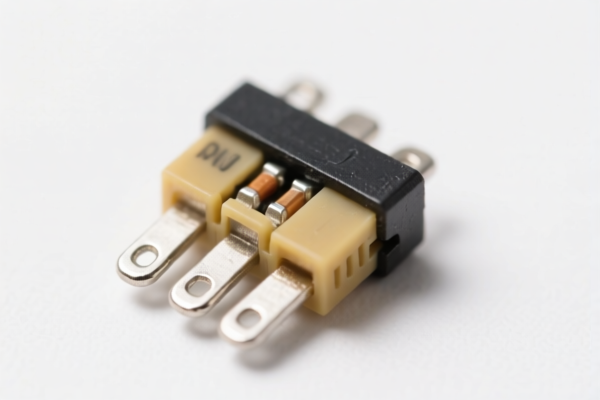
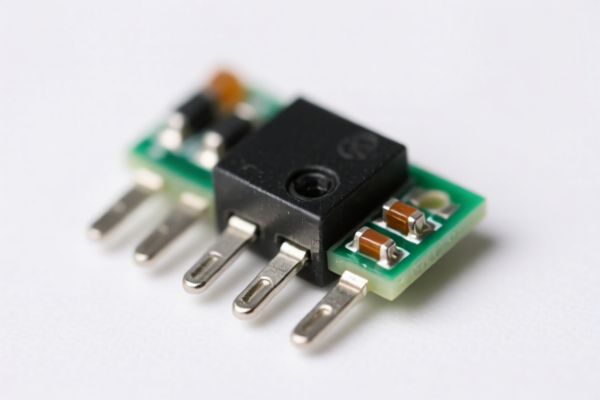
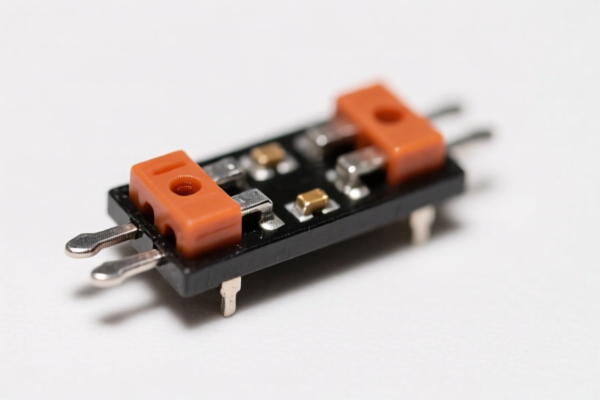
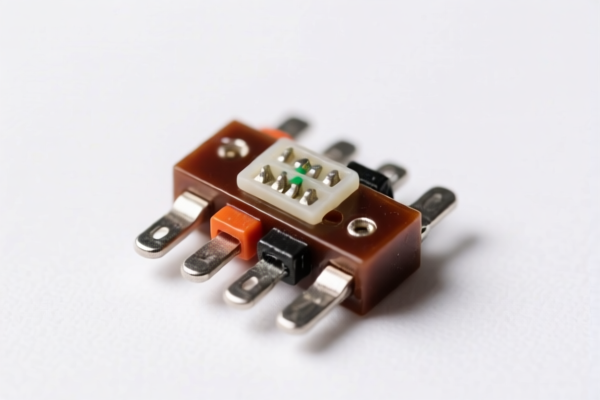
AI Analysis
🛡️ Micro Fuse (Miniature Fuses)
🌐 HS Code Reference & Customs Clearance Guide | 2026 Latest Tariff Analysis | Professional Clearance Strategy
📌 I. Product Definition & Classification: Do You Really Understand "Micro Fuse"?
A Micro Fuse (often referred to as a Miniature Fuse or Glass Tube Fuse) is a critical protective component used in electronic circuits. In international trade, it is primarily classified under Chapter 85 (Electrical Machinery and Equipment). The key to accurate classification lies in distinguishing whether it is explicitly defined as a "fuse" or broadly categorized as a "part of an electrical machine."
⚠️ Key Distinction Points:
- If the product is specifically identified as a fuse (device for protecting circuits by melting), it falls under 8536 (Circuit Protection) or 8535 (Switching/Protection Devices).
- If the product is considered a generic electrical part without specific protective function description, it might be misclassified under 8548 (Parts of Machines).
- Critical Note: US Customs strongly prefers specific functional classifications (8536/8535) over generic parts (8548) for fuses. Misclassification can lead to severe duties.
📦 II. HS Code Classification Details (2026 Latest Tariff Authority Mapping)
Based on the provided data, here are the potential HS Codes for Micro Fuses, their logical justifications, and tax implications.
| HS Code | Product Description | Logic/Justification from Data | Total Tax Rate | Tax Breakdown |
|---|---|---|---|---|
| 8536.10.00.40 | Fuses (General/Catch-all) | Matches the "Fuse" purpose. No specific material conflict. Classified under general catch-all rules for fuses. | 37.7% | Base: 2.7%, Section 301: 25%, Section 122: 10% |
| 8535.10.00.20 | Circuit Protection Devices | Matches usage (switching/protection). Voltage unspecified but no conflicting material/shape features. "Description Gap Principle" applies. | 37.7% | Base: 2.7%, Section 301: 25%, Section 122: 10% |
| 8536.10.00.20 | Glass Tube Fuses (Implied) | Matches usage (circuit protection) & form (fuse). Inferred material: Glass tube. No material conflict. | 37.7% | Base: 2.7%, Section 301: 25%, Section 122: 10% |
| 8535.10.00.40 | Circuit Protection Equipment | Functional equivalent to fuses. Fits classification description for circuit protection devices. | 37.7% | Base: 2.7%, Section 301: 25%, Section 122: 10% |
| 8548.00.00.00 | Electrical Parts (General) | Classified as an "electrical part of a motor/device." Inferred material: Metal/Ceramic. No conflict with "electrical part" usage. | 35.0% | Base: 0.0%, Section 301: 25%, Section 122: 10% |
🔍 Critical Insight:
- 8536 and 8535 are the correct functional classifications for Fuses.
- 8548 is a less preferred/risky classification ("Parts"). While it has a slightly lower total tax (35.0% vs 37.7%), it is often challenged by Customs if the item is clearly a fuse.
- All codes listed include heavy US tariffs for Chinese origin goods.
💰 III. 2026 Latest Tariff Rate Breakdown (Detailed Tax Clauses)
✅ Applicable Country: United States (US)
✅ Origin: China (CN)
✅ Effective Date: Current rates apply (Section 301 & 122 still active in 2026 context per data)
🎯 1. The Standard Fuse Classification (8536.10.00.40, 8536.10.00.20, 8535.10.00.20, 8535.10.00.40)
| Item | Content |
|---|---|
| Base Tariff | 2.7% (Ad Valorem) |
| Section 301 Tariff | +25.0% (Trade Remedy Duties) |
| Section 122 Tariff | +10.0% (Section 122 National Security Tariff) |
| Total Effective Rate | 37.7% |
| Tax Calculation | CIF Value × 37.7% |
| De Minimis Exemption | ❌ NO (Section 301 and 122 duties do not qualify for Section 321 De Minimis exemption) |
| Legal Path | HTSUS:8536.10.00 → USITC:Section 301 → USITC:Section 122 |
📌 Explanation:
- Base Rate (2.7%): Standard Most Favored Nation (MFN) rate for fuses.
- Section 301 (25%): Imposed under the Trade Promotion Authority Act for Chinese-origin goods.
- Section 122 (10%): Imposed under the Trade Act of 1974 for national security reasons.
- Total: 37.7%. This is a very high barrier for entry. Do not rely on "low value" shipments to avoid these duties.
🎯 2. The "Electrical Parts" Classification (8548.00.00.00)
| Item | Content |
|---|---|
| Base Tariff | 0.0% (Ad Valorem) |
| Section 301 Tariff | +25.0% |
| Section 122 Tariff | +10.0% |
| Total Effective Rate | 35.0% |
| Tax Calculation | CIF Value × 35.0% |
| De Minimis Exemption | ❌ NO |
| Legal Path | HTSUS:8548.00.00 → USITC:Section 301 → USITC:Section 122 |
📌 Caution:
- While the rate is 2.7% lower than the 8536/8535 codes, Customs may reject this classification if the item is undeniably a "fuse."
- Risk: If Customs reclassifies from 8548 to 8536 during audit, you will owe the difference (2.7%) + penalties + interest.
- Recommendation: Use 8536/8535 unless you have a legal opinion supporting the "general part" classification.
🛠️ IV. Customs Clearance Practical Advice (Avoiding Pitfalls)
✅ 1. Preparation Checklist (Must-Have Documents)
| Document | Required | Purpose |
|---|---|---|
| ✅ Product Specification Sheet | ✔️ | Must state: Type (Glass/Metallized), Rating (Voltage/Ampere), Breaking Capacity. |
| ✅ Product Photos (Clear) | ✔️ | Show label, markings, and physical form (e.g., glass tube, ceramic body). |
| ✅ Commercial Invoice | ✔️ | Must specify: "Micro Fuse," "Circuit Protection Device," and HS Code. |
| ✅ Packing List | ✔️ | Detail quantity per box. Ensure no "hidden" items. |
| ✅ Material Declaration | ✔️ | Confirm materials (Glass, Ceramic, Metal) to support classification logic. |
| ✅ Origin Certificate | ✔️ | To prove Chinese origin (triggers 301/122) or other origin (if applicable). |
✅ 2. Declaration Tips (Golden Rules)
🔥 "Be Specific: 'Fuse' Not 'Part', 'Rating' Not 'Generic'!"
| Scenario | Correct Declaration | Incorrect Declaration |
|---|---|---|
| Standard Glass Micro Fuse | "Glass Tube Fuse, 5x20mm, 5A/250V, For Circuit Protection" | "Electrical Part" or "Resistor" |
| Blade Type Fuse | "ATO/ATC Blade Fuse, 10A, Automotive Circuit Protection" | "Switch" or "Connector" |
| Bulk Packaging | "Fuses in Bulk, Not Retail Packaged" | "Retail Packaged" (Triggers different duty rates in some cases) |
| Mixed Shipments | Declare Fuses separately from Cables | Grouping with cables → Audit Risk |
✅ 3. Special Handling for "Micro" Fuses
| Situation | Handling Advice |
|---|---|
| Small Quantity (Sample) | Even if low value, Declare Properly. Do not use "De Minimis" (Section 321) for Section 301/122 items. CBP is cracking down on this. |
| Custom/Non-Standard Fuses | Provide engineering drawings. If it doesn't fit 8536, argue under 8535 (Protection Device) with technical justification. |
| High Voltage Fuses | Ensure they are not misclassified as "Industrial Switches" (8536.99). Stick to 8536.10 if they are fuses. |
🌍 V. Global Market Comparison (2026 Latest)
| Country/Region | Recommended HS Code | Tariff (China Origin) | Certification | Notes |
|---|---|---|---|---|
| 🇺🇸 USA | 8536.10.00.20 / .40 |
37.7% | UL, CSA, RoHS | High duty. Section 122 applies. |
| 🇨🇳 China | 8536.10.00.90 |
0% - 5% | CCC | Low duty for import into China. |
| 🇪🇺 EU | 8536.20.00 |
2.5% - 4.0% | CE, RoHS | No Section 301/122 equivalent. |
| 🇬🇧 UK | 8536.20.00 |
2.5% - 4.0% | UKCA | Post-Brexit rules apply. |
| 🇯🇵 Japan | 8536.20.00 |
0% - 3.2% | PSE | Low duty, strict safety standards. |
📌 Conclusion:
- USA is the most expensive market for Micro Fuses due to the 37.7% combined duty.
- EU/UK/Japan are significantly cheaper (<5%) but require strict safety certifications.
- Strategy: If targeting the US, consider tariff engineering (if applicable) or supply chain diversification (e.g., assembling in a third country) to mitigate 301/122 risks.
📌 VI. Common Errors & Pitfalls (Lessons Learned)
❌ Error 1: Declaring Fuses as "Electrical Parts" (8548) to save 2.7%.
👉 Consequence: Customs audit → Reclassification to 8536 → Back taxes + Penalties + Interest.
✅ Fix: Stick to 8536/8535. The risk/reward is not worth it.
❌ Error 2: Using "De Minimis" (Section 321) for low-value fuses.
👉 Consequence: BOLDED SEIZURE. Section 301 and 122 duties apply to all shipments, regardless of value.
✅ Fix: Always file a formal entry (Type 01 or 03) and pay the 37.7% duty.
❌ Error 3: Vague Description "Fuse" without rating.
👉 Consequence: CBP may ask for Ruling Request → Delay in clearance → Storage fees.
✅ Fix: Include Voltage (V), Current (A), and Breaking Capacity (A) in the invoice.
❌ Error 4: Mixing Fuses with Cables in one HS Code.
👉 Consequence: Complex valuation → High chance of Customs Exam.
✅ Fix: Declare separately. Fuses (8536) vs. Cables (8544).
🎯 VII. Conclusion: Precision Pays Off!
🎯 Remember the Rules:
🔹 "Fuses are 8536/8535, not 8548."
🔹 "US Duty is 37.7%, no exceptions for small values."
🔹 "Declare Ratings, Avoid Audits."📌 Pro Tip:
If you are shipping to the US, budget for the 37.7% duty. Do not rely on "low-value" loopholes. For high-volume imports, consider Advance Rulings from CBP to lock in your classification.
📣 Immediate Action:
📞 Contact your Customs Broker with Product Specs + Photos.
🚀 Apply for HTS Code Pre-Ruling if unsure.
💼 Your profit margin depends on accurate duty calculation!
✨ Professional Clearance Starts with Accurate Classification!
💼 Every Cent Counts – Don’t Lose It to Misclassification!
Customer Reviews
About HS Code Classification
The Harmonized System (HS) is an internationally standardized nomenclature developed by the World Customs Organization (WCO) to classify traded products. Over 200 countries use the HS system as the basis for customs tariffs, trade statistics, and import/export regulations.
Each HS code follows a hierarchical structure:
- Chapter (2 digits) — Broad category of goods (e.g., Chapter 84: Machinery and Mechanical Appliances)
- Heading (4 digits) — More specific grouping within the chapter
- Subheading (6 digits) — Internationally standardized breakdown, used by all WCO member countries
- National subdivisions (8-10 digits) — Country-specific extensions for further classification, such as US HTSUS 10-digit codes
Correct HS code classification is essential for smooth customs clearance, accurate duty payment, and compliance with trade regulations. Misclassification can lead to customs delays, overpayment of duties, or penalties.
When importing from CN to US, the applicable tariff rates may include:
- Most-Favored-Nation (MFN) rate — The standard duty rate applied to WTO members
- General rate — Applied to countries without trade agreements
- Trade remedy duties — Additional tariffs such as Section 301 (anti-dumping), Section 232 (national security), or countervailing duties
The information provided on this page is for reference purposes only. For official classification, please consult with your local customs authority or a licensed customs broker.