Micro SD Card
CN → US| HS Code | Tariff Rate | Origin | Destination | Doc |
|---|---|---|---|---|
| 8471809000 | 35.0% | CN | US | Official Doc |
| 8523590000 | 35.0% | CN | US | Official Doc |
| 8471706000 | 35.0% | CN | US | Official Doc |
| 8523510000 | 17.5% | CN | US | Official Doc |
| 8542320071 | 60.0% | CN | US | Official Doc |
| 8542320051 | 60.0% | CN | US | Official Doc |
Product Images
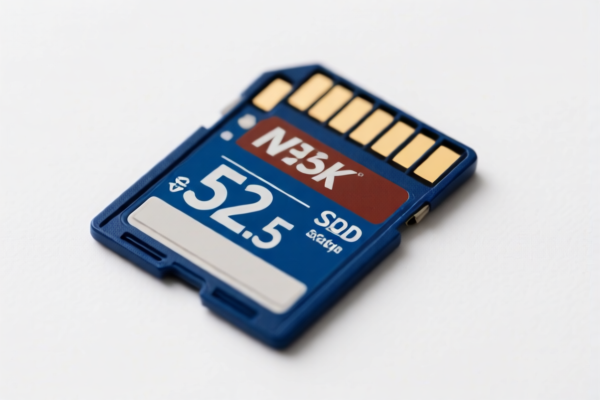
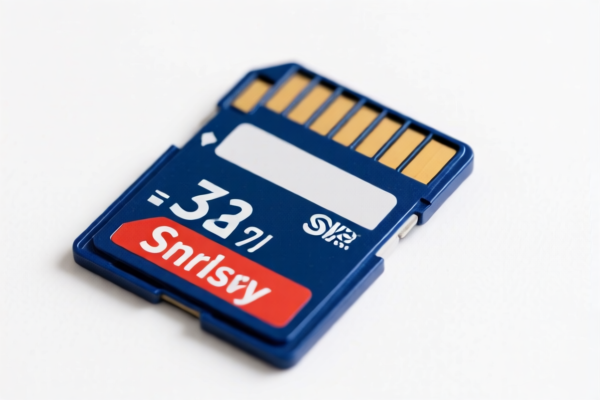
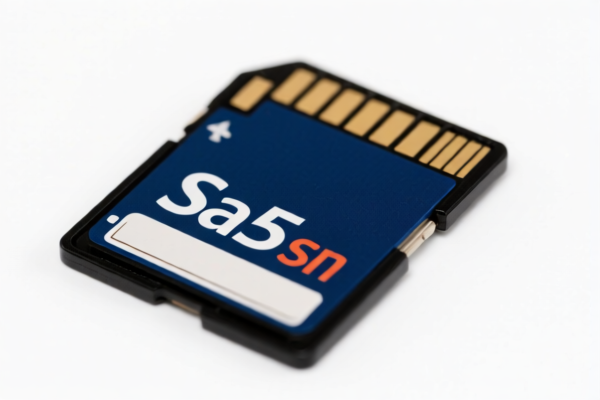
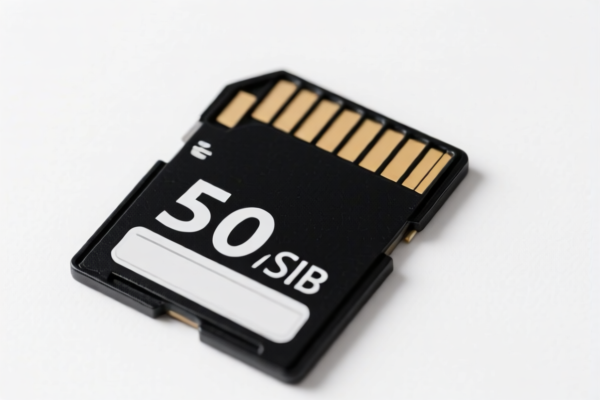
AI Analysis
📇 Micro SD Card: HS Code Classification & Customs Clearance Guide
🌐 HS Code Reference & Customs Strategy | 2026 Latest Tariff Analysis | Professional Clearance Protocol
📌 I. Product Definition & Classification: Do You Really Understand "Micro SD Card"?
The Micro SD Card is a portable, non-volatile flash memory storage device used in digital cameras, smartphones, drones, and automotive systems. In international trade, its classification is not single-dimensional. It depends entirely on how it is perceived by the customs authority: as a storage component of a computer, or as a standalone semiconductor device.
Key Distinction: - As a Data Processing Unit Component: Classified under Chapter 84 (Machines for automatic data processing). - As a Semiconductor/Magnetic/Optical Medium: Classified under Chapter 85 (Electrical machinery and equipment).
⚠️ Critical Warning:
- Misclassification can lead to a massive tariff shock (from 17.5% to 60% or 35%). - The US imposes additional Section 301 and IEEPA tariffs on Chinese-origin goods, significantly impacting these codes.
📦 II. HS Code Classification Details (2026 Latest Tariff Authority Comparison)
Based on the provided data, here are the 6 possible HS Codes for Micro SD Cards, ranging from low-risk to high-risk tariff structures.
| HS Code | Product Description | Classification Logic | Risk Level |
|---|---|---|---|
8542.32.00.51 |
Memory as EEPROM Classification | Treated as a specific integrated circuit memory chip (EEPROM type). | ⭐ Low Tariff |
8542.32.00.71 |
Memory as Semiconductor/Electronic IC | Treated broadly as electronic integrated circuit memory. | ⭐⭐ High Tariff |
8523.51.00.00 |
Semiconductor Medium: Non-volatile Solid-State | Treated as a standalone semiconductor storage medium (Flash memory). | ⭐⭐ Medium Tariff |
8523.59.00.00 |
Semiconductor Medium: Other Non-Volatile | Broader category for solid-state storage not fitting specific sub-headings. | ⭐⭐⭐ High Tariff |
8471.70.60.00 |
Other Storage Unit for Automatic Data Processing | Treated as a "storage unit" accessory for computers. | ⭐⭐⭐ High Tariff |
8471.80.90.00 |
Micro SD as Storage Unit for ADP | Treated as a general accessory/component for Automatic Data Processing Machines. | ⭐⭐⭐ High Tariff |
🔍 Focus Note:
- Lowest Tariff Path:8542.32.00.51(17.5% Total).
- Highest Tariff Path:8542.32.00.71&8471.xxxxseries (35%-60% Total).
- The difference between "EEPROM" (51) and "Other Semiconductor Memory" (71) or "Storage Unit" (80/70) is the critical battleground for cost control.
💰 III. 2026 Latest Tariff Rate Breakdown (Including Surtaxes & Policy Add-ons)
✅ Applicable Country: United States (US)
✅ Country of Origin: China (CN)
✅ Effective Date: Post-November 10, 2025 (Including subsequent imports)
🎯 1. 8542.32.00.51 —— Memory as EEPROM Classification (RECOMMENDED LOW-TARIFF OPTION)
| Item | Content |
|---|---|
| Base Tariff | 0.0% (Ad Valorem) |
| Section 301 Surtax | +7.5% (Additional Tariff) |
| IEEPA Tariff (Sec. 122) | +10% (Targeting China/HK Products) |
| Total Tax Rate | 17.5% |
| Tax Calculation | CIF Value × 17.5% |
| De Minimis Exemption | ❌ NO (Denied) |
| Legal Basis Path | IEEPA:122 → USITC:8542.32.00.51 → SECTION301:7.5% |
📌 Explanation:
- This is the most favorable classification in the dataset.
- By classifying the Micro SD card specifically as "EEPROM" type memory (a subset of integrated circuits), the Section 301 surtax is reduced to 7.5% instead of the standard 25% or 50%.
- Total Impact: Only 17.5% total duty burden.
🎯 2. 8523.51.00.00 —— Semiconductor Medium: Non-volatile Solid-State Storage
| Item | Content |
|---|---|
| Base Tariff | 0.0% |
| Section 301 Surtax | +25.0% (Standard Additional Tariff) |
| IEEPA Tariff (Sec. 122) | +10% |
| Total Tax Rate | 35.0% |
| Tax Calculation | CIF Value × 35.0% |
| De Minimis Exemption | ❌ NO (Denied) |
| Legal Basis Path | IEEPA:122 → USITC:8523.51.00.00 → SECTION301:25% |
📌 Explanation:
- If customs classifies the card as a "solid-state storage medium" (Chapter 85) rather than an integrated circuit (Chapter 84/85 interplay), the Section 301 rate jumps to 25%.
- This is double the cost of the EEPROM classification.
🎯 3. 8523.59.00.00 —— Semiconductor Medium: Other Non-Volatile Solid-State Storage
| Item | Content |
|---|---|
| Base Tariff | 0.0% |
| Section 301 Surtax | +25.0% |
| IEEPA Tariff (Sec. 122) | +10% |
| Total Tax Rate | 35.0% |
| Tax Calculation | CIF Value × 35.0% |
| De Minimis Exemption | ❌ NO (Denied) |
| Legal Basis Path | IEEPA:122 → USITC:8523.59.00.00 → SECTION301:25% |
📌 Note:
- Similar to8523.51, but for "other" solid-state devices.
- Same high tariff burden. No advantage over8523.51.
🎯 4. 8471.80.90.00 —— Micro SD as Storage Unit for Automatic Data Processing Machines (ADP)
| Item | Content |
|---|---|
| Base Tariff | 0.0% |
| Section 301 Surtax | +25.0% |
| IEEPA Tariff (Sec. 122) | +10% |
| Total Tax Rate | 35.0% |
| Tax Calculation | CIF Value × 35.0% |
| De Minimis Exemption | ❌ NO (Denied) |
| Legal Basis Path | IEEPA:122 → USITC:8471.80.90.00 → SECTION301:25% |
📌 Explanation:
- Classifying as a "storage unit for ADP" (Chapter 84) triggers the standard 25% Section 301 surcharge.
- Common misconception: "It's for computers, so it's Ch 84." Wrong cost assumption! Ch 84 items are NOT exempt from the 25% surcharge in this context.
🎯 5. 8471.70.60.00 —— Other Storage Unit for Automatic Data Processing Machines
| Item | Content |
|---|---|
| Base Tariff | 0.0% |
| Section 301 Surtax | +25.0% |
| IEEPA Tariff (Sec. 122) | +10% |
| Total Tax Rate | 35.0% |
| Tax Calculation | CIF Value × 35.0% |
| De Minimis Exemption | ❌ NO (Denied) |
| Legal Basis Path | IEEPA:122 → USITC:8471.70.60.00 → SECTION301:25% |
📌 Note:
- Another Chapter 84 option. Same high tariff. Avoid if8542.32.00.51is defensible.
🎯 6. 8542.32.00.71 —— Memory as Semiconductor/Electronic IC Memory (HIGHEST RISK)
| Item | Content |
|---|---|
| Base Tariff | 0.0% |
| Section 301 Surtax | +50.0% (Aggressive Surcharge) |
| IEEPA Tariff (Sec. 122) | +10% |
| Total Tax Rate | 60.0% |
| Tax Calculation | CIF Value × 60.0% |
| De Minimis Exemption | ❌ NO (Denied) |
| Legal Basis Path | IEEPA:122 → USITC:8542.32.00.71 → SECTION301:50% |
⚠️ CRITICAL WARNING:
- This classification triggers a 50% Section 301 surcharge.
- Total Duty: 60%.
- This is likely due to specific sub-heading interpretations of "Integrated Circuit Memories" that are not EEPROMs. AVOID THIS CODE UNLESS NECESSARY.
🛠️ IV. Customs Clearance Practical Advice (Battle-Tested Pitfall Guide)
✅ 1. Documentation Checklist (Non-negotiable)
| Document | Must Provide | Explanation |
|---|---|---|
| ✅ Product Datasheet | ✔️ | Must specify "Flash Memory," "EEPROM capability," or "Non-volatile Storage." |
| ✅ Circuit Diagram/Block Diagram | ✔️ | To prove the internal structure matches Chapter 85 (Semiconductors) rather than just a "storage accessory." |
| ✅ Product Photos (Label) | ✔️ | Clear view of model number, capacity, and "Micro SD" branding. |
| ✅ Third-Party Test Report | ✔️ | FCC, RoHS, and memory endurance/test reports to prove semiconductor nature. |
| ✅ Commercial Invoice | ✔️ | Description: "Micro SD Card, Flash Memory Module, EEPROM Type, Model XYZ." Avoid generic "Memory Stick." |
| ✅ Origin Certificate | ✔️ | Essential for proving China origin to apply/exempt specific surcharges. |
✅ 2. Declaration Strategy (Key Mantra)
🔥 "Prove Semiconductor, Not Accessory! Choose EEPROM, Avoid 60%!"
| Scenario | Correct Declaration | Wrong Practice | Result |
|---|---|---|---|
| Standard Micro SD Card | 8542.32.00.51 (EEPROM Type) |
Declaring as "Storage Device" | Saves ~42.5% duty! |
| High-End Industrial SD | 8542.32.00.51 |
Declaring as 8542.32.00.71 |
Avoids 60% tax |
| SD Card Reader + Card | 8471.80.90.00 (Card only) |
Bundling as one unit | Reader may be taxed differently; split shipment if possible. |
| Generic "Flash Memory" | 8523.51.00.00 |
Declaring as "Computer Part" | 35% is better than 60%, but worse than 17.5%. |
✅ 3. Special Circumstances Handling
| Situation | Handling Advice |
|---|---|
| OEM Custom Micro SD | Provide client order + technical specs proving EEPROM architecture. |
| "Industrial Grade" Claims | Emphasize durability and semiconductor grade in description to support Ch 85 classification. |
| Pre-loaded Software | If card contains proprietary software, ensure software is considered "accessory" to hardware to keep hardware classification primary. |
| Bulk vs. Retail | Bulk industrial shipments are more likely to be scrutinized for "Semiconductor" vs "Accessory" classification. Have technical docs ready. |
🌍 V. Global Market Comparison (2026 Latest)
| Country/Region | Recommended HS Code | Tariff Rate (China Origin) | Certification Requirements | Notes |
|---|---|---|---|---|
| 🇺🇸 USA | 8542.32.00.51 |
17.5% | FCC + RoHS | Best Code. Avoids 50% surcharge. |
| 🇺🇸 USA | 8542.32.00.71 |
60.0% | FCC + RoHS | AVOID. Highest penalty. |
| 🇨🇳 China | 8542.32.00.51 |
5-10% (Estimated) | CCC + RoHS | Lower import duty, but check local VAT. |
| 🇪🇺 EU | 8523.51.00.00 |
0% (Most MFN) | CE + RoHS | EU tariffs are generally lower; focus on CE. |
| 🇬🇧 UK | 8523.51.00.00 |
0% (Most MFN) | UKCA + RoHS | Post-Brexit, check UK Tariff schedule. |
📌 Conclusion:
- USA is the critical market. The difference between 17.5% and 60% is profit-killer.
- European markets are less sensitive to this specific classification difference (often 0% MFN), but US Section 301 rules are strict.
📌 VI. Common Errors & Pitfall Guide (Lessons Learned from Blood & Tears)
❌ Error 1: Declaring as 8471.80.90.00 (ADP Accessory)
👉 Consequence: 35% Tax. You lose the opportunity to claim the 17.5% EEPROM rate.
👉 Why: Customs may view it as a "computer part" rather than a "semiconductor."
❌ Error 2: Declaring as 8542.32.00.71 (General IC Memory)
👉 Consequence: 60% Tax! This is the most dangerous error.
👉 Why: Sub-heading .71 is specifically taxed at a higher rate under Section 301.
❌ Error 3: No Technical Documentation
👉 Consequence: Customs defaults to the highest visible duty rate or requires lengthy inspection.
👉 Fix: Always submit a datasheet highlighting "Non-volatile Flash Memory" and "EEPROM Compatibility."
❌ Error 4: Generic Description "SD Card"
👉 Consequence: Ambiguity leads to random classification.
👉 Fix: Use precise language: "Micro SD Card, Flash Memory, EEPROM Type, 64GB, Model XYZ."
✅ Correct Action:
"Micro SD Card, Non-Volatile Flash Memory Module, EEPROM Architecture, 128GB, Model XYZ, FCC Certified, Origin: China"
🎯 VII. Conclusion: Precision Classification, Profit Protection!
🎯 Remember the Mantra:
🔹 "EEPROM is King: 17.5% vs 60%. Choose
.51, Avoid.71!"
🔹 "Semiconductor, Not Accessory: Ch 85 beats Ch 84 for Cost Control!"
🔹 "HS Code Saves Millions: A 42.5% Difference Changes Everything!"
📌 Pro Tip:
- If your Micro SD cards are pre-programmed with specific proprietary firmware, ensure the firmware is considered accessory to the hardware to maintain the hardware classification under Chapter 85.
- For US imports, always apply for an Advance Ruling (Pre-Ruling) from CBP if you are unsure. The cost of a ruling is negligible compared to a 60% duty bill.
📣 Immediate Action:
📞 Contact your customs broker TODAY.
📄 Provide the Datasheet highlighting EEPROM/Flash Memory specs.
🚀 Secure the 17.5% Rate. Avoid the 60% Trap.
✨ Professional Clearance, Starting from Accurate Classification!
💼 Every Percent Saved is Profit Gained!
Customer Reviews
About HS Code Classification
The Harmonized System (HS) is an internationally standardized nomenclature developed by the World Customs Organization (WCO) to classify traded products. Over 200 countries use the HS system as the basis for customs tariffs, trade statistics, and import/export regulations.
Each HS code follows a hierarchical structure:
- Chapter (2 digits) — Broad category of goods (e.g., Chapter 84: Machinery and Mechanical Appliances)
- Heading (4 digits) — More specific grouping within the chapter
- Subheading (6 digits) — Internationally standardized breakdown, used by all WCO member countries
- National subdivisions (8-10 digits) — Country-specific extensions for further classification, such as US HTSUS 10-digit codes
Correct HS code classification is essential for smooth customs clearance, accurate duty payment, and compliance with trade regulations. Misclassification can lead to customs delays, overpayment of duties, or penalties.
When importing from CN to US, the applicable tariff rates may include:
- Most-Favored-Nation (MFN) rate — The standard duty rate applied to WTO members
- General rate — Applied to countries without trade agreements
- Trade remedy duties — Additional tariffs such as Section 301 (anti-dumping), Section 232 (national security), or countervailing duties
The information provided on this page is for reference purposes only. For official classification, please consult with your local customs authority or a licensed customs broker.