Micro Screw
CN → US| HS Code | Tariff Rate | Origin | Destination | Doc |
|---|---|---|---|---|
| 7318141060 | 91.2% | CN | US | Official Doc |
| 7318156070 | 91.2% | CN | US | Official Doc |
| 7415330500 | 88.0% | CN | US | Official Doc |
| 8302498090 | 38.5% | CN | US | Official Doc |
| 7415338050 | 88.0% | CN | US | Official Doc |
Product Images
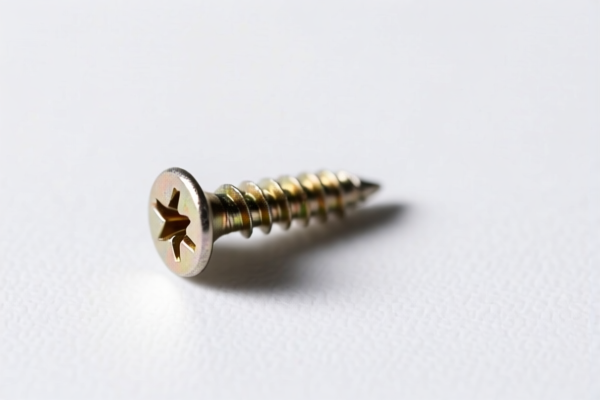
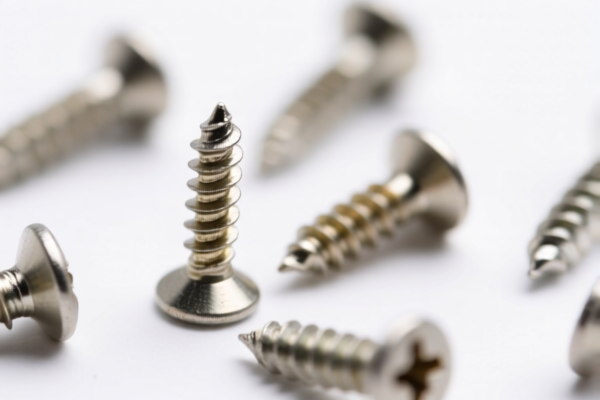
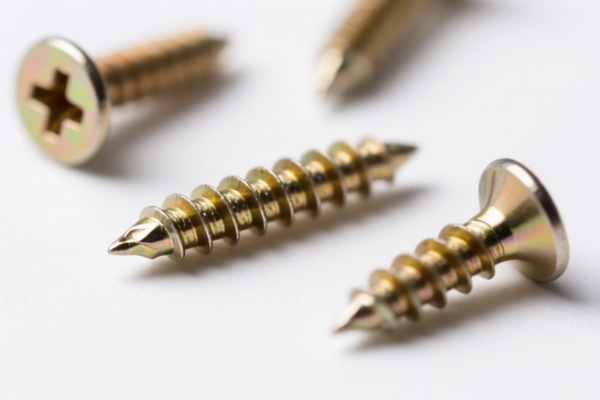
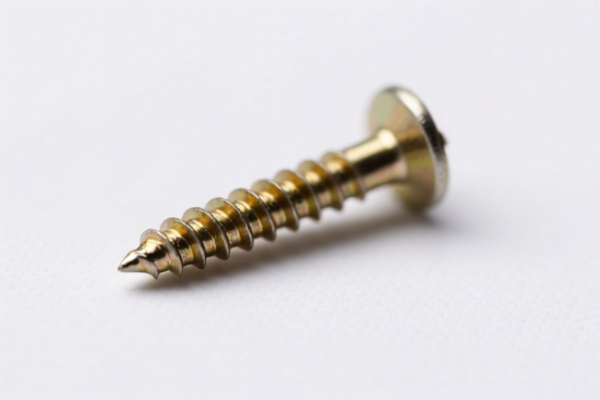
AI Analysis
🏭 Micro Screws: The Tiny Titans of Global Trade
🌐 HS Code Reference & Customs Clearance Guide | 2026 Latest Tariff Analysis | Professional-Level Clearance Strategy
📌 I. Product Definition & Classification: Do You Really Understand "Micro Screws"?
Micro Screws, often categorized under "Screws and Bolts," are small threaded fasteners typically defined by their diameter (often <6mm) and precise engineering applications. In international trade, they are not a single unified category but are split based on material composition and specific usage.
1. Iron or Steel Micro Screws:
The most common type, used in general electronics, machinery, and assembly.
Classification Logic: Based on shape (screw/bolt) and inferred material (iron/steel), falling under Chapter 73.
2. Copper or Copper-Alloy Micro Screws:
Used in high-conductivity applications, jewelry, or specific anti-corrosion needs.
Classification Logic: Shape matches threaded articles, but material shifts classification to Chapter 74.
3. Miscellaneous Metal Mounting/Support Hardware:
Sometimes, small screws are classified as accessories to larger metal fixtures (like brackets) rather than general fasteners, depending on the specific tariff structure's "residual" clauses.
Classification Logic: Inferred as base metal accessories under Chapter 83.
⚠️ Critical Distinction Point:
- If the screw is Iron/Steel → It falls under 7318.14 or 7318.15.
- If the screw is Copper → It falls under 7415.33.
- If the item is considered a Bracket/Accessory rather than a standalone fastener → It may fall under 8302.49.
📦 II. HS Code Classification Details (2026 Latest Tariff Authority Comparison)
Based on the provided data, here are the potential HS Codes and their logical justifications:
| HS Code | Product Description & Classification Logic | Inferred Material | Key Tax Rate (US/China) |
|---|---|---|---|
7318.14.10.60 |
Iron/Steel Screws/Bolts: Threads formed by rolling. Matches shape (screw) and "micro" implies small diameter. Inferred as metal/iron-based. | Iron/Steel | 91.2% |
7318.15.60.70 |
Iron/Steel Other Screws: Matches shape. No material conflict with general "other" screws in Chapter 73. | Iron/Steel | 91.2% |
7415.33.05.00 |
Copper Threads/Products: Shape matches. Inferred as copper/copper-head material. Fits "copper articles" category. | Copper | 88.0% |
8302.49.80.90 |
Base Metal Mounting Hardware: Classified as "other mounts/fittings." Inferred as base metal. Treated as accessory/part rather than pure fastener. | Base Metal | 38.5% |
7415.33.80.50 |
Other Copper Threaded Articles: Matches shape. Inferred as copper. No material conflict. | Copper | 88.0% |
🔍 Key Insight:
- Steel/Iron Screws are heavily taxed due to trade restrictions (Section 301 + Section 232).
- Copper Screws also face high tariffs due to "Section 122" specific provisions for copper/aluminum.
- Chapter 83 (Accessories) offers a significantly lower total tax rate (38.5%) compared to Chapter 73 (91.2%), making the classification argument critical.
💰 III. 2026 Latest Tariff Rate Breakdown (Including Add-ons & Policy Surcharges)
✅ Applicable Country: United States (US)
✅ Origin: China (CN)
✅ Effective Date: From November 10, 2025 (and subsequent imports)
🎯 1. 7318.14.10.60 & 7318.15.60.70 —— Iron/Steel Micro Screws
| Item | Detail |
|---|---|
| Base Duty | 6.2% (Ad Valorem) |
| Section 301 Surcharge | +25.0% (Retaliatory Tariff) |
| Section 122 Surcharge | +10.0% (Specific to Steel, Aluminum, Copper articles under certain clauses) |
| Additional Steel/Aluminum/Copper Tariff | +50.0% (Targeted at specific steel/aluminum/copper products) |
| Total Effective Tax Rate | 91.2% |
| Tax Calculation | CIF Value × 91.2% |
| De Minimis Eligibility | ❌ None (deny_de_minimis) |
| Legal Basis Path | USITC:7318.14.10.60 → FOOTNOTE:301 → FOOTNOTE:122 → Section 232 Logic |
📌 Explanation:
- This is one of the highest tax brackets for small hardware items.
- The 50% additional tariff on steel/aluminum/copper products, combined with 25% and 10%, creates a punishing 91.2% rate.
- Warning: Do not misdeclare copper screws as steel screws or vice versa; customs may still apply the "Steel/Aluminum/Copper" surcharge if material evidence is weak.
🎯 2. 7415.33.05.00 & 7415.33.80.50 —— Copper Micro Screws
| Item | Detail |
|---|---|
| Base Duty | 3.0% (Ad Valorem) |
| Section 301 Surcharge | +25.0% |
| Section 122 Surcharge | +10.0% |
| Additional Steel/Aluminum/Copper Tariff | +50.0% |
| Total Effective Tax Rate | 88.0% |
| Tax Calculation | CIF Value × 88.0% |
| De Minimis Eligibility | ❌ None |
| Legal Basis Path | USITC:7415.33.05.00 → FOOTNOTE:301 → FOOTNOTE:122 → Copper Specifics |
📌 Note:
- Although the base rate is lower (3% vs 6.2%), the same massive surcharges apply.
- Copper products are explicitly targeted under the "Steel, Aluminum, Copper Products" surcharge clause, leading to the 88% total.
🎯 3. 8302.49.80.90 —— Base Metal Mounting Hardware / Accessories
| Item | Detail |
|---|---|
| Base Duty | 3.5% (Ad Valorem) |
| Section 301 Surcharge | +25.0% |
| Section 122 Surcharge | +10.0% |
| Additional Steel/Aluminum/Copper Tariff | Not Applied (or not explicitly listed in this specific residual code's heavy surcharge bundle in the source data) |
| Total Effective Tax Rate | 38.5% |
| Tax Calculation | CIF Value × 38.5% |
| De Minimis Eligibility | ❌ None (Based on source data logic) |
| Legal Basis Path | USITC:8302.49.80.90 → FOOTNOTE:301 → FOOTNOTE:122 |
📌 Critical Advantage:
- This code offers the lowest tax rate (38.5%) among all options.
- Strategy: If the micro screws are used as parts of a bracket, hinge, or fixture, they may be argued as "accessories/mounts" (Chapter 83) rather than general fasteners (Chapter 73). This can save 52.7% in taxes (91.2% - 38.5%).
🛠️ IV. Customs Clearance Practical Advice (Battle-Tested Pitfall Avoidance)
✅ 1. Document Checklist (Must-Haves)
| Document | Required | Explanation |
|---|---|---|
| ✅ Product Specifications | ✔️ | Must specify diameter, length, thread pitch, and material (e.g., "Stainless Steel 304", "Brass"). |
| ✅ Material Certificates | ✔️ | Mill test certificates or supplier declarations proving material (Steel vs. Copper). Crucial for avoiding misclassification penalties. |
| ✅ Product Photos (Clear) | ✔️ | Show thread detail and overall shape. Help customs distinguish between "screw" and "mounting accessory." |
| ✅ Commercial Invoice | ✔️ | Clearly state: "Micro Screws, Steel, M2x5mm" OR "Metal Mounting Brackets with Screws." |
| ✅ Packing List | ✔️ | Itemize quantities. Avoid vague terms like "Hardware." |
✅ 2. Declaration Tactics (Key Mantras)
🔥 “Shape Determines Chapter, Material Determines Rate, Accessory Logic Saves Money!”
| Scenario | Correct Declaration | Wrong Approach |
|---|---|---|
| Pure Iron/Steel Screws | 7318.14.10.60 |
Do not try to hide material. Accept the 91.2% rate or argue for Chapter 83 if part of a kit. |
| Pure Copper Screws | 7415.33.05.00 |
Declare as Copper. Do not declare as Steel to avoid the "Copper" surcharge; customs will inspect and fine you. |
| Screws sold with Brackets/Fixtures | Argue for 8302.49.80.90 |
Declaring as pure screws incurs 91.2%. If sold as a "Bracket Kit," you may qualify for 38.5%. |
| Mixed Materials | Split Declaration | Separate steel screws and copper screws. Do not mix them under one HS code. |
✅ 3. Special Situations
| Situation | Handling Advice |
|---|---|
| OEM Custom Screws | Provide OEM drawings. If the shape is unique and not a standard fastener, argue for Chapter 83 (Accessories) to lower the tax. |
| Micro Screws for Electronics | Ensure no electronic components are included. If it’s just the screw, it’s hardware. If it’s a screw + PCB, it’s electronic assembly. |
| Small Volume (De Minimis) | ❌ Do Not Rely on De Minimis. Most hardware from China >$800 (or even lower thresholds under new rules) is subject to full inspection and tariffs. The source data indicates deny_de_minimis. |
🌍 V. Global Main Market Customs Comparison (2026 Latest)
| Country/Region | Recommended HS Code | Tariff (China Origin) | Certification | Notes |
|---|---|---|---|---|
| 🇺🇸 USA | 7318.14.10.60 or 8302.49.80.90 |
38.5% - 91.2% | None specific for hardware, but material proof needed | Highest risk zone. Section 301 + 232 apply. |
| 🇨🇳 China | 7318.14.10.60 |
~6-10% | None | Domestic trade, lower impact. |
| 🇪🇺 EU | 7318.15.00.00 |
2.7% + Anti-dumping? | CE (if part of machinery) | EU has different anti-dumping rules for steel fasteners. Check EU tariffs separately. |
| 🇬🇧 UK | 7318.15.00.00 |
2.7% | UKCA | Post-Brexit rules similar to EU but independent. |
📌 Conclusion:
- The USA is the only major market with these extreme punitive tariffs (up to 91.2%).
- Strategy for US Market: If the micro screws are small components of a larger assembly (like a bracket or hinge), strictly argue for Chapter 83 (8302.49.80.90) to achieve the 38.5% rate. Pure standalone screws will likely face the 91.2% rate.
📌 VI. Common Errors & Pitfalls (Lessons Learned)
❌ Error 1: Declaring "Screws" as "Nuts" or "Washers"
👉 Consequence: Customs may reclassify based on physical inspection, leading to back-taxes and penalties.
❌ Error 2: Misdeclaring Copper as Steel to Avoid Copper-Specific Surcharges
👉 Consequence: If customs tests and finds copper, they will apply the 88% rate anyway + fines. Honesty with material proof is better.
❌ Error 3: Ignoring the "Accessory" Argument
👉 Consequence: Paying 91.2% when 38.5% was available by declaring as "Mounting Hardware."
❌ Error 4: Assuming De Minimis Applies
👉 Consequence: Package seized. Hardware from China is heavily scrutinized.
✅ Correct Practice:
"Steel Micro Screws, M2x4mm, Flat Head, Black Oxide Finish, HS 7318.14.10.60"
OR
"Copper Mounting Brackets with Integrated Screws, HS 8302.49.80.90" (If structurally a bracket).
🎯 VII. Conclusion: Precision Classification Saves Fortune
🎯 Remember Mantra:
🔹 "Steel Screws = 91.2% (Ouch!)”
🔹 “Copper Screws = 88.0% (Expensive!)”
🔹 “Bracket/Accessory Logic = 38.5% (The Goal!)”
🔹 “Material Proof is Your Shield!”
📌 Pro Tip:
If you are exporting micro screws to the US, consult a customs broker to evaluate if your product can be legally classified as a "part of a mounting system" (Chapter 83) rather than a generic fastener (Chapter 73). The 52.7% tax difference is huge.
📣 Immediate Action:
📞 Contact Your Freight Forwarder + Provide Material Data Sheet + Request HS Code Pre-Ruling
🚀 Optimize Your HS Code, Optimize Your Profit!
✨ Professional Clearance Starts with Precise Classification!
💼 Every Percentage Point Matters in Hardware Trade!
Customer Reviews
About HS Code Classification
The Harmonized System (HS) is an internationally standardized nomenclature developed by the World Customs Organization (WCO) to classify traded products. Over 200 countries use the HS system as the basis for customs tariffs, trade statistics, and import/export regulations.
Each HS code follows a hierarchical structure:
- Chapter (2 digits) — Broad category of goods (e.g., Chapter 84: Machinery and Mechanical Appliances)
- Heading (4 digits) — More specific grouping within the chapter
- Subheading (6 digits) — Internationally standardized breakdown, used by all WCO member countries
- National subdivisions (8-10 digits) — Country-specific extensions for further classification, such as US HTSUS 10-digit codes
Correct HS code classification is essential for smooth customs clearance, accurate duty payment, and compliance with trade regulations. Misclassification can lead to customs delays, overpayment of duties, or penalties.
When importing from CN to US, the applicable tariff rates may include:
- Most-Favored-Nation (MFN) rate — The standard duty rate applied to WTO members
- General rate — Applied to countries without trade agreements
- Trade remedy duties — Additional tariffs such as Section 301 (anti-dumping), Section 232 (national security), or countervailing duties
The information provided on this page is for reference purposes only. For official classification, please consult with your local customs authority or a licensed customs broker.