Microcrystalline Cellulose
CN → US| HS Code | Tariff Rate | Origin | Destination | Doc |
|---|---|---|---|---|
| 3913902090 | 40.8% | CN | US | Official Doc |
| 3913905000 | 41.5% | CN | US | Official Doc |
| 3926909989 | 22.8% | CN | US | Official Doc |
Product Images
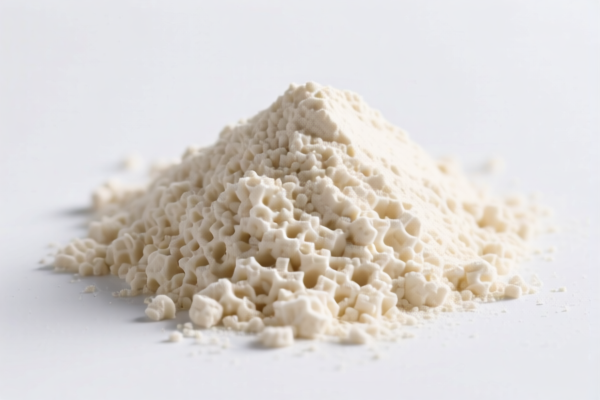

AI Analysis
🧬 Microcrystalline Cellulose (MCC) | Chemical Excipients & Polymers
🌐 HS Code Reference & Customs Clearance Guide | 2026 Tax Regulations Deep Dive | Professional Clearance Strategy
📌 I. Product Definition & Classification: What Exactly is "Microcrystalline Cellulose"?
Microcrystalline Cellulose (MCC) is a refined, partially depolymerized cellulose derived from alpha-cellulose, primarily sourced from wood pulp. In international trade, it serves as a critical bulk material, widely used as a binder and filler in pharmaceutical tablet formulations, as well as in food and cosmetic industries.
Because MCC is a derivative of a natural polymer (cellulose), its classification depends heavily on its physical form (primary shape vs. manufactured article) and its chemical nature (sugar derivative vs. plastic material).
⚠️ Key Distinction Point:
- If it is viewed as a polysaccharide derivative in its primary polymeric form, it falls under Chapter 39 (Plastics and Articles Thereof), specifically subheading 3913 (Products of celluloses and their chemical derivatives).
- If it is treated as a plastic material in a non-specific form for general manufacturing, it may fall under 3926.
- Crucial Note: The classification significantly impacts the Total Tax Rate due to differing base duties and Section 301/122 surcharges.
📦 II. HS Code Classification Details (2026 Latest Customs Data)
Based on the provided data, there are three potential HS Codes for Microcrystalline Cellulose, each reflecting a different regulatory interpretation of the material's nature.
| HS Code | Product Description | Applicable Scenario | Key Justification |
|---|---|---|---|
| 3913.90.20.90 | Other polysaccharides and their derivatives (Primary Form) | MCC classified as a sugar derivative in primary polymeric form. | "MCC belongs to polysaccharide derivatives, in the form of primary form polymers, consistent with the classification of other polysaccharides and their derivatives." |
| 3913.90.50.00 | Other products of celluloses and their chemical derivatives (Primary Form) | MCC classified as a natural polymer (cellulose derivative) in raw/material form. | "MCC belongs to natural polymers (cellulose derivatives), in the form of raw materials, consistent with other natural polymers." |
| 3926.90.99.89 | Other articles of plastics (Unclassified Items) | MCC classified as a plastic material for general use (e.g., capsule ingredients) as an unclassified item. | "MCC belongs to cellulose, fits the category of plastics and other materials; as capsule ingredient, it is an unclassified article." |
🔍 Critical Reminder:
- 3913 Series (20.90 & 50.00): Higher tax burden due to higher base duties (5.8% vs 5.3%) and higher Section 301 surcharge (25% vs 7.5%).
- 3926 Series (99.89): Lower tax burden, treated as a general plastic article.
- Selection Strategy: The choice depends on how the customs authority interprets the primary function and form of the MCC at the time of import. Primary polymeric form usually favors 3913, while manufactured/utilitarian form might lean towards 3926.
💰 III. 2026 Latest Tariff Rate Breakdown (Including Surcharges & Policy Add-ons)
✅ Applicable Country: United States (US)
✅ Origin: China (CN)
✅ Effective Date: Includes subsequent imports subject to current trade policies.
🎯 1. 3913.90.20.90 – Polysaccharide Derivatives (Primary Form)
| Item | Content |
|---|---|
| Base Duty Rate | 5.8% (ad valorem) |
| Section 301 Surcharge | +25.0% (China-origin goods under USITC Footnote 9903.88) |
| Section 122 Surcharge | +10.0% (Specific trade policy addition) |
| Total Tax Rate | 40.8% |
| Tax Calculation | CIF Value × 40.8% |
| De Minimis Exemption | ❌ Not Applicable (High duty rate exceeds threshold for de minimis relief) |
| Legal Basis Path | HTSUS:3913.90.20.90 → USITC:Section 301 (25%) → Section 122 (10%) |
📌 Explanation:
- This classification treats MCC strictly as a chemical derivative of polysaccharides.
- The 25% Section 301 tariff is the primary driver of cost, added to the 5.8% base.
- The 10% Section 122 tariff further increases the burden, making this the second-highest cost option.
🎯 2. 3913.90.50.00 – Cellulose Derivatives (Raw Material Form)
| Item | Content |
|---|---|
| Base Duty Rate | 6.5% (ad valorem) |
| Section 301 Surcharge | +25.0% (China-origin goods under USITC Footnote 9903.88) |
| Section 122 Surcharge | +10.0% (Specific trade policy addition) |
| Total Tax Rate | 41.5% |
| Tax Calculation | CIF Value × 41.5% |
| De Minimis Exemption | ❌ Not Applicable |
| Legal Basis Path | HTSUS:3913.90.50.00 → USITC:Section 301 (25%) → Section 122 (10%) |
📌 Explanation:
- This classification emphasizes MCC as a natural polymer in its raw state.
- Interestingly, the base duty (6.5%) is higher than 3913.90.20.90 (5.8%), leading to the highest total tax rate (41.5%).
- Strategic Implication: If the goods are clearly raw, unprocessed cellulose derivatives, this classification applies, but it is the most expensive option.
🎯 3. 3926.90.99.89 – Other Plastic Articles (Unclassified)
| Item | Content |
|---|---|
| Base Duty Rate | 5.3% (ad valorem) |
| Section 301 Surcharge | +7.5% (Reduced Section 301 applicability for certain plastics/articles) |
| Section 122 Surcharge | +10.0% (Specific trade policy addition) |
| Total Tax Rate | 22.8% |
| Tax Calculation | CIF Value × 22.8% |
| De Minimis Exemption | ❌ Not Applicable |
| Legal Basis Path | HTSUS:3926.90.99.89 → USITC:Section 301 (7.5%) → Section 122 (10%) |
📌 Explanation:
- This classification views MCC as a general plastic article or unclassified material (e.g., for capsule use).
- The Section 301 surcharge is significantly lower (7.5% vs 25%), resulting in the lowest total tax rate (22.8%).
- Strategic Advantage: This is the most cost-effective classification. However, it requires robust justification that MCC is being used as a finished plastic article or non-specific material, rather than a raw chemical derivative.
🛠️ IV. Customs Clearance Practical Advice (Avoiding Pitfalls)
✅ 1. Documentation Checklist (Essential for Clearance)
| Document | Required | Notes |
|---|---|---|
| ✅ Product Specification Sheet | ✔️ | Must detail particle size, moisture content, and viscosity. |
| ✅ Certificate of Analysis (COA) | ✔️ | Proves it is "Microcrystalline Cellulose" and not a different polymer. |
| ✅ Material Safety Data Sheet (MSDS) | ✔️ | For safety handling; confirms non-hazardous nature. |
| ✅ Commercial Invoice | ✔️ | Clearly state: "Microcrystalline Cellulose, for Pharmaceutical/Food Use." |
| ✅ Packing List | ✔️ | Include net/gross weight, number of bags, and material composition. |
| ✅ Proof of Use | ✔️ | If claiming 3926.90.99.89, provide documentation showing end-use as a capsule ingredient or plastic article to justify lower duty. |
✅ 2. Declaration Strategy (Key Tips)
🔥 "Form Defines Code, Use Defines Duty!"
| Scenario | Recommended HS Code | Reasoning |
|---|---|---|
| Raw Powder for Pharma | 3913.90.50.00 |
If strictly "raw polymer," this is the most accurate, but highest tax. |
| Primary Polymer Form | 3913.90.20.90 |
If described as "polysaccharide derivative," this is a strong alternative with slightly lower tax. |
| Capsule Ingredient / Plastic Use | 3926.90.99.89 |
Lowest Tax (22.8%). Justify by emphasizing it is a "plastic material" or "unclassified article" used in manufacturing, not a raw chemical intermediate. |
⚠️ Warning:
- Do not arbitrarily choose3926.90.99.89without proper justification. If customs verifies the product is a raw chemical derivative, they may reclassify it to3913, leading to back taxes and penalties.
- Consistency is Key: Ensure the HS Code on the invoice, packing list, and customs entry matches the product description and supporting documents.
✅ 3. Special Cases & Mitigation
| Situation | Advice |
|---|---|
| High-Value Pharma Grade | If used in high-end pharmaceuticals, consider Advance Ruling from US Customs to lock in 3926.90.99.89 or 3913.90.20.90 for 5 years. |
| Mixed Shipments | If MCC is mixed with other plastics, declare separately. Do not lump MCC into general plastic bags to avoid misdeclaration. |
| Section 122 Impact | Note that the 10% Section 122 tariff applies to all three codes. Focus on minimizing the Section 301 portion by choosing 3926 if defensible. |
🌍 V. Global Market Comparison (2026)
| Country/Region | Recommended HS Code | Total Tax (China Origin) | Notes |
|---|---|---|---|
| 🇺🇸 USA | 3926.90.99.89 |
22.8% | Best Option if defensible. 3913 codes hit ~41%. |
| 🇨🇳 China | 3913.90.90.00 |
~5-6% | Standard import duty for cellulose derivatives. |
| 🇪🇺 EU | 3913.90.00.00 |
0% (GSP if applicable) | No Section 301 surcharge. Check for EORI and REACH compliance. |
| 🇬🇧 UK | 3913.90.00.00 |
0% | Post-Brexit trade terms may offer duty-free access for certain goods. |
📌 Conclusion:
- The USA is the most challenging market due to Section 301 and 122 tariffs.
- Canada and Mexico (under USMCA) may offer 0% duty if MCC is wholly obtained or undergoes sufficient transformation in North America. Verify Rules of Origin!
📌 VI. Common Errors & Pitfalls (Lessons Learned)
❌ Error 1: Declaring MCC under 3913.90.50.00 when it can be justified as 3926.90.99.89.
👉 Result: Paying 41.5% instead of 22.8% → 18.7% extra cost per unit!
❌ Error 2: Declaring MCC under 3926.90.99.89 without justification.
👉 Result: Customs reclassification to 3913.90.20.90 → Back taxes, interest, and potential fines.
❌ Error 3: Ignoring Section 122 tariffs.
👉 Result: Unexpected 10% surcharge applies to all codes, reducing savings from lower Section 301 rates.
❌ Error 4: Incorrectly describing the product as "Cellulose" instead of "Microcrystalline Cellulose."
👉 Result: Misleading description may lead to audits or rejection of entry.
✅ Correct Practice:
"Microcrystalline Cellulose, Pharmaceutical Grade, 50kg bags, for use as tablet binder. HS Code: 3926.90.99.89 (Justified as unclassified plastic article)."
(Note: Ensure legal defensibility for 3926.)
🎯 VII. Conclusion: Professional Declaration, Cost Optimization!
🎯 Remember the Golden Rule:
🔹 "Primary Form = High Duty (3913), Finished Article = Lower Duty (3926)."
🔹 "Section 301 is the Killer: 25% vs 7.5% makes a huge difference!"
🔹 "Section 122 is the Silent Taxer: 10% applies to all!"
📌 Pro Tip:
If your MCC is sourced from non-China origins (e.g., Canada, Brazil, or EU), you may avoid Section 301 and 122 tariffs entirely, resulting in 0-5% duty.
Recommendation:
📞 Contact a Customs Broker to apply for a Pre-Ruling (Advance Ruling) from US Customs and Border Protection (CBP).
🚀 Optimize Your Supply Chain: Source from USMCA countries if possible to eliminate surcharges entirely.
📣 Immediate Action:
📄 Prepare a Strong Justification Dossier for
3926.90.99.89if cost is the priority.
📊 Calculate the Tax Differential:
-3913.90.50.00: 41.5%
-3913.90.20.90: 40.8%
-3926.90.99.89: 22.8%
Savings: Up to 18.7% on CIF value!
✨ Professional Clearance, Started with Accurate Classification!
💼 Every Percent of Tax Saved is Directly Added to Your Bottom Line!
Customer Reviews
About HS Code Classification
The Harmonized System (HS) is an internationally standardized nomenclature developed by the World Customs Organization (WCO) to classify traded products. Over 200 countries use the HS system as the basis for customs tariffs, trade statistics, and import/export regulations.
Each HS code follows a hierarchical structure:
- Chapter (2 digits) — Broad category of goods (e.g., Chapter 84: Machinery and Mechanical Appliances)
- Heading (4 digits) — More specific grouping within the chapter
- Subheading (6 digits) — Internationally standardized breakdown, used by all WCO member countries
- National subdivisions (8-10 digits) — Country-specific extensions for further classification, such as US HTSUS 10-digit codes
Correct HS code classification is essential for smooth customs clearance, accurate duty payment, and compliance with trade regulations. Misclassification can lead to customs delays, overpayment of duties, or penalties.
When importing from CN to US, the applicable tariff rates may include:
- Most-Favored-Nation (MFN) rate — The standard duty rate applied to WTO members
- General rate — Applied to countries without trade agreements
- Trade remedy duties — Additional tariffs such as Section 301 (anti-dumping), Section 232 (national security), or countervailing duties
The information provided on this page is for reference purposes only. For official classification, please consult with your local customs authority or a licensed customs broker.