Microfiber Cloth
CN → US| HS Code | Tariff Rate | Origin | Destination | Doc |
|---|---|---|---|---|
| 5603110070 | 35.0% | CN | US | Official Doc |
| 5512110090 | 47.0% | CN | US | Official Doc |
| 5603110010 | 35.0% | CN | US | Official Doc |
| 5407100010 | 48.6% | CN | US | Official Doc |
| 6307102027 | 22.8% | CN | US | Official Doc |
Product Images
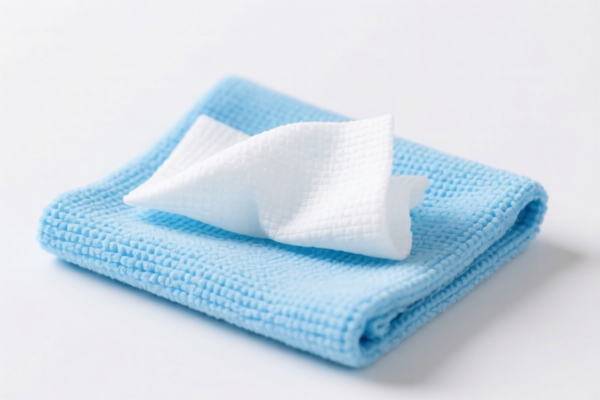
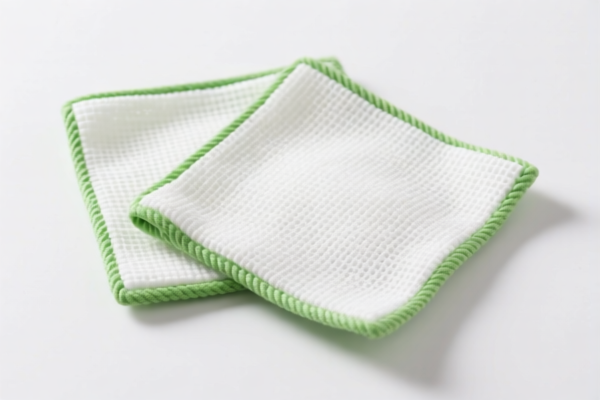

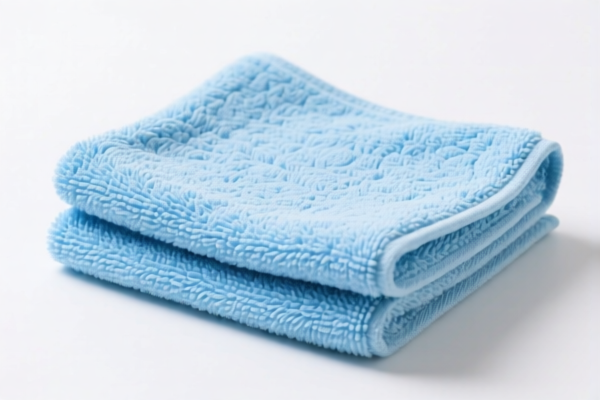
AI Analysis
✨ Microfiber Cloth: Global Trade HS Code Guide & 2026 Tax Strategy
🌐 HS Code Classification & Customs Clearance Guide | 2026 Tax Rate Breakdown | Strategic Entry Plan
📌 一、Product Definition & Classification: What Exactly is "Microfiber"?
Microfiber cloths are high-performance cleaning tools made from ultra-fine synthetic filaments, widely used in automotive, industrial, and household cleaning. In international trade, they are classified based on fiber type (long vs. short), fabric structure (woven vs. non-woven), and end-use (general cloth vs. specialized mop/wipe).
Key Classification Criteria:
- Non-Woven (Needled/Punched): Loose fiber structure, often used for disposable wipes or soft cloths → HS 5603 series.
- Woven (Machine-loomed): Tight interlaced structure, durable, often for reusable cleaning pads → HS 5512 / 5407 series.
- Specific End-Use (Mop/Wipe): Sold specifically as a cleaning tool → HS 6307 series.
- Fiber Composition: Synthetic long filaments vs. polyester/nylon short fibers drastically change the HS code and tax rate.
⚠️ Critical Distinction:
- Non-woven synthetic filaments → 5603.11.00 (Low Base Tax, High Add-on)
- Woven Polyester/Nylon Short Fibers → 5512.11.00 / 5407.10.00 (Higher Base Tax)
- Sold specifically as a "Wipe/Mop" → 6307.10.20.27 (Lowest Base Tax, but specific conditions apply)
📦 二、HS Code Classification Breakdown (2026 Latest Tariff Reference)
| HS Code | Product Description | Application Scenario | Material/Structure |
|---|---|---|---|
| 5603.11.00.70 | Microfiber Cloth, Non-woven, Artificial Long Filaments/Synthetic | Disposable cleaning pads, automotive wipes, industrial wipes | Non-woven + Long Filament |
| 5512.11.00.90 | Microfiber Cloth, Woven, Synthetic Short Fibers (Polyester/Nylon) | Reusable polishing pads, heavy-duty industrial cloths | Woven + Short Fiber |
| 5603.11.00.10 | Microfiber Cloth, Non-woven/Textile, Artificial Long Filaments | General purpose non-woven wipes, mixed textile forms | Non-woven + Long Filament |
| 5407.10.00.10 | Microfiber Cloth, Woven, Polyester/Nylon Long Filaments | High-durability woven fabrics, technical textiles | Woven + Long Filament |
| 6307.10.20.27 | Microfiber Wipe (as "Cloth/Mop"), Cleaning Purpose | Sold as a specific cleaning tool, cotton or fiber-based | Specific End-Use (Wipe) |
🔍 Important Note:
- Non-woven items generally have a 0% base tariff but attract heavy Section 301 (25%) and 122-clause (10%) add-ons.
- Woven items often start with a 12-13.6% base tariff, compounding the total tax burden.
- 6307.10.20.27 ("Mop/Wipe") offers the lowest total tax but requires proof of specific cleaning function and packaging.
💰 三、2026 Latest Tariff Rate Breakdown (USA, China Origin)
✅ Applicable Country: USA
✅ Origin: China (CN)
✅ Effective Date: From November 10, 2025 (and subsequent imports)
🎯 1. 5603.11.00.70 & 5603.11.00.10 — Non-Woven Microfiber (Long Filament)
| Item | Details |
|---|---|
| Base Tariff | 0.0% (Duty-free on base) |
| Section 301 Add-on | +25.0% (From 301 List 4A/4B) |
| Clause 122 Add-on | +10.0% (Specific Section 122 Measure) |
| Total Tariff | 35.0% |
| Tax Calculation | CIF Value × 35% |
| De Minimis Exemption? | ❌ NO (Deny for Section 301/122 items) |
| Legal Path | 301:5603.11.00.70 → 122:10% |
📌 Explanation:
- Even though the base duty is 0%, the 35% total comes entirely from Section 301 (25%) and Section 122 (10%) add-ons.
- These are synthetic non-woven items, highly targeted by US trade policy.
- Cost Impact: Every $100 shipment = $35 tax.
🎯 2. 5512.11.00.90 — Woven Microfiber (Short Fibers)
| Item | Details |
|---|---|
| Base Tariff | 12.0% |
| Section 301 Add-on | +25.0% |
| Clause 122 Add-on | +10.0% |
| Total Tariff | 47.0% |
| Tax Calculation | CIF Value × 47% |
| De Minimis Exemption? | ❌ NO |
| Legal Path | 301:5512.11.00.90 → 122:10% |
📌 Explanation:
- Woven structures incur a 12% base duty regardless of add-ons.
- The 47% total makes this one of the highest cost categories.
- Warning: Do not ship "woven" microfiber pads from China; the tariff is prohibitive.
🎯 3. 5407.10.00.10 — Woven Microfiber (Long Filaments)
| Item | Details |
|---|---|
| Base Tariff | 13.6% |
| Section 301 Add-on | +25.0% |
| Clause 122 Add-on | +10.0% |
| Total Tariff | 48.6% |
| Tax Calculation | CIF Value × 48.6% |
| De Minimis Exemption? | ❌ NO |
| Legal Path | 301:5407.10.00.10 → 122:10% |
📌 Explanation:
- Similar to5512, but slightly higher base duty (13.6%) due to long filament classification.
- Total 48.6% is the highest in the dataset.
- Strategy: Avoid this code unless absolutely necessary; look for alternative classifications.
🎯 4. 6307.10.20.27 — "Microfiber Wipe/Mop" (Specific End-Use)
| Item | Details |
|---|---|
| Base Tariff | 5.3% |
| Section 301 Add-on | +7.5% (Reduced Section 301 rate) |
| Clause 122 Add-on | +10.0% |
| Total Tariff | 22.8% |
| Tax Calculation | CIF Value × 22.8% |
| De Minimis Exemption? | ❌ NO (But lowest total rate) |
| Legal Path | 301:6307.10.20.27 → 122:10% |
📌 Explanation:
- This is the most tax-efficient option (22.8% vs 35-48.6%).
- Condition: Must be classified strictly as a "Wipe" or "Mop" (specific cleaning tool), not just a "cloth".
- Strategy: Market packaging and description must emphasize "Cleaning Wipe", not generic "Fabric Cloth".
🛠️ 四、Customs Clearance Practical Advice (Actionable Strategy)
✅ 1. Documentation Checklist (Critical for Clearance)
| Document | Requirement | Why It Matters |
|---|---|---|
| ✅ Technical Spec Sheet | ✔️ | Must define: Fiber type (Long/Short), Structure (Woven/Non-woven), Weight, Width |
| ✅ Product Photos | ✔️ | Show packaging label "Cleaning Wipe", texture, and lack of weaving (if non-woven) |
| ✅ Manufacturing Process | ✔️ | Proof of "Needling" or "Punching" for Non-woven (5603) vs. "Weaving" for Woven |
| ✅ Commercial Invoice | ✔️ | Do NOT write "Fabric" or "Textile" alone. Use "Microfiber Cleaning Wipe" for 6307 |
| ✅ Packing List | ✔️ | Confirm quantity per unit; avoid "loose cloth" descriptions if claiming 6307 |
| ✅ Country of Origin Cert | ✔️ | Must clearly state China (CN) for tax calculation |
✅ 2. Declaration Strategy (Crucial "Tax Hacking")
🔥 Golden Rule: "Non-woven wins on base tax, Wiped wins on total tax!"
| Scenario | Correct Declaration | Wrong Declaration | Result |
|---|---|---|---|
| Generic Microfiber Cloth | 5603.11.00.70 (Non-woven) |
5512.11.00.90 (Woven) |
35% vs 47% (Save 12%) |
| Selling as "Cleaning Wipe" | 6307.10.20.27 |
5603.11.00.70 |
22.8% vs 35% (Save 12.2%) |
| Selling as "Polishing Pad" | 5512.11.00.90 |
6307.10.20.27 |
47% vs 22.8% (Pay more!) |
| Woven Long Filament | 5407.10.00.10 |
(None available) | 48.6% (Highest cost, avoid if possible) |
⚠️ Warning:
- If you declare "Wipe" (6307) but the product is a generic roll of fabric, Customs will reclassify to 5603 or 5512, leading to back taxes + fines.
- Packaging must explicitly say "Microfiber Cleaning Wipe", not "Microfiber Fabric".
✅ 3. Special Cases & Risk Mitigation
| Scenario | Handling Advice |
|---|---|
| OEM Custom Cloths | Provide OEM order + design sheet to prove "Wipe" function, not fabric trading |
| Mixed Material (Cotton + Microfiber) | If >50% synthetic, still likely 6307; if cotton dominant, risk reclassification |
| Pre-packaged Cleaning Kits | Declare as "Set" but itemize "Microfiber Wipe" separately for lower tax |
| High-Volume Industrial Supply | Consider Free Trade Zones (FTZ) to defer duty payment, but note 122 clause still applies on entry |
🌍 五、Global Market Comparison (2026 Tax Snapshot)
| Region | Recommended HS Code | Estimated Tariff (China) | Key Requirement |
|---|---|---|---|
| 🇺🇸 USA | 6307.10.20.27 |
22.8% (Lowest) | Must be "Wipe/Mop", not fabric |
| 🇨🇳 China | 5603.11.00 |
0-10% | No Section 301 |
| 🇪🇺 EU | 5603.11 |
0% | No Section 301 |
| 🇨🇦 Canada | 5603.11 |
0% | CPTPP benefits |
| 🇦🇺 Australia | 6307.10 |
5-10% | Check free trade |
📌 Conclusion:
- USA is the hardest market due to Section 301 + 122 clauses.
- The only way to reduce tax in the US is to classify as "Cleaning Wipe" (6307) with strict packaging.
- Avoid Woven codes (5512,5407) if possible; the 47-48% rate is devastating for margins.
📌 Six: Common Mistakes & Pitfalls (Lessons Learned)
❌ Mistake 1: Calling a "Microfiber Wipe" a "Microfiber Cloth" in the invoice.
👉 Consequence: Customs reclassifies to 5603 (35%) → Loss of 12.2% margin.
❌ Mistake 2: Shipping Woven pads but declaring Non-woven.
👉 Consequence: Physical inspection reveals weaving → Fines + Seizure.
❌ Mistake 3: Ignoring Clause 122 (10%).
👉 Consequence: Under-declared tax → Post-entry audit + interest.
❌ Mistake 4: Assuming "Fabric" = Lower Tax.
👉 Consequence: Woven fabric has 12-13% base + 25% add-on = 47%+.
✅ Correct Approach:
"Sell as Wipe, Pack as Wipe, Declare as Wipe."
Use phrase: "Microfiber Cleaning Wipe, Disposable, 100% Synthetic, Non-Woven"
🎯 Seven: Conclusion: Strategic Classification for Profit
🎯 Remember the Formula:
🔹 "Non-woven = 35% (Base 0%)"
🔹 "Woven = 47-48% (Base 12-13%)"
🔹 "Wipe (6307) = 22.8% (Best Option)"
🔹 "Woven = Death of Margin"
📌 Pro Tip:
If your product is disposable, ensure packaging says "Cleaning Wipe" and "Single Use".
If your product is reusable, classify as "Non-woven Cloth" (5603), not Woven.
Avoid Woven unless you have a niche industrial market willing to pay 48%.
📣 Immediate Action Plan:
📞 Contact Customs Broker: Provide Product Photos and Packaging Design.
📝 Update Invoice: Change "Cloth" to "Cleaning Wipe" (if eligible).
🚀 Calculate Margin: Run scenarios for 22.8% vs 35% vs 47% before shipping.
✨ Smart Classification = Smart Profit!
💼 Don't let 47% tariffs eat your margin. Optimize your HS Code today!
Customer Reviews
About HS Code Classification
The Harmonized System (HS) is an internationally standardized nomenclature developed by the World Customs Organization (WCO) to classify traded products. Over 200 countries use the HS system as the basis for customs tariffs, trade statistics, and import/export regulations.
Each HS code follows a hierarchical structure:
- Chapter (2 digits) — Broad category of goods (e.g., Chapter 84: Machinery and Mechanical Appliances)
- Heading (4 digits) — More specific grouping within the chapter
- Subheading (6 digits) — Internationally standardized breakdown, used by all WCO member countries
- National subdivisions (8-10 digits) — Country-specific extensions for further classification, such as US HTSUS 10-digit codes
Correct HS code classification is essential for smooth customs clearance, accurate duty payment, and compliance with trade regulations. Misclassification can lead to customs delays, overpayment of duties, or penalties.
When importing from CN to US, the applicable tariff rates may include:
- Most-Favored-Nation (MFN) rate — The standard duty rate applied to WTO members
- General rate — Applied to countries without trade agreements
- Trade remedy duties — Additional tariffs such as Section 301 (anti-dumping), Section 232 (national security), or countervailing duties
The information provided on this page is for reference purposes only. For official classification, please consult with your local customs authority or a licensed customs broker.