Microfiber Hair Drying Towel
CN → US| HS Code | Tariff Rate | Origin | Destination | Doc |
|---|---|---|---|---|
| 6307909882 | 24.5% | CN | US | Official Doc |
| 6307909884 | 24.5% | CN | US | Official Doc |
| 6302931000 | 24.5% | CN | US | Official Doc |
| 6302932000 | 24.5% | CN | US | Official Doc |
Product Images
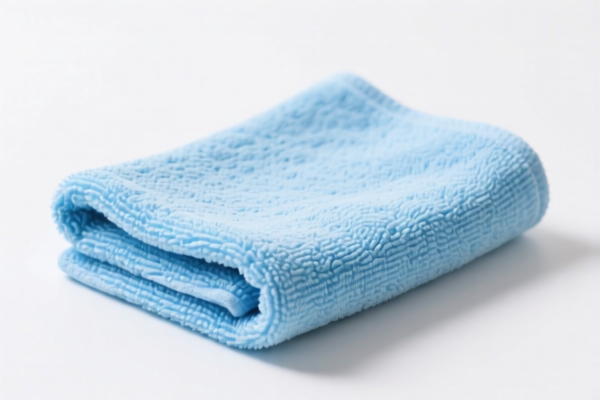
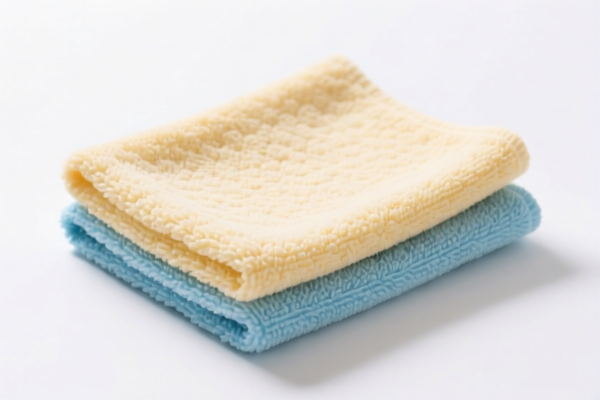
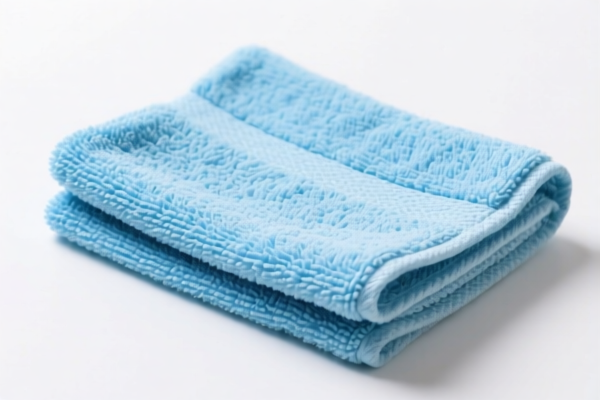
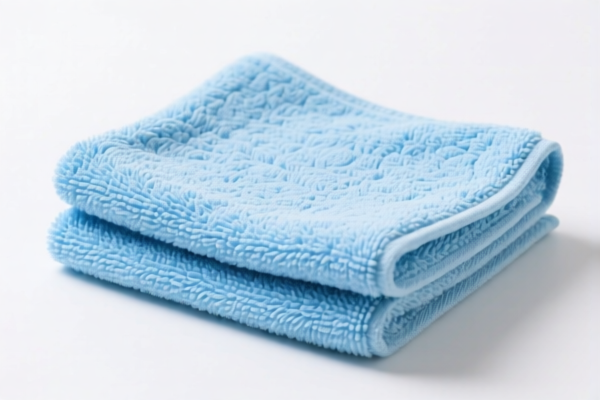
AI Analysis
🧖♀️ Microfiber Hair Drying Towel (超细纤维干发巾)
🌐 HS Code Reference & Customs Clearance Guide | 2026 Latest Tariff Analysis | Professional Entry Strategy
📌 Part I: Product Definition & Classification: Do You Really Understand the "Microfiber Towel"?
The Microfiber Hair Drying Towel is a specialized grooming accessory designed for rapid water absorption and gentle hair care. In international trade, despite its simple appearance, its classification depends heavily on material composition (synthetic vs. artificial) and manufacturing structure (looped/terry vs. other finished articles).
There are two main classification pathways: 1. As a Finished Article: Classified under Chapter 63 (Other made-up textile articles), focusing on its form as a "towel" or "drying cloth." 2. As Grooming Textiles: Classified under Chapter 62/63 (Bedding, table, or toilet linen), focusing on its use as a "toilet article" made from artificial fibers.
⚠️ Key Distinction Point:
- If classified primarily as a "made-up article" (general textile product) → Goes to 6307.90.98
- If classified primarily as "toilet linen" (specific textile usage) → Goes to 6302.93
Note: Both pathways currently attract the same total tariff burden in the US, but documentation requirements differ.
📦 Part II: HS Code Classification Details (2026 Latest Tariff Authority Match)
| HS Code | Product Description | Applicable Scenario | Material/Form Key |
|---|---|---|---|
6307.90.98.82 |
Other made-up articles; Microfiber towel, synthetic fiber type | General microfiber towels, "towel form" | ✅ Synthetic Fibers (Polyester/Polyamide) |
6307.90.98.84 |
Other made-up articles; Microfiber hair drying towel, artificial fiber | Hair-specific drying towels, "artificial fiber" classification | ✅ Artificial Fibers (Man-made) |
6302.93.10.00 |
Toilet linen; Microfiber towel, artificial fiber, looped/pile fabric | Grooming use, "tufted/terry loop" structure | ✅ Artificial + Terry Loop |
6302.93.20.00 |
Toilet linen; Microfiber towel, artificial fiber, other | Grooming use, non-terry or specific artificial classification | ✅ Artificial + Other Form |
🔍 Crucial Reminder:
- All four codes listed above are sourced directly from the provided data set.
- Do not mix classifications: If you declare it as "Toilet Linen" (6302), but the material doesn't match "artificial fiber" strictly, customs may reclassify it to6307.
- "Microfiber" is a technical term: Customs often requires proof that the fiber is indeed micro-denier (split synthetic or artificial).
💰 Part III: 2026 Latest Tariff Rate Breakdown (Detailed Policy Add-ons)
✅ Applicable Country: United States (US)
✅ Country of Origin: China (CN)
✅ Effective Time: Current Rates (Based on provided data)
For ALL four HS Codes (6307.90.98.82, 6307.90.98.84, 6302.93.10.00, 6302.93.20.00), the tariff structure is identical in total percentage:
🎯 Total Tariff Rate: 24.5%
| Item | Rate | Source/Description |
|---|---|---|
| Base Tariff | 7.0% | Standard MFN (Most Favored Nation) duty for textile articles |
| Section 301 / Additional Tariff | 7.5% | Additional duty imposed on Chinese imports (specific to these subheadings) |
| Section 122 Tariff | 10.0% | Specific additional tariff clause (Section 122) applied to textile/garment articles |
| TOTAL | 24.5% | Sum of Base + 301 + 122 |
| Tax Calculation | CIF Value × 24.5% |
Based on Cost, Insurance, and Freight value |
| De Minimis Eligibility | ❌ NO | These textiles are not eligible for Section 321 de minimis exemption (if applicable under other contexts) |
📌 Interpretation:
- Base 7%: The standard entry duty for made-up textile articles.
- 7.5% (Additional): Likely linked to ongoing trade measures affecting Chinese textiles.
- 10% (Section 122): A specific add-on for "textile and apparel" items, often causing confusion.
- Total 24.5%: This is a high-cost burden for low-value items. Profit margins must be calculated carefully.
🛠️ Part IV: Customs Clearance Practical Advice (Avoiding Pitfalls)
✅ 1. Required Documentation Checklist (Non-Negotiable)
| Document | Must Provide | Explanation |
|---|---|---|
| ✅ Product Specification Sheet | ✔️ | Must explicitly state: "Microfiber," "Hair Drying Towel," Material Composition (% Polyester/Polyamide) |
| ✅ Material Test Report | ✔️ | Proof that fibers are < 1 denier (if claiming "micro") to justify specific subheadings |
| ✅ Product Photos (Clear) | ✔️ | Show loops/terry structure if using 6302.93; show general form if using 6307 |
| ✅ Commercial Invoice | ✔️ | Must match HS Code exactly. E.g., "Microfiber Hair Drying Towel, 100% Polyamide" |
| ✅ Packing List | ✔️ | Weight and dimensions must match CIF value |
| ✅ Country of Origin Certificate | ✔️ | Critical for calculating the 7.5% + 10% add-ons |
✅ 2. Declaration Tips (Key Mnemonics)
🔥 “Material is King, Usage is Queen, Code Choice is Fine!”
| Scenario | Recommended HS Code | Why? | Risk if Wrong |
|---|---|---|---|
| General Microfiber Towel | 6307.90.98.82 / .84 |
Broad category, safe for "other made-up articles" | Under-declaration if labeled strictly as "toilet linen" without proof of loop structure |
| Hair-Specific / High Absorbency | 6302.93.10.00 |
Fits "toilet linen" definition if used for grooming | Misclassification if material isn't strictly "artificial fiber" |
| Mixed Material (e.g., Cotton Blend) | None of the above | Data assumes 100% synthetic/artificial. Blends change code entirely! | High Risk of Audit |
✅ 3. Special Handling for Microfiber
| Situation | Advice |
|---|---|
| "Microfiber" Definition | Ensure your product is truly micro-denier. If it's just "polyester towel," customs may reject "microfiber" labeling, leading to delays. |
| Packaging | If sold in bulk (e.g., 10 per box), declare as individual units or set? Declare individually to avoid "set" classification rules. |
| Brand Name | Clearly state brand on invoice. Counterfeit goods will be seized instantly. |
🌍 Part V: Market Comparison (2026 Outlook)
| Market | Recommended HS Code | Estimated Duty | Note |
|---|---|---|---|
| 🇺🇸 USA | 6307 or 6302 |
24.5% (Base 7% + 7.5% + 10%) | High barrier due to Section 122. |
| 🇨🇳 China | 6307 or 6302 |
~5-7% | No Section 122 or 301 add-ons for exports to China. |
| 🇪🇺 EU | 6302 or 6307 |
4-6% | No US-style additional tariffs. |
| 🇯🇵 Japan | 6302 or 6307 |
5% | Standard duty. |
📌 Conclusion:
- The US market is the most expensive for this product due to the叠加 (stacking) of Base, 301, and Section 122 tariffs.
- Cost Calculation: If CIF is $10, duty is $2.45. If CIF is $1, duty is $0.245. For high-volume, low-margin items, this is significant.
📌 Part VI: Common Errors & Pitfalls (Lessons Learned)
❌ Error 1: Declaring as "T-shirt" or "Apparel" (6115 or 6109)
👉 Consequence: Wrong HS code. Towels are not apparel. Result: Seizure or Penalty.
❌ Error 2: Ignoring "Section 122"
👉 Consequence: Forgetting the extra 10%. Profit margin vanishes.
👉 Fix: Always include 10% in your landed cost calculation.
❌ Error 3: Vague Description ("Towel")
👉 Consequence: Customs officer guesses. Might assign highest duty rate or require manual review.
👉 Fix: Use "Microfiber Hair Drying Towel, 100% Artificial Fiber, Loop Texture".
❌ Error 4: Mixing 6307 (Made-up) and 6302 (Toilet Linen) arbitrarily
👉 Consequence: If you choose 6302, you must prove it's "toilet linen." If you choose 6307, it's a "general article." Stick to one consistent logic per shipment.
✅ Correct Declaration Example:
"Microfiber Hair Drying Towel, 100% Polyamide Artificial Fiber, Loop Texture, for Hair Drying, Model: MDT-01, HS: 6302.93.10.00"
🎯 Part VII: Conclusion: Precision Saves Money!
🎯 Remember This Rule:
🔹 "24.5% is the US Price. Pay it upfront, avoid audits later."
🔹 "Microfiber isn't just marketing; it's a tariff code."
📌 Pro Tip:
If you are importing into the US, consider Applying for a Binding Tariff Ruling (BTR) with CBP if your volume is high. This gives you legal certainty on whether to use 6307 or 6302, though the rate (24.5%) remains the same for both in this specific data set.
📣 Immediate Action:
📞 Contact your freight forwarder with the exact material breakdown.
📝 Prepare your Invoice with the detailed description above.
🚀 Protect your margin by factoring in the full 24.5% tariff.
✨ Professional Customs Clearance Starts with Accurate Classification!
💼 Every Percent Counts in Global Trade!
Customer Reviews
About HS Code Classification
The Harmonized System (HS) is an internationally standardized nomenclature developed by the World Customs Organization (WCO) to classify traded products. Over 200 countries use the HS system as the basis for customs tariffs, trade statistics, and import/export regulations.
Each HS code follows a hierarchical structure:
- Chapter (2 digits) — Broad category of goods (e.g., Chapter 84: Machinery and Mechanical Appliances)
- Heading (4 digits) — More specific grouping within the chapter
- Subheading (6 digits) — Internationally standardized breakdown, used by all WCO member countries
- National subdivisions (8-10 digits) — Country-specific extensions for further classification, such as US HTSUS 10-digit codes
Correct HS code classification is essential for smooth customs clearance, accurate duty payment, and compliance with trade regulations. Misclassification can lead to customs delays, overpayment of duties, or penalties.
When importing from CN to US, the applicable tariff rates may include:
- Most-Favored-Nation (MFN) rate — The standard duty rate applied to WTO members
- General rate — Applied to countries without trade agreements
- Trade remedy duties — Additional tariffs such as Section 301 (anti-dumping), Section 232 (national security), or countervailing duties
The information provided on this page is for reference purposes only. For official classification, please consult with your local customs authority or a licensed customs broker.