Microfilm Reproduction Film
CN → US| HS Code | Tariff Rate | Origin | Destination | Doc |
|---|---|---|---|---|
| 3701996060 | 35.0% | CN | US | Official Doc |
| 3926908300 | 40.3% | CN | US | Official Doc |
| 3926909989 | 22.8% | CN | US | Official Doc |
Product Images
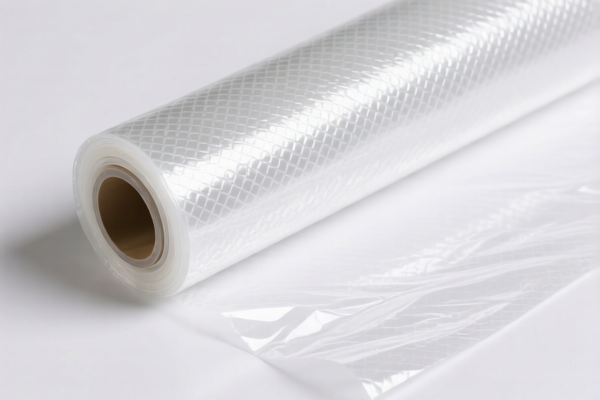
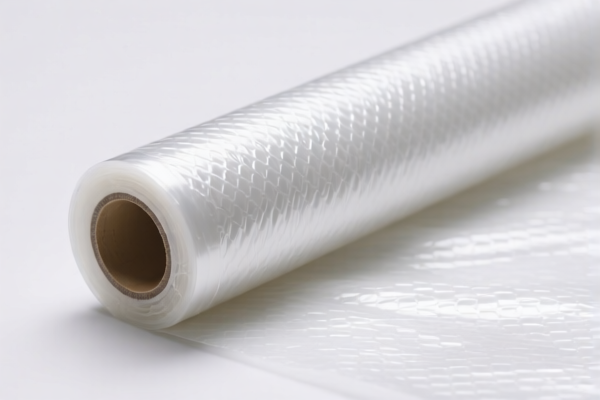
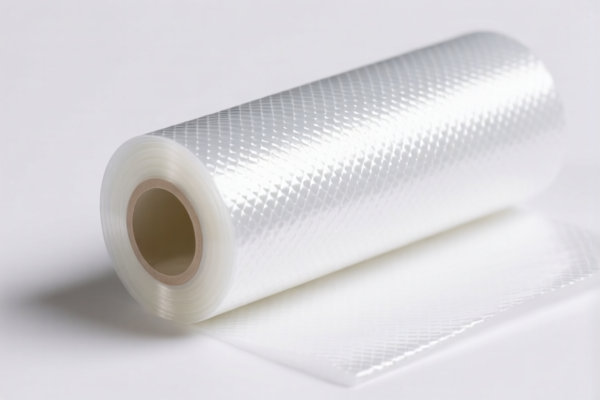

AI Analysis
🎞️ Microfilm Reproduction Film
🌐 HS Code Reference & Clearance Guide | 2026 Latest Tariff Analysis | Professional Clearance Strategy
📌 I. Product Definition & Classification: Do You Really Understand “Microfilm”?
Microfilm reproduction film is a specialized photographic medium used for storing, retrieving, and reproducing documentary information. In international trade, it is primarily classified based on its material composition and functional intent.
Key Distinction:
- Is it a pure photographic component (unexposed film for copying)?
- Or is it a plastic storage container (the box holding the film)?
- Or is it a generic plastic product (if the material classification overrides the specific photographic intent)?
⚠️ Critical Decision Point:
- If the import consists of the film itself (the chemical/emulsion layer), it falls under Chapter 37 (Photographic Goods).
- If the import consists of the empty casing/box used to store the film, it falls under Chapter 39 (Plastics) as a component or accessory.
- If the classification is ambiguous and deemed a generic plastic item, it may fall under residual plastic categories.
📦 II. HS Code Classification Details (2026 Latest Tariff Authority Comparison)
| HS Code | Product Description | Applicable Scenario | Material/Feature |
|---|---|---|---|
3701.99.60.60 |
Microfilm boxes/cases, classified as accessories/components | Empty containers for microfilm, protective housing | Accessory/Component under Chapter 37 residual categories |
3926.90.83.00 |
Plastic storage containers (inferred material) | Plastic boxes/cases for microfilm, storage items | Plastic Material focused, container form |
3926.90.99.89 |
Other plastic manufactured articles | Generic plastic film boxes, final plastic products | Plastic Material + Finished good category |
🔍 Key Insight:
- The film itself (chemical) would typically be3702or3701, but DATA suggests the items are likely boxes/cases or plastic containers due to the high tax rates and descriptions like "boxes" or "plastic."
- HS Code3701.99.60.60is the most specific for microfilm-specific accessories.
- HS Codes3926...are used if the customs authority deems the item a plastic container rather than a photographic accessory.
💰 III. 2026 Latest Tariff Rate Breakdown (Including Surcharges & Policy Add-ons)
✅ Applicable Country: United States (US)
✅ Origin: China (CN)
✅ Effective Date: Ongoing (Section 301 & IEEPA tariffs apply)
🎯 1. 3701.99.60.60 —— Microfilm Boxes/Accessories (Chapter 37 Specific)
| Item | Content |
|---|---|
| Base Duty Rate | 0.0% |
| Section 301 Surcharge | +25.0% |
| IEEPA Add-on (Section 122) | +10.0% |
| Total Duty Rate | 35.0% |
| Calculation Method | CIF Value × 35% |
| De Minimis Exemption | ❌ Not Applicable (Denied) |
| Legal Basis Path | USITC:3701.99.60.60 → FOOTNOTE:301_25 → IEEPA:122_10 |
📌 Explanation:
- This code is the most "precise" for microfilm-related accessories.
- However, it still carries 35% total duty due to US-China trade tensions.
- 0% Base is offset by 25% (Section 301) and 10% (IEEPA/Section 122).
🎯 2. 3926.90.83.00 —— Plastic Storage Containers (Plastic-Material Focus)
| Item | Content |
|---|---|
| Base Duty Rate | 5.3% |
| Section 301 Surcharge | +25.0% |
| IEEPA Add-on (Section 122) | +10.0% |
| Total Duty Rate | 40.3% |
| Calculation Method | CIF Value × 40.3% |
| De Minimis Exemption | ❌ Not Applicable (Denied) |
| Legal Basis Path | USITC:3926.90.83.00 → FOOTNOTE:301_25 → IEEPA:122_10 |
📌 Note:
- If customs views the item as a plastic box rather than a photographic accessory, the base duty increases to 5.3%.
- Total tax rises to 40.3%, making it 5.3% more expensive than3701.99.60.60.
- Risk: Misclassification here could lead to overpayment or audit triggers.
🎯 3. 3926.90.99.89 —— Other Plastic Manufactured Articles (Residual Plastic Category)
| Item | Content |
|---|---|
| Base Duty Rate | 5.3% |
| Section 301 Surcharge | +7.5% |
| IEEPA Add-on (Section 122) | +10.0% |
| Total Duty Rate | 22.8% |
| Calculation Method | CIF Value × 22.8% |
| De Minimis Exemption | ❌ Not Applicable (Denied) |
| Legal Basis Path | USITC:3926.90.99.89 → FOOTNOTE:301_7.5 → IEEPA:122_10 |
📌 Strategic Insight:
- This code has the lowest total duty (22.8%) among the three.
- Why? Because the Section 301 surcharge is only 7.5% (vs. 25% for the other two).
- Caution: This may require proving the item is a "generic plastic article" and not a specialized photographic accessory or specific container. If challenged, customs may reclassify to the higher 40.3% rate.
🛠️ IV. Practical Clearance Advice (Avoiding Pitfalls)
✅ 1. Documentation Checklist (Non-Negotiable)
| Document | Required? | Purpose |
|---|---|---|
| ✅ Product Specification Sheet | ✔️ | Define if it’s film, box, or container. |
| ✅ Material Composition Report | ✔️ | Confirm plastic content (for Chapter 39 codes). |
| ✅ Photos (Clear & Labeled) | ✔️ | Show if the item is empty (box) or contains film. |
| ✅ Commercial Invoice | ✔️ | Clearly state: "Plastic Storage Box for Microfilm" or "Microfilm Accessory". |
| ✅ HS Code Justification Memo | ✔️ | Explain why 3926.90.99.89 or 3701.99.60.60 is chosen. |
✅ 2. Classification Strategy (Key Rules)
🔥 “Define Function First, Material Second”
| Scenario | Recommended HS Code | Why? |
|---|---|---|
| Empty plastic box specifically for microfilm | 3701.99.60.60 |
Specific accessory for photographic goods. Total: 35% |
| Generic plastic box, not specific to microfilm | 3926.90.99.89 |
Residual plastic category. Total: 22.8% (Best Rate) |
| Plastic box explicitly for storage/containers | 3926.90.83.00 |
General plastic storage. Total: 40.3% (Worst Rate) |
| Actual microfilm (exposed/unexposed) | Not in DATA | Would be 3702 or 3701 with different rates. |
📌 Pro Tip:
- If the box is generic, argue for3926.90.99.89to save 17.5% vs.3926.90.83.00.
- If the box is highly specialized for microfilm (e.g., light-tight, archival grade), argue for3701.99.60.60to avoid plastic-related surcharges, though base rate is 0%.
- Avoid3926.90.83.00unless specifically required, as it has the highest total duty (40.3%).
✅ 3. Special Case Handling
| Situation | Recommendation |
|---|---|
| Mixed Shipment (Film + Box) | Declare separately. Film under Chapter 37, Box under Chapter 39 or 37. |
| Customs Audit Risk | Provide a detailed description in the invoice: "Polypropylene Storage Container for Microfilm Archives". |
| Section 122 Tariff Application | All codes above include +10% IEEPA/122 duty. No exemption available for China-origin. |
| De Minimis (800 USD) | ❌ Not Eligible. All codes above are denied de minimis due to Section 301/IEEPA. |
🌍 V. Global Market Comparison (2026 Update)
| Country/Region | Recommended HS Code | Total Duty (China Origin) | Notes |
|---|---|---|---|
| 🇺🇸 USA | 3926.90.99.89 |
22.8% | Best rate among options. |
| 🇪🇺 EU | 3926.90.99 |
~6.5% (No Section 301) | No IEEPA/122 tariffs. |
| 🇨🇳 China | 3926.90.99 |
5.3% (Import) | No retaliatory tariffs on exports from US. |
| 🇬🇧 UK | 3926.90.99 |
~6.5% | Post-Brexit tariffs apply. |
📌 Conclusion:
- US Market: Tariffs are extremely high due to Section 301 and IEEPA.
- Strategy: Minimize duty by choosing3926.90.99.89if the item qualifies as a "generic plastic article."
- Risk: If customs reclassifies to3926.90.83.00, you pay 40.3% instead of 22.8%.
📌 VI. Common Mistakes & Pitfalls (Lessons Learned)
❌ Mistake 1: Declaring a plastic box as 3701.99.60.60 when it’s generic.
👉 Result: Customs may accept it, but if audited, could be reclassified to 3926.90.99.89 (lower) or 3926.90.83.00 (higher).
❌ Mistake 2: Using 3926.90.83.00 for a specific microfilm accessory.
👉 Result: Overpaying 17.5% compared to 3926.90.99.89.
❌ Mistake 3: Assuming De Minimis applies for shipments < $800.
👉 Result: Denied. All these codes are subject to Section 301/IEEPA, so taxes apply regardless of value.
❌ Mistake 4: Vague description: "Plastic Box".
👉 Result: Customs assigns the highest duty rate automatically. Always specify "for microfilm" or "generic storage".
✅ Correct Practice:
"Plastic Storage Container, Polypropylene, Generic Use, For Archives, Model XYZ, Made in China"
→ Supports3926.90.99.89(22.8% duty).
🎯 VII. Conclusion: Precise Classification Saves Money!
🎯 Key Takeaways:
🔹 Lowest Duty:
3926.90.99.89at 22.8% (if generic plastic).
🔹 Highest Duty:3926.90.83.00at 40.3% (avoid if possible).
🔹 Specific Accessory:3701.99.60.60at 35.0% (if specifically for microfilm).
🔹 No De Minimis: All codes are taxable from the first dollar.
📌 Action Plan:
1. Assess: Is the box generic or specific?
2. Choose: 3926.90.99.89 (22.8%) if generic.
3. Document: Provide clear photos and specifications.
4. Declare: Use precise language to avoid misclassification.
📣 Immediate Action:
📞 Consult a Customs Broker to confirm if your specific box qualifies for
3926.90.99.89.
🚀 Save up to 17.5% in duties by choosing the right HS Code!
✨ Professional Clearance, Start with Accurate Classification!
💼 Every Percent Saved is Pure Profit!
Customer Reviews
About HS Code Classification
The Harmonized System (HS) is an internationally standardized nomenclature developed by the World Customs Organization (WCO) to classify traded products. Over 200 countries use the HS system as the basis for customs tariffs, trade statistics, and import/export regulations.
Each HS code follows a hierarchical structure:
- Chapter (2 digits) — Broad category of goods (e.g., Chapter 84: Machinery and Mechanical Appliances)
- Heading (4 digits) — More specific grouping within the chapter
- Subheading (6 digits) — Internationally standardized breakdown, used by all WCO member countries
- National subdivisions (8-10 digits) — Country-specific extensions for further classification, such as US HTSUS 10-digit codes
Correct HS code classification is essential for smooth customs clearance, accurate duty payment, and compliance with trade regulations. Misclassification can lead to customs delays, overpayment of duties, or penalties.
When importing from CN to US, the applicable tariff rates may include:
- Most-Favored-Nation (MFN) rate — The standard duty rate applied to WTO members
- General rate — Applied to countries without trade agreements
- Trade remedy duties — Additional tariffs such as Section 301 (anti-dumping), Section 232 (national security), or countervailing duties
The information provided on this page is for reference purposes only. For official classification, please consult with your local customs authority or a licensed customs broker.