Microfilm for Libraries
CN → USProduct Images
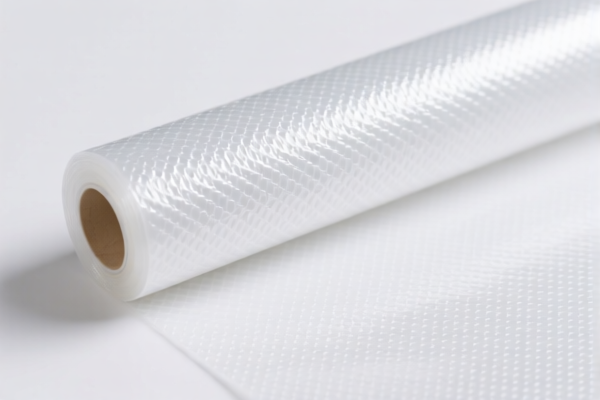
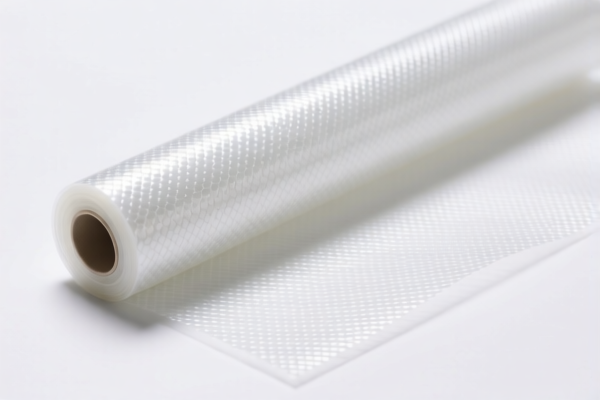
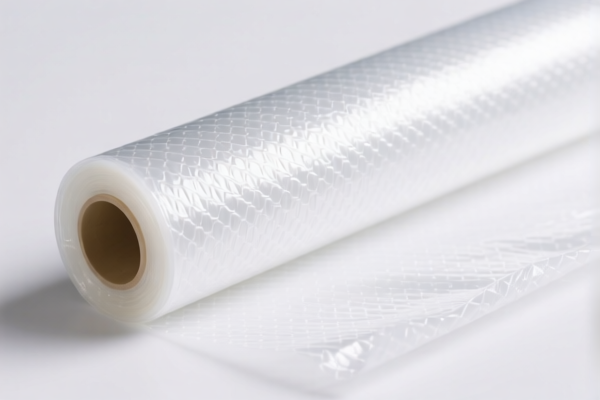
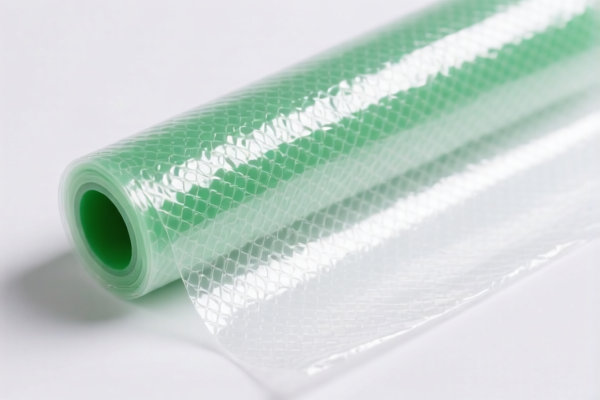
AI Analysis
📜 Microfilm for Libraries (Library Preservation Films)
🌐 HS Code Reference & Customs Clearance Guide | 2026 Latest Tariff Analysis | Professional Compliance Strategy
📌 I. Product Definition & Classification: What Exactly is "Microfilm"?
Microfilm for libraries refers to miniature photographic films used primarily for archival, preservation, and information storage purposes. In international trade, these are not considered "print media" nor standard "photographic supplies," but rather optical information storage media.
Key Distinction: * Microfilm Rolls/Cartridges: Flexible plastic film coated with silver halide emulsion, rolled onto spools. Used in microfilm readers/printers. * Microfiche: Flat sheets of film containing reduced images. Often classified separately from rolls but under the same broader category.
⚠️ Critical Classification Point:
- If the product is unexposed film stock intended for blank recording → HS 3702.
- If the product is exposed/pre-recorded microfilm (e.g., archives of newspapers, books, maps) → HS 3707 or 4903 depending on content nature, but predominantly 3707 for the physical medium itself in most customs jurisdictions unless it constitutes a "book" in digital/optical format.
- Note for 2026: Many jurisdictions treat pre-recorded microfilm as a photographic product (Chapter 37) rather than printed matter (Chapter 49), because the primary value is the photographic reproduction, not the text per se.
📦 II. HS Code Classification Details (2026 Latest Tariff Authority)
| HS Code | Product Description | Applicable Scenario | Physical Form |
|---|---|---|---|
3702.54.00.00 |
Photographic film, in rolls, other than film of heading 3702, 3704 or 3707, sensitized, unexposed, of a width of > 61 mm | Unexposed wide-format microfilm reels (rare for libraries, common for industrial) | ✅ Unexposed |
3707.10.00.00 |
Prepared film, whether or not sensitized | Pre-recorded/Exposed microfilm cartridges or rolls (most common for library archives) | ✅ Exposed |
4903.00.00.00 |
Children’s picture books and painting books | Incorrect for microfilm. Only for actual printed books. | ❌ N/A |
3701.99.00.00 |
Other photographic plates and film | General photographic film (not specialized for microform) | ✅ Unexposed |
9011.90.00.00 |
Parts and accessories for microscopes/microform readers | Microfilm readers, scanners, enlargers | ✅ Equipment |
🔍 Key Reminder:
- Exposed Pre-Recorded Microfilm (e.g., archives of The New York Times, census records) is typically classified under3707.10.00.00as "Prepared film."
- Blank Microfilm Reels sold to libraries for microfilming services fall under3702.54.00.00(if width > 61mm) or other3702subheadings.
- Do NOT classify as4903(Books) unless it is a printed microform card set sold as a "book," which is rare. Most customs authorities treat the film medium as a Chapter 37 good.
💰 III. 2026 Latest Tariff Rate Breakdown (Including Surcharges)
✅ Applicable Country: United States (US)
✅ Origin: China (CN)
✅ Effective Date: From November 10, 2025 (including subsequent imports)
🎯 1. 3707.10.00.00 —— Prepared Microfilm (Exposed/Pre-Recorded)
| Item | Content |
|---|---|
| Base Rate | 0% (ad valorem) |
| USITC Surcharge | +25% (from USITC Footnote 9903.88.01) |
| IEEPA Surcharge | +10% (against China/HK products, effective Nov 10, 2025) |
| Total Rate | 35% |
| Tax Calculation | CIF Value × 35% |
| De Minimis Eligibility | ❌ No (deny_de_minimis) |
| Legal Path | IEEPA:9903.01.25 → IEEPA:9903.01.24 → USITC:3707.10.00.00 → FOOTNOTE:9903.88.01 |
📌 Explanation:
- Although base rate is 0%, the USITC 25% surcharge applies to many Chapter 37 goods under Section 301.
- The IEEPA 10% surcharge adds additional burden.
- Total 35% is significant for low-value archival items. Cost efficiency must be calculated carefully.
🎯 2. 3702.54.00.00 —— Unexposed Microfilm Rolls
| Item | Content |
|---|---|
| Base Rate | 0% |
| USITC Surcharge | +25% |
| IEEPA Surcharge | +10% |
| Total Rate | 35% |
| Tax Calculation | CIF Value × 35% |
| De Minimis Eligibility | ❌ No |
| Legal Path | IEEPA:9903.01.25 → IEEPA:9903.01.24 → USITC:3702.54.00.00 → FOOTNOTE:9903.88.01 |
📌 Note:
- Blank film stock faces the same high tariffs as pre-recorded film.
- If importing microfilm readers (equipment), refer to HS 9011.90.00.00 or 8471.60.00.00 (monitors/output devices), which may have different tariff structures (often 0% base, but check Section 301 applicability).
🛠️ IV. Customs Clearance Practical Advice (Operational Pitfall Guide)
✅ 1. Documentation Checklist (Must-Haves)
| Document | Required | Description |
|---|---|---|
| ✅ Product Specification Sheet | ✔️ | Specify: Film type (silver halide/dye), format (16mm/35mm roll, fiche), length, whether exposed/unexposed. |
| ✅ Certificate of Origin (CO) | ✔️ | Essential for determining tariff eligibility. |
| ✅ Commercial Invoice | ✔️ | Clearly state "Microfilm, Prepared/Unexposed, for Library Archives." Avoid vague terms like "Photo Film." |
| ✅ Packing List | ✔️ | Detail weight, dimensions, and number of rolls/cassettes. |
| ✅ Content Declaration | ✔️ | If pre-recorded, declare if content is public domain, copyrighted, or restricted. Some archives require IP clearance. |
| ✅ FCC/CE Certificates | ✔️ | If importing microfilm readers/scanners, these are required for electronic devices. |
✅ 2. Declaration Tips (Key Mnemonic)
🔥 “Exposed is 3707, Blank is 3702; Don’t say ‘Book’, Say ‘Film’!”
| Scenario | Correct Declaration | Incorrect Approach |
|---|---|---|
| Pre-recorded archive reels | 3707.10.00.00 - "Prepared Microfilm, Exposed" |
Misdeclare as 4903 (Books) → Audit Risk |
| Blank film for library microfilming unit | 3702.54.00.00 - "Unexposed Photographic Film" |
Misdeclare as 3701 (Plates) → Classification Error |
| Microfilm Reader/Scanner | 9011.90.00.00 or 8471.60.00.00 |
Mix film and equipment in one line → Complicated Inspection |
| Microfiche Cards | 3707.10.00.00 |
Treat as paper documents → Wrong Chapter |
✅ 3. Special Cases Handling
| Scenario | Handling Advice |
|---|---|
| Copyrighted Content | If importing microfilm of copyrighted books, ensure you have rights or it falls under fair use/exemption. Customs may ask for IP authorization. |
| Bulk Archival Imports | High volume may trigger additional scrutiny. Provide detailed manifest and purpose (e.g., "National Library Preservation Project"). |
| Microfilm Readers | If bundled with film, declare separately. Readers may have 0% tariff but require FCC/UL certification. |
| Free Trade Agreements (FTA) | Check if origin is from Vietnam, Mexico, etc. IEEPA surcharges may be waived. Apply for preference claim if eligible. |
🌍 V. Global Market Customs Comparison (2026 Latest)
| Country/Region | Recommended HS Code | Tariff Rate | Certification | Notes |
|---|---|---|---|---|
| 🇺🇸 USA | 3707.10.00.00 |
35% (China) | N/A for film | High tariff due to Section 301 + IEEPA |
| 🇨🇳 China | 3707.10.00.00 |
0% | N/A | Duty-free import of archival materials |
| 🇪🇺 EU | 3707.10.00.00 |
0% | CE (if equipment) | Generally duty-free for microfilm |
| 🇬🇧 UK | 3707.10.00.00 |
0% | N/A | Post-Brexit tariff aligns with EU for most Chapter 37 |
| 🇦🇺 Australia | 3707.10.00.00 |
5% | N/A | Low tariff, no surcharge |
📌 Conclusion:
- USA is the most expensive market for importing microfilm from China due to 35% total duty.
- EU, UK, and Australia are more favorable, with 0%-5% rates.
- Consider re-routing supply chains (e.g., from Vietnam) if targeting the US market to avoid IEEPA surcharges.
📌 VI. Common Errors & Pitfalls (Lessons Learned)
❌ Error 1: Declaring pre-recorded microfilm as 4903 (Books)
👉 Consequence: Customs flags for misclassification → Delayed release, penalties, and back-tariff assessment.
❌ Error 2: Mixing exposed and unexposed film in one HS Code
👉 Consequence: Inspection required to verify content → 1-2 week delay.
❌ Error 3: Ignoring IEEPA surcharge applicability
👉 Consequence: Underpayment by 10% → Fine and interest charges upon audit.
❌ Error 4: Not declaring "Library Use" or "Archival Purpose"
👉 Consequence: May trigger additional security or copyright checks.
✅ Correct Practice:
"Pre-Recorded Microfilm, 35mm, Exposed, Containing Public Domain Newspaper Archives, for Library Preservation, HS 3707.10.00.00"
🎯 VII. Conclusion: Precise Classification Saves Costs!
🎯 Remember the Mantra:
🔹 "Exposed = 3707, Blank = 3702; USA Tariff 35%, Global 0-5%."
🔹 "Don’t call it a Book, Call it Film; Keep Your Customs Clean."
📌 Pro Tip:
If your microfilm is originated from Vietnam, Mexico, or Thailand, you can apply for IEEPA exemption, reducing the US tariff to 0%-10%.
Recommend pre-classification ruling (US CBP) if importing large volumes to avoid disputes.
📣 Immediate Action:
📞 Contact your customs broker + Provide product specs + Verify HS Code with CBP
🚀 Ensure smooth clearance, avoid penalties, and protect your archival assets!
✨ Professional Customs Clearance Starts with Accurate Classification!
💼 Every Dollar Saved in Tariffs is Pure Profit!
Customer Reviews
About HS Code Classification
The Harmonized System (HS) is an internationally standardized nomenclature developed by the World Customs Organization (WCO) to classify traded products. Over 200 countries use the HS system as the basis for customs tariffs, trade statistics, and import/export regulations.
Each HS code follows a hierarchical structure:
- Chapter (2 digits) — Broad category of goods (e.g., Chapter 84: Machinery and Mechanical Appliances)
- Heading (4 digits) — More specific grouping within the chapter
- Subheading (6 digits) — Internationally standardized breakdown, used by all WCO member countries
- National subdivisions (8-10 digits) — Country-specific extensions for further classification, such as US HTSUS 10-digit codes
Correct HS code classification is essential for smooth customs clearance, accurate duty payment, and compliance with trade regulations. Misclassification can lead to customs delays, overpayment of duties, or penalties.
When importing from CN to US, the applicable tariff rates may include:
- Most-Favored-Nation (MFN) rate — The standard duty rate applied to WTO members
- General rate — Applied to countries without trade agreements
- Trade remedy duties — Additional tariffs such as Section 301 (anti-dumping), Section 232 (national security), or countervailing duties
The information provided on this page is for reference purposes only. For official classification, please consult with your local customs authority or a licensed customs broker.