Microphone
CN → US| HS Code | Tariff Rate | Origin | Destination | Doc |
|---|---|---|---|---|
| 8518104000 | 35.0% | CN | US | Official Doc |
| 8518108030 | 17.5% | CN | US | Official Doc |
| 8518108040 | 17.5% | CN | US | Official Doc |
| 8518108030 | 17.5% | CN | US | Official Doc |
| 8518104000 | 35.0% | CN | US | Official Doc |
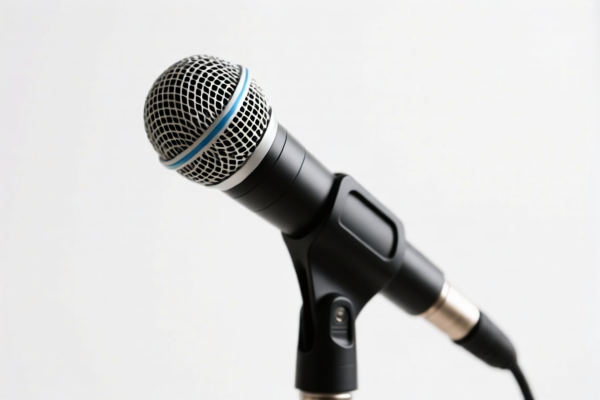
Product Images



AI Analysis
🎙️ Microphones (Audio Transducers)
🌐 HS Code Reference & Customs Clearance Guide | 2026 Latest Tariff Analysis | Professional Clearance Strategy
📌 I. Product Definition & Classification: Do You Really Understand "Microphones"?
Microphones are core input devices in audio systems, converting sound waves into electrical signals. In international trade, classification depends heavily on whether the item is a complete microphone unit or a component/accessory (such as a handle/stand). Misclassification can lead to significant tax differences due to US trade policies (Section 301 and Section 122).
⚠️ Key Distinction:
- Complete Microphones: Includes the transducer, internal wiring, and often the connector. Typically falls under 8518.10.40.00.
- Accessories/Handles/Stands: Physical supports, handles, or mounts that do not contain the audio transducer element itself. Typically falls under 8518.10.80.30 or 8518.10.80.40.
📦 II. HS Code Classification Details (2026 Latest Tariff Authority Comparison)
| HS Code | Product Description | Application Scenario | Material/Function Conflict? |
|---|---|---|---|
8518.10.40.00 |
Microphones | Complete microphone units; function matches; no material conflict | ❌ No |
8518.10.80.30 |
Microphones (Accessory/Sub-category) | Fits characteristics of microphone and stand sub-category | ❌ No |
8518.10.80.40 |
Microphone Handles (Accessories) | Belongs to stand/accessory category; no material conflict | ❌ No |
🔍 Key Reminder:
- If the product is a stand or handle (physical support, no audio conversion), it should not be declared as a complete microphone. -8518.10.80.30is specifically noted as fitting the "microphone and stand sub-category." -8518.10.80.40is explicitly for "Microphone Handles," classified under accessories/stands.
💰 III. 2026 Latest Tariff Rate Details (Including Surtaxes & Policy Add-ons)
✅ Applicable Country: United States (US)
✅ Origin: China (CN)
✅ Effective Time: Current trade policies (Section 301 & Section 122)
🎯 1. 8518.10.40.00 —— Complete Microphones (The High-Tax Route)
| Item | Content |
|---|---|
| Base Tariff | 0.0% |
| Section 301 Surtax | 25.0% |
| Section 122 Surtax | 10.0% |
| Total Tax Rate | 35.0% |
| Tax Calculation | CIF Value × 35% |
| Legal Basis | Base (0%) + Section 301 (25%) + Section 122 (10%) |
📌 Explanation:
- The 25% Section 301 tariff applies to a broad range of Chinese electronic goods.
- The 10% Section 122 tariff is an additional levy on specific goods, often affecting electronics and audio equipment.
- Total 35% is a high burden for complete microphone imports.
🎯 2. 8518.10.80.30 & 8518.10.80.40 —— Accessories/Handles (The Lower-Tax Route)
| Item | Content |
|---|---|
| Base Tariff | 0.0% |
| Section 301 Surtax | 7.5% |
| Section 122 Surtax | 10.0% |
| Total Tax Rate | 17.5% |
| Tax Calculation | CIF Value × 17.5% |
| Legal Basis | Base (0%) + Section 301 (7.5%) + Section 122 (10%) |
📌 Explanation:
- The Section 301 surtax is significantly lower (7.5%) for accessories and handles compared to complete microphones (25%).
- The 10% Section 122 tariff remains the same, as it applies broadly to the covered goods list.
- Total 17.5% offers substantial savings if the product can be legally classified as an accessory/handle.
🛠️ IV. Customs Clearance Practical Advice (Real-World Pitfall Guide)
✅ 1. Preparation Checklist (Essential Documents)
| Document | Required? | Description |
|---|---|---|
| ✅ Product Specifications | ✔️ | Must clearly distinguish between "Microphone" (transducer) and "Handle/Stand" (structural support). |
| ✅ Product Photos | ✔️ | Show the item clearly. If it’s a handle, show no internal audio components. |
| ✅ Bill of Materials (BOM) | ✔️ | Prove that items under 8518.10.80.30/40 lack the transducer element. |
| ✅ Commercial Invoice | ✔️ | Description must match the HS code exactly (e.g., "Microphone Handle" vs. "Dynamic Microphone"). |
| ✅ Packing List | ✔️ | Separate shipments of microphones and handles if possible to avoid ambiguity. |
✅ 2. Declaration Strategy (Key Rules)
🔥 “Function Determines Code, Structure Defines Tax!”
| Scenario | Correct Declaration | Risk of Wrong Declaration |
|---|---|---|
| Complete Microphone | 8518.10.40.00 (35% Tax) |
If misdeclared as accessory → Audit Risk & Penalty |
| Microphone Handle/Stem | 8518.10.80.40 (17.5% Tax) |
If declared as complete mic → Overpay 17.5% |
| Microphone + Stand Combo | Check if they are sold as a single functional unit. If the stand is integral, it may still be 35%. If separate, declare separately. | Mixed declaration → Customs Seizure |
| Accessories | 8518.10.80.30 (17.5% Tax) |
Ensure they fit "microphone and stand sub-category." |
📌 Critical Insight:
-8518.10.80.30is specifically validated for items that "fit the microphone and stand sub-category." Use this for items that are part of the microphone assembly but not the transducer itself. -8518.10.80.40is for Microphone Handles. Ensure the product is purely a handle/structural part.
✅ 3. Special Case Handling
| Situation | Recommendation |
|---|---|
| Microphone + Integrated Stand | If the stand is fixed and the unit is sold as one piece, it is likely a "Complete Microphone" → 35% Tax. |
| Spare Handles | Clearly declare as "Microphone Handle (Accessory)" → 17.5% Tax. Provide BOM showing no audio components. |
| OEM Custom Parts | Provide design drawings showing the item lacks the diaphragm/transducer. |
🌍 V. Global Market Customs Comparison (2026 Latest)
| Country/Region | Recommended HS Code | Tariff Rate | Notes |
|---|---|---|---|
| 🇺🇸 USA | 8518.10.40.00 (Mic) / 8518.10.80.30/40 (Accessory) |
35% (Mic) / 17.5% (Accessory) | High tariffs due to Sec 301 & 122. Classification is critical. |
| 🇨🇳 China | 8518.10.10.00 (Typical) |
Varies (Low/Zero for some) | Different classification structure. |
| 🇪🇺 EU | 8518.10.00 |
0% | No Section 301/122 equivalents. |
| 🇯🇵 Japan | 8518.10.00 |
0-2% | Generally low tariffs. |
📌 Conclusion:
- USA is the only major market with these specific high additional tariffs.
- For US exports from China, accurately distinguishing between Complete Microphones (35%) and Accessories/Handles (17.5%) is crucial for cost control.
📌 VI. Common Errors & Pitfalls (Lessons Learned)
❌ Error 1: Declaring a microphone handle as a complete microphone.
👉 Consequence: Paying 35% tax instead of 17.5%. Overpayment of 17.5%.
❌ Error 2: Declaring a complete microphone as an accessory to avoid taxes.
👉 Consequence: Customs audit, potential seizure, fines, and back taxes. Risk is too high.
❌ Error 3: Mixing "Microphone" and "Stand" in one line item without clarification.
👉 Consequence: Customs may classify the entire shipment under the highest rate or request detailed breakdown, causing delays.
✅ Correct Practice:
"Microphone Handle (Stainless Steel, No Audio Components)" for
8518.10.80.40.
"Dynamic Microphone, Complete Unit" for8518.10.40.00.
🎯 VII. Conclusion: Precise Classification, Efficient Clearance, Cost Reduction!
🎯 Remember the Mantra:
🔹 "Transducer = 35%, Handle = 17.5%. Don't Pay for What You Don't Have!"
🔹 "Section 301 is 25% for Mics, 7.5% for Accessories. Know the Difference!"
📌 Pro Tip:
- If you are exporting microphone handles or stand components, ensure your commercial invoice and product description explicitly state "Accessory," "Handle," or "Stand" and NOT "Microphone."
- For complete microphones, factor in the 35% total tariff into your pricing strategy.
📣 Immediate Action:
📞 Consult with a licensed customs broker to verify if your product fits
8518.10.80.30or8518.10.80.40.
📄 Ensure your BOM clearly separates audio components from structural parts.
🚀 Clear customs smoothly, save costs, and maximize profit!
✨ Professional customs clearance starts with precise classification!
💼 Every penny in tax is worth calculating precisely!
Customer Reviews
About HS Code Classification
The Harmonized System (HS) is an internationally standardized nomenclature developed by the World Customs Organization (WCO) to classify traded products. Over 200 countries use the HS system as the basis for customs tariffs, trade statistics, and import/export regulations.
Each HS code follows a hierarchical structure:
- Chapter (2 digits) — Broad category of goods (e.g., Chapter 84: Machinery and Mechanical Appliances)
- Heading (4 digits) — More specific grouping within the chapter
- Subheading (6 digits) — Internationally standardized breakdown, used by all WCO member countries
- National subdivisions (8-10 digits) — Country-specific extensions for further classification, such as US HTSUS 10-digit codes
Correct HS code classification is essential for smooth customs clearance, accurate duty payment, and compliance with trade regulations. Misclassification can lead to customs delays, overpayment of duties, or penalties.
When importing from CN to US, the applicable tariff rates may include:
- Most-Favored-Nation (MFN) rate — The standard duty rate applied to WTO members
- General rate — Applied to countries without trade agreements
- Trade remedy duties — Additional tariffs such as Section 301 (anti-dumping), Section 232 (national security), or countervailing duties
The information provided on this page is for reference purposes only. For official classification, please consult with your local customs authority or a licensed customs broker.