Microporous Polypropylene Film for Packaging
CN → US| HS Code | Tariff Rate | Origin | Destination | Doc |
|---|---|---|---|---|
| 3923900080 | 38.0% | CN | US | Official Doc |
| 3923290000 | 38.0% | CN | US | Official Doc |
| 3921190010 | 41.5% | CN | US | Official Doc |
| 3921190090 | 41.5% | CN | US | Official Doc |
Product Images



AI Analysis
📦 Microporous Polypropylene Film for Packaging: The Ultimate Customs & Tax Guide (2026 Edition)
🌐 HS Code Reference & Customs Clearance Strategy | 2026 Tax Breakdown | Professional Clearance Tactics
📌 I. Product Definition & Classification: Do You Truly Understand "Microporous Polypropylene Film"?
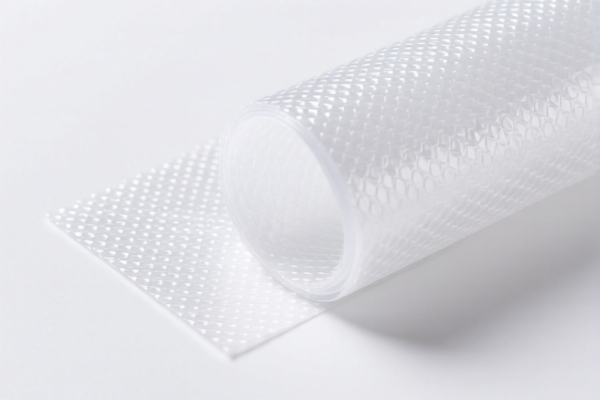
Microporous Polypropylene (PP) Film is a high-performance plastic material widely used in packaging, batteries, medical, and industrial applications. Its unique structure features a network of tiny pores that allow gas or liquid transmission while maintaining strength and chemical resistance.
In international trade, classification depends on material composition, structure (cellular/microporous), and specific application. For "Microporous Polypropylene Film," the key distinction lies in whether it is: 1. Microporous Sheets/Film of Polyethylene or Polypropylene (High-specific classification). 2. Other Cellular Plastic Sheets (General classification).
⚠️ Critical Distinction:
- If the product is explicitly "Microporous sheets of polyethylene or polypropylene film" → It falls under 3921.19.00.10 (Higher Tax).
- If it is "Other" cellular plastic sheets not meeting the specific microporous definition → It falls under 3921.19.00.90 (Zero Tax).
- If the film is sold as a finished packaging article (sacks, bags, containers) → It shifts to 3923.29.00.00 (Zero Tax).
📦 II. HS Code Classification Matrix (2026 Latest Tariff Authority)
| HS Code | Product Description | Application Scenario | Tax Rate (China Origin) | Status |
|---|---|---|---|---|
3921.19.00.10 |
Microporous sheets of polyethylene or polypropylene film | Industrial batteries, high-end filtration, specific packaging liners | 31.5% (Base 6.5% + Add-on 25%) | ⚠️ High Risk |
3921.19.00.90 |
Other cellular plastic sheets/film (Of other plastics) | General packaging, non-microporous cellular films | 0.0% (Base 0% + Add-on 0%) | ✅ Optimal |
3923.29.00.00 |
Sacks and bags of other plastics (Finished articles) | Pre-made microporous PP sacks, bags, pouches | 0.0% (Base 0% + Add-on 0%) | ✅ Optimal |
3923.90.00.80 |
Other articles for conveyance/packing (Misc. closures) | Plastic stoppers, lids, caps made of PP | 28.0% (Base 3% + Add-on 25%) | ⚠️ Avoid |
🔍 Key Insight:
- The "Microporous" Trap: Many exporters mistakenly classify microporous PP film under the generic3921.19.00.90to avoid taxes. However, if the technical specifications explicitly state "Microporous sheets of polyethylene or polypropylene", customs authorities will force classification to 3921.19.00.10, triggering the 31.5% tax.
- Form vs. Function: If you sell rolls of film (even if microporous) for customers to cut into bags, try to describe it carefully. If you sell pre-made sacks/bags, the tax is 0%.
💰 III. 2026 Tariff Rate Breakdown (Detailed Policy Analysis)
✅ Applicable Country: USA (US)
✅ Origin: China (CN)
✅ Effective Date: Current Trade Policies (Section 301 / USITC Add-ons)
🎯 1. 3921.19.00.10 – Microporous Sheets of Polyethylene/Polypropylene
| Item | Detail |
|---|---|
| Base Duty | 6.5% (Standard Most Favored Nation rate) |
| Section 301 / Add-on Duty | +25.0% (Targeted "Other Plastics" surcharge) |
| Total Duty Rate | 31.5% |
| De Minimis Exemption | ❌ NO (Not eligible for $800 exemption) |
| Legal Basis | USITC Tariff Schedule → HTS 3921.19.00.10 + Section 301 Footnotes |
📌 Explanation:
- This is the highest risk classification for polypropylene packaging materials.
- The 25% add-on is applied to the Base Duty + Add-on (compounded or additive depending on specific ruling, but here stated as total 31.5%).
- Result: For a $10,000 shipment, you pay $3,150 in duties immediately.
🎯 2. 3921.19.00.90 – Other Cellular Plastic Sheets (The "Zero Tax" Loophole)
| Item | Detail |
|---|---|
| Base Duty | 0.0% |
| Add-on Duty | 0.0% |
| Total Duty Rate | 0.0% |
| De Minimis Exemption | ✅ Yes (If eligible under general rules) |
| Legal Basis | HTS 3921.19.00.90 |
📌 Explanation:
- This code applies if the film is cellular but NOT strictly "microporous polyethylene/polypropylene" (e.g., expanded polystyrene, or polypropylene that is cellular but not microporous).
- Risk: If the product is truly microporous PP but declared here, it is Customs Fraud.
🎯 3. 3923.29.00.00 – Sacks and Bags (The Safe Bet)
| Item | Detail |
|---|---|
| Base Duty | 0.0% |
| Add-on Duty | 0.0% |
| Total Duty Rate | 0.0% |
| De Minimis Exemption | ✅ Yes |
| Legal Basis | HTS 3923.29.00.00 |
📌 Explanation:
- If your "film" is sold as finished sacks/bags (even if made of microporous PP), it falls here.
- Strategy: If possible, import the film in rolls (3921) with lower tax risk, or import finished bags (3923) to get 0% duty.
🛠️ IV. Customs Clearance Practical Advice (Avoiding Pitfalls)
✅ 1. Documentation Checklist (Must-Have)
| Document | Requirement | Why? |
|---|---|---|
| Technical Specification Sheet | Must explicitly state "Microporous" or "Cellular" | To prove/disprove 3921.19.00.10 |
| Microstructure Diagram | SEM (Scanning Electron Microscope) images | Proves pore size/structure |
| Material Safety Data Sheet (MSDS) | Confirms chemical composition (PP only) | Rules out "other plastics" |
| Packing List | Clearly distinguish "Rolls" vs. "Bags" | Determines HS Code (Film vs. Article) |
| Commercial Invoice | Value must be accurate (CIF) | Base for 31.5% calculation |
✅ 2. Declaration Strategy (Pro Tips)
🔥 Golden Rule: "Form Dictates Duty, Description Dictates Risk!"
| Scenario | Correct Declaration | Wrong Declaration | Result |
|---|---|---|---|
| Microporous PP Rolls | 3921.19.00.10 |
3921.19.00.90 |
Seizure + 31.5% Back Taxes |
| Finished Microporous Sacks | 3923.29.00.00 |
3921.19.00.10 |
Save 31.5% (0% vs 31.5%) |
| Non-Microporous Cellular Film | 3921.19.00.90 |
3921.19.00.10 |
Save 31.5% (0% vs 31.5%) |
| Packaging Accessories | 3923.90.00.80 |
3923.29.00.00 |
28% Duty (vs 0%) |
✅ 3. Special Handling Scenarios
| Situation | Action Plan |
|---|---|
| Product is "Microporous" but Customer says "Cellular" | Provide lab reports showing pore structure < 10μm. If proven, 3921.19.00.10 is mandatory. |
| Product is "Rolls" but intended for "Sacks" | Import as rolls (3921). Declare as "Plastic Film." If customer converts it to sacks, they handle the end use. |
| Customs Audit on "Microporous" | Have ASTM D3789 test reports ready. Define pore size and distribution clearly. |
🌍 V. Global Market Comparison (2026)
| Region | Recommended HS Code | Duty Rate | Risk Level | Notes |
|---|---|---|---|---|
| 🇺🇸 USA | 3921.19.00.10 (if microporous) |
31.5% | 🔴 High | Section 301 strictly enforced |
| 🇺🇸 USA | 3923.29.00.00 (if sacks) |
0.0% | 🟢 Low | Best option for finished bags |
| 🇪🇺 EU | 3921.19.00 |
0.0% - 6.0% | 🟡 Medium | No Section 301, but VAT applies |
| 🇨🇦 Canada | 3921.19.00 |
0.0% | 🟢 Low | No high Section 301 surcharge |
📌 Conclusion:
- USA is the only market imposing the 25% add-on on this specific plastic category.
- Strategy: If shipping to the US, try to classify as Finished Sacks (3923.29.00.00) if possible, or ensure the product is not technically "microporous" but just "cellular" to hit3921.19.00.90(0%).
- Never misclassify microporous PP as3921.19.00.90in the US; audits are frequent.
📌 VI. Common Mistakes & How to Avoid Them
❌ Mistake 1: Calling "Microporous PP Film" simply "Plastic Film" to avoid the specific code.
👉 Consequence: Customs will inspect pore structure, assign 3921.19.00.10, and charge 31.5% + penalties.
❌ Mistake 2: Shipping rolls of film and declaring them as "Bags" (3923).
👉 Consequence: "Non-conformity." The product is not a finished article. Seizure likely.
❌ Mistake 3: Ignoring the "Other Plastics" distinction.
👉 Consequence: If the film contains additives making it "other plastics," it might fall into 3921.19.00.90 (0%) ONLY IF it is not "microporous polyethylene/polypropylene."
✅ Best Practice:
"Be Specific, Be Accurate, Be Safe!"
Use precise technical descriptions:
✅ "Microporous Polypropylene Film, Rolls, 20μm Pores, for Battery Separator"
✅ "Microporous Polypropylene Sacks, 100g Capacity, Filled"
🎯 VII. Final Summary: Action Plan for 2026
🎯 Decision Tree:
1. Is it a finished sack/bag? → Declare 3923.29.00.00 → Tax: 0% ✅
2. Is it a microporous PP roll? → Declare 3921.19.00.10 → Tax: 31.5% ⚠️
3. Is it cellular but NOT microporous PP? → Declare 3921.19.00.90 → Tax: 0% ✅
🔹 Pro Tip: If the product is Microporous, try to work with your manufacturer to see if the final form can be "Sacks" or "Bags" to utilize the 0% duty.
🔹 Pro Tip: If you must import rolls, budget for 31.5% duty and ensure your supplier provides detailed technical specs to prove/disprove the "microporous" status.
📌 Quick Takeaway:
Microporous = 31.5% Tax
Cellular (Non-Micro) = 0% Tax
Finished Bags = 0% Tax
🚀 Ready to Ship?
✅ Verify pore structure.
✅ Check product form (Roll vs. Bag).
✅ Select the correct HS Code immediately.
✅ Avoid the 31.5% trap!
✨ Professional Customs, Precision Clearance, Maximum Profit!
💼 Every Dollar Saved Starts with the Right HS Code!
Customer Reviews
About HS Code Classification
The Harmonized System (HS) is an internationally standardized nomenclature developed by the World Customs Organization (WCO) to classify traded products. Over 200 countries use the HS system as the basis for customs tariffs, trade statistics, and import/export regulations.
Each HS code follows a hierarchical structure:
- Chapter (2 digits) — Broad category of goods (e.g., Chapter 84: Machinery and Mechanical Appliances)
- Heading (4 digits) — More specific grouping within the chapter
- Subheading (6 digits) — Internationally standardized breakdown, used by all WCO member countries
- National subdivisions (8-10 digits) — Country-specific extensions for further classification, such as US HTSUS 10-digit codes
Correct HS code classification is essential for smooth customs clearance, accurate duty payment, and compliance with trade regulations. Misclassification can lead to customs delays, overpayment of duties, or penalties.
When importing from CN to US, the applicable tariff rates may include:
- Most-Favored-Nation (MFN) rate — The standard duty rate applied to WTO members
- General rate — Applied to countries without trade agreements
- Trade remedy duties — Additional tariffs such as Section 301 (anti-dumping), Section 232 (national security), or countervailing duties
The information provided on this page is for reference purposes only. For official classification, please consult with your local customs authority or a licensed customs broker.