Microscope
CN → US| HS Code | Tariff Rate | Origin | Destination | Doc |
|---|---|---|---|---|
| 9011800000 | 35.0% | CN | US | Official Doc |
| 9011108000 | 35.0% | CN | US | Official Doc |
| 9013802000 | 41.6% | CN | US | Official Doc |
| 9013809100 | 22.0% | CN | US | Official Doc |
| 9012100000 | 35.0% | CN | US | Official Doc |
Product Images
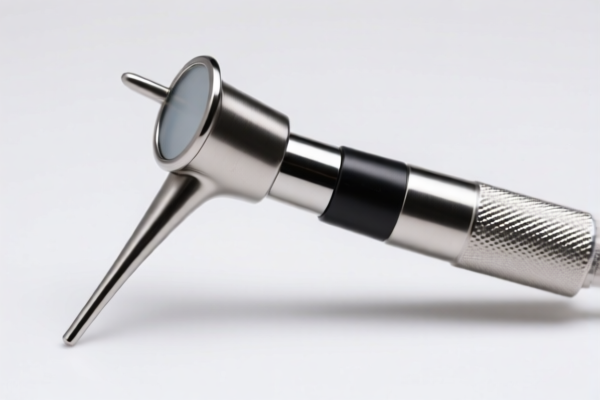
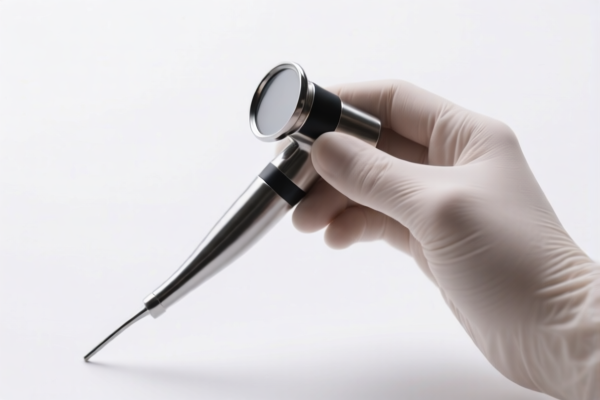
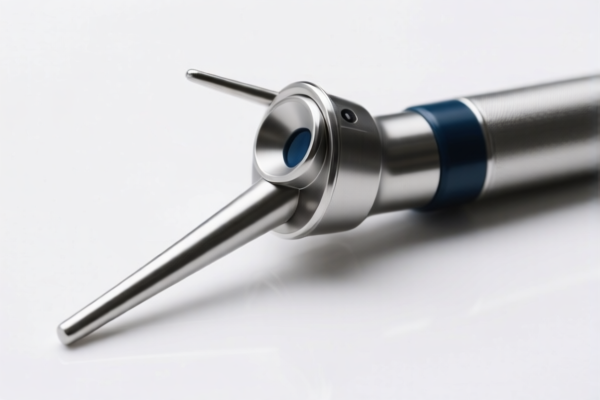
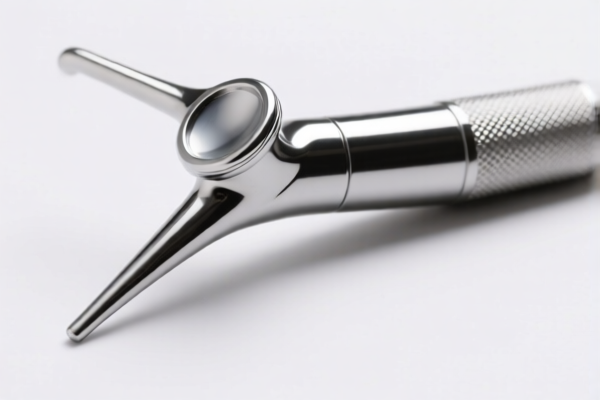
AI Analysis
🔬 Microscopes: Precision Optical Instruments | HS Code Classification & US Customs Strategy 2026
🌐 HS Code Reference & Clearance Guide | 2026 Latest Tariff Analysis | Professional Compliance Strategy
📌 Part 1: Product Definition & Classification – Do You Know Your Microscope?
A microscope is a critical optical instrument used for viewing objects that are too small to be seen by the naked eye. In international trade, they are classified based on their optical nature, application, and component structure. They generally fall into two main categories:
Optical Microscopes (Genuine Microscopes): Instruments using glass lenses to magnify images (e.g., biological, stereo, digital microscopes). Typically classified under Chapter 90 (9011, 9012).
Optical Magnifying Devices / Other Optical Apparatus: Devices that provide magnification but may not be strictly defined as "microscopes" in customs nomenclature, or are specialized optical components. Typically classified under Chapter 90 (9013).
⚠️ Key Distinction Point:
- If it is a dedicated microscope (biological, stereo, or compound) with optical lenses → 9011 / 9012
- If it is a general optical magnifier or specialized optical instrument not fitting microscope definitions → 9013
📦 Part 2: HS Code Classification Details (2026 Latest Tariff Authority Reference)
| HS Code | Product Description | Application Scenario | Material/Form Conflict? | Total Tax |
|---|---|---|---|---|
9011.80.00.00 |
Other Microscopes | General-purpose microscopes not specified elsewhere | No material or form conflict | 35.0% |
9011.10.80.00 |
Optical Microscopes (Stereoscopic) | Stereo microscopes, lab use | No material conflict | 35.0% |
9013.80.20.00 |
Optical Magnifying Devices | Similar equipment, optical appliances | No material conflict | 41.6% |
9013.80.91.00 |
Optical Instruments | Optical appliances & instruments | No material or form conflict | 22.0% |
9012.10.00.00 |
Non-Optical Microscopes | Electron or other non-optical types | No material or form conflict | 35.0% |
🔍 Key Reminder:
- 9011/9012 Codes: Specifically for microscopes. If your product is clearly a microscope (optical or electron), these are the primary candidates.
- 9013 Codes: For optical instruments/devices that may offer magnification but are not strictly "microscopes" (e.g., laser scanning devices, certain digital imaging systems not classified as microscopes).
- Tax Discrepancy: Note that9013.80.20.00has a significantly higher base tariff (6.6%) compared to others (0-4.5%), leading to a 41.6% total rate vs. 22-35%.
💰 Part 3: 2026 Latest Tariff Rate Breakdown (Including Surtaxes & Policy Add-ons)
✅ Applicable Country: United States (US)
✅ Origin: China (CN)
✅ Effective Time: Ongoing (as per current trade policy)
🎯 1. 9011.80.00.00 – Other Microscopes
| Item | Content |
|---|---|
| Base Tariff | 0.0% (ad valorem) |
| USITC Surtax | +25.0% (301 Section) |
| 122 Clause Surtax | +10.0% (Section 122) |
| Total Tax Rate | 35.0% |
| Tax Calculation | CIF Value × 35% |
| De Minimis Eligible | ❌ No (high tariff items usually excluded) |
| Legal Basis Path | USITC:9011.80.00.00 → 301 Footnote → 122 Clause |
📌 Explanation:
- "USITC Surtax 25%" is from the Section 301 trade remedy against China;
- "122 Clause 10%" is an additional surcharge under Section 122;
- Total 35% applies to most standard microscopes not specifically listed elsewhere.
🎯 2. 9011.10.80.00 – Optical Microscopes (Stereoscopic)
| Item | Content |
|---|---|
| Base Tariff | 0.0% |
| USITC Surtax | +25.0% |
| 122 Clause Surtax | +10.0% |
| Total Tax Rate | 35.0% |
| Tax Calculation | CIF × 35% |
| De Minimis Eligible | ❌ No |
| Legal Basis Path | USITC:9011.10.80.00 → 301 Footnote → 122 Clause |
📌 Note:
- Stereo microscopes fall under optical microscopes but may have specific sub-codes. The rate is identical to general microscopes.
- Applies to lab, industrial, and educational stereo microscopes.
🎯 3. 9013.80.20.00 – Optical Magnifying Devices
| Item | Content |
|---|---|
| Base Tariff | 6.6% |
| USITC Surtax | +25.0% |
| 122 Clause Surtax | +10.0% |
| Total Tax Rate | 41.6% |
| Tax Calculation | CIF × 41.6% |
| De Minimis Eligible | ❌ No |
| Legal Basis Path | USITC:9013.80.20.00 → 301 Footnote → 122 Clause |
📌 Critical Alert:
- This code has a 6.6% base tariff, making it the most expensive option at 41.6%.
- Avoid this code unless your product is definitively an "optical magnifying device" and NOT a microscope. Misclassification here can lead to higher costs or penalties if corrected later.
🎯 4. 9013.80.91.00 – Optical Instruments
| Item | Content |
|---|---|
| Base Tariff | 4.5% |
| USITC Surtax | +7.5% |
| 122 Clause Surtax | +10.0% |
| Total Tax Rate | 22.0% |
| Tax Calculation | CIF × 22% |
| De Minimis Eligible | ❌ No |
| Legal Basis Path | USITC:9013.80.91.00 → 301 Footnote → 122 Clause |
📌 Strategic Insight:
- If your device is an optical instrument but not a microscope (e.g., laser alignment tool, optical sensor array), this code offers the lowest total rate at 22%.
- Ensure the product description clearly states it is NOT a microscope to justify this classification.
🎯 5. 9012.10.00.00 – Non-Optical Microscopes
| Item | Content |
|---|---|
| Base Tariff | 0.0% |
| USITC Surtax | +25.0% |
| 122 Clause Surtax | +10.0% |
| Total Tax Rate | 35.0% |
| Tax Calculation | CIF × 35% |
| De Minimis Eligible | ❌ No |
| Legal Basis Path | USITC:9012.10.00.00 → 301 Footnote → 122 Clause |
📌 Note:
- Applies to electron microscopes or other non-optical types.
- Same 35% rate as optical microscopes, but distinct legal basis. Must prove non-optical nature.
🛠️ Part 4: Clearance Practical Advice (Pitfall Avoidance Guide)
✅ 1. Preparation Checklist (Mandatory)
| Document | Required | Description |
|---|---|---|
| ✅ Product Specification Sheet | ✔️ | Details: Magnification, optical type, power source, dimensions |
| ✅ Optical Diagram / Schematic | ✔️ | To prove optical vs. non-optical nature |
| ✅ Product Photos (with Label) | ✔️ | Clear view of brand, model, input/output specs |
| ✅ Third-Party Test Report | ✔️ | CE, FCC, RoHS (if applicable) |
| ✅ Commercial Invoice | ✔️ | Clearly state "Microscope" or "Optical Instrument" |
| ✅ Packing List | ✔️ | Show components (lenses, eyepieces, base) to avoid partial shipment claims |
✅ 2. Declaration Tips (Key Mnemonic)
🔥 "Microscope is 9011/9012, Optical Device is 9013. Base rate matters: 0% vs 6.6%. Don't mix them up!"
| Scenario | Correct HS Code | Incorrect Practice |
|---|---|---|
| Standard Optical Microscope | 9011.80.00.00 or 9011.10.80.00 |
Classify as 9013 → Risk of penalty or higher tax |
| Stereo Microscope | 9011.10.80.00 |
Classify as 9012 → Wrong category |
| Electron Microscope | 9012.10.00.00 |
Classify as 9011 → Optical vs Non-optical error |
| Optical Sensor/Laser Aligner | 9013.80.91.00 |
Classify as 9011 → Incorrect, may trigger audit |
| General Magnifier | 9013.80.20.00 |
Classify as 9011 → 41.6% Tax! Avoid if possible |
✅ 3. Special Cases Handling
| Situation | Handling Advice |
|---|---|
| Digital Microscope with Screen | Still 9011 if primary function is microscopy. Do NOT split into "camera + microscope". |
| OEM Custom Microscope | Provide design drawings + customer PO to prove specific use case. |
| Microscope Parts (Lenses, Eyepieces) | May fall under 9013.90 or 9011.90. Declare separately to avoid misclassification. |
| Portable/Handheld Magnifier | If not a microscope, use 9013.80.20.00 but be aware of 41.6% rate. Consider 9013.80.91.00 if applicable for 22%. |
🌍 Part 5: Global Market Comparison (2026 Latest)
| Country/Region | Recommended HS Code | Tariff | Certification | Notes |
|---|---|---|---|---|
| 🇺🇸 USA | 9011.80.00.00 |
35.0% | FCC + CE | High tax due to 301 & 122 clauses |
| 🇨🇳 China | 9011.80.00.00 |
5% | CCC | No surtaxes |
| 🇪🇺 EU | 9011.80.00.00 |
0-4% | CE | No surtaxes |
| 🇦🇺 Australia | 9011.80.00.00 |
5% | RCM | No surtaxes |
| 🇯🇵 Japan | 9011.80.00.00 |
0% | PSE | No surtaxes |
📌 Conclusion:
- USA is the most expensive market for microscopes due to 35-41.6% combined tariffs.
- EU/Asia offer significantly lower costs.
- Strategic Tip: Consider tariff engineering – if your device can be classified as a general optical instrument (9013.80.91.00), you save 13% (22% vs 35%). However, this requires strong technical justification that it is NOT a microscope.
📌 Part 6: Common Errors & Pitfalls (Lessons Learned)
❌ Error 1: Classifying a digital microscope as a camera (8525)
👉 Consequence: Incorrect classification, potential penalties, or delayed clearance. Microscopes are optical instruments, not imaging devices.
❌ Error 2: Using 9013.80.20.00 for a standard microscope
👉 Consequence: 41.6% tax instead of 35%. Unnecessary cost increase.
❌ Error 3: Not providing optical diagrams for electron microscopes
👉 Consequence: Misclassified as optical (9011) instead of non-optical (9012), leading to audit.
❌ Error 4: Splitting microscope into "base" and "optical head" for separate declaration
👉 Consequence: Parts may be taxed separately at higher rates or rejected as incomplete shipments.
✅ Correct Approach:
"Stereoscopic Microscope, 10x-40x, LED Illumination, Lab Use, Model XYZ, CE & FCC Certified"
🎯 Part 7: Conclusion – Professional Classification, Cost Optimization!
🎯 Remember the Mnemonic:
🔹 "Microscope is 9011/9012, Optical Device is 9013. Base rate 0% vs 6.6%. 35% vs 41.6%. Don't pay extra!"
🔹 "HS Code determines tax. 13% difference between 35% and 22%. Declare correctly, save money!"
📌 Pro Tip:
If your product is originally from Vietnam, Mexico, or Thailand, you may qualify for IEEPA Exemptions, reducing tariffs to 0-5%.
Consider applying for Advance Ruling from US Customs to confirm classification before shipment.
📣 Action Required:
📞 Contact a professional customs broker + Provide product specs + Apply for HS Code Advance Ruling
🚀 Ensure smooth clearance, efficient export, and maximized profit!
✨ Professional Clearance Starts with Accurate Classification!
💼 Every cent of cost deserves precise calculation!
Customer Reviews
About HS Code Classification
The Harmonized System (HS) is an internationally standardized nomenclature developed by the World Customs Organization (WCO) to classify traded products. Over 200 countries use the HS system as the basis for customs tariffs, trade statistics, and import/export regulations.
Each HS code follows a hierarchical structure:
- Chapter (2 digits) — Broad category of goods (e.g., Chapter 84: Machinery and Mechanical Appliances)
- Heading (4 digits) — More specific grouping within the chapter
- Subheading (6 digits) — Internationally standardized breakdown, used by all WCO member countries
- National subdivisions (8-10 digits) — Country-specific extensions for further classification, such as US HTSUS 10-digit codes
Correct HS code classification is essential for smooth customs clearance, accurate duty payment, and compliance with trade regulations. Misclassification can lead to customs delays, overpayment of duties, or penalties.
When importing from CN to US, the applicable tariff rates may include:
- Most-Favored-Nation (MFN) rate — The standard duty rate applied to WTO members
- General rate — Applied to countries without trade agreements
- Trade remedy duties — Additional tariffs such as Section 301 (anti-dumping), Section 232 (national security), or countervailing duties
The information provided on this page is for reference purposes only. For official classification, please consult with your local customs authority or a licensed customs broker.