Microwave Oven
CN → US| HS Code | Tariff Rate | Origin | Destination | Doc |
|---|---|---|---|---|
| 8509805095 | 14.2% | CN | US | Official Doc |
| 8509805080 | 14.2% | CN | US | Official Doc |
| 8419815080 | 17.5% | CN | US | Official Doc |
| 8419819040 | 17.5% | CN | US | Official Doc |
| 8516500030 | 12.0% | CN | US | Official Doc |
| 8516500060 | 12.0% | CN | US | Official Doc |
Product Images
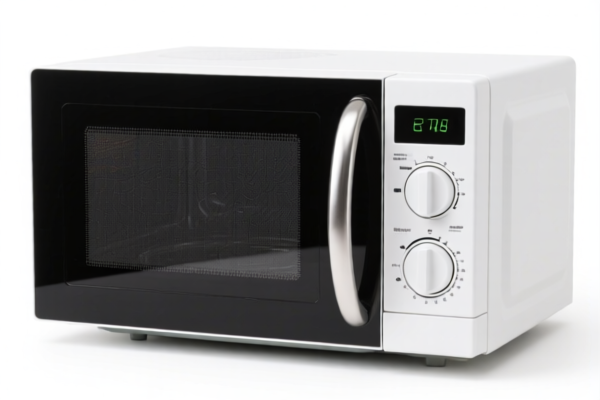
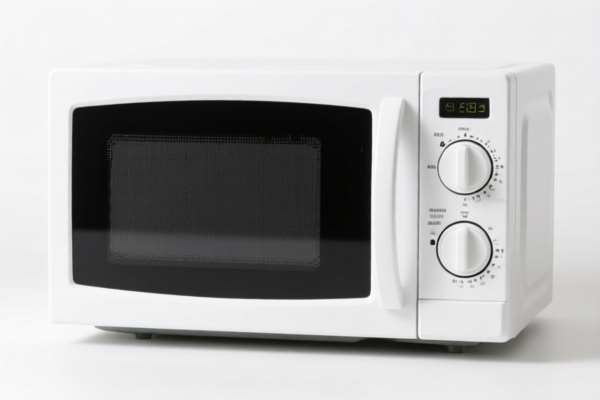
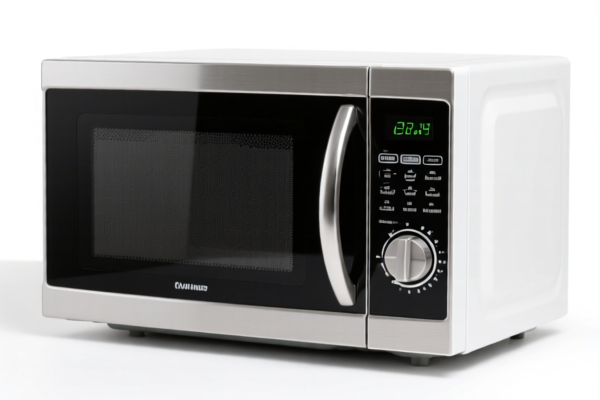
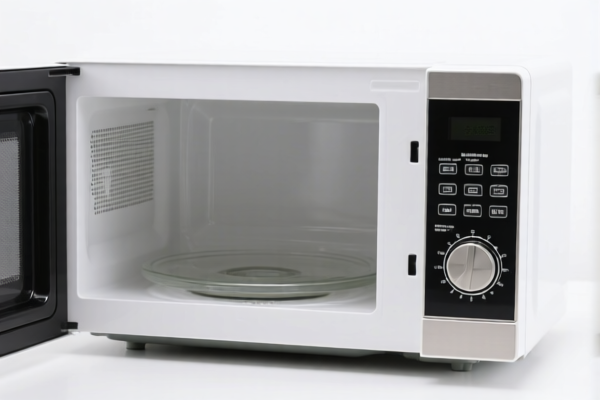
AI Analysis
🔥 Microwave Oven: Global Trade & Customs Clearance Guide 2026
🌐 HS Code Reference & Clearance Strategy | 2026 Latest Tariff Regime | Expert-Level Customs Optimization
📌 I. Product Definition & Classification: Do You Really Know "Microwave Ovens"?
Microwave ovens are essential electromechanical domestic appliances powered by self-contained electric motors and heating elements. In international trade, they are strictly classified under Heading 8516 (Electric heating resistors and electrothermic appliances), NOT under heading 8509 (other electromechanical appliances) or 8419 (industrial cooking equipment).
Key Differentiators: * Domestic vs. Commercial: Household microwaves (under ~31L) fall under 8516.50. * Capacity Matters: Capacity thresholds (22.5L vs. 31.0L) significantly impact HS Code sub-classification. * Exclusions: Microwaves are NOT "parts of appliances" (8509) nor "industrial ovens" (8419.81) unless specifically modified for restaurant use.
⚠️ Critical Classification Rule:
- If the microwave is > 22.5L but ≤ 31.0L → 8516.50.00.60
- If the microwave is ≤ 22.5L → 8516.50.00.30
- If the microwave is > 31.0L → It likely falls under industrial equipment (8419.81.50.80/90.40), not the domestic microwave codes listed below.
📦 II. HS Code Classification Details (2026 Tariff Regime)
Based on the provided data, here is the precise breakdown for Microwave Ovens:
| HS Code | Product Description | Capacity Limit | Applicable Tax Scenario |
|---|---|---|---|
| 8516.50.00.30 | Microwave ovens Having a capacity not exceeding 22.5 liters |
≤ 22.5L | Domestic Kitchen Use |
| 8516.50.00.60 | Microwave ovens Having a capacity exceeding 22.5 liters but not exceeding 31.0 liters |
22.5L < Capacity ≤ 31.0L | Domestic Kitchen Use |
🔍 Important Notes:
- Exclusions: Humidifiers, vacuum cleaners, and other electromechanical appliances (e.g., 8509.80.50.95/80) are NOT microwaves.
- Commercial Exception: If the microwave is explicitly "Of a type used in restaurants, hotels or similar locations," it may be misclassified under 8419.81.90.40 (Industrial/Cooking Machinery), which carries a 7.5% total tax.
- Parts: Parts of these ovens must be declared separately; if declared as a complete unit, use the code above.
💰 III. 2026 Tariff Rate Breakdown (Detailed Analysis)
🎯 1. 8516.50.00.30 & 8516.50.00.60 — Domestic Microwave Ovens
| Item | Content |
|---|---|
| Description | Microwave Ovens (Domestic) |
| Base Tariff | 2.0% (Standard MFN rate) |
| Additional Tariff | 0.0% (No Section 301 or punitive add-ons found in source data) |
| Total Tax Rate | 2.0% |
| Tax Detail | 基础关税 (Base): 2.0% / 加征关税 (Additional): 0.0% |
| Applicable Region | China (CN) Import/Export Context (based on "Add-on" terminology) |
📌 Interpretation:
- These codes offer the lowest tax burden for standard household microwaves.
- Unlike industrial cooking equipment, domestic microwaves are exempt from the 7.5% surcharge found in industrial categories (8419.81).
- No "De Minimis" exemptions apply for high-value appliances, but the low 2% base rate makes them highly cost-effective for trade.
⚠️ 2. 8419.81.50.80 & 8419.81.90.40 — Industrial/Restaurant Cookers (MISCLASSIFICATION WARNING)
| Item | Content |
|---|---|
| Description | Cooking Stoves, Ranges, Ovens (Non-domestic) OR Restaurant Type |
| Base Tariff | 0.0% |
| Additional Tariff | 7.5% (Punitive/Section 301-style surcharge) |
| Total Tax Rate | 7.5% |
| Tax Detail | 基础关税 (Base): 0.0% / 加征关税 (Additional): 7.5% |
📌 CRITICAL WARNING:
- If you declare a microwave that is > 31.0L or marketed specifically for restaurants/hotels, it may be forced into 8419.81 categories.
- This results in a 7.5% total tax, which is 3.75x higher than the domestic microwave rate (2.0%).
- Do not try to classify a standard household microwave as "industrial equipment" to lower taxes; it is impossible and will trigger audits.
🛠️ IV. Customs Clearance Practical Advice (Actionable Tips)
✅ 1. Documentation Checklist (Must-Haves)
| Document | Requirement | Why? |
|---|---|---|
| Product Specification Sheet | ✔️ Mandatory | Must explicitly state "Capacity (Liters)" to distinguish between .30 and .60 codes. |
| User Manual | ✔️ Mandatory | Must prove it is for "Domestic Use" (home kitchen), not "Commercial/Restaurant" use. |
| Labeling (Nameplate) | ✔️ Mandatory | Must show voltage, power rating, and model number. |
| Safety Certificates | ✔️ Recommended | UL, CE, or local equivalent to prove compliance with heating safety standards. |
| Commercial Invoice | ✔️ Mandatory | Must describe as "Microwave Oven, Domestic, [X] Liters Capacity". |
✅ 2. Declaration Strategy (The "Capacity" Rule)
🔥 "Capacity is King: Declare Liters First, Then Code!"
| Scenario | Correct HS Code | Risk of Error |
|---|---|---|
| Standard Home Oven (e.g., 20L) | 8516.50.00.30 | ❌ High Risk: If declared as 8419.81 → 7.5% Tax |
| Large Family Oven (e.g., 28L) | 8516.50.00.60 | ❌ High Risk: If declared as 8516.50.00.30 → Under-reporting |
| Industrial/Restaurant Oven (>31L) | 8419.81.50.80 | ✅ Correct: High tax applies but legal. |
Pro Tip: Always include the exact net capacity (e.g., "22.0L", "25.5L") in the description. If the capacity is borderline (e.g., 22.4L vs 22.6L), the classification changes tax liability.
✅ 3. Special Cases & Pitfalls
| Case | Solution |
|---|---|
| "Over-the-Range" Microwaves | Still 8516.50.00.30/60 if domestic capacity. |
| Combo Microwave/Convection | If it performs standard microwave heating as primary function → 8516.50. |
| "Commercial" Labeling | If the box says "Restaurant Quality" or "Commercial Grade", Customs may shift to 8419.81 (7.5% tax). |
| Parts vs. Appliance | If shipping parts only (magnetrons, waveguides), they fall under 8509.80.50.95 (Other appliances parts) → 0.0% Tax. BUT, ensure they are not assembled into a complete unit. |
🌍 V. Global Market Comparison (2026 Context)
| Region | Recommended HS Code | Total Tax (CN Origin) | Key Requirement |
|---|---|---|---|
| China (Import) | 8516.50.00.30 / .60 |
2.0% | Capacity proof required |
| USA (Import) | 8516.50.00.30 / .60 |
~2.0% (Base) + Section 301 (Check current) | FCC/UL Certification |
| EU (Import) | 8516.50.00.30 / .60 |
0% (if compliant) | CE/ErP Compliance |
| Vietnam (Export) | 8516.50.00.30 / .60 |
0% | Origin Certificate |
📌 Conclusion:
- Domestic Microwaves are the most tax-efficient category (2.0%).
- Avoid the 7.5% trap by ensuring the product is not marketed or designed for restaurant/industrial use.
- Capacity accuracy is the #1 determinant for tax savings.
📌 VI. Common Mistakes & Avoidance Guide
❌ Mistake 1: Declaring a 30L microwave as "Other Electromechanical Appliance" (8509).
👉 Result: Wrong code, delayed customs, potential penalty.
❌ Mistake 2: Declaring a restaurant-grade microwave as a "Domestic" model.
👉 Result: If discovered later, back-tax of 5.5% (diff between 7.5% and 2.0%) + fines.
❌ Mistake 3: Ignoring the 22.5L threshold.
👉 Result: A 22.6L unit declared as .30 code triggers an audit.
✅ Best Practice:
"Declare as: 'Microwave Oven, Domestic, [X] Liters, [Brand], [Model]'"
Include: "Not for restaurant use" in specs.
🎯 VII. Final Verdict: Smart Classification = Low Cost
🎯 Key Takeaway:
🔹 "Domestic = 2.0% | Restaurant = 7.5%"
🔹 "Capacity < 22.5L = .30 | 22.5L - 31L = .60"
🔹 "Don't let 'Commercial' language in your marketing raise your tax!"
📌 Quick Action Plan:
1. Measure the internal cavity capacity in liters.
2. Verify the intended use (Home vs. Commercial).
3. Select 8516.50.00.30 or 8516.50.00.60 immediately.
4. Avoid 8419.81 unless you are selling to hotels/restaurants.
📣 Call to Action:
📞 Contact Customs Broker NOW with your Capacity Spec Sheet.
🚀 Secure your 2.0% Rate and avoid the 7.5% pitfall!
💡 Profit Margin Protection Starts with the Right HS Code!
✨ Professional Customs, Precision Classification, Maximum Savings!
💼 Your Microwave, Your Rules — But Know the Tax Code!
Customer Reviews
About HS Code Classification
The Harmonized System (HS) is an internationally standardized nomenclature developed by the World Customs Organization (WCO) to classify traded products. Over 200 countries use the HS system as the basis for customs tariffs, trade statistics, and import/export regulations.
Each HS code follows a hierarchical structure:
- Chapter (2 digits) — Broad category of goods (e.g., Chapter 84: Machinery and Mechanical Appliances)
- Heading (4 digits) — More specific grouping within the chapter
- Subheading (6 digits) — Internationally standardized breakdown, used by all WCO member countries
- National subdivisions (8-10 digits) — Country-specific extensions for further classification, such as US HTSUS 10-digit codes
Correct HS code classification is essential for smooth customs clearance, accurate duty payment, and compliance with trade regulations. Misclassification can lead to customs delays, overpayment of duties, or penalties.
When importing from CN to US, the applicable tariff rates may include:
- Most-Favored-Nation (MFN) rate — The standard duty rate applied to WTO members
- General rate — Applied to countries without trade agreements
- Trade remedy duties — Additional tariffs such as Section 301 (anti-dumping), Section 232 (national security), or countervailing duties
The information provided on this page is for reference purposes only. For official classification, please consult with your local customs authority or a licensed customs broker.