Middle Ear Negative Pressure Therapy Device
CN → US| HS Code | Tariff Rate | Origin | Destination | Doc |
|---|---|---|---|---|
| 9018199530 | 35.0% | CN | US | Official Doc |
| 9018907540 | 35.0% | CN | US | Official Doc |
| 9018907520 | 35.0% | CN | US | Official Doc |
| 9018907540 | 35.0% | CN | US | Official Doc |
| 9018907540 | 35.0% | CN | US | Official Doc |
Product Images
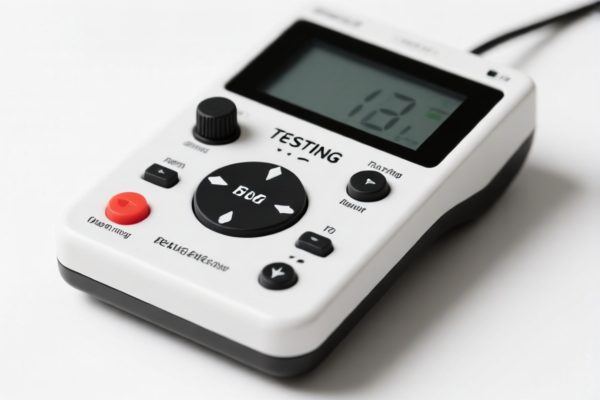
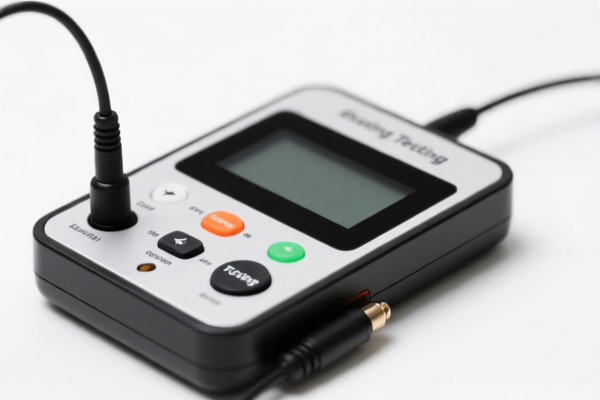
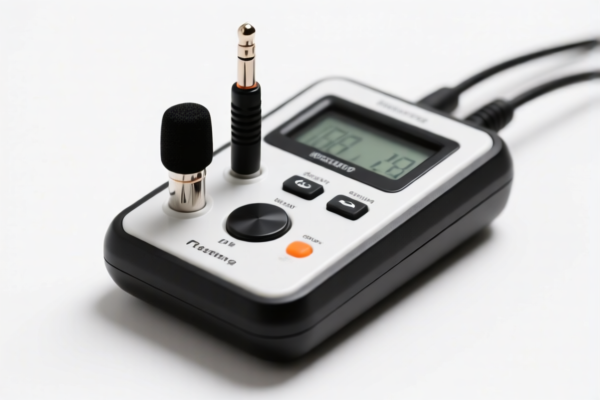

AI Analysis
🦻 Middle Ear Negative Pressure Therapy Device (MEPTD)
🌐 HS Code Reference & Customs Clearance Guide | 2026 Latest Tariff Analysis | Professional Clearance Strategy
📌 I. Product Definition & Classification: Do You Really Understand "Middle Ear Negative Pressure Therapy Devices"?
The Middle Ear Negative Pressure Therapy Device is a specialized medical instrument designed to treat ear conditions (such as otitis media with effusion) by manipulating pressure within the middle ear cavity. In international trade, it falls under the broad category of Medical, Surgical, Dental, or Veterinary Instruments and Apparatus (Chapter 90).
Specifically, it is classified based on its function as an electrical medical therapeutic device or a diagnostic/therapeutic instrument. It is not a simple mechanical tool but an electronic apparatus that generates negative pressure.
⚠️ Key Distinction Point: - If it is an electrical device for therapeutic purposes (creating negative pressure via motor/pump) → Falls under 9018 (Electrical diagnostic, therapeutic, etc. apparatus). - It is not classified under general machinery (Chapter 84) or simple hand tools (Chapter 82) because its primary purpose is medical therapy.
📦 II. HS Code Classification Details (Based on Provided Data)
According to the provided <DATA>, the device is classified under three potential HS Codes, all within the 9018 heading. All listed codes carry a Total Tax Rate of 35.0% with specific duty structures.
| HS Code | Summary / Rationale | Key Characteristic |
|---|---|---|
| 9018.90.75.40 | Ultrasonic/Therapeutic Device Logic: Classified as medical therapeutic equipment, fitting the logic of ultrasonic or other therapeutic instruments. | Focus on Therapeutic Function |
| 9018.90.75.20 | Electrical Medical Instrument Logic: Classified under electrical medical apparatus, fitting the logic of dialysis or dedicated medical instruments. | Focus on Electrical/Mechanical Nature |
| 9018.19.95.30 | Electrical Diagnosis/Science Instrument Logic: Classified as electrical diagnostic and medical science instruments, consistent with equipment under 9018.19. | Focus on Diagnostic/Scientific Use |
🔍 Important Note:
All three codes listed in the data share the same tariff structure. This suggests that for this specific product, the customs authority may view the distinction between "therapeutic" (9018.90) and "diagnostic/scientific" (9018.19) as less critical for tariff purposes, OR that the current trade environment applies the same punitive/additional duties to this entire medical device category.
💰 III. 2026 Latest Tariff Rate Detailed Breakdown
✅ Applicable Country: United States (US)
✅ Origin: China (CN)
✅ Total Tax Rate: 35.0%
🎯 1. Universal Tax Structure for All Listed Codes
| Item | Content |
|---|---|
| Base Tariff | 0.0% (Ad Valorem) |
| Additional Tariff (Section 301) | +25.0% |
| Section 122 Tariff | +10.0% |
| Total Effective Rate | 35.0% |
| Tax Calculation | CIF Value × 35% |
| De Minimis Exemption | ❌ Not Applicable (High-value medical equipment typically excluded or subject to strict scrutiny; data implies high total tax) |
| Legal Basis Path | USITC:9018.xx.xx → Section 301: 25% → Section 122: 10% |
📌 Explanation: - "Base Tariff 0%": The standard Most Favored Nation (MFN) rate for medical electrical apparatus under HS 9018 is often 0% or low, reflecting the humanitarian/medical nature. - "Additional Tariff 25%": This is the standard Section 301 duty imposed on many Chinese goods to address trade imbalance and IP issues. - "Section 122 Tariff 10%": This refers to specific trade actions (likely related to Section 301 or other emergency powers) that impose an extra 10% on certain Chinese imports. - Total 35%: This is a high effective tariff, significantly impacting the cost of exporting medical devices from China to the US.
🛠️ IV. Customs Clearance Practical Advice (Avoid Pitfalls Guide)
✅ 1. Required Documentation Checklist (Non-Negotiable)
| Document | Mandatory? | Description |
|---|---|---|
| ✅ Product Specifications | ✔️ | Detailed technical manual, including power supply, pressure range, and mechanism. |
| ✅ Medical Device Classification | ✔️ | FDA 510(k) clearance letter or equivalent to prove it is a regulated medical device. |
| ✅ Commercial Invoice | ✔️ | Clearly state: "Middle Ear Negative Pressure Therapy Device, Electrical, for Medical Use." |
| ✅ Certificate of Origin | ✔️ | To confirm CN origin (subject to 35% duties). |
| ✅ Packing List | ✔️ | List all accessories (e.g., ear tips, power adapters, tubing). |
| ✅ Test Reports | ✔️ | Safety tests (UL, IEC 60601-1) to ensure compliance with US safety standards. |
✅ 2. Declaration Strategy (Key Mnemonic)
🔥 "Classify as 9018, Declare 'Medical', Avoid 'General Machinery'!"
| Scenario | Correct Declaration | Incorrect Declaration | Consequence |
|---|---|---|---|
| Device with Power Cord | 9018.90.75.40 (or 20/30) |
"Electric Massager" or "Pump" | Risk of misclassification, lower duty but possible penalty/fines. |
| Device as Part of Kit | Declare Main Item as MEPTD | Split into "Probe" + "Controller" | Risk of higher combined duties or compliance review. |
| Used Device | Declare "Used Medical Equipment" | Declare "New" | Potential rejection if not certified for reuse. |
✅ 3. Special Considerations
| Situation | Handling Advice |
|---|---|
| OEM/White Label | Ensure the invoice reflects the actual manufacturer but allows for the brand name. Provide authorization letters if required. |
| Accessory Only (e.g., Ear Tip) | If shipped separately, the ear tip might fall under a different HS code (e.g., 9018.90.90 or 3926.90), which may have different duties. Clarify with customs broker. |
| FDA Status | Ensure the device is FDA-registered. Medical devices without proper FDA clearance may be seized, regardless of HS code. |
| Packaging | Do not package with non-medical items (e.g., consumer electronics) to avoid classification confusion. |
🌍 V. Global Market Comparison (2026 Latest)
| Country/Region | Recommended HS Code | Tariff (China Origin) | Certification Required | Remarks |
|---|---|---|---|---|
| 🇺🇸 USA | 9018.90.75.40 / .20 / .30 |
35.0% (Total) | FDA 510(k) + UL | High tariff due to Section 301 & 122. |
| 🇨🇳 China | 9018.90.75.40 |
~0% - 5% (Varies) | NMPA (formerly CFDA) | Lower entry barrier, but domestic competition is fierce. |
| 🇪🇺 EU | 9018.90.75.40 |
0% (Mostly) | CE Mark + MDR | No additional punitive tariffs, but strict MDR compliance needed. |
| 🇬🇧 UK | 9018.90.75.40 |
0% (Mostly) | UKCA Mark | Post-Brexit rules apply, but generally favorable for medical devices. |
📌 Conclusion:
- The USA is the most challenging market due to the 35% combined tariff.
- EU/UK are more favorable in terms of tariff but have stringent regulatory compliance (MDR/UKCA) hurdles.
- Strategy: For US exports, consider tariff engineering (e.g., separate shipping of accessories if duty-free) or supply chain diversification (though difficult for medical devices).
📌 VI. Common Mistakes & Pitfall Guide (Lessons Learned)
❌ Mistake 1: Classifying as "Electric Massager" (HS 8543)
👉 Consequence: If caught, customs will reclassify to 9018 and demand back duties + penalties. The 35% is non-negotiable for medical use.
❌ Mistake 2: Ignoring Section 122 Tariff
👉 Consequence: Assuming only 25% duty. Failure to account for the extra 10% leads to budget overruns and customs holds.
❌ Mistake 3: Incomplete FDA Documentation
👉 Consequence: Even with correct HS code, the shipment will be detained by FDA for lack of registration or 510(k) reference.
❌ Mistake 4: Vague Product Description
👉 Consequence: "Ear Therapy Tool" is too vague. Must specify: "Electrical Device for Middle Ear Negative Pressure Therapy."
✅ Correct Practice:
"Middle Ear Negative Pressure Therapy Device, Model XYZ, Electrical, FDA Cleared, Includes Controller, Ear Tips, and Power Supply. HS Code: 9018.90.75.40."
🎯 VII. Conclusion: Professional Declaration for Smooth Clearance
🎯 Remember the Mnemonic:
🔹 "9018 is the Home, Medical Use is the Key."
🔹 "35% Total Duty, Plan Your Cost Accordingly."
🔹 "FDA First, Then Customs."
📌 Pro Tip:
- If the device can be modular (e.g., the main unit is one shipment, accessories another), consult a customs broker to see if accessories can be classified under lower-duty codes (e.g., plastic parts).
- Apply for an Advance Ruling with US Customs (CBP) if you are unsure about the specific 9018 subheading (
.75.40vs.75.20vs.19.30). This provides legal certainty.
📣 Immediate Action:
📞 Contact a Certified Customs Broker specializing in Medical Devices.
📄 Prepare FDA Documentation before shipping.
💰 Factor in the 35% Total Duty in your pricing strategy.
✨ Professional Clearance, From Accurate Classification Starts!
💼 Your Medical Device Deserves a Smooth Journey to Patients!
Customer Reviews
About HS Code Classification
The Harmonized System (HS) is an internationally standardized nomenclature developed by the World Customs Organization (WCO) to classify traded products. Over 200 countries use the HS system as the basis for customs tariffs, trade statistics, and import/export regulations.
Each HS code follows a hierarchical structure:
- Chapter (2 digits) — Broad category of goods (e.g., Chapter 84: Machinery and Mechanical Appliances)
- Heading (4 digits) — More specific grouping within the chapter
- Subheading (6 digits) — Internationally standardized breakdown, used by all WCO member countries
- National subdivisions (8-10 digits) — Country-specific extensions for further classification, such as US HTSUS 10-digit codes
Correct HS code classification is essential for smooth customs clearance, accurate duty payment, and compliance with trade regulations. Misclassification can lead to customs delays, overpayment of duties, or penalties.
When importing from CN to US, the applicable tariff rates may include:
- Most-Favored-Nation (MFN) rate — The standard duty rate applied to WTO members
- General rate — Applied to countries without trade agreements
- Trade remedy duties — Additional tariffs such as Section 301 (anti-dumping), Section 232 (national security), or countervailing duties
The information provided on this page is for reference purposes only. For official classification, please consult with your local customs authority or a licensed customs broker.