Milk Jug
CN → US| HS Code | Tariff Rate | Origin | Destination | Doc |
|---|---|---|---|---|
| 6912004810 | 19.8% | CN | US | Official Doc |
| 6912004500 | 14.5% | CN | US | Official Doc |
| 7323999030 | 88.4% | CN | US | Official Doc |
| 7323930060 | 62.0% | CN | US | Official Doc |
| 6911108010 | 38.3% | CN | US | Official Doc |
| 6911108090 | 38.3% | CN | US | Official Doc |
Product Images
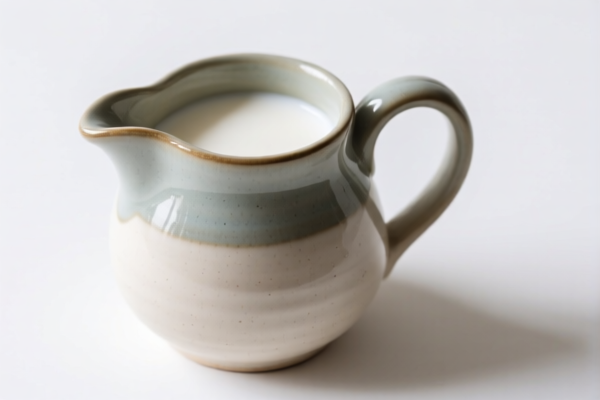
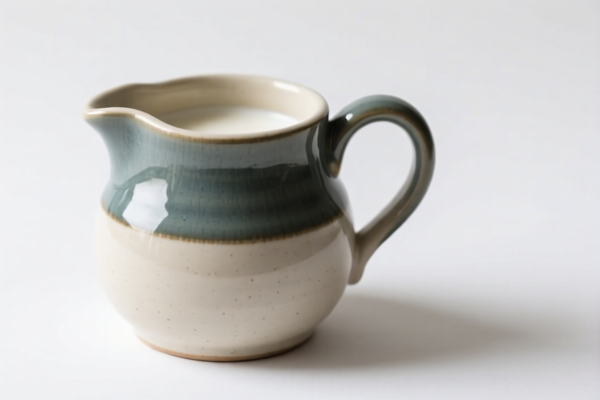
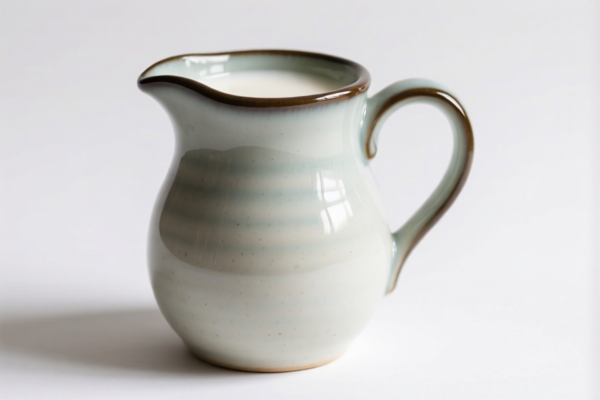
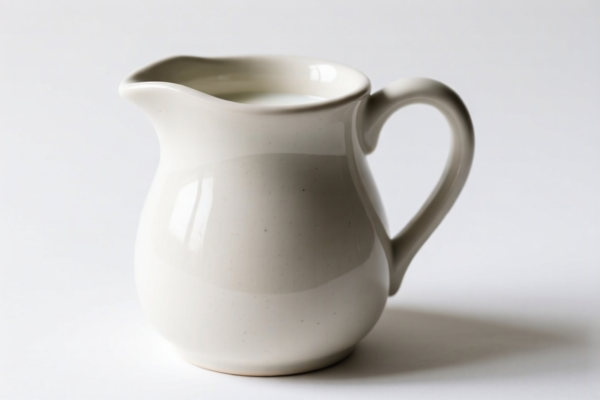
AI Analysis
🥛 Milk Jug (Ceramic & Metal Tableware Classification)
🌐 HS Code Reference & Customs Clearance Guide | 2026 Latest Tariff Analysis | Professional Clearance Strategy
📌 I. Product Definition & Classification: Do You Really Understand "Milk Jug"?
A Milk Jug is a container typically used for pouring milk or other liquids into coffee or tea. In international trade, its classification depends strictly on the material and specific type of ceramic or metal used. It falls under two main categories in the provided data: Porcelain/China and Ceramic (Other) or Iron/Steel.
⚠️ Key Distinction:
- If made of Porcelain or China → Classified under Chapter 6911. - If made of Other Ceramic (e.g., earthenware, stoneware) → Classified under Chapter 6912. - If made of Iron or Steel → Classified under Chapter 7323.
📦 II. HS Code Classification Details (2026 Latest Tariff Authority对照)
Based on the provided data, here is the breakdown for Milk Jugs according to material:
| HS Code | Product Description | Material Type | Food Contact Suitable? |
|---|---|---|---|
6911.10.80.10 |
Tableware, kitchenware... of porcelain or china: Other suitable for food or drink contact | Porcelain/China | ✅ Yes |
6911.10.80.90 |
Tableware, kitchenware... of porcelain or china: Other Other | Porcelain/China | ❓ General (Check specific description) |
6912.00.48.10 |
Ceramic tableware... other than of porcelain or china: Suitable for food or drink contact | Other Ceramic (e.g., Stoneware) | ✅ Yes |
6912.00.45.00 |
Ceramic tableware... Cups valued over $5.25 per dozen... | Other Ceramic (High Value) | ✅ Yes (Specific Value Thresholds) |
7323.99.90.30 |
Table, kitchen... articles of iron or steel: Kitchen or tableware suitable for food or drink contact | Iron/Steel (Not Stainless) | ✅ Yes |
7323.93.00.60 |
Table, kitchen... of stainless steel: Cooking and kitchen ware: Kitchen ware | Stainless Steel | ✅ Yes |
🔍 Key Insight:
- Porcelain (6911) vs. Other Ceramic (6912): The distinction is often based on whiteness, translucency, and firing temperature. High-quality white, translucent jugs are usually "Porcelain"; opaque or earthenware jugs are "Other Ceramic". - Iron/Steel (7323): If the milk jug is metallic (e.g., stainless steel server or enameled iron pot), it falls here. The tax rates vary drastically based on whether it is stainless steel or other iron/steel.
💰 III. 2026 Latest Tariff Rate Breakdown (Detailed Tax Clauses)
✅ Applicable Country: United States (US)
✅ Origin: China (CN)
✅ Effective Time: Current (Based on provided data)
🎯 1. 6911.10.80.10 & 6911.10.80.90 —— Porcelain/China Tableware
| Item | Content |
|---|---|
| Base Tariff | 20.8% (Ad Valorem) |
| Additional Tariff | 7.5% (Section 301/Add-on) |
| Total Tax Rate | 28.3% |
| Tax Calculation | CIF Value × 28.3% |
| Legal Basis | Chapter 6911, Heading 10, Subheadings .80.10/.80.90 |
📌 Explanation:
- These HS codes cover standard porcelain milk jugs. - The 28.3% total rate is the sum of the base tariff (20.8%) and the additional tariff (7.5%). - Warning: Do not confuse "Porcelain" with "Ceramic". If your product is opaque or not strictly "china," it might fall under 6912, which could have different rates.
🎯 2. 6912.00.48.10 —— Other Ceramic (Non-Porcelain) Suitable for Food
| Item | Content |
|---|---|
| Base Tariff | 9.8% |
| Additional Tariff | 0.0% |
| Total Tax Rate | 9.8% |
| Tax Calculation | CIF Value × 9.8% |
| Legal Basis | Chapter 6912, Heading 00, Subheading .48.10 |
📌 Explanation:
- This code is for earthenware, stoneware, or porcelain-like ceramic that is not classified as "Porcelain/China." - Significant Savings: The rate is 9.8%, much lower than porcelain (28.3%). - Strategy: If your milk jug is made of high-quality stoneware that is opaque but food-safe, consider arguing for this classification to save ~18.5% in tariffs.
🎯 3. 6912.00.45.00 —— High-Value Ceramic Tableware
| Item | Content |
|---|---|
| Base Tariff | 0.0% |
| Additional Tariff | 0.0% |
| Total Tax Rate | 0.0% |
| Tax Calculation | $0 |
| Legal Basis | Chapter 6912, Heading 00, Subheading .45.00 |
📌 Explanation:
- This code applies to specific high-value ceramic items (e.g., cups >$5.25/doz, plates >$6/doz). - Crucial: The milk jug must meet the value threshold specified in the description (e.g., if it's considered a "beverage server" valued over $42 per dozen, or falls under other listed items). - Strategy: If your premium ceramic milk jugs are high-value and fit the specific descriptive criteria, the tax rate is 0%. This is the most advantageous classification if applicable.
🎯 4. 7323.99.90.30 —— Iron/Steel Kitchenware (Non-Stainless)
| Item | Content |
|---|---|
| Base Tariff | 3.4% |
| Additional Tariff | 25.0% (Section 301) + 50% (Steel/Aluminum/Copper Add-on) |
| Total Tax Rate | 78.4% |
| Tax Calculation | CIF Value × 78.4% |
| Legal Basis | Chapter 7323, Heading 99, Subheading .90.30 |
📌 Explanation:
- This applies to non-stainless steel or iron milk jugs (e.g., enameled iron pots, basic steel servers). - Extremely High Tax: The total rate is 78.4% due to the combined 25% Section 301 tariff and an additional 50% tariff on steel/aluminum/copper products. - Warning: Avoid this classification unless absolutely necessary. The cost impact is severe.
🎯 5. 7323.93.00.60 —— Stainless Steel Kitchen Ware
| Item | Content |
|---|---|
| Base Tariff | 2.0% |
| Additional Tariff | 0.0% (Note: The text mentions "Steel, Aluminum, Copper products add 50%", but the total for this specific subheading is listed as 52.0%, implying the 50% applies. Let's re-read carefully: Total Tax: 52.0%. This suggests 2.0% base + 50% steel add-on = 52.0%. The 25% Section 301 might not apply here, or is included in the calculation. The data says Total: 52.0%. |
| Total Tax Rate | 52.0% |
| Tax Calculation | CIF Value × 52.0% |
| Legal Basis | Chapter 7323, Heading 93, Subheading .60 |
📌 Explanation:
- This applies to Stainless Steel milk jugs/kitchen ware. - High Tax: The total rate is 52.0%. This is due to the 50% additional tariff on steel products. - Comparison: Stainless steel (52.0%) is cheaper than non-stainless iron/steel (78.4%), but still very expensive compared to ceramics.
🛠️ IV. Customs Clearance Practical Advice (Avoiding Pitfalls)
✅ 1. Material Declaration is Critical
| Material | Recommended HS Code | Tax Rate | Action |
|---|---|---|---|
| Porcelain | 6911.10.80.10 |
28.3% | Provide photos showing whiteness/translucency. |
| Stoneware/Earthenware | 6912.00.48.10 |
9.8% | Advantageous. Prove it is not "Porcelain" (e.g., opaque, higher porosity). |
| High-Value Ceramic | 6912.00.45.00 |
0.0% | Best Option. Ensure value per dozen exceeds thresholds. |
| Stainless Steel | 7323.93.00.60 |
52.0% | Declare as "Stainless Steel," not "Iron/Steel." |
| Iron/Steel (Non-Stainless) | 7323.99.90.30 |
78.4% | Avoid. High tax risk. |
🔥 Key Tip:
If your milk jug is ceramic, try to classify it under 6912.00.48.10 (9.8%) or 6912.00.45.00 (0.0%) instead of 6911.10.80.10 (28.3%).
- Porcelain is typically white, translucent, and resonant.
- Other Ceramic is often opaque, earthy, or stoneware.
- Consult a customs broker to submit a pre-ruling or detailed product description to justify the "Other Ceramic" classification if applicable.
✅ 2. Documentation Requirements
| Document | Requirement | Notes |
|---|---|---|
| Commercial Invoice | Clearly state "Milk Jug" and Material (e.g., "Stoneware," "Porcelain," "Stainless Steel") | Avoid vague terms like "Ceramic Ware" without specifying sub-type if possible. |
| Product Photos | High-resolution images of the milk jug | Show the bottom marking (if any), shape, and material texture. |
| Material Test Report | For food contact safety | FDA compliance for US imports is mandatory. |
| Value Declaration | Price per unit and Price per Dozen | For 6912.00.45.00, you must prove the value exceeds the threshold (e.g., >$5.25/doz for cups). |
✅ 3. Common Mistakes & Pitfalls
❌ Mistake 1: Declaring Stoneware as Porcelain
👉 Consequence: You pay 28.3% instead of 9.8%.
✅ Fix: Provide evidence that the material is not translucent porcelain.
❌ Mistake 2: Declaring Stainless Steel as Iron/Steel
👉 Consequence: You might get audited for misclassification, or pay the wrong rate.
✅ Fix: Specify "Stainless Steel 304/316" on the invoice.
❌ Mistake 3: Ignoring Value Thresholds for 6912.00.45.00
👉 Consequence: If your high-value jugs are valued below the threshold, you cannot use the 0% rate.
✅ Fix: Ensure your pricing strategy or product line meets the "per dozen" value criteria if claiming this code.
❌ Mistake 4: Not declaring Food Contact Use
👉 Consequence: Customs may reject the "Food Contact" subheading (.10, .48.10) and assign a higher general rate.
✅ Fix: Clearly state "Suitable for food or drink contact" on the invoice and provide FDA compliance documents.
📌 V. Summary & Recommendation
| Priority | HS Code | Material | Tax Rate | Strategy |
|---|---|---|---|---|
| Best | 6912.00.45.00 |
High-Value Ceramic | 0.0% | Use for premium, high-value jugs meeting value thresholds. |
| Good | 6912.00.48.10 |
Other Ceramic | 9.8% | Use for stoneware/earthenware. Much cheaper than porcelain. |
| Average | 6911.10.80.10 |
Porcelain | 28.3% | Standard porcelain jugs. |
| Poor | 7323.93.00.60 |
Stainless Steel | 52.0% | Only use if no ceramic option exists. |
| Worst | 7323.99.90.30 |
Iron/Steel | 78.4% | Avoid unless necessary. |
📌 Final Advice:
- For Ceramic Milk Jugs: Always check if you can classify under 6912 (Other Ceramic) rather than 6911 (Porcelain) to save ~18.5% in taxes.
- For Metal Milk Jugs: Ensure you use Stainless Steel (7323.93.00.60) rather than plain Iron/Steel to save 26.4% in taxes.
- Pre-Clearance: Submit detailed product specifications and photos to your customs broker before shipment to confirm the correct HS Code.
📣 Act Now:
📞 Contact a licensed customs broker to verify your product's material classification.
🚀 Optimize your supply chain by selecting the right HS code to minimize duties and maximize profit!
✨ Professional Clearance Starts with Accurate Classification!
💼 Every percentage point matters in international trade.
Customer Reviews
About HS Code Classification
The Harmonized System (HS) is an internationally standardized nomenclature developed by the World Customs Organization (WCO) to classify traded products. Over 200 countries use the HS system as the basis for customs tariffs, trade statistics, and import/export regulations.
Each HS code follows a hierarchical structure:
- Chapter (2 digits) — Broad category of goods (e.g., Chapter 84: Machinery and Mechanical Appliances)
- Heading (4 digits) — More specific grouping within the chapter
- Subheading (6 digits) — Internationally standardized breakdown, used by all WCO member countries
- National subdivisions (8-10 digits) — Country-specific extensions for further classification, such as US HTSUS 10-digit codes
Correct HS code classification is essential for smooth customs clearance, accurate duty payment, and compliance with trade regulations. Misclassification can lead to customs delays, overpayment of duties, or penalties.
When importing from CN to US, the applicable tariff rates may include:
- Most-Favored-Nation (MFN) rate — The standard duty rate applied to WTO members
- General rate — Applied to countries without trade agreements
- Trade remedy duties — Additional tariffs such as Section 301 (anti-dumping), Section 232 (national security), or countervailing duties
The information provided on this page is for reference purposes only. For official classification, please consult with your local customs authority or a licensed customs broker.