Milk Processing Machinery
CN → US| HS Code | Tariff Rate | Origin | Destination | Doc |
|---|---|---|---|---|
| 8434200000 | 35.0% | CN | US | Official Doc |
| 8434100000 | 17.5% | CN | US | Official Doc |
Product Images
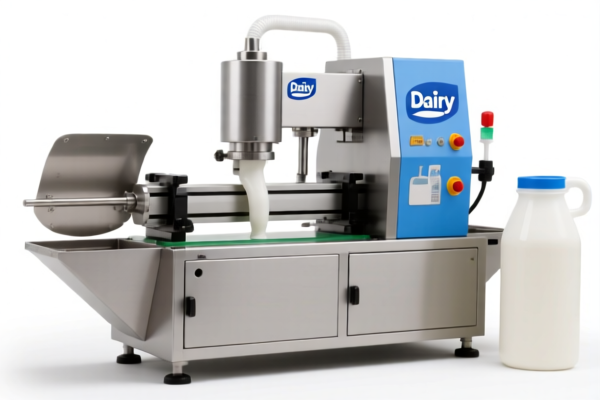
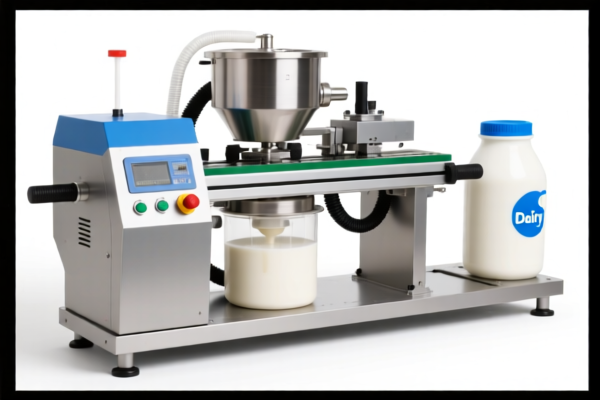
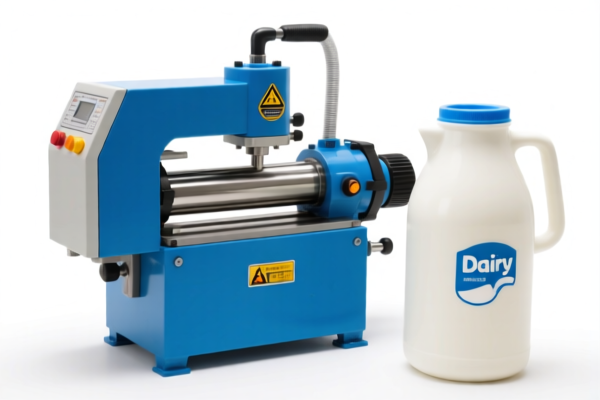
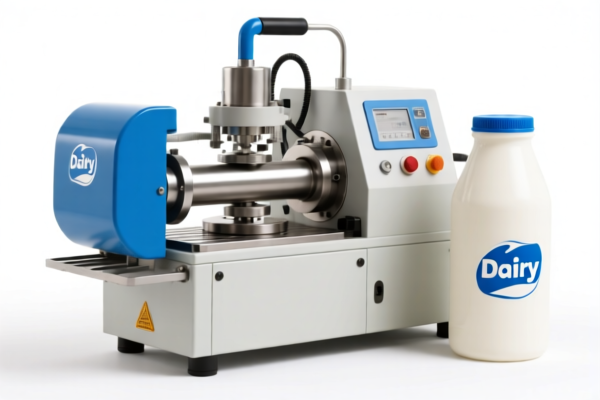
AI Analysis
🥛 Milk Processing Machinery (Dairy Machinery & Parts)
🌐 HS Code Reference & Customs Clearance Guide | 2026 Latest Tariff Analysis | Professional Clearance Strategy
📌 I. Product Definition & Classification: What Exactly Is "Milk Processing Machinery"?
Milk processing machinery is a critical component of the dairy industry, encompassing equipment used for the collection, separation, pasteurization, homogenization, and storage of milk. In international trade, these goods are primarily classified under Heading 84.34 of the Harmonized System (HS).
The classification depends heavily on the specific function and completeness of the equipment: * Dairy Machinery (General/Processing): Equipment such as pasteurizers, homogenizers, separators, or bulk tanks used for processing milk. * Milking Machines: Specific automated devices designed for the extraction of milk from animals.
⚠️ Key Distinction Point:
- If the machine is for processing/packaging/storage (e.g., pasteurizer, separator) →归入 8434.20.00.00
- If the machine is for milking (extraction from animals) →归入 8434.10.00.00
📦 II. HS Code Classification Details (2026 Latest Tariff Authority Comparison)
Based on the provided data, there are two specific HS codes for this category. Note that parts are generally grouped under the main machinery code unless specified otherwise in detailed national schedules, but the primary distinction here is between Dairy Processing and Milking.
| HS Code | Product Description | Application Scenario | Key Feature |
|---|---|---|---|
8434.20.00.00 |
Dairy machinery | Pasteurizers, homogenizers, separators, milk storage tanks, filling machines. | Processes milk after extraction. |
8434.10.00.00 |
Milking machines | Automatic milking robots, hand-held milking units, vacuum pumps for milking. | Extracts milk from animals. |
🔍 Important Reminder:
- Parts thereof: The description "and parts thereof" in the HS heading usually means that spare parts for these machines are classified under the same HS code as the machine itself, unless a specific parts-only code exists in a national subheading (which is not indicated in the providedDATA).
- Do not confuse: A "milk pump" used in a pipeline system is part of Dairy Machinery (8434.20), whereas a "milking claw" or "milking cup" is part of Milking Machines (8434.10).
💰 III. 2026 Latest Tariff Rate Breakdown (Including Surtaxes & Policy Add-ons)
✅ Applicable Country: United States (US)
✅ Country of Origin: China (CN) (Implied by the high surtax rates typical of US-China trade data)
✅ Effective Date: Current Rates Apply
🎯 1. 8434.20.00.00 —— Dairy Machinery (e.g., Pasteurizers, Separators)
| Item | Content |
|---|---|
| Base Tariff | 0.0% (Ad Valorem) |
| Section 301 Surtax | +25.0% |
| Total Tariff Rate | 25.0% |
| Tax Calculation | CIF Value × 25% |
| De Minimis Exemption | ❌ Not Eligible (Section 301 duties typically exclude de minimis for China-origin goods in certain contexts, or are strictly enforced). Note: Always verify current CBP enforcement on Section 301. |
| Legal Basis Path | USITC:8434.20.00.00 → Footnote: 9903.88.01 (Section 301 List 4) |
📌 Explanation:
- "Base Tariff 0%": Dairy machinery is considered essential industrial equipment, so the standard MFN (Most Favored Nation) rate is often 0%.
- "Surtax 25%": This is the standard Section 301 tariff rate for "Dairy Machinery" (often falling under Group 4 or 99 lists).
- Total Impact: Even with a 0% base rate, the 25% surtax significantly increases the landed cost. This is a high-cost category for importers from China.
🎯 2. 8434.10.00.00 —— Milking Machines
| Item | Content |
|---|---|
| Base Tariff | 0.0% (Ad Valorem) |
| Section 301 Surtax | +7.5% |
| Total Tariff Rate | 7.5% |
| Tax Calculation | CIF Value × 7.5% |
| De Minimis Exemption | ❌ Not Eligible (Subject to Section 301 enforcement). |
| Legal Basis Path | USITC:8434.10.00.00 → Footnote: 9903.88.01 (or applicable List) |
📌 Explanation:
- "Base Tariff 0%": Like processing machinery, milking machines often enjoy a 0% base MFN rate.
- "Surtax 7.5%": This is a lower surtax rate compared to dairy processing machinery. This reflects different classifications within the Section 301 lists (e.g., List 4A vs. List 4).
- Total Impact: A 7.5% total tariff is relatively moderate compared to other industrial goods, but still a direct cost addition.
🛠️ IV. Customs Clearance Practical Advice (Battle-Tested Pitfall Avoidance)
✅ 1. Required Documentation Checklist (Non-negotiable)
| Document | Mandatory? | Purpose |
|---|---|---|
| ✅ Product Specification Sheet | ✔️ | Must clearly state: Machine Type (Milking vs. Processing), Capacity, Voltage, and Key Function. |
| ✅ Functional Description | ✔️ | Detailed explanation of how the machine works. Crucial for distinguishing 8434.10 from 8434.20. |
| ✅ Product Photos | ✔️ | Clear images of the machine, control panel, and any branding/model numbers. |
| ✅ Commercial Invoice | ✔️ | Must accurately describe the goods as "Dairy Machinery" or "Milking Machine," not generic "Agricultural Equipment." |
| ✅ Packing List | ✔️ | Detailed list of all components. If spare parts are shipped separately, declare them under the correct HS code. |
| ✅ Certificate of Origin | ✔️ | To prove origin (China) and apply appropriate Section 301 surtax. |
✅ 2. Declaration Tips (Critical Mnemonics)
🔥 “Know the Function: Milking = 8434.10 (7.5%), Processing = 8434.20 (25%)!”
| Scenario | Correct HS Code | Reason |
|---|---|---|
| Automatic Milking Robot | 8434.10.00.00 |
It extracts milk from animals. |
| Pasteurizer / Homogenizer | 8434.20.00.00 |
It processes milk after extraction. |
| Bulk Milk Tank (Cooling) | 8434.20.00.00 |
It is part of the dairy processing chain. |
| Spare Parts for Milking Machine | 8434.10.00.00 |
Parts follow the main machine's classification. |
| Spare Parts for Pasturizer | 8434.20.00.00 |
Parts follow the main machine's classification. |
📌 Warning:
- Misdeclaring a Pasteurizer as "Milking Machine" to save 17.5% tariff (25% vs 7.5%) is fraud and will result in severe penalties, audits, and potential seizure.
- Misdeclaring a Milking Machine as "Dairy Machinery" results in underpayment of tariffs, leading to back-duties and interest.
✅ 3. Special Circumstances Handling
| Scenario | Handling Advice |
|---|---|
| Kit Assemblies | If milking parts and processing parts are shipped in one container, separate them in the invoice and declare under correct HS codes. Do not blend. |
| "Dairy Equipment" Generic Name | Avoid using vague terms like "Dairy Equipment" in the description. Be specific: "Automatic Milking System, Model XYZ" or "Plate Pasturizer, Model ABC." |
| Parts Shipped Separately | If a milking machine is shipped with separate spare cups/valves, the spare parts should still be declared under 8434.10.00.00 with a clear description like "Spare Parts for Milking Machines (Cups/Valves)." |
🌍 V. Global Market Clearance Comparison (2026 Latest)
| Country/Region | Recommended HS Code | Tariff (China Origin) | Notes |
|---|---|---|---|
| 🇺🇸 United States | 8434.10.00.00 / 8434.20.00.00 |
7.5% / 25.0% | Section 301 surtaxes apply heavily. |
| 🇨🇳 China | 8434.10.00.00 / 8434.20.00.00 |
~10-12% | Base import duties apply; no US-style surtaxes. |
| 🇪🇺 European Union | 8434.10.00 / 8434.20.00 |
0% | Generally duty-free for agri-food machinery under most trade agreements. |
| 🇦🇺 Australia | 8434.10.00 / 8434.20.00 |
5% | Moderate standard duty. |
📌 Conclusion:
- The United States is the most expensive market for importing Chinese dairy/milking machinery due to Section 301 tariffs.
- Europe and China (for re-export) are more tariff-friendly.
- Strategy: If exporting to the US, consider tariff engineering (if applicable) or supply chain diversification (e.g., assembly in a non-tariffed country) to mitigate the 25% hit on dairy machinery.
📌 VI. Common Errors & Pitfall Guide (Lessons Learned)
❌ Error 1: Using "Agricultural Machinery" (HS 8432) as a blanket term.
👉 Consequence: Customs will reclassify to 8434, assess the correct (higher) duty, and apply penalties for misdeclaration.
❌ Error 2: Confusing "Milk Processing" with "Food Processing" (HS 8438).
👉 Consequence: While similar, milk-specific machinery has its own subheading (8434). Misclassification can lead to delays and audits.
❌ Error 3: Ignoring the "Parts Thereof" clause.
👉 Consequence: Shipping spare parts separately with vague descriptions ("Machine Parts") leads to high temporary duties or seizure. Always specify "Parts for Milking Machine" or "Parts for Dairy Machinery."
❌ Error 4: Underestimating the 25% vs. 7.5% difference.
👉 Consequence: A $100,000 shipment of dairy machinery costs $25,000 in tariffs, while milking machines cost only $7,500. A misclassification error of just this type can cost $17,500.
✅ Correct Approach:
“Be Precise: ‘Milking Machine’ for extraction, ‘Dairy Machinery’ for processing. Check Section 301 lists before shipping.”
🎯 VII. Conclusion: Precision Classification Saves Money!
🎯 Remember the Mnemonic:
🔹 “Milking is 7.5, Processing is 25. Don’t guess, check the function!”
🔹 “HS Code 8434 is the home. 10 for milking, 20 for processing. Know the difference, avoid the stress!”
📌 Pro Tip:
If your machinery has advanced IoT features or specialized dairy treatments, ensure the documentation highlights these to support the correct classification.
For large-scale dairy plants, consider applying for an Advance Ruling from US CBP if the classification is complex.
📣 Immediate Action:
📞 Contact a Licensed Customs Broker + Provide Detailed Product Specs + Verify Section 301 Applicability
🚀 Ensure Compliance, Avoid Delays, and Optimize Your Landed Cost!
✨ Professional Clearance Starts with Accurate Classification!
💼 Every Percent of Tariff Matters in Dairy Equipment Trade!
Customer Reviews
About HS Code Classification
The Harmonized System (HS) is an internationally standardized nomenclature developed by the World Customs Organization (WCO) to classify traded products. Over 200 countries use the HS system as the basis for customs tariffs, trade statistics, and import/export regulations.
Each HS code follows a hierarchical structure:
- Chapter (2 digits) — Broad category of goods (e.g., Chapter 84: Machinery and Mechanical Appliances)
- Heading (4 digits) — More specific grouping within the chapter
- Subheading (6 digits) — Internationally standardized breakdown, used by all WCO member countries
- National subdivisions (8-10 digits) — Country-specific extensions for further classification, such as US HTSUS 10-digit codes
Correct HS code classification is essential for smooth customs clearance, accurate duty payment, and compliance with trade regulations. Misclassification can lead to customs delays, overpayment of duties, or penalties.
When importing from CN to US, the applicable tariff rates may include:
- Most-Favored-Nation (MFN) rate — The standard duty rate applied to WTO members
- General rate — Applied to countries without trade agreements
- Trade remedy duties — Additional tariffs such as Section 301 (anti-dumping), Section 232 (national security), or countervailing duties
The information provided on this page is for reference purposes only. For official classification, please consult with your local customs authority or a licensed customs broker.