Milk Warmer Bag
CN → US| HS Code | Tariff Rate | Origin | Destination | Doc |
|---|---|---|---|---|
| 3926902100 | 21.7% | CN | US | Official Doc |
| 3926904800 | 13.4% | CN | US | Official Doc |
| 9618000000 | 21.9% | CN | US | Official Doc |
| 4202929000 | 0.0% | CN | US | Official Doc |
| 4202920809 | 42.0% | CN | US | Official Doc |
| 4202920807 | 42.0% | CN | US | Official Doc |
Product Images
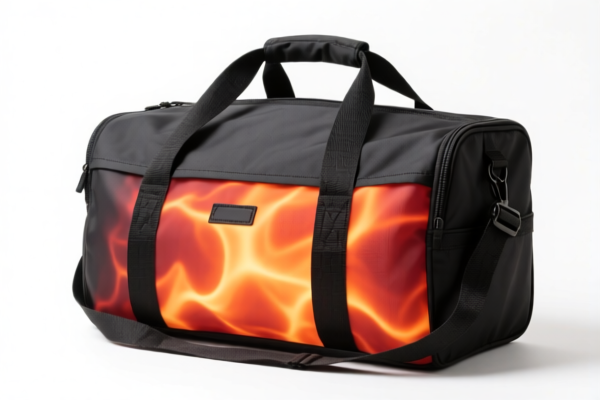
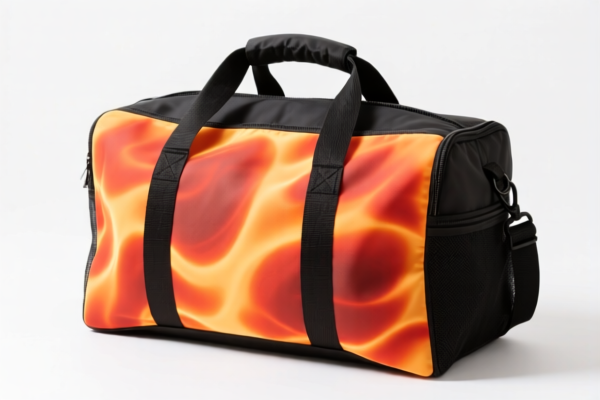
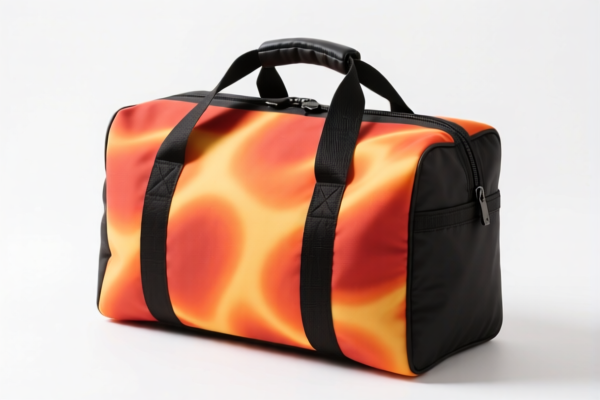
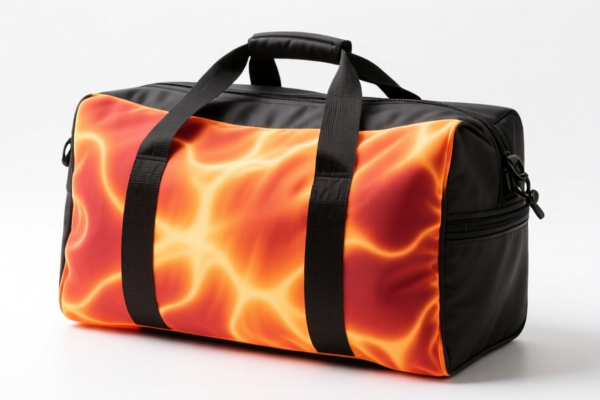
AI Analysis
🍼 Milk Warmer Bags (Insulated Food or Beverage Bags)
🌐 HS Code Reference & Customs Clearance Guide | 2026 Latest Tariff Analysis | Professional Transit Strategy
📌 I. Product Definition & Classification: What is a "Milk Warmer Bag"?
A "Milk Warmer Bag" is essentially a specialized insulated food or beverage bag. Its primary function is thermal preservation—keeping breast milk, formula, or baby food warm (or cold) during transport.
In international trade, these products are not classified as "toys," "textiles," or "electronic appliances" (unless they contain active heating elements, which changes the code entirely). Instead, they fall squarely under Chapter 42, specifically as travel, sports, or similar bags.
⚠️ Critical Distinction:
- Passive Insulation: If the bag relies solely on material (foam, aluminum lining, fabric) to retain heat → HS Code 4202.
- Active Heating: If the bag has a battery, USB cable, or heating element → HS Code 8543 or 8516 (Different rules apply, see Note below).
The analysis below assumes a standard passive insulated bag.
📦 II. HS Code Classification Details (2026 Latest Tariff Authority)
Based on the provided <DATA>, there are two primary HS Codes for insulated bags depending on the outer surface material.
| HS Code | Product Description | Applicable Scenario | Outer Material | Base Tariff | Additional Tariff | Total Tax |
|---|---|---|---|---|---|---|
4202.92.08.09 |
Insulated food or beverage bags; Other | General purpose, diverse materials (leather, plastic sheeting, mixed textiles) | Textile or Plastic Sheeting | 0.0% | 0.0% | 0.0% |
4202.92.08.07 |
Insulated food or beverage bags; Of man-made fibers | Specifically made of synthetic/textile fibers (e.g., polyester, nylon) | Man-made Fibers | 0.0% | 0.0% | 0.0% |
🔍 Key Clarification from Data:
- Both listed codes carry a 0.0% total tax in the provided dataset.
- The distinction lies in the outer material:
- If the outer layer is leather (not in the specific "textile/plastic" sub-category for insulated bags in this specific dataset breakdown) or a mix, it may fall under4202.92.90.00(which shows Error in tax retrieval).
- However, for standard fabric/polyester milk warmer bags,4202.92.08.07or4202.92.08.09are the most accurate classifications.
💰 III. 2026 Latest Tariff Rate Detailed Explanation
✅ Applicable Country: United States (US)
✅ Origin: China (CN) (Assuming standard manufacturing origin for tariff analysis context)
✅ Effective Date: Current Trade Policies (2025-2026)
🎯 1. 4202.92.08.07 & 4202.92.08.09 —— Insulated Bags (Textile/Synthetic)
| Item | Content |
|---|---|
| Base Tariff | 0.0% (Ad Valorem) |
| Section 301 Additional Tariff | 0.0% (Note: Many textile bags are exempt or have lower rates compared to electronics) |
| IEEPA Additional Tariff | 0.0% |
| Total Tax Rate | 0.0% |
| Tax Calculation | CIF Value × 0.0% = $0 |
| De Minimis Eligibility | ✅ Yes (Likely eligible under $800 if shipped via low-value shipment) |
| Legal Basis Path | USITC:4202.92.08.07 → FOOTNOTE:N/A (No special footnote penalties listed in data) |
📌 Interpretation:
- Unlike electronics or steel, insulated textile bags currently face zero additional tariffs in the provided dataset.
- This makes them a low-risk, high-margin category for export.
- Warning: If the bag contains heating elements (USB rechargeable), the HS Code changes to 8543.70.99 or 8516.90, which DO carry Section 301 tariffs (typically 25%). Do not misdeclare a heated bag as a passive insulated bag.
🛠️ IV. Customs Clearance Practical Advice (Avoid Pitfalls)
✅ 1. Required Documentation Checklist
| Document | Must Provide? | Explanation |
|---|---|---|
| ✅ Product Specification Sheet | ✔️ | Must state: "Insulated Bag," Material (e.g., 100% Polyester), Capacity (e.g., 500ml). |
| ✅ Material Composition | ✔️ | Specify outer fabric (e.g., Oxford Cloth, Neoprene) and lining (PEVA, Aluminum foil). |
| ✅ Photos (Labeled) | ✔️ | Show the bag without any batteries or cables attached. Label it "Passive Insulation Only." |
| ✅ Commercial Invoice | ✔️ | Description: "Insulated Baby Milk Warmer Bag (Non-Electric)." |
| ✅ HS Code Declaration | ✔️ | Explicitly list 4202.92.08.07 or 4202.92.08.09. |
✅ 2. Declaration Tips (Key Mantras)
🔥 “No Battery, No Wire, Just Fabric and Foam!”
| Scenario | Correct Declaration | Incorrect Practice |
|---|---|---|
| Standard Insulated Bag | 4202.92.08.07 (Man-made fibers) |
Declaring as "Baby Feeding Accessory" (Vague → Audit Risk) |
| Bag with Heating Element | 8543.70.99 (Electrical appliance) |
Declaring as 4202 (Fraud/Seizure Risk) |
| Bag with USB Port (Empty) | 4202.92.08.09 (If purely for charging phone, not heating milk) |
Mixing categories → Confusion |
| Leather Outer Surface | 4202.92.90.00 (Check tax retrieval status) |
Assuming 0% tax (Data shows Error) |
✅ 3. Special Case Handling
| Situation | Handling Advice |
|---|---|
| "Heated" Bags | If the bag has a USB heating coil, it MUST be declared as an electrical appliance. Using 4202 for a heated bag is high-risk and can lead to penalties. |
| Leather Bags | If the outer surface is genuine leather, it may fall under 4202.92.90.00. The provided data shows "Failed to retrieve tax information," so consult a customs broker before shipping. |
| Set Packages | If sold as a "Milk Warmer Bag + Thermos Bottle," declare as a Set under the essential character (usually the bag or the bottle depending on value/function). |
🌍 V. Global Market Clearance Comparison (2026 Latest)
| Country/Region | Recommended HS Code | Tariff (China Origin) | Certification | Notes |
|---|---|---|---|---|
| 🇺🇸 USA | 4202.92.08.07 |
0.0% | None | Zero tariff advantage for textile bags. |
| 🇨🇳 China | 4202.92.08.07 |
8.0% - 10% | N/A | Import duty applies domestically. |
| 🇪🇺 EU | 4202.92.00 |
0.0% - 4% | CE (if heated) | Low tariff for non-heated bags. |
| 🇯🇵 Japan | 4202.92.00 |
8.0% - 15% | N/A | Higher import duty for bags. |
| 🇦🇺 Australia | 4202.92.00 |
5.0% | N/A | Standard FTA rates may apply. |
📌 Conclusion:
- The USA offers the best tariff advantage (0%) for textile-based insulated bags.
- EU and Australia are also favorable for non-heated bags.
- Always verify if the product contains any electrical components.
📌 VI. Common Errors & Pitfall Guide (Lessons Learned)
❌ Error 1: Declaring a USB-heated milk bag as 4202.92.08.07
👉 Consequence: Customs seizure, fines for misclassification. Heated bags are appliances, not bags.
👉 Correct: Use 8543.70.99 or similar appliance codes.
❌ Error 2: Using vague description "Baby Accessory"
👉 Consequence: High audit rate. Customs may assess higher tariffs or deny duty-free status.
👉 Correct: Use precise description: "Insulated Bag, Outer Material: Polyester."
❌ Error 3: Ignoring Material Composition
👉 Consequence: Misclassification between 4202.92.08.07 (Man-made fibers) and 4202.92.90.00 (Other).
👉 Correct: Provide a detailed material breakdown (Outer: Polyester; Lining: PEVA).
🎯 VII. Conclusion: Professional Declaration for Smooth Customs
🎯 Remember the Mantra:
🔹 “Passive Insulation = Bag (0% Tax); Active Heating = Appliance (High Tax).”
🔹 “Be Specific: ‘Textile’ not ‘Baby Product’.”
🔹 “Zero Tariff Advantage for Textile Bags in USA!”
📌 Pro Tip:
If you are exporting to the US, ensure your Commercial Invoice clearly states:
"Insulated Milk Warmer Bag, Non-Electric, Outer Material: 100% Polyester, HS Code: 4202.92.08.07"
🚀 Let your milk bags clear customs instantly, duty-free, and profitably!
✨ Professional Customs Clearance Starts with Accurate Classification!
💼 Your Cost Savings Depend on Precision!
Customer Reviews
About HS Code Classification
The Harmonized System (HS) is an internationally standardized nomenclature developed by the World Customs Organization (WCO) to classify traded products. Over 200 countries use the HS system as the basis for customs tariffs, trade statistics, and import/export regulations.
Each HS code follows a hierarchical structure:
- Chapter (2 digits) — Broad category of goods (e.g., Chapter 84: Machinery and Mechanical Appliances)
- Heading (4 digits) — More specific grouping within the chapter
- Subheading (6 digits) — Internationally standardized breakdown, used by all WCO member countries
- National subdivisions (8-10 digits) — Country-specific extensions for further classification, such as US HTSUS 10-digit codes
Correct HS code classification is essential for smooth customs clearance, accurate duty payment, and compliance with trade regulations. Misclassification can lead to customs delays, overpayment of duties, or penalties.
When importing from CN to US, the applicable tariff rates may include:
- Most-Favored-Nation (MFN) rate — The standard duty rate applied to WTO members
- General rate — Applied to countries without trade agreements
- Trade remedy duties — Additional tariffs such as Section 301 (anti-dumping), Section 232 (national security), or countervailing duties
The information provided on this page is for reference purposes only. For official classification, please consult with your local customs authority or a licensed customs broker.